Dramatic power reduction on 23cm for Belgium radio hams

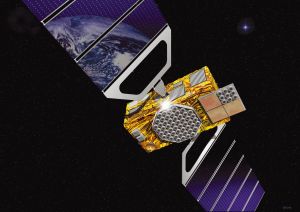
A Galileo satellite - image credit ESA

A Galileo satellite – image credit ESA

The Belgium regulator BIPT has proposed cutting to just 20 watts the permitted power level for the Amateur and Amateur-Satellite allocations in 1260-1300 MHz which is to be used by the Galileo GNSS / GPS constellation.

A Google translation of the UBA post reads:

On December 18, the BIPT website provides BIPT consultation on the Frequencies, Power and Transmission modes that may be used by radio amateurs.

This consultation was already announced at the BIPT meeting with the recognized associations of September 28 and should provide a framework for the introduction of the CEPT Novice license in Belgium.

The most important part is the Appendix 1 which establishes the Frequency bands and technical characteristics allowed for the different categories of radio amateur licenses.

For holders of a HAREC license (class A operating certificate), there are only changes to the transmission power (usually in our favor):

• On most bands between 1.81 MHz and 440 MHz, the permitted power is 1500 W. Exceptions are 1.85-2.00 MHz (10 W), 5.3515-5.3665 MHz (15 W EIRP), 50-52 MHz (200 W), 69.95 MHz (10 W). EIRP), 70.1125-70.4125 MHz (50W) and 433.05-434.79 MHz (200W EIRP for (D-) ATV, 200W transmit power for other modes). On the bands above 1 GHz the permissible power is increased to 200 W, with the exception of 1260-1300 MHz (20 W). The special license for higher capital expires, but to perform exceptional experiments one can still submit a motivated request to temporarily use a larger capital. It is allowed to own devices that are capable of supplying a power up to twice the permitted maximum power.

The holders of the newly introduced CEPT Novice license (class B operating license) have access to almost all bands between 1.81 MHz and 440 MHz (except 5.3515-5.3665 MHz, 69.95 MHz and 70.1125-70.4125 MHz). The permitted transmission power is 100W at HF ​​and 6 meters and 50 W at 2 m and 70 cm. All classes of broadcast (modes) are allowed with the exception of D-ATV.
For the holders of a basic license (class C operating license) the changes are greater:

• The permissible transmission power is limited to 10 W, but the use of devices up to 100 W transmission power remains permitted (provided that the power is limited to 10 W). The use of external power amplifiers is not permitted.
• The use of the 17 m band (now 18.080-18.168 MHz), 12 m band (now 24.900-24.990 MHz) and 6 m band (now 50.125-52.000 MHz) is no longer allowed.
• The 20 m band is expanded (14,000-14,150 and 14,250-14,350 MHz), this is 65 kHz extra (14,080-140150 MHz).
• The 15 m band is expanded (21,000-21,150 and 21,320-21,450 MHz), this is 90 kHz extra (21,000-21,040 and 21,100-21,150 MHz).
• The 10 m band is expanded (28,000-29,700 MHz), this is 40 kHz extra (28,000-28,040 MHz).
• The permitted classes of broadcast (modes) do not change, everything modes except (D-) ATV remain allowed.

The full text of this consultation can be found on
https://www.ibpt.be/public/files/nl/22691/Raadpleging_RAM_2018-12-18.pdf

Everyone has the right to respond to the content of this consultation until January 18 and to propose changes.

The UBA will certainly do this and invites all members to send their comments and proposals for January 5 to ON7YD ( ( on7yd [at] uba [dot] be ) ). Anyone who wants to respond in their own name can find the procedure for this at
https://www.ibpt.be/nl/consumenten/radio/radioamateurs/raadpleging-op-verzoek-van-de-raad-van-het-bipt-met-betrekking-tot-het-ontwerp-van-besluit-van-de-raad-van-het-bipt-betreffende-de-frequenties-vermogens-en-transmissiemodi-die-mogen-worden-gebruikt-door-de-radioamateurs

UBA in Google English https://tinyurl.com/BelgiumUBA

2006 article Potential Interference To Galileo From 23cm Band Operations by Peter Blair G3LTF.
The Galileo constellation is expected to be fully operational by 2020.
http://www.southgatearc.org/articles/galileo.htm
UWE-4 satellite ready to launch

UWE-4 in the launch deployer

UWE-4 in the launch deployer

Last week our Team returned from the Vostochny Launch Site (Russia) where we performed the last check out tests of UWE-4 before launch on December 27, 2018.

The satellite will be launched through the German integrator ECM Space on a Soyuz-2 mission using a Fregat upper stage on December 27, 2018 at 02:07:18 UTC.

UWE-4 transportation to Far East of Russia was very smooth, so only a last software update and recharging of the batteries needed to be performed. By now, UWE-4 has been successfully integrated into the launch deployer followed by the integration with the upper stage, the fairing encapsulation will occur Thursday December 20.

UWE-4 LogoIn the meantime we updated our website to provide more detailed information about the orbit and the communication parameter including the beacon decoding information.

You can find all these and some more details here:
http://www7.informatik.uni-wuerzburg.de/forschung/space-exploration/projects/uwe-4/

As soon as we can provide the TLE, you will find them also on our website.

Kind regards,

The UWE‑4 Team

Winter issue of OSCAR News now available for download

Oscar News issue 224 December 2018

Oscar News issue 224 December 2018

E-members of AMSAT-UK can now download the Winter 2018 edition of OSCAR News here.

The paper edition should be sent to postal members in 2-3 weeks.

In this issue:
• From the Secretary’s Keyboard
• New Editor’s Welcome
• 2018 Meetings & Events calendar
• AMSAT-UK 2018 Colloquium
• JY1Sat First Packet Received
• Meteorwatch
• Things that fall from the sky – 2
• Es’Hail-2 Report
• My Radio Life – part 2
• AO85 back in Operation
• SSO-A Objects
• Using the NO-84 (PSAT) PSK Transponder
• AMSAT-UK Construction Contest 2018
• From Cape Canaveral to a geostationary orbit using the example of Korea-5A
• Minutes of the Annual General Meeting
• Joe Spier, K6WAO visits the RSGB National Radio Centre
• The FUNcube Project – five years since launch
• IARU Frequency Coordination
• Smallsat Express LEOPs report
• We were there at the launch of the Es’Hail-2 satellite!
• The story behind Es’hail-2
• ARISS Joins NASA On-The-Air for a Special SSTV Event

AMSAT-UK FUNcube Mission Patch

AMSAT-UK FUNcube Mission Patch

Membership of AMSAT-UK is open to anyone who has an interest in amateur radio satellites or space activities, including the International Space Station (ISS).

E-members of AMSAT-UK are able to download OSCAR News as a convenient PDF that can be read on laptops, tablets or smartphones anytime, anyplace, anywhere. Join as an E-member at Electronic (PDF) E-membership

PDF sample copy of “Oscar News” here.

Join AMSAT-UK using PayPal, Debit or Credit card at
http://shop.amsat-uk.org/

E-members can download their copies of OSCAR News here.

Kenilworth students’ amateur radio contact with space station

International Space Station – Image Credit NASA

This is the high definition video feed from the live contact between the Kenilworth School and Sixth Form GB4KSN and astronaut Serena Auñón-Chancellor KG5TMT onboard the International Space Station NA1SS on Friday, December 14, 2018.

The event starts with a brief introduction from the head teacher, Mr Hayden Abbott, before the students present their work and activities that lead up the contact.

ARISS Operations UK team lead takes over at approximately 12 minutes and leads the audience into the contact which occurs at approximately 58:05 minutes into the video.

Watch the video of the event

Kenilworth school ARISS contact
http://www.southgatearc.org/news/2018/december/ariss-event-1412.htm

ARISS http://www.ariss-eu.org/
https://twitter.com/ARISS_status

Tim Peake KG5BVI / GB1SS inspired 2 million young people

UK PM Theresa May and Tim Peake with some of the young people involved in Principia mission

UK PM Theresa May and Tim Peake with some of the young people involved in Principia mission

A new report has found more than 2 million young people in the UK engaged with education and outreach programmes linked to Tim Peake’s Principia Mission to space. The report highlights the role of ARISS and amateur radio during the mission.

UK astronaut Tim Peake KG5BVI / GB1SS

UK astronaut Tim Peake KG5BVI / GB1SS

The UK Space Agency ran a £3 million education campaign alongside the mission to the International Space Station, which blasted off three years ago tomorrow (15 December), to inspire a greater interest and understanding of science, technology, engineering and mathematics (STEM) as well as space.

The campaign – the largest and most successful ever organised for a European Space Agency (ESA) astronaut – encompassed 34 separate projects and covered a spectrum of ages and subjects, including mass participation experiments in schools using seeds that had been in space.

The report, produced by the UK Space Agency, found one in three UK schools took part in at least one Principia activity. Every region of the UK ran school activities with all projects accessible to boys and girls. The majority of the 34 projects focused on primary school children although some went right through to university.

Amateur Radio on the International Space Station (ARISS) logoHuman Spaceflight & Microgravity Programme Manager at the UK Space Agency Libby Jackson @LibbyJackson__ tweeted:
This report records my most memorable and most proud of professional achievement. Thank you to each and every one of the amazing team and partner organisations for what we did together along with @spacegovuk, @esa and @astro_timpeake. The impacts will be felt for many years yet.

ARISS-UK Ciaran Morgan @M0XTD tweeted:
Thank you @LibbyJackson__ and to the amazing team at @spacegovuk for choosing @ARISS_status to be part of the #Principia mission. We are proud to have taken part and to have made such an impression with so many students. Looking forward to the future!

Download the full Principia campaign report, or summary education report from
https://www.gov.uk/government/news/on-third-anniversary-of-tim-peakes-space-mission-report-reveals-over-2-million-inspired-by-education-campaign

ARISS Principia https://principia.ariss.org/

ARISS-UK videos of the Principia amateur radio contacts
https://www.youtube.com/channel/UCQS-yDk7PdE9cRv4MNu8pCw

Post launch updates on the JY1SAT and ESEO missions

JY1SAT (JO-97) CubeSat

JY1SAT (JO-97) CubeSat

JY1SAT (JO-97) carrying the FUNcube-6 amateur radio transponder and ESEO with the FUNcube-4 transponder were launched on December 3, 2018.

JY1SAT – Although not finally confirmed, good tracking results are being obtained using the TLEs for object 2018-99AX / 43803, the 1200 bps BPSK telemetry beacon is on 145.840 MHz.

Commissioning of the spacecraft is continuing and there may be some changes to the operating modes over the next couple of weeks. Please continue to let the Data Warehouse have as much data as possible. In that regard, an updated version of the JY1SAT Dashboard (ver 1189) has just been released. This fixes a couple of buggettes relating to Doppler tracking over multiple orbits and the graph displays now no longer start at zero. This update v1189 JY1 Dashboard can be downloaded from https://download.funcube.org.uk/JY1Sat_Dashboard_v1189.msi

ESEO satellite in the anechoic chamber at the ESTEC test facilities, in the Netherlands

ESEO satellite in the anechoic chamber at the ESTEC test facilities, in the Netherlands

ESEO – In a similar manner to JY1SAT, the official confirmation has not been received, but the best TLEs are currently 2018-99AL / 43792. The 9600 bps downlink signal on 437.00 MHz is quite strong and reports and recordings are welcomed. Please continue to check the https://www.esa.int/Education/ESEO website for the latest updates from ESA.

We can confirm that the AMSAT payload with a downlink on 145.985 MHz has not yet been activated and that DK3WN and EA4GPZ, working with other collaborators, have developed a decoder for the 437.00 MHz downlink signals.

Decoding ESEO https://destevez.net/2018/12/decoding-eseo/

It is hoped that a UI, to show the actual telemetry values, will also be available soon.

AMSAT-UK: https://amsat-uk.org/
Twitter: https://twitter.com/AmsatUK
Facebook: https://facebook.com/AmsatUK
YouTube: https://youtube.com/AmsatUK