Registration Needed for SSTL Kepler Visit

SSTL-Kepler-Building

SSTL Kepler Building

As part of the AMSAT-UK International Space Colloquium there will be tours of the satellite facilities at the Surrey Satellite Technology Limited (SSTL) Kepler building on Friday, July 29.

Update July 28 – The tours are now full to capacity. SSTL can only accept a limited number of visitors. We are very sorry if you have been disappointed!

As previously noted, any one wishing to go needed to contact us by 5pm 28 July.

Those who are registered for the tour have been notified of the details by email.

AMSAT-UK International Space Colloquium July 29-31 https://amsat-uk.org/colloquium/

AMSAT-UK International Space Colloquium 2016

UK Space Agency Astronaut Flight Education Programme Manager Libby Jackson will speak at the Gala Dinner

UK Space Agency Astronaut Flight Education Programme Manager Libby Jackson will speak at the Gala Dinner

The 2016 AMSAT-UK International Space Colloquium is taking place at the Holiday Inn, Guildford, GU2 7XZ, over the weekend of July 29-31. The event is open to all. The presentations will be streamed at https://beta.batc.tv/live/amsatuk

A full programme of presentations, covering all aspects of the amateur satellite world, has been developed for the Saturday and Sunday and a “Beginners Session” is scheduled for the Friday afternoon.

Download the PDF Schedule Here —- For PC’s Excel Spreadsheet Here

Travel information https://amsat-uk.org/colloquium/colloquium-travel/

Day Passes and Gala Dinner Booking http://shop.amsat-uk.org/

Sessions will include updates on the many new satellites that are expected to be launched over the next few months. This includes Eshail-2 which will carry the first ever geostationary amateur radio transponder and provide more than 8 MHz of new intercontinental spectrum – it will provide coverage to five continents. Additionally we will have a session on how to develop software receivers using GNU radio, reviews of the Tim Peake GB1SS ARISS contacts and the STEM results achieved, information about a new 76 GHz satellite project, a review of how to operate “in the field” and lots more.

UKSA - UK Space Agency LogoAs well as the presentations during the day, Libby Jackson, Astronaut Flight Education Programme Manager at the UK Space Agency, with whom the ARISS UK team worked closely during the Tim Peake mission, will be speaking during the Gala Dinner on the Saturday evening.

Other highlights will include visits to the SSTL facilities (late Friday afternoon) and the opportunity to see the special ground station equipment that was used for all the ARISS contacts. This will be available for use for contacts during passes of all the available satellite transponders.

Visitors can either turn up on the day, book day passes on the website or, if planning an overnight stay, now is the last week to make their hotel bookings at the preferential rate and which have been block-booked by AMSAT-UK. The URL for the AMSAT-UK shop to book day passes is http://shop.amsat-uk.org/

If you wish to book overnight accommodation, please contact the hotel direct on 01483 784413 (alternative +44 1483 784402).  Quote block code S1M or AMSAT. Day passes cost £10 per day (incl tea/coffee), please pay at the AMSAT-UK shop (not hotel reception). If you wish to attend the Gala dinner on Saturday, you must book in advance, either with the hotel (by booking dinner, bed, and breakfast) if staying overnight, or if Day Visitor book the Gala Dinner at the AMSAT-UK shop.

The 01483 784413 number is staffed from Monday to Friday 9am to 5:30pm UK local time. Outside these hours, you can email reservations@higuildford.co.uk Give your phone number and the hotel should call you back to take Debit/Credit card number and confirm the booking.

As well at the AMSAT-UK shop, there will be a number of specialist suppliers present, and we are hoping that the RSGB bookshop will also be present.

The event is open to all and further information can be found at https://amsat-uk.org/colloquium/

Registration needed for SSTL Kepler building visit https://amsat-uk.org/2016/07/03/registration-sstl-kepler-visit/

UAE satellite will have Amateur Radio transponder

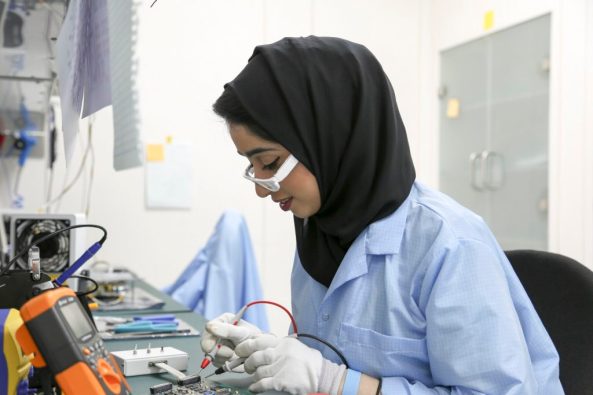
Nayif-1 was developed by UAE students - Image credit The Mohammed bin Rashid Space Centre

Nayif-1 was developed by UAE students – Image credit The Mohammed bin Rashid Space Centre

The United Arab Emirates newspaper The National reports on the Nayif-1 spacecraft developed by Emirati students from the American University of Sharjah in partnership with The Mohammed bin Rashid Space Centre.

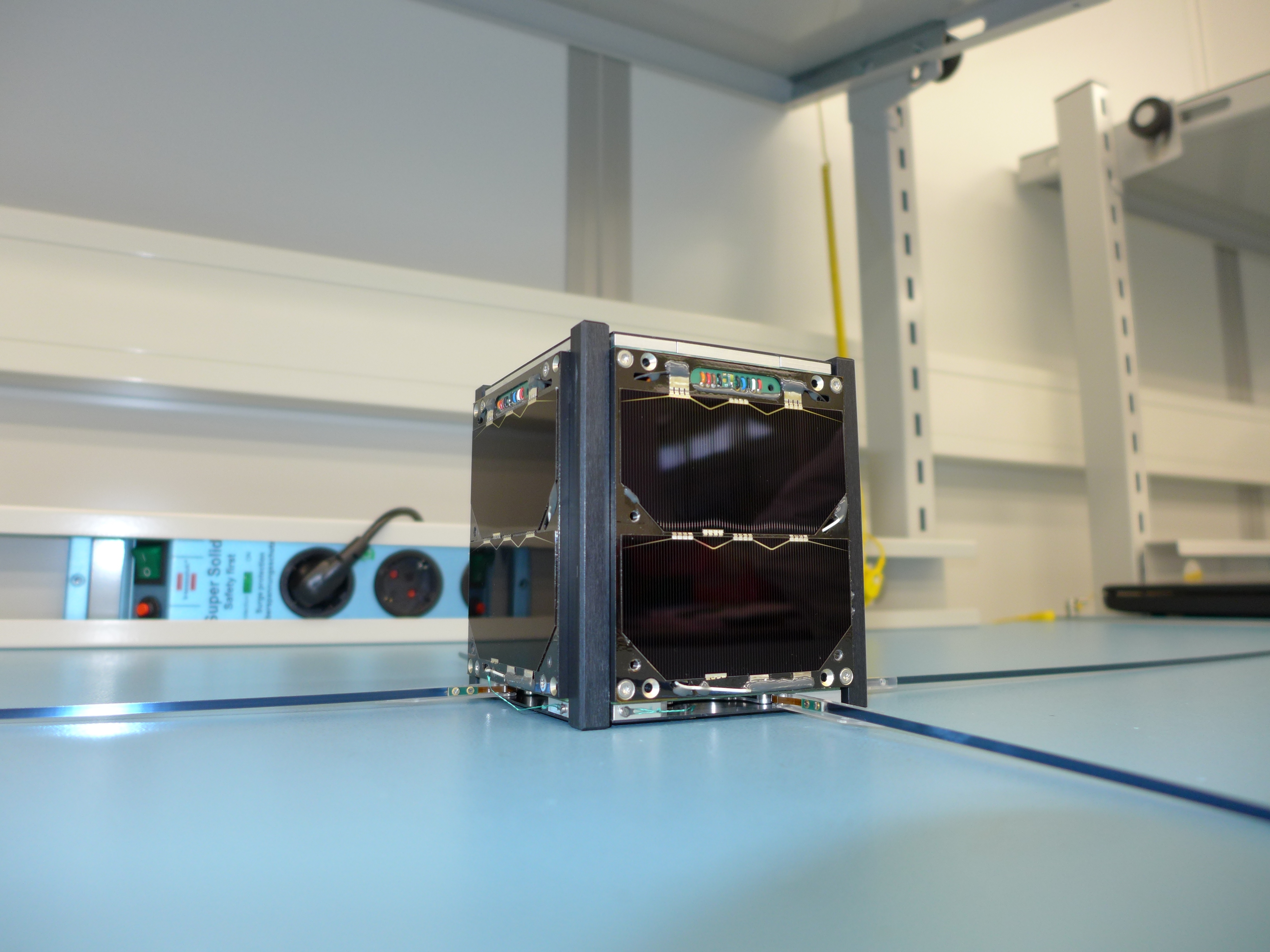
Nayif-1 carries a 435/145 MHz transponder (FUNcube-5) for amateur radio SSB/CW communications. It is expected to launch along with other amateur radio satellites such as Fox-1C and Fox-1D on a SpaceX rocket between September and November 2016.

Nayif-1 CubeSat - Credit Wouter Weggelaar PA3WEG

Nayif-1 CubeSat – Credit Wouter Weggelaar PA3WEG

The National says:

Yousuf Al Shaibani, director general of The Mohammed bin Rashid Space Centre, said the satellite’s development was a testament to its commitment to develop Emirati talent.

“There is no doubt that the field of satellite design and manufacturing is a new industry to UAE universities and students,” Mr Al Shaibani said.

“The Emirati students possess the skills and capabilities to design and build a CubeSat as a result of a knowledge-transfer strategy and cooperation between academic and professional institutions that are launching real space projects, enabling students to see the product of their work as a reality in space.”

The satellite is about 10 cubic centimetres and weighs about 1 kilogram. One of its most notable features is that it is programmed to transfer messages in Arabic.

“This is a great achievement and a source of pride for all of us,” said Dr Bjorn Kjerfve, chancellor of American University of Sharjah.

Watch the insertion of Nayif-1 into the QuadPack deployer

Read the National story at
http://www.thenational.ae/uae/science/first-satellite-developed-by-emirati-students-ready-for-launching

Nayif-1 CubeSat https://amsat-uk.org/satellites/communications/nayif-1/

Radio amateurs help students reach for the sky

View from Balloon - Image Credit Caen School

View from Balloon – Image Credit Caen School

The Appledore Amateur Radio Club helped students at Caen School in Braunton, Devon with their balloon, callsign CAEN_CP1, which transmitted pictures using Slow Scan Digital Video (SSDV) on 434.250 MHz.

The balloon was launched on Wednesday, June 22, 2016 at the school sports day by members of the Pi, Code and Chips after school club. It reached an altitude of 32,540 metres before the payload descended back to Earth by parachute.

The North Devon Gazette say the club – for STEM (science, technology, engineering and maths) subjects – has been working on the balloon project for weeks under the guidance of trainee teacher Bill Harvey. The payload for the flight included a Raspberry Pi mini computer, plus cameras and sensors.

The North Devon Journal reports:

Bill Harvey, an ex-services trainee teacher, is passionate about getting pupils enthused with science and this project was one of many that he hopes to use to inspire children.

“We enlisted the help of the Appledore Amateur Radio Club for ground to air communications as well as the Commando Logistics Regiment RMB Chivenor who provided personnel and equipment.”

Read the full North Devon Journal story at
http://www.northdevonjournal.co.uk/braunton-primary-school-successfully-launches-high-altitude-balloon-into-space/story-29448234-detail/story.html

Read the North Devon Gazette story at
http://www.northdevongazette.co.uk/news/braunton_balloon_launch_sees_pupils_reach_the_skies_1_4593411

SSDV images http://ssdv.habhub.org/
Useful balloon tracking links and information https://amsat-uk.org/beginners/balloons/

Appledore Amateur Radio Club http://www.adarc.co.uk/

Getting Started with Amateur Satellites 2016

Getting Started with Amateur Satellites 2016 Front CoverThe 2016 edition of the book Getting Started with Amateur Satellites is now available from the AMSAT-UK shop.

This excellent book is written by G. Gould Smith, WA4SXM and Friends. This year’s edition has been thoroughly updated and the book is now 176 pages long, covering all a beginner (and an experienced operator) needs to know about getting set up, listening to, and operating through the amateur satellites.

With information on, AO-73, UKube-1, the upcoming Fox-1A, Fox-1B, Fox-1C, Fox-1D, and Fox-1E, it also includes information on several satellites of interest to radio amateurs expected to be launched in the coming year.

As last year, AMSAT-NA and the authors have very kindly allowed AMSAT-UK to print copies in the UK, and make them available from the AMSAT-UK shop at http://shop.amsat-uk.org/Getting_Started_with_Amateur_Satellites_-_2016/p3815740_16038670.aspx

Phase-4A Geostationary Transponders

Es'hail-2 coverage from 26 degrees EastEs’hail 2 is a geostationary satellite which will carry two amateur radio transponders.

The launch of the Es’Hail-2 satellite into a geostationary orbit is currently planned for the 3rd quarter of 2017. The coverage area of the Narrowband (NB) and Wideband (WB) transponders should extend from Brazil to Thailand.

The two “Phase 4” amateur radio non-inverting transponders will operate in the 2400 MHz and 10450 MHz bands. A 250 kHz bandwidth linear transponder is intended for conventional analogue operations and an 8 MHz bandwidth transponder for experimental digital modulation schemes and DVB amateur television.

Narrowband Linear transponder
 2400.050 -  2400.300 MHz Uplink Right Hand Circular Polarization
10489.550 - 10489.800 MHz Downlink Vertical Polarization

Wideband digital transponder
 2401.500 -  2409.500 MHz Uplink Right Hand Circular Polarization
10491.000 - 10499.000 MHz Downlink Horizontal Polarization

Download the Eshail-2 P4-A Amateur Radio Leaflet 2016-06-24

A LEILA-2 system, similar to LEILA flown on AMSAT OSCAR-40 (P3-D) will be used for Traffic Control and Telemetry Beacons. The mayor difference is, that this is a ground-based system which will be installed at the Es’hailSat Satellite Control Center (SCC) near Doha in Qatar.

LEILA-2 will analyze the downlink power levels in the passband of the NB-transponder and automatically generate a Siren to remark users to decrease their uplink power.

LEILA-2 is a joint development of AMSAT-DL’s Achim Vollhardt DH2VA and AMSAT-UK’s Howard Long G6LVB.

LEILA is an German acronym for “LEIstungs Limit Anzeige”, which means: Power Limit Indicator.

The following video gives a first insight to the Es’hail-2 LEILA-2 hardware concept

Watch Es’hail 2 AMSAT-DL LEILA 2 Transponder