X-Wing 434 MHz Balloon on BBC Click

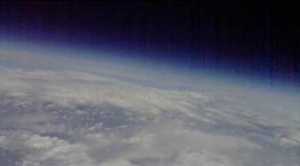
X-Wing in Space - Image Credit Essex Space Agency

X-Wing in Space – Image Credit Essex Space Agency

On Sunday, May 17 the BBC TV technology show Click broadcast a report on Essex Star Wars enthusiasts who flew an X-Wing in near-space.

The balloon was launched on April 21, 2015 and reached an altitude of 36,190m before bursting and returning to Earth, landing in a field between Bedford and Northampton. Telemetry and Slow Scan Digital Video (SSDV) were transmitted on 434.510 MHz.

Phil St Pier of Romford and Matt Kingsnorth of Brentwood took around six months to complete the project at a cost of about £1,200.

Watch The Full X-wing flight 1 of 9 – Launch

Watch the BBC report with video shot at the “Essex Space Agency” Brentwood branch at
http://www.bbc.co.uk/news/technology-32384570

Read the Romford Recorder story at http://www.romfordrecorder.co.uk/home/romford_star_wars_fans_send_model_plane_towards_space_1_4068369

Project Helium Tears
http://projecthet.tumblr.com/
https://twitter.com/ProjectHeT
https://www.facebook.com/ProjectHeT
https://www.youtube.com/channel/UCAOju7S4k4zHW2_16EiyLVA/

High Altitude Balloons https://amsat-uk.org/beginners/balloons/

Southampton students to launch 434 MHz eclipse payload

Assembling SUSF payloads for solar eclipse launchThe University of Southampton Spaceflight Society will be launching for the solar eclipse on Friday, March 20, with two 434 MHz Slow Scan Digital Video (SSDV) balloon payloads.

The transmitters are as follows:

MAJORA – 434.211 MHz USB, 600 bps RTTY, 600 Hz Shift, 8n2 – (SSDV + no GPS)
OLAF – 434.149 MHz USB, 300 bps RTTY, 880 Hz Shift, 8n2 – (SSDV + GPS)
There may also be a backup tracker on 434.700 MHz USB.

The launch will take place from Pepperbox Hill near Salisbury, at 7am due to the NOTAM, so it will be sent up slowly, perhaps landing in France.

Live launch webstream: http://www.batc.tv/streams/m0dny
Prediction: http://predict.habhub.org/#!/uuid=eb10ee6e7030c615d2e0f49243add969e42465b0
Project page: http://susf.co.uk/launches/eclipse/
Eclipse summary page: http://ukhas.org.uk/news:balloon_launches

Thanks in advance to all those who will try to listen

Matt Brejza

The 434 MHz signals transmitted by High Altitude Balloons can have a range of up to 800 km. The path of the balloons can be tracked in real-time at http://spacenear.us/tracker/

Useful links for tracking, receiving and decoding the telemetry from 434 MHz balloons can be found at
https://amsat-uk.org/beginners/balloons/

Listen for 434 MHz balloon signals online using the SUWS WebSDR, further details at
https://amsat-uk.org/2014/08/15/suws-websdr-moves-to-new-site/

434 MHz balloon launch at BBC Stargazing event
https://amsat-uk.org/2015/03/16/434-mhz-balloon-launch-at-bbc-stargazing-event/

Ulster 434 MHz Solar Eclipse Balloon

Radio amateur Philip Heron MI0VIM reports on a Raspberry Pi balloon which will be launched for the eclipse and should be receivable across the British Isles.

All being well there will be a launch from Cookstown, N.Ireland on Friday, March 20 at about 0700 UT.

The plan is to have it rise high enough before the time of maximum solar eclipse, and maybe image the lunar shadow on the horizon. This will have a slow ascent rate and should hopefully float at about 36km, on a path which takes it south towards Dublin, before turning east to Wales and on towards Germany.

Callsign: EAGLE
Frequency: 434.250 MHz USB
Mode: RTTY 300 baud 8N2

The payload consists of a Raspberry Pi A+, camera and a Pi In The Sky module. It will be sending SSDV images throughout the flight.

The 434 MHz signals transmitted by High Altitude Balloons can have a range of up to 800 km. The path of the balloons can be tracked in real-time at http://spacenear.us/tracker/

Useful links for tracking, receiving and decoding the telemetry from 434 MHz balloons can be found at
https://amsat-uk.org/beginners/balloons/

Listen for 434 MHz balloon signals online using the SUWS WebSDR, further details at
https://amsat-uk.org/2014/08/15/suws-websdr-moves-to-new-site/

434 MHz balloon launch at BBC Stargazing event
https://amsat-uk.org/2015/03/16/434-mhz-balloon-launch-at-bbc-stargazing-event/

434 MHz balloon launch at BBC Stargazing event

SSDV picture from a PIE balloon - Image credit Dave Akerman M6RPI/2E0LTX/M0RPI

SSDV picture from a PIE balloon – Image credit Dave Akerman M0RPI

Radio amateur David Akerman M0RPI will be launching a 434 MHz balloon from the BBC Stargazing Live solar eclipse event in Leicester on March 20.

The flight is to primarily to take photographs during the partial solar eclipse. Slow Scan Digital Video (SSDV), RTTY and LoRa telemetry beacons will be transmitting from the balloon in 434 MHz, so plenty of stuff to tune in to.

The launch activities will be recorded and some of the footage will be transmitted on the special BBC Stargazing show from 9am to 10am on that day.  There will also be a couple of very brief live segments where, hopefully, Dave will get to show some pretty live images.  Also, assuming the payload is recovered, some of the recorded video should end up on the main Stargazing show in the evening (9pm-10pm, BBC2).

There will be 2 Raspberry Pi trackers each sending telemetry and SSDV using both RTTY and LoRa modulation. RTTY frequencies are Upper Sideband (USB).

Pi #1 (camera with solar film):
MARVIN:  434.300 MHz, RTTY, 910 Hz shift, USB, 300 baud 8 N 2
ZAPHOD:  434.350 MHz, LoRa, Implicit mode, Bandwidth 20.8 kHz, Error coding 4:5, SF6

Pi #2 (bare camera):
KRYTEN:  434.400 MHz, RTTY, 910 Hz shift, USB, 300 baud 8 N 2
RIMMER:  434.450 MHz, LoRa, Implicit mode, Bandwidth 20.8 kHz, Error coding 4:5, SF6

UPDATE March 18 – An additional beacon has been added:
BUZZ: 434.315 MHz, 425 Hz shift, 50 baud, 7 N 2

Launch time 8am Friday, March 20, 2015

As well as the TV stuff, the BBC are running a “spectacular live event” from the racecourse, open to the public from 9am to 3pm and then 6pm to 9pm.  Entry is free to please do come along if you can.  They have a real astronaut, Paolo Nespoli IZ0JPA, and plenty else of interest – see
http://www.bbc.co.uk/mediacentre/latestnews/2015/stargazing-live-leicester

Radio hams will be at BBC Solar Eclipse event
https://amsat-uk.org/2015/03/02/radio-hams-will-be-at-bbc-solar-eclipse-event/

The 434 MHz signals transmitted by High Altitude Balloons can have a range of up to 800 km. The path of the balloons can be tracked in real-time at http://spacenear.us/tracker/

Useful links for tracking, receiving and decoding the telemetry from 434 MHz balloons can be found at
https://amsat-uk.org/beginners/balloons/

Listen for 434 MHz balloon signals online using the SUWS WebSDR, further details at
https://amsat-uk.org/2014/08/15/suws-websdr-moves-to-new-site/

APRS balloon heads for UK

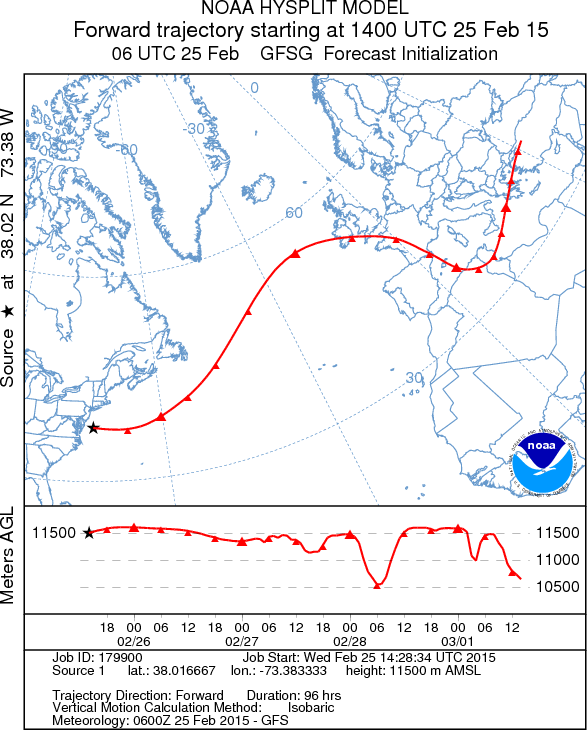
CNSP-22 Predicted Track for February 26 to March 1, 2015

CNSP-22 Predicted Track for February 26 to March 1, 2015

An amateur radio balloon CNSP-22, call sign K6RPT-11, is crossing the Atlantic at an altitude of 11,150 metres and should reach the British Isles on Friday, February 27.

The solar powered around-the-world high altitude balloon was released by the California Near Space Project team from San Jose on Monday, February 23 and is expected to reach the UK on Friday. The APRS beacon should have a radio range of up to 400 km.

The amateur radio APRS frequency is not standardized world-wide. The USA uses 144.390 MHz FM while the British Isles and Europe use 144.800 MHz. It is understood the balloon will change frequency to 144.800 MHz when it reaches this side of the Atlantic.

See the K6RPT-11 APRS track at
http://aprs.fi/#!mt=roadmap&z=11&call=a%2FK6RPT-11&timerange=86400&tail=86400

California Near Space Project
Web http://www.cnsp-inc.com/
Facebook https://www.facebook.com/pages/California-Near-Space-Project/255864787858630
Twitter http://twitter.com/k6rpt

APRS http://www.aprs.org/

APRS frequencies used around the world http://info.aprs.net/index.php?title=Frequencies

APRS-UK Yahoo Group https://groups.yahoo.com/group/APRSUK

434 MHz balloons to launch for JOTA

Chris Stubbs M6EDF with 434 MHz trackers

Chris Stubbs M6EDF with 434 MHz trackers

Radio amateurs Chris M6EDF and Steve G0TDJ will each be launching 434 MHz balloons from Essex for Jamboree On The Air (JOTA) this weekend.

The balloons should be launched from Kingston Ridge Campsite in Essex on the Saturday and Sunday, Lat/Lon: 51.559144, 0.435010 http://www.kingstonridgecampsite.co.uk/index2.html

Chris Stubbs M6EDF posted on the UKHAS Google Group:
I will be launching JOTA1 at about 12:30 on Saturday 18/10/2014.
Using either a foil or 100g pawan depending on the conditions.
434.300 MHz SSB,RTTY, 50 baud, 7n2, 450Hz shift.

Steve G0TDJ posted:
Callsign: JOTA2
Date-Time: 19/10/2014 – 12:30pm
Frequency: 434.450 MHz SSB
Mode: RTTY 50n7 with 450Hz shift.
My launch will be at around 12:30pm (+/- ish) Tracking stations will be appreciated. This time, I’m going to try for a float since I will hopefully have plenty of time to prepare. The payload will be running on a Maplin AAA Lithium so expected Tx time will be >24hrs.

The balloon’s FSK (SSB) 434 MHz signals should be receiveable across much of the UK but for those out of range or who lack 70 cm SSB the online SUWS WebSDR can be used instead, see https://amsat-uk.org/2014/08/15/suws-websdr-moves-to-new-site/
Useful links for tracking and receiving 434 MHz balloons https://amsat-uk.org/beginners/balloons/