Space Station Slow Scan TV Transmissions

2024-10-08 ARISS SSTV ExperimentARISS is planning a Slow Scan Television (SSTV) experiment from the International Space Station, scheduled to start on Tuesday, October 8, at 16:00 GMT and running until Monday, October 14, at 14:10 GMT.

There will be an interruption on Friday, October 11, for planned school contacts over Europe.

The SSTV transmissions will be made using the amateur radio station in the ISS Service Module. The transmission frequency will be 145.800 MHz (+/- 3.5 kHz Doppler shift) FM, using SSTV mode PD120.

Many FM rigs can be switched been wide and narrow deviation FM filters. For best results you should select the filter for wider deviation FM. Handhelds generally have a single wide filter fitted as standard.

2024-10-08 SSTV Experiment NotesThe ISS callsign will be RS0ISS.

Reports are requested: please send ARISS uploading your decoded pictures in the official ARISS SSTV gallery: https://www.spaceflightsoftware.com/ARISS_SSTV/

Useful information to receive the pictures can be found here: https://amsat-uk.org/beginners/iss-sstv/

Follow ARISS on X for official updates during the event https://x.com/ARISS_Intl

Space Station contact with UK Girlguides

2024-10-05 Girlguiding ARISS Contact With Sunita Willams KD5PLBAt 11:29 GMT on Saturday October 5, 2024, an Amateur Radio on the International Space Station (ARISS) radio contact between astronaut Sunita Williams KD2PLB aboard the International Space Station (ISS) and members of Girlguiding Surrey West County, took place at the Brooklands Museum and Brookland Innovation Academy, located in Weybridge, UK.

2024-10-05 ARISS UK Girlguding ContactARISS conducts 60-100 of these special Amateur Radio contacts each year between students around the globe and crew members with ham radio licenses aboard the ISS.

Watch the recording at https://www.youtube.com/watch?v=lxN4VuNj_AY

Girlguiding Surrey West is a charity organization for girls and young women. Girlguiding wants to inspire their members to learn skills in science, technology, engineering and math with fun guiding activities and science-based activities. The Brooklands Innovation Academy, established in 2022, creates inspirational STEM experiences for young people. The age range of the participants for this ARISS contact are 5 to 19 years old. By hosting this ARISS contact they are also demonstrating real-world application of STEM concepts (an important principle at Brooklands Museum) to space missions and are encouraging the girls to complete their space interest badge. The group is being supported by the Radio Society of Great Britain and the ARISS UK Team to establish the radio link.

Duchess of Edinburgh 2024Girlguiding patron, Her Royal Highness The Duchess of Edinburgh attended the contact to help in promoting the engagement and involvement of girls and young women in STEM. At the start of the contact she greeted Sunita Williams on board the ISS.

This was a direct contact via Amateur Radio allowing students to ask their questions of astronaut Sunita Williams, amateur radio call sign KD5PLB. The downlink frequency for this contact was 145.800 MHz and was heard by listeners within the ISS-footprint that also encompasses the relay ground station.

The amateur radio ground station for this contact is in Weybridge, UK. Amateur radio operators using call sign GB4GGB, operated the ground station to establish and maintain the ISS connection.

The recording of the live stream isat: https://www.youtube.com/watch?v=lxN4VuNj_AY

Evening Standard newspaper: ‘Duchess of Edinburgh contacts ‘inspiring’ astronaut in space during museum visit’ https://www.standard.co.uk/news/uk/girlguiding-edinburgh-duchess-stem-rangers-b1186075.html

_______________________________

The  Brownies, Guides and Rangers asked these questions:

1. Who or what inspired you to become an astronaut and what advice would you have for any of these girls here today who might want to become an astronaut?

2. Do you have any free time and if so what do you spend your time doing?

3. There are many international time zones so how does time work on the ISS?

4. If you were not an astronaut, what job would you like to have instead?

5. What things do you like to take with you to remind you of home?

6. What is the hardest part of your job?

7. How does the food and drinks do you have in space compare to foods on earth?

8. What do you miss about Earth?

9. How long have you been on the international space station?

10. What was your reaction when you found out you had been selected to fly to the ISS?

11. What stars or other things have you seen in space?

12. Is space hot or cold?

13. Does space smell of anything?

14. How do you sleep in space?

15. What is your favorite planet and why?

16. Have you done a spacewalk? If so, what was it like?

17. The spacesuits look very heavy, are they uncomfortable to wear?

18. What is it like floating in space? Have you ever lost anything from it floating away?

19. What things do you like to take with you to remind you of home?

About ARISS:

Amateur Radio on the International Space Station (ARISS) is a cooperative venture of international amateur radio societies and the space agencies that support the ISS. In the United States, sponsors are the American Radio Relay League (ARRL), Amateur Radio Digital Communications (ARDC), Radio Amateur Satellite Corporation (AMSAT), NASA’s Space Communications and Navigation program (SCaN) and the ISS National Lab—Space Station Explorers. The primary goal of ARISS is to promote exploration of science, technology, engineering, the arts, and mathematics topics. ARISS does this by organizing scheduled contacts via amateur radio between crew members aboard the ISS and students. Before and during these radio contacts, students, educators, parents, and communities take part in hands-on learning activities tied to space, space technologies, and amateur radio. For more information, see http://www.ariss.org/

Follow ARISS on X at https://x.com/ARISS_Intl

Those satellite enthusiasts thinking of getting their UK Amateur Radio licence may like to know a Free online training courses are available at hamtrain.co.uk

UK School to Contact Space Station

Preparing for ARISS school contact

Preparing for ARISS school contact

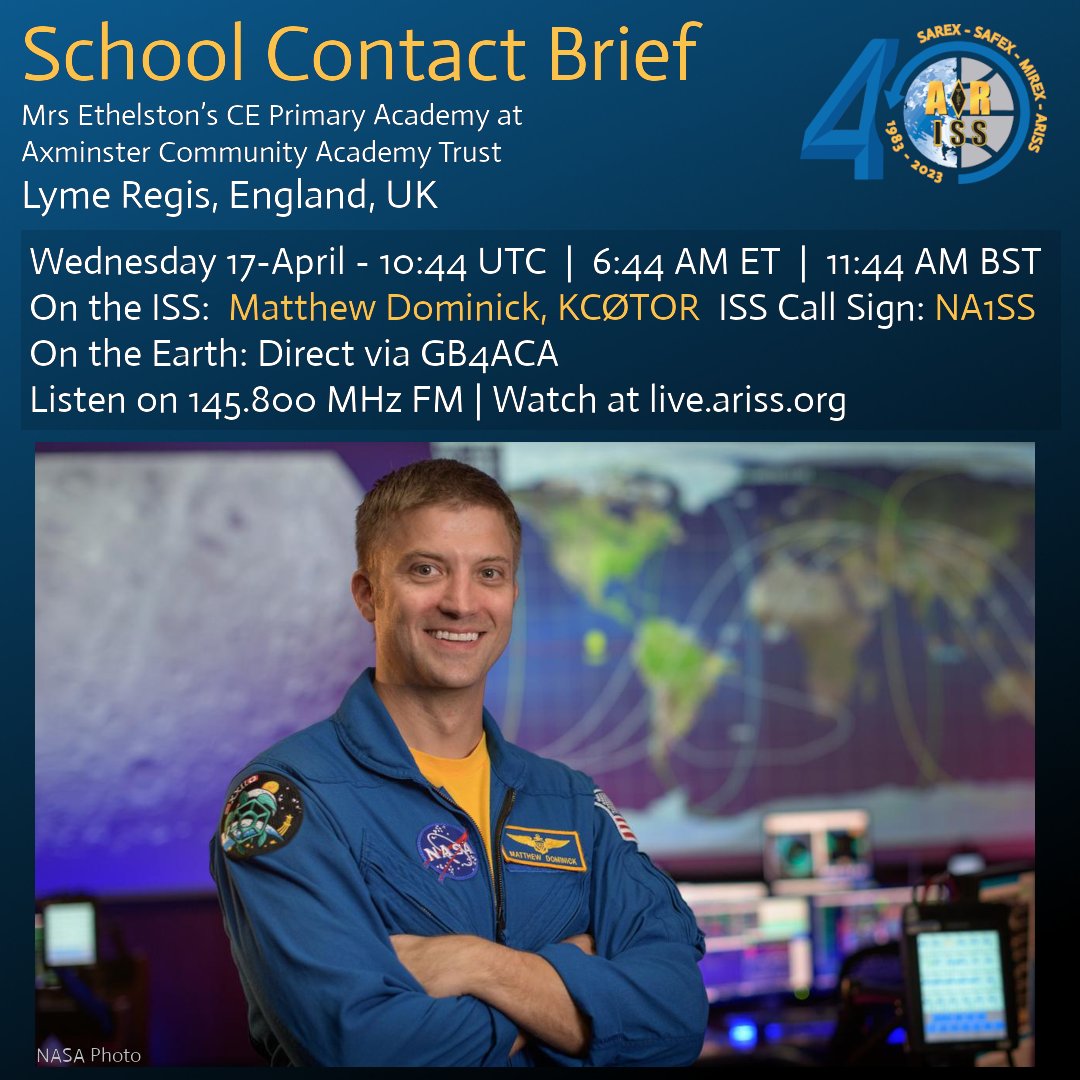
An ARISS contact is scheduled with students at Mrs Ethelston’s CE Primary Academy at Axminster Community Academy Trust, Lyme Regis, U.K. at 11:44 BST (10:44 GMT) on Wednesday April 17 on 145.800 MHz FM.

Matthew Dominick KC0TOR

Matthew Dominick KC0TOR

Amateur Radio on the International Space Station (ARISS) has received schedule confirmation for an ARISS radio contact between an astronaut aboard the International Space Station (ISS) and students at the Mrs. Ethelston’s CE Primary Academy located in Lyme Regis, UK. ARISS conducts 60-100 of these special amateur radio contacts each year between students around the globe and crew members with ham radio licenses aboard the ISS.

Acorn Multi Academy Trust is a small trust of seven schools (Mrs Ethelstons, Axminster, Chardstock, Marshwood, Loders, Thorncombe and Membury) that are situated on the coast of the English Dorset /Devon /Somerset border. Mrs Ethelston’s CE Primary Academy is hosting this ARISS contact and is directly involved in this project, however children involved are from the 7 primary schools within this Multi-Academy Trust and range in ages from 4-11 years.

This will be a direct contact via Amateur Radio allowing students to ask their questions of astronaut Matthew Dominick, amateur radio call sign KCØTOR. The downlink frequency for this contact is 145.800 MHz and may be heard by listeners that are within the ISS-footprint that also encompasses the relay ground station.

The amateur radio ground station for this contact is in Lyme Regis, UK. Amateur radio operators using call sign GB4ACA, will operate the ground station to establish and maintain the ISS connection.

The ARISS radio contact is scheduled for April 17, 2024 at 11:44:48 am BST (UK) (10:44:48 UTC, 6:44 am EDT, 5:44 am CDT, 4:44 am MDT, 3:44 am PDT).

The public is invited to watch the live stream at: https://live.ariss.org

ARISS School Students Contact ISSAs time allows, students will ask these questions:
1. What was the hardest part of getting ready to go to space?
2. If you can make the water from a bottle float, then how can you swallow it without it coming up again?
3. Why do humans want to go to Mars?
4. How will we get loads of water in space without running out?
5. How long does it take to transmit data from Earth to ISS?
6. How do you not get lost in space?
7. Why doesn’t the ISS fall and hit the ground?
8. How much exercise do you need and how do you get it?
9. What temperature is it in the ISS and is that the same outside?
10. What is it like in zero gravity?
11. What is your favorite part of the ISS and why?
12. How fast can you move around in zero gravity?
13. How do you wash your hands?
14. Have you ever seen any astronomical phenomenon?
15. What is your favorite site every time you circle the Earth?
16. How big is the ISS?
17. How do you cook food in space?
18. How do you vote in space?
19. Are the space suits really heavy or light?
20. Which other planets can you see?
School Students ask ISS Astronaut Questions

ISS deployment of Clark sat-1 (AMBITIOUS)

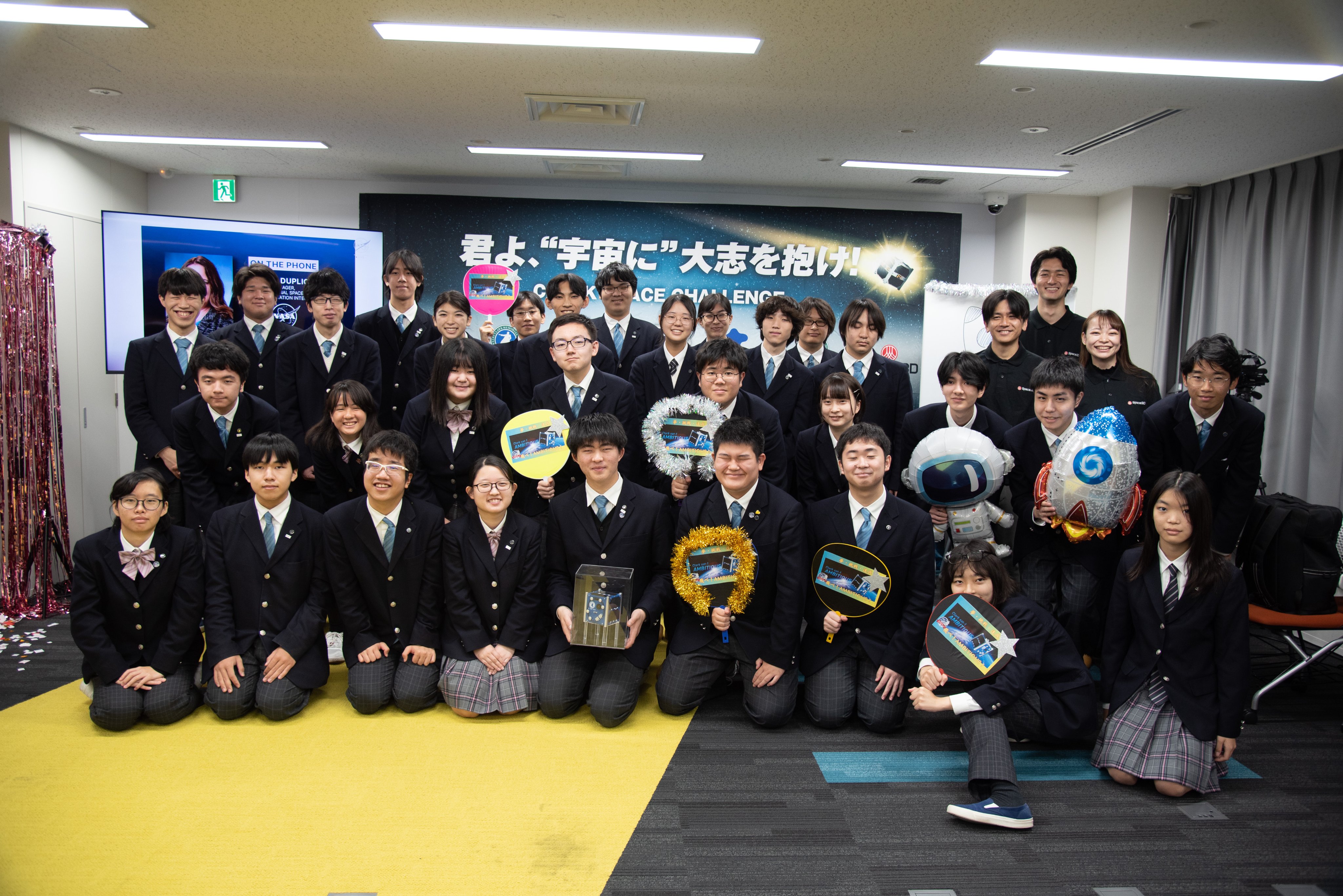
Students involved in the Clark sat-1 project

Students involved in the Clark sat-1 project

Clark sat-1 (AMBITIOUS), callsign JS1YLT, is scheduled to deploy from the International Space Station (ISS) on Monday, December 18, 2023, at 10:15 GMT. The IARU coordinated downlink is 435.130 MHz.

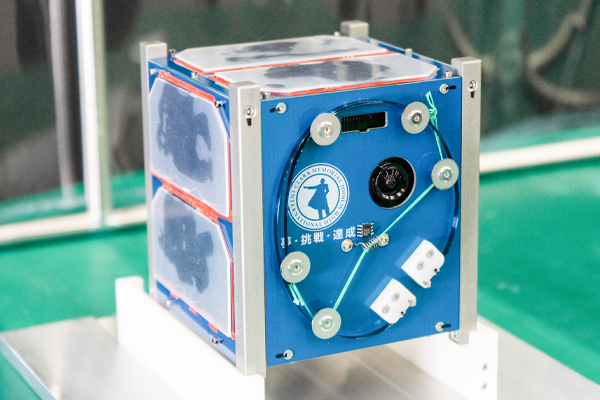
Clark sat-1 (AMBITIOUS) CubeSat

Clark sat-1 (AMBITIOUS) CubeSat

Clark sat-1 is a 1U size satellite is an educational project of students at the Clark Memorial International High School in Japan. As of November 30 approximately 50 students have been involved in the project and a number have an amateur radio license. The satellite will carry out these missions:

1. Optical Camera Mission
Take photos of the Earth and will downlink them in the 435 MHz band (GMSK, 4,800 bps). The downlink schedule will be posted on X (@sat1_AMBITIOUS).

2. Digi-talker Mission
Downlink 40 to 120 seconds long Digi-talker NBFM signal (Voice message or SSTV pictures in Robot 36 format recorded before launch) including the call sign and school name. communications.

In addition to the 4k8 AX25 GMSK telemetry and mission data there will be a CW beacon every two minutes.

Through these missions, the students will be able to improve their amateur radio and satellite communication skills.

The project will also serve as a model showcase for the development of amateur satellites by the younger generation, and stimulate the interest of the younger generation in amateur radio and satellite

We would appreciate if you will report the reception to “clarksat-1@clark.ed.jp” after receiving those signals.

Other information
1) Orbit injection schedule (may change)
Dec. 18th, 2023 (Monday)10:15(UTC)
refer : https://humans-in-space.jaxa.jp/en/biz-lab/news/detail/003559.html

2) Clark sat-1 website https://sp.clark.ed.jp/en/

3) IARU website https://iaru.amsat-uk.org/finished_detail.php?serialnum=852

4) X account (@sat1_AMBITIOUS) https://twitter.com/sat1_AMBITIOUS

5) NASA’s archive movie of the satellite’s launch to the ISS
Clark sat-1 was launched on November 10, 2023 (UTC) on a SpaceX Falcon 9 rocket from Kennedy Space Center (KSC), Florida, USA.
https://www.youtube.com/live/Hgj1byn08lM

Kosuke Narita, JS1YIZ

ISS SSTV 40th Anniversary of Ham Radio in Human Spaceflight

ARISS SSTV Event Dec-16 to Dec19 2023An ARISS Slow Scan TV (SSTV) event is scheduled from the International Space Station (ISS) December 16-19, 2023, on 145.800 MHz FM to celebrate the 40th anniversary of amateur radio in human spaceflight.

The event is slated to begin on Saturday, December 16, at 10:15 GMT for setup and operation and continue until Tuesday, December 19, ending at 18:00 GMT. These times are tentative and are subject to change due to crew availability.

Images will be downlinked at 145.800 MHz +/- 3 kHz for Doppler shift and the expected SSTV mode of operation is PD-120.

Radio enthusiasts participating in the event can post and view images on the ARISS SSTV Gallery at https://www.spaceflightsoftware.com/ARISS_SSTV/

The signal should be receivable even on a handheld with a 1/4 wave whip. If your rig has selectable FM filters try the wider filter for 25 kHz channel spacing.

You can get predictions for the ISS pass times at https://www.amsat.org/track/

ARISS SSTV Blog https://ariss-sstv.blogspot.com/

Useful SSTV info and links https://amsat-uk.org/beginners/iss-sstv/

ISS SSTV Verification Test – Oct 27-Nov 1

ISS SSTV image 5/12 received by Murray Hely ZL3MH January 31, 2015

The SSTV system in the Service Module will be activated to attempt to verify a replacement piece of hardware during the period of Oct 27 until Nov 01.

The system will be off around the required period of no transmissions during the planned EVA on Oct 31. Images will be transmitted on 145.800 MHz and in the typical PD120 format.

There are 2 windows for testing, separated by an EVA:
Fri Oct 27 at 12:15 GMT – Sun Oct 29 at 18:50 GMT
Tue Oct 31 at 10:05 GMT – Wed Nov 01 at 18:10 GMT

Your images can be posted to the Gallery at https://www.spaceflightsoftware.com/ARISS_SSTV/index.php

Since this is a test of replacement components of the system, there still may be unexpected outages or issues.

The signal should be receivable on a handheld with a 1/4 wave whip. If your rig has selectable FM filters try the wider filter for 25 kHz channel spacing.

You can get predictions for the ISS pass times at https://www.amsat.org/track/

ARISS SSTV Blog https://ariss-sstv.blogspot.com/

Useful SSTV info and links https://amsat-uk.org/beginners/iss-sstv/