Antarctica: DP0GVN QO-100 antenna destroyed, rebuild planned for 2022

AWI Neumayer Station III Antarctica - image from AMSAT-DL

AWI Neumayer Station III Antarctica – image from AMSAT-DL

AMSAT-DL reports the antenna used by DP0GVN in Antarctica for the QO-100 geostationary satellite amateur radio transponder is completely destroyed.

According to the Alfred-Wegener-Institute (AWI), a severe winter storm hit Atka Bay (Antarctica) at the end of last week. At Neumayer Station III, about 20 kilometres away, wind speeds of max. 94.9 knots (175.7 km/h) were recorded as a minute average during the night from 13 to 14 August. The strongest gust was 112 knots (207 km/h). This is by far the highest wind speed in recent years.

Unfortunately, the satellite antenna for the geostationary QO-100 amateur radio satellite was also completely destroyed during the storm, despite the weatherproof radome, so no school contacts with DP0GVN can take place until further notice. AMSAT-DL and AWI hope to erect a new antenna early next year, in particular to continue the very successful contacts with schools.

Source AMSAT-DL
https://amsat-dl.org/en/dp0gvn-antenna-destroyed-rebuilding-planned-2022/
https://twitter.com/amsatdl

GB2RS News available on QO-100 satellite from this Sunday

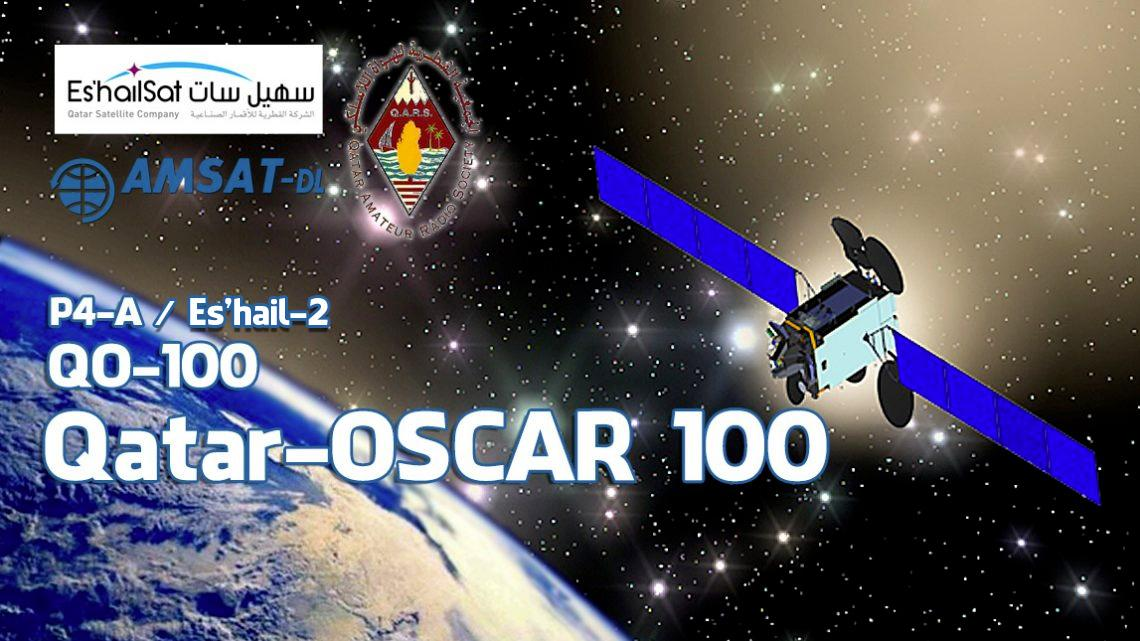
Es'hail-2 Qatar-OSCAR-100The RSGB has announced that their popular weekly GB2RS news broadcast will now be available via the QO-100 amateur radio transponder on the geostationary satellite Es’hail-2.

QO-100 provides continuous coverage from eastern Brazil to as far west as Thailand. There are two amateur transponders, one for Narrowband modes such as SSB and FT8 and the other for digital amateur television (DATV).

The RSGB website says:

“GB2RS can now also be heard via the QO-100 amateur radio satellite. The transmission is provided by Keith, GU6EFB at 0800UTC, using upper sideband on 10489.900 MHz, which is in the mixed-mode section of the narrowband transponder. QO-100 is a geostationary satellite with a footprint that covers Europe, Africa and India, so this news bulletin is a specially-adapted international version. The RSGB would like to thank AMSAT-DL for their kind cooperation in making this broadcast possible.”

If you do not have 10 GHz receive capability you can still listen to the broadcast on the AMSAT-UK and BATC WebSDR located at Goonhilly, see
https://eshail.batc.org.uk/nb/

RSGB https://rsgb.org/
https://twitter.com/theRSGB

QO-100 info https://amsat-uk.org/satellites/geo/eshail-2/

RSGB awards Louis Varney Cup to Dave Crump G8GKQ

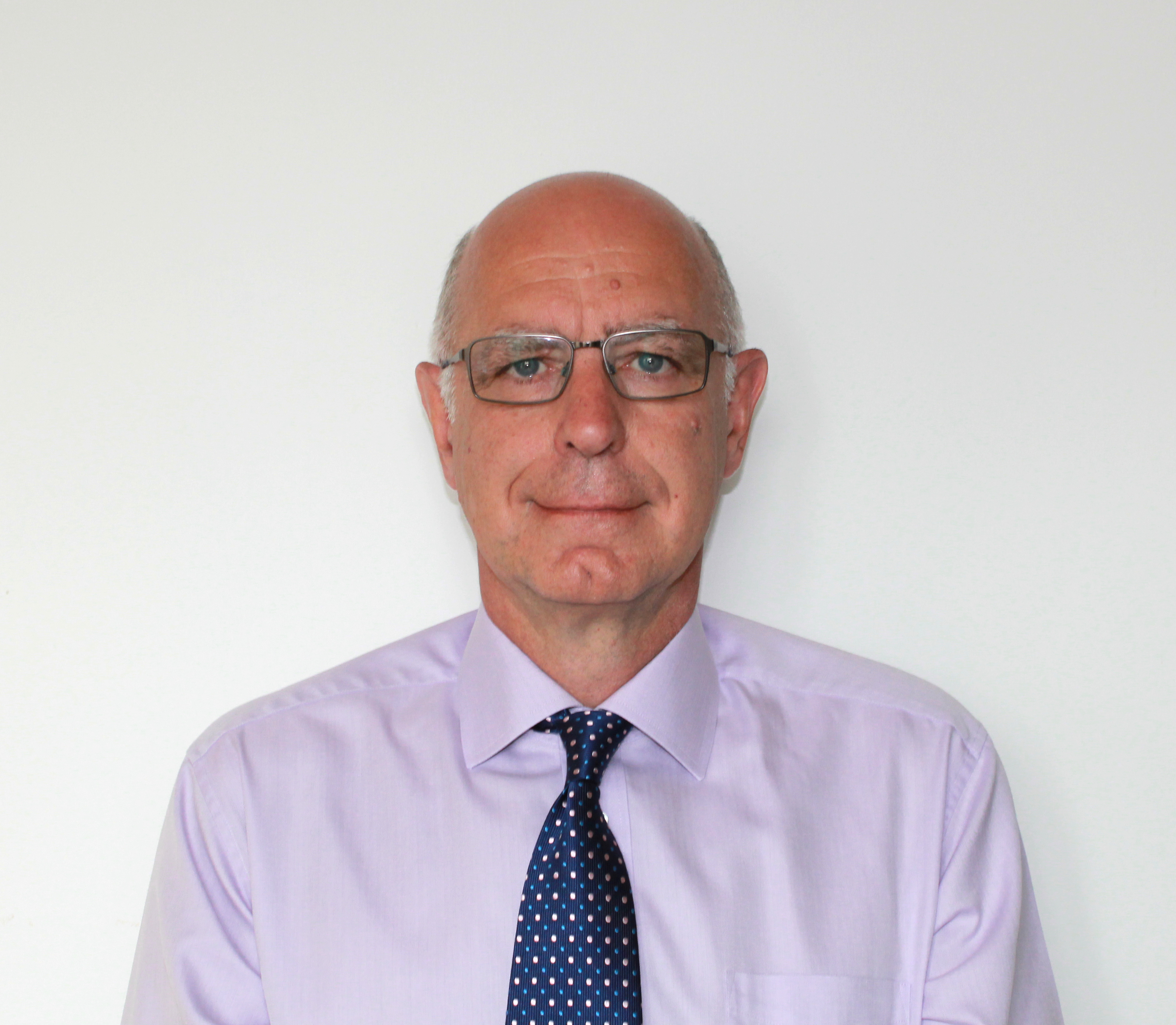
Dave Crump G8GKQ

Dave Crump G8GKQ

At the RSGB AGM held on Saturday, April 24, 2021 the Society awarded the Louis Varney Cup for advances in space communications to Dave Crump G8GKQ.

Dave accepts this award as Chair of the British Amateur Television Club. His leadership of the BATC community, both in the UK and overseas, has been instrumental in enabling the QO100 satellite wideband transponder to be fully utilized with many new DATV systems being developed since the launch of the spacecraft.

This award acknowledges the exciting and significant contributions made by many members of the BATC, both in terms of software and hardware.

RSGB 2021 Awards and Trophies
https://rsgb.org/main/agm-2021/2021-trophies-and-awards/

Info on the QO-100 Geostationary satellite transponders
https://amsat-uk.org/satellites/geo/eshail-2/
Spring issue of OSCAR News now available

Oscar News issue 233 March 2021 Front CoverE-members of AMSAT-UK can now download the March 2021 edition of OSCAR News, issue 233, here.

The paper edition edition will be sent to postal members and should arrive in the next 2-3 weeks.

In this issue:
• From the Secretary’s Keyboard
• Minutes of the Annual General Meeting
• Changes to AMSAT News Service Bulletins Distribution
• QO-100 Wideband Transponder – 2021 Operating Guidelines and Bandplan
• First QO-100 satellite contact from Indonesia
• AO73 – FUNcube-1 in Space
• A Gain and Power Upgrade for the AMSAT-UK Filtered S Band Driver Amplifier
• The current state of space debris
• CHESS – A cubesat constellation for atmospheric analysis of earth
• It is getting even busier up there!

AMSAT-UK FUNcube Mission Patch

AMSAT-UK FUNcube Mission Patch

Membership of AMSAT-UK is open to anyone who has an interest in amateur radio satellites or space activities, including the International Space Station (ISS).

E-members of AMSAT-UK are able to download the quarterly publication OSCAR News as a convenient PDF that can be read on laptops, tablets or smartphones anytime, anyplace, anywhere. Join as an E-member at Electronic (PDF) E-membership

PDF sample copy of “Oscar News” here.

Join AMSAT-UK using PayPal, Debit or Credit card at
http://shop.amsat-uk.org/

E-members can download their copies of OSCAR News here.

Contests on QO-100 allowed in time for Yuri Gagarin contest

AMSAT QO-100 NB Transponder BandplanOn April 4, AMSAT-DL announced the opening of the QO-100 NB satellite transponder to general contest operation in the upper mixed-mode range. This weekend (April 10-11) will see the Yuri Gagarin contest.

The contest area on the QO-100 geostationary satellite NB transponder for both CW and SSB is:

Uplink area 2400.370 – 2400.490 MHz
Downlink area 10489.870 – 10489.990 MHz

Of course, the usual QO-100 NB transponder guidelines also apply here. Therefore, the bandwidth should still be limited to 2.7 kHz and the transmitting power should be reduced to the necessary level, i.e. only as much power as necessary should be used.

Read the AMSAT-DL announcement at https://amsat-dl.org/en/contests-on-qo-100-allowed/

The Yuri Gagarin International DX Contest 2021 is dedicated to the memory of Yuri Gagarin, who realized the first human flight to space, on April 12, 1961.

It runs from 2100 GMT on April 10 until 2100 GMT on April 11, 2021, and the categories include:
• SAT Single operator – Satellite QSOs
• SAT-GS Single operator – Geostationary Satellite QSOs

Contest rules are at http://gc.qst.ru/en/section/32

First QO-100 satellite contact from Indonesia

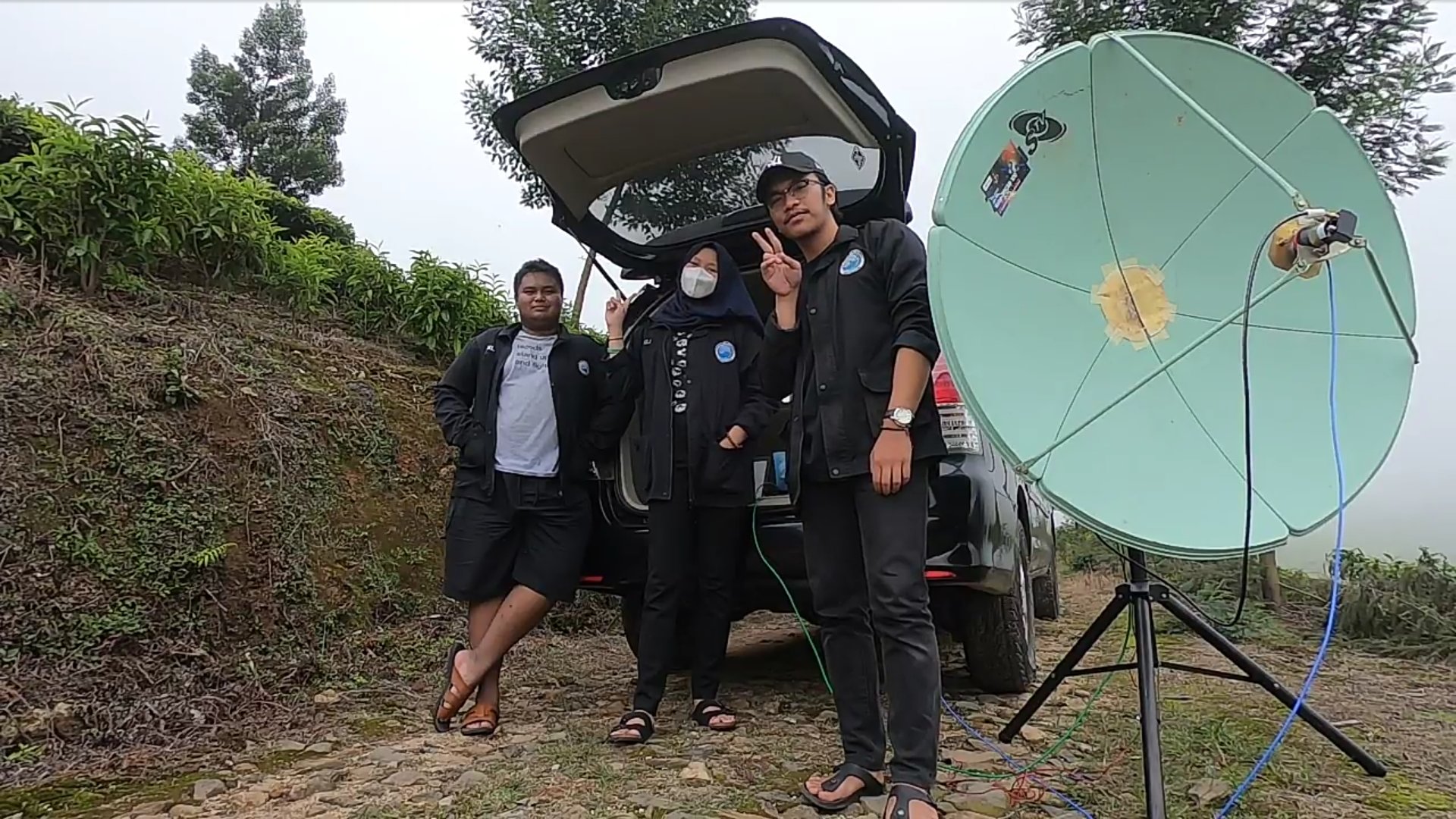
Team from the Telkom University Telecommunication Engineering Student Association

Team from the Telkom University Telecommunication Engineering Student Association

Indonesia’s national amateur radio society, ORARI, reports on the first contacts from Indonesia via the Qatar-Oscar-100 geostationary satellite transponder that took place on Thursday, January 27, 2021. Those involved were Farid Farhan YC1HVZ, Remco den Besten PA3FYM and Rene Stevens PE1CMO.

ORARI’s report says a team from the Telkom University Telecommunication Engineering Student Association (HMTT) led by Farid Farhan YC1HVZ, succeeded in conducting the first contact from Bukit Moko (Grid square OI33UD), Bandung, West Java with a satellite elevation of 0.8 degrees at an altitude of 1200m+.

Over several months Remco den Besten PA3FYM, and Rene Stevens PE1CMO had helped Farid Farham YC1HVZ get equipment operational for use on the QO-100 satellite which has an uplink in the 2.4 GHz band and a downlink in 10.45 GHz.

Farid’s location in Bandung is on the edge of the satellite’s footprint and he didn’t have a clear view to the horizon so Farid had to travel to a location in the hills of Java to get an unobstructed path to the satellite which had an elevation of just 0.8 degrees.

An attempt on Monday, January 24, was unfortunately unsuccessful and Farid YC1HVZ returned to the hill on Thursday, January 27, for a test with Remco PA3FYM and Rene PE1CMO. At about 07:40 GMT they heard the first signals from YC1HVZ but Farid couldn’t receive the QO-100 signal. It’s rainy season in Indonesia, which makes it much harder – the 10 GHz downlink has to get through the heavy rain showers which attenuate the signal.

After a few tests conditions improved and Farid heard his signal coming back from the satellite and by 07:50 GMT it was possible to make a two-way contact. Rene PE1CMO was the first to receive Farid and the first who Farid received but it was Remco PA3FYM who made the first complete contact exchanging signal report, call and locator, after which Rene has a QSO with Farid. Unfortunately the signal in Indonesia then dropped due to clouds and rain but later it came back and YC1HVZ made six more contacts. Farid hopes to try that location again or go to a location on the beach on the west coast of Java for a DXpedition.

Congratulations to Farid, Remco and Rene.

See a translation of the ORARI report at https://tinyurl.com/IndonesiaORARI

QO-100 information https://amsat-uk.org/satellites/geo/eshail-2/