Ofcom considers 10.475 GHz and 47 GHz bands for 5G

Ofcom-logo-col-tThe Amateur Satellite Service allocations at 10.475 GHz  and 47.0 GHz are being considered by Ofcom for 5G use .

Ofcom has published an update on spectrum bands above 6 GHz that might be suitable for next generation mobile, often referred to as ‘5G’ – the fifth generation of mobile services.

This document summarises responses from Ofcom’s earlier Call for Input in January and sets out their current views on bands and next steps. The update identifies several bands in different parts of the 6 – 100 GHz range, including 10.475-10.575 GHz and 47.000-47.200 GHz, they believe are candidates for further study for use in the UK.

Ofcom’s goal is to have globally harmonised bands for next generation mobile services and is currently engaging with other administrations around the world, ahead of these services becoming commercially available in the next five to six years.

Consideration of these bands will now be taken forward in forthcoming international discussions, including the World Radiocommunication Conference-15 (WRC-15) at which the scope of a future WRC-19 agenda item on bands above 6 GHz will be considered.

This does not guarantee these bands will be adopted in the future and Ofcom do not rule out considering other options ahead of WRC-15, pending further research and development.

Ofcom Above 6 GHz consultation page
http://stakeholders.ofcom.org.uk/consultations/above-6ghz/update-apr15/

Laying the foundations for next generation mobile services: Update on bands above 6 GHz
http://stakeholders.ofcom.org.uk/binaries/consultations/above-6ghz/5G_CFI_Update_and_Next_Steps.pdf

Quotient Associates – 5G Candidate Band Study
http://stakeholders.ofcom.org.uk/binaries/consultations/above-6ghz/qa-report.pdf

Frequencies of Es’hail 2 Geostationary Amateur Radio Transponders
https://amsat-uk.org/2014/09/21/eshail-2-ham-radio-transponders/
ACMA consults on removing 3400-3410 MHz

ACMA Logo 940x627The Australian regulator the ACMA is consulting on a number of changes to the amateur radio licence including removal of a key 3400 MHz allocation.

3400-3410 MHz is allocated to the Amateur Satellite Service in ITU Regions 2 and 3. It  is used by amateurs in many countries around the world for weak signal communications including moon bounce (EME).

The ACMA consultation closes on April 24.

The WIA announcement is at http://www.wia.org.au/newsevents/news/2015/20150314-2/

Consultation documents
http://www.acma.gov.au/theACMA/remaking-amateur-lcd-and-overseas-visiting-amateurs-class-licence

UK Microwave Group 3400 MHz page http://www.microwavers.org/3400mhz.htm

Satellite operation from Isle of Mull

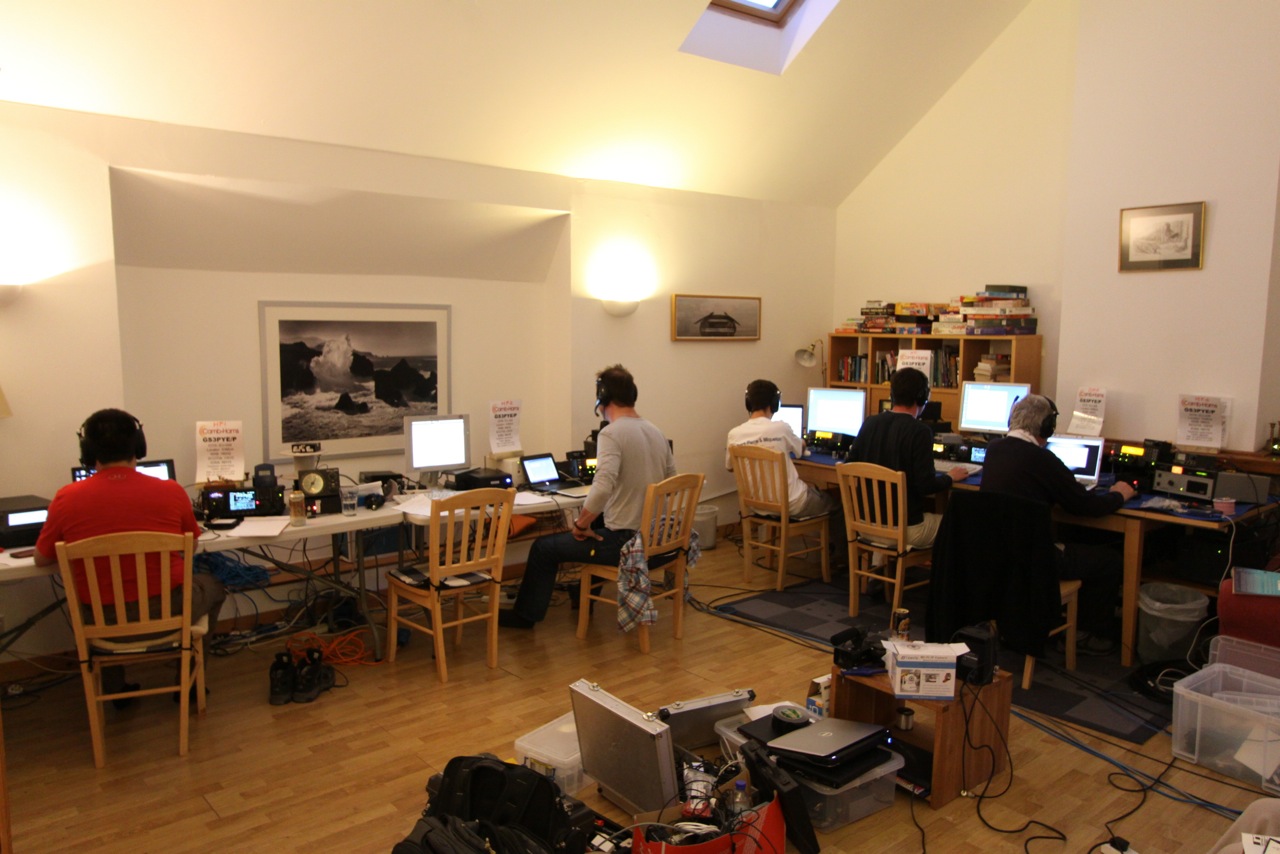
Camb-Hams operating from the Isle of Mull in 2012

Camb-Hams operating from the Isle of Mull in 2012

Ten members of the Camb-Hams are returning to Grasspoint IO76EJ on Mull (IOTA EU-008) from May 15-21, 2015 as GS3PYE/P.

They will be QRV with multiple stations on HF on 3.5-28MHz SSB, CW, RTTY and PSK with dipoles and verticals and up to 400W if necessary.

VHF activity will be on 50MHz, 70MHz and 144MHz, all bands QRO with sizeable antennas.

VHF will be mainly QRV using JT6m or ISCAT on 50MHz, FSK441 on 70MHz and FSK441 and JT65b (for EME) on 144MHz, but SSB and CW is also possible, especially in any sporadic E propagation openings. Other modes by agreement.

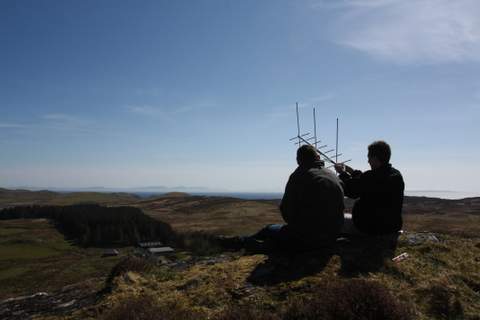
Hilltop satellite operation from Mull in 2012 with Peter 2E0SQL and Robert M0VFC - Image Credit Lawrence M0LCM

Hilltop satellite operation from Mull in 2012 with Peter 2E0SQL and Robert M0VFC – Image Credit Lawrence M0LCM

Satellite operations on 2m & 70cm will use an Icom IC-910 and X-Quad antennas mounted on a fully automatic AZ/EL tracking system. If internet connectivity allows, the VHF operators will monitor ON4KST Chat for terrestrial activity and N0UK JT65 chat for EME. You can submit your VHF sked requests online here: http://tiny.cc/gs3pyesked

The team will be QRV in the 80m CW CC event on the 21st and in the 144MHz contest on the 16th and 17th. They may do very short side trips to Iona and the Treshnish Islands and will announce these nearer the time on the website.

Please QSL only via OQRS on ClubLog for direct or bureau cards. Do not send any cards direct or via the bureau.

For the latest info see
http://dx.camb-hams.com/
http://twitter.com/g3pye
http://facebook.com/CambHams
http://youtube.com/CambHams

OSCAR News Issue 209

OSCAR News 209 front coverIssue 209 of the AMSAT-UK amateur radio satellite publication OSCAR News was released on March 17, 2015. E-members can download it here.

The paper edition is usually posted 2-3 weeks after publication of the electronic issue.

In this issue:
• 4M: A Moon Mission
• FUNcube-1/AO-73 Report
• Work FM Satellites with your HT!
• Controlled Impedance “Cheap” Antennas
• Prototype L/V transponder tested for ESEO mission
• Operation of the FUNcube-1 transponder — First European 73-on-73 award
• QB50P1/EO79 – FUNcube-3 Update
• 29 MHz Uplinks: A New Alternative
• ITU Symposium & Workshop on small satellite regulation and communication systems – Prague March 2015
• Fox-1 “In the Bag” (Updated)
• Debris opinion spotted in the internet
• The AlSat-Nano Project

AMSAT-UK FUNcube Mission Patch

AMSAT-UK FUNcube Mission Patch

Membership of AMSAT-UK is open to anyone who has an interest in amateur radio satellites or space activities, including the International Space Station (ISS).

E-members of AMSAT-UK are able to download OSCAR News as a convenient PDF that can be read on laptops, tablets or smartphones anytime, anyplace, anywhere. Join as an E-member at Electronic (PDF) E-membership

There are two rates for the paper edition to cover the extra postage costs:
UK
Rest of the World (Overseas)

PDF sample copy of “Oscar News” here.

Join AMSAT-UK using PayPal, Debit or Credit card at
http://shop.amsat.org.uk/shop/category_9/Join-Amsat-UK.html

E-members can download their copies of OSCAR News here.

UK CanSat 2015 Winner Announced

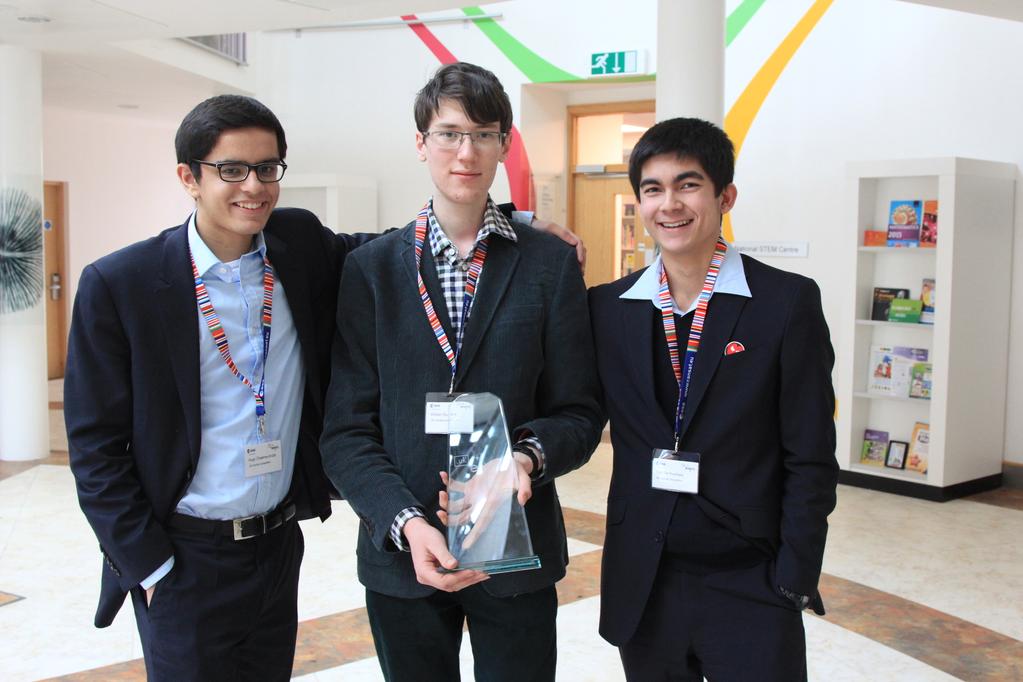
St Paul's Team Impulse - UK CanSat 2015 Winners - Image Credit ESERO-UK

St Paul’s Team Impulse – UK CanSat 2015 Winners – Image Credit ESERO-UK

ESERO-UK, the UK space education office, based in York, has announced the winner of the UK round of the International CanSat competition .

A CanSat is a student built simulated satellite with all the major subsystems including radio communications on 433/434 MHz and power fitting into a 350 ml soda can.

ESERO-UK organises the annual UK CanSat Competition for teams of secondary school students.

Winner of the Beginners’s category was the CANnoneers, from Tonbridge School in Kent. Runners up include: Spiritus, Putney High School, London; #getjezsrockettospace, from Allestree Woodlands School, Derby; Benenden CANSAT Avengers, from Benenden; Kent and Colossus, from St. Paul’s School, London.

“I highly recommend this wonderful opportunity to anyone who has the chance. Jump on it as it’s a unique opportunity to gain a lot of experience in a unique learning environment and will give a good amount of experience for anyone even considering a career in engineering! I enjoyed the experience and I’m sure the rest of my team did too.” Walter Tso, Outreach Manager and Electronics Assistant, CANnoneers.

Team Impulse, from St Paul’s School in London won the Advanced category of the competition. Runners up include: OSSO , from Oundle School, Northamptonshire; Heathrow Aeronautical Engineers, from Heathrow UTC, Greater London.

Team Impulse, from St Paul’s School in London, were announced overall winners of the 2015 CanSat competition and will go on to compete at the European CanSat Competition in Portugal.

“We are thrilled to be continuing the great British tradition of innovative engineering and are delighted to be representing St Paul’s and the UK at the CanSat final in Portugal.” Team Impulse, St Paul’s School.

Tom Lyons, ESERO Teacher Fellow said: “This year’s completion was a great success with all teams launching and recording data with their CanSats. We’re now looking forward to the 2016 competition and hoping to attract even more teams to get involved.”

Source ESERO-UK http://www.esero.org.uk/news/winner-of-uk-cansat-2015-announced

UK 434 MHz CanSat Competition https://amsat-uk.org/2015/03/13/434-mhz-cansat-competition/

Team Impulse St Paul’s School on Twitter https://twitter.com/TeamImpulseSPS

Young ham’s first contact is via OSCAR satellite

8-year-old radio amateur Hope Lea KM4IPF made her first contact just 45 minutes after her callsign appeared in the FCC database. The contact with Arthur K4YYL, via the FO-29 satellite, took place on March 11, 2015 at 2100 UT.

Her elder sister Faith WA4BBC and brother Zechariah WX4TVJ got to work K4YYL as well. They had both gained their US Technician licenses (equiv UK Foundation) in February and upgraded to the US General (equiv UK Intermediate) a couple of weeks later.

Hope’s younger sister is studying for her licence.

Watch KM4IPF Makes her FIRST amateur radio QSO!

FO-29 information https://amsat-uk.org/satellites/two-way-comms-satellites/fuji-oscar-29-jas-2/

John Heath G7HIA describes how to work FO-29 in this article https://amsat-uk.org/beginners/radcom-getting-started-on-satellites/