SatNOGS Win Hackaday Prize

SatNOGS - Satellite Networked Open Ground Station

SatNOGS – Satellite Networked Open Ground Station

The open-source amateur satellite tracking project SatNOGS has won the Hackaday 1st prize and an amateur radio SDR won 3rd prize.

Six months ago Hackaday challenged their readers to realize the future of open, connected devices, The prize was a ticket to travel into space. The winners were announced at the Electronica trade show in Munich on November 13.

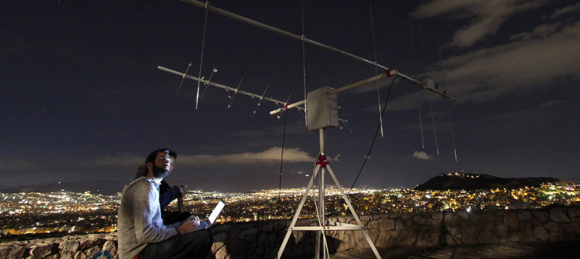
The SatNOGs project is a thrilling example of the benefits of a connected world. It opens up the use of satellite data to a much wider range of humanity by providing plans to build satellite tracking stations, and a protocol and framework to share the satellite data with those that cannot afford, or lack the skills to build their own tracking station. The hardware itself is based on readily available materials, commodity electronics, and just a bit of 3D printing.

Read the Hackaday article at
http://hackaday.com/2014/11/13/satnogs-wins-the-2014-hackaday-prize/

Ham Radio in Hackaday Prize Finals
https://amsat-uk.org/2014/11/08/ham-radio-in-hackaday-prize-finals/

SatNOGS – Satellite Networked Open Ground Station https://satnogs.org/

40 Years of Tracking OSCAR-7

Satrack showing OSCAR 7 (AO-7)

Satrack showing OSCAR 7 (AO-7)

William Leijenaar PE1RAH shows how people tracked satellites in the time before PC’s and AMSAT Argentina show how it’s done today.

ARRL OSCAR LocatorIn the 1974 radio amateurs tracked OSCAR 7 (AO-7) using an OSCARLOCATOR that comprised a polar great circle map and overheads for each satellite.

40 years later OSCAR 7 is still operational when in sunlight and thanks to William Leijenaar PE1RAH you can now download the map and overheads to make your very own OSCARLOCATOR. Read his article at
http://www.qsl.net/pe1rah/oscarlator.htm

AMSAT Argentina has recently released the online satellite tracker Satrack, use it at http://amsat.org.ar/sat.htm

The PC version can be downloaded from http://amsat.org.ar/Satrack.htm

Special Event Station for 40th Anniversary of OSCAR 7 Launch
https://amsat-uk.org/2014/10/31/special-event-station-for-40th-anniversary-of-oscar-7-launch/

OSCAR 7 in Space

OSCAR 7 in Space


Japanese Microsatellites Launched

Dnepr Launch November 21, 2013 - Credit ISC Kosmotras

A typical Dnepr launch – Credit ISC Kosmotras

On Thursday, November 6 at 07:35:49 UT a Dnepr rocket carrying the primary payload Asnaro-1 and four microsatellites was launched from Dombarovsky near Yasny. Kosmotras report all spacecraft have been inserted into their target orbits.

The four Japanese microsatellites are:
– ChubuSat-1 (Kinshachi-1) 437.485 MHz CW/AX.25 (Digipeater uplink 145.980 MHz)
– TSUBAME 437.250 MHz CW and 437.505 AX.25
– Hodoyoshi-1 467.674 MHz
– QSAT-EOS (Tsukushi) an AX.25 GMSK payload has been reported but the frequency is unknown.

Signals have been received from both ChubuSat-1 and TSUBAME.

The 50kg class ChubuSat-1 aims to
• Relay messages in amateur service (AX.25 packet radio Digipeater)
• Take pictures of particular site on Earth commanded from the Earth station with an optical camera and an Infra-red camera
• Try to take pictures of space debris commanded from the Earth station with above two cameras
It will have 3 axis stabilisation

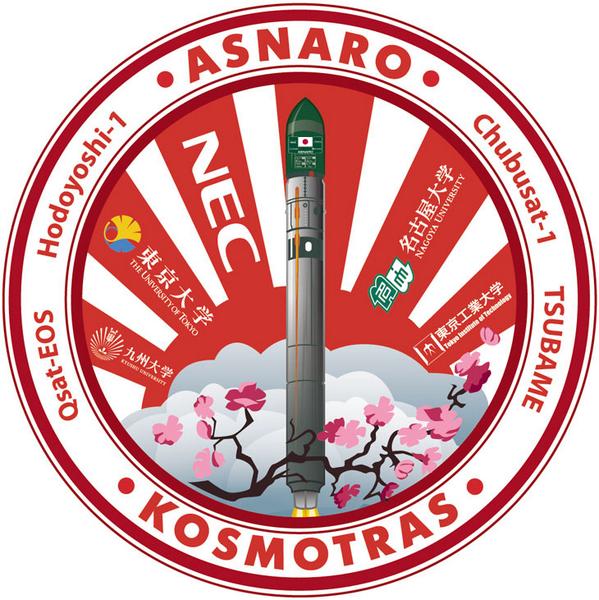
Asnaro Mission PatchThe 30kg class TSUBAME aims to
• Demonstrate satellite bus technology for 30kg-class microsatellite and verification of COTS components such as micro-processors, memory and Li-ion batteries in the space environment
• Verify of Control Moment Gyros developed by the Laboratory for Space Systems
• Demonstrate of high-speed attitude manoeuvres technology using Control Moment Gyros. Some sensor data acquisition experiments will be conducted at the same time in order to demonstrate applications of CMGs
• Demonstrate of SRLL communication protocol developed by Tokyo Institute of Technology and high-speed GMSK data downlink
• Collect data through internet with the aid of radio amateurs all over the world

TSUBAME TLE http://www.dk3wn.info/p/?p=51785

Kosmotras announcement http://www.kosmotras.ru/en/news/155/

Satellite info and launch video http://russianspaceweb.com/dnepr_asnaro.html

ChubuSat-1 Slides http://www.frontier.phys.nagoya-u.ac.jp/chubusat/ChubuSat-20130311.pdf

UHF Satellite frequencies http://www.satellitenwelt.de/freqlisten/SatFreq-UHF.txt

IARU Satellite Frequency Coordination Panel Status Pages http://www.amsat.org.uk/iaru

IARU Region 1 Approve Youth Budget and Satellite Allocation

Lisa Leenders PA2LS

Lisa Leenders PA2LS

The minutes of the Final Plenary, 23rd IARU Region 1 General Conference have been released.

The Conference approved these Youth budgets:
a. Youth Projects – 25,000 Swiss Francs for the years 2015, 2016 and 2017
b. Youth Working Group – 2,000 Swiss Francs for the years 2015, 2016 and 2017
One Swiss Franc is roughly equivalent to £0.65, $1.04, €0.83.

It was agreed to set up a Youth Working Group which will be Chaired for three years by Lisa Leenders, PA2LS.

A new satellite Space-to-Earth (downlink) band from 144.000 – 144.025 MHz with a maximum signal bandwidth of 2.7 kHz was agreed. This allocation is now available in all three IARU regions.

Read the minutes at
http://rsgb.org/main/files/2013/05/VA14_IARU-R1_Conference-Plenary-minutes.pdf

Additional information is in annexes/minutes which are awaiting release, check
http://rsgb.org/main/about-us/committees/spectrum-forum/sf-iaru-matters/sf-iaru-r1-conference/

Special Event Station for 40th Anniversary of OSCAR 7 Launch

OSCAR 7 in Space

OSCAR 7 in Space

Patrick Stoddard WD9EWK/VA7EWK has secured the special call sign W7O (Whiskey Seven Oscar) for use in commemorating the 40th anniversary of the launch of OSCAR 7 on November 15, 1974.

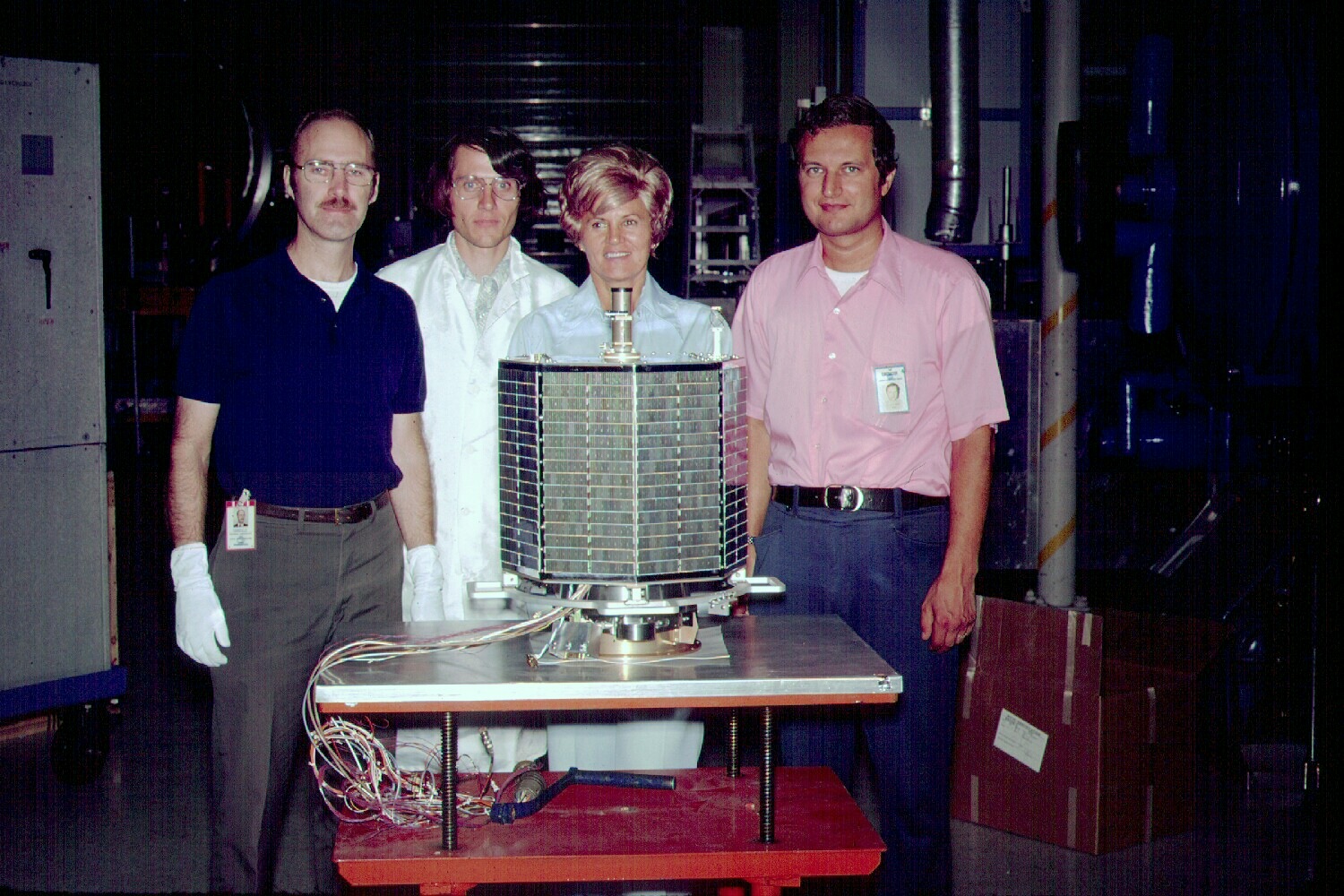
OSCAR 7 in anechoic chamber with Perry Klein K3JTE and Jan King K8VTR/W3GEY - Credit Dick Daniels W4PUJ

OSCAR 7 in anechoic chamber with Perry Klein K3JTE and Jan King K8VTR/W3GEY – Credit Dick Daniels W4PUJ

On the AMSAT Bulletin Board he writes:

I plan on having this call on the air between November 15-24 2014, working satellites and possibly other bands.  I will work satellite passes from Arizona, including AO-7 passes, and hope to recruit a small group of operators who can work other passes that cover eastern North America along with other places I can’t work from here (Europe, North Africa, South America).  I may also try to get some operators working HF with this call.

I will handle the QSL requests for W7O during this period. I am thinking of incorporating the original QSL card design AMSAT used to confirm AO-7 reception reports from the 1970s in the W7O card.

The QSL cards will be printed after the W7O activity wraps up.  I will also upload W7O QSOs to ARRL’s Logbook of the World system.

Please contact me directly if you have any questions related to this operation, or if you are willing to operate on satellites and/or HF as W7O during this 10-day period.

Thanks in advance, and 73!

Patrick WD9EWK/VA7EWK http://www.wd9ewk.net/
OSCAR 7 with Dick Daniels W4PUJ, Jan King K8VTR-W3GEY, Marie Marr and Perry Klein K3JTE

OSCAR 7 with Dick Daniels W4PUJ, Jan King K8VTR-W3GEY, Marie Marr and Perry Klein K3JTE

The amateur radio satellite AMSAT-OSCAR 7 was launched by a Delta rocket from Vandenberg Air Force Base on November 15, 1974 and provided many years of service until it went silent from battery failure in mid 1981.

For 21 years nothing more was heard until June 21, 2002 when Pat Gowen G3IOR came across a beacon sending slow 8 -10 wpm CW on 145.973.8 MHz. It sounded like old OSCAR satellite telemetry, it had the familiar HI HI followed by a string of numbers in groups of three. After monitoring by many radio amateurs it turned out to be OSCAR-7, and it seemed to have come back from the dead.

Pat’s email to the AMSAT Bulletin Board announcing his discovery can be seen at
http://www.amsat.org/amsat/archive/amsat-bb/200206/msg00525.html
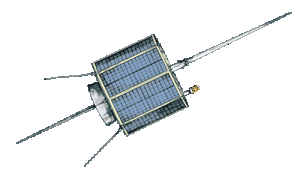
OSCAR 7 amateur radio satelliteIt is believed that in 1981 the batteries failed short-circuit, however, in 2002 they became open-circuit enabling the satellite to run again from the solar panels. Since that day OSCAR 7 has been operational when in sunlight and provided radio amateurs with many long distance (DX) SSB/CW contacts.

Remember when working OSCAR 7 use the least uplink power possible to minimize your downlink power usage, and maximize the number of simultaneous contacts supported in the passband.

A BBC News report Radio ham finds lost satellite about the reception of OSCAR 7 by Dave Rowan G4CUO can be seen at http://news.bbc.co.uk/1/hi/england/2149381.stm

A collection of photos by Dick Daniels W4PUJ taken during the construction, test and launch of the AMSAT-OSCAR 7 spacecraft in 1973 and 1974 can be viewed at http://n4hy.smugmug.com/AMSAT/AMSAT-Oscar-7

Oscar 7 Information http://ww2.amsat.org/?page_id=1031

Video of 2E0HTS Working the OSCAR-7 Satellite https://amsat-uk.org/2012/01/26/2e0hts-working-the-oscar-7-satellite/

2010 video of the then AO-7 distance record http://www.southgatearc.org/news/january2010/new_ao7_record.htm

‘Getting started on amateur radio satellites’ by G7HIA published in the March 2007 RadCom. Download the article at https://amsat-uk.org/wp-content/uploads/2011/05/satellites_radcom_mar07.pdf
Copyright 2007 Radio Society of Great Britain. For personal use only – no copying, reprinting or distribution without written permission from the RSGB.

Join the AMSAT Bulletin Board AMSAT-BB http://amsat.org/mailman/listinfo
 

Bandplan released for 146 MHz

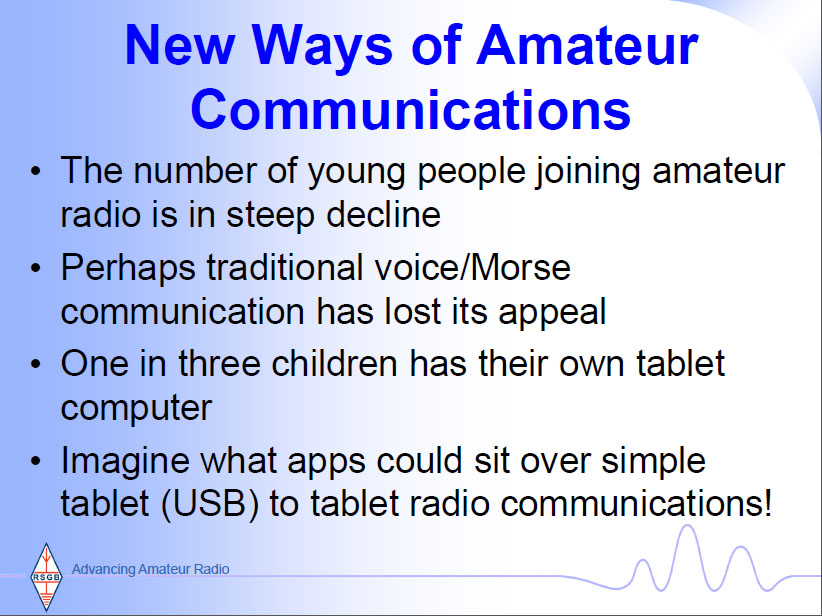
New Ways of Amateur CommunicationsFriday, October 31 is the formal start of the 146-147 MHz ‘experiment’ for Full licence holders with NoV’s and the RSGB has released a bandplan.

The bandplan has an allocation for digital modes with up to 500 kHz bandwidth and 12.5 kHz channels for narrowband digital modes including digital voice.

Users of wideband modes may need to use bandwidth tailoring to ensure no RF extends into the weak signal satellite segment at 145.8-146.0 MHz (the Lunar 4M JT65B beacon uses 145.980 MHz) or goes above 147.0 (or 146.93750 where applicable).

146 MHz Spectral CompatibilityDownload the bandplan from http://rsgb.org/main/files/2014/10/146-147-Initial-Bandplan.pdf

Some amateurs will be active in the early hours of Friday with the digital voice mode FreeDV which uses Codec2, download FreeDV from http://freedv.org/tiki-index.php

Apply now for your NoV at http://rsgb.org/main/operating/licensing-novs-visitors/online-nov-application/146mhz-147mhz-nov/

146-147 MHz Usage and Band Planning FAQ
https://amsat-uk.org/2014/10/28/146-147-mhz-usage-and-band-planning-faqs/

RSGB 146 MHz Information
http://rsgb.org/main/operating/band-plans/vhf-uhf/vhf-spectrum-release/