ESA announce six CubeSats chosen for Phase 1

AAUSAT 4 CubeSat

AAUSAT 4 CubeSat

Six student teams and their supervisors have gathered at ESA’s ESTEC centre in The Netherlands for the kick-off of the new Fly Your Satellite! Programme under the ESA Education Office.

On June 26-28, ESA experts will introduce the objectives and present the activities to be performed during the first phase of the programme.

In January, ESA’s Education Office announced the ‘Fly Your Satellite!’ initiative. This is aimed at offering student teams the opportunity to become familiar with good engineering practice to build and perform satellite testing in order to increase the chances of a successful mission. The 2013 edition of the programme is however only focussing on testing selected university-built satellites that are already at an advanced stage of development.

Launch of Vega VV01

Launch of Vega VV01

‘Fly Your Satellite!’ builds on the success of the ‘CubeSats for the Vega Maiden Flight’ pilot programme. This culminated in 2012 with the launch of seven student-built CubeSats on the first flight of the new ESA Vega launcher.

The focus of the kick-off meeting will consist of coordinating the activity to be performed during the first phase of Fly Your Satellite! enabling the teams to complete the construction of their satellite. This will include extensive satellite testing in ambient conditions under the supervision of ESA specialists who will decide which satellites should participate in the next phase of the programme.

The second phase will see the satellites tested in the simulated conditions of outer space and in those the satellites will experience at launch. These will include vibration and thermal-vacuum tests.

ConSat-1 engineering model

ConSat-1 engineering model

The six CubeSats chosen for Phase 1 are:

Robusta-1B from France will validate a radiation test methodology for specific transistor components.

Oufti-1 from Belgium will demonstrate the D-STAR digital communication protocol and validate high-efficiency solar cells.

ConSat-1 from Canada will analyse radiation characteristics in the South-Atlantic Anomaly, and test technology payloads.

e-st@r-II from Italy will test an Active-Attitude Determination Control System.

AAUSAT4 from Denmark will test an improved version of student built AIS (Automated Identification System) receivers.

Politech.1 from Spain will carry a student built C-band communication system, a “GEODEYE” Earth Observation camera for academic purposes, and solar wind experiments.

Read the full ESA article at http://www.esa.int/Education/ESA_and_student_teams_kick-off_Fly_Your_Satellite

Fly Your Satellite! initiative http://www.esa.int/Education/Students_are_you_ready_to_fly_your_satellites_in_space

Open access to latest research output from Surrey Space Centre

Surrey Space Centre University of Surrey, Guildford

Surrey Space Centre
University of Surrey, Guildford

The Surrey Space Centre (SSC) Research blog is dedicated to improving access to the cutting edge research output of the Surrey Space Centre. The standard process for disseminating research output through conference and journal publication is a lengthy and cumbersome process.

The blog aims to provide open access to SSC research output by sharing pre-print copies of  publications. Each article is presented in its own, individual post, and SSC encourage visitors to comment and provide feedback on their work. This two-way process of sharing will provide their research staff with robust feedback on the work, complimenting reviewer feedback. In return, visitors are able to access our latest research accomplishments,  many months before becoming accessible through journals or conference proceedings.

Situated in Guildford, UK, the Surrey Space Centre is a forms part of the Department of Electronics Engineering at the University of Surrey. Research is focused on many areas of space technology, including antenna and RF systems, astrodynamics, autonomy and AI, control systems, on-board data handling, environments and instrumentation, propulsion and robotics. Their website can be found here for further details.

Surrey Space Centre Research blog http://surreyspacecentre.wordpress.com/

AMSAT Online Ham Radio Satellite Pass Predictions Now Available

AMSAT Online Satellite Pass PredictionsThe AMSAT online amateur radio satellite pass prediction tool is once again available.

You can use the predictor at
http://www.amsat.org/amsat-new/tools/predict/

50 years of Women in Space

Astronuat Sally Ride - Image Credit NASA

Astronuat Sally Ride – Image Credit NASA

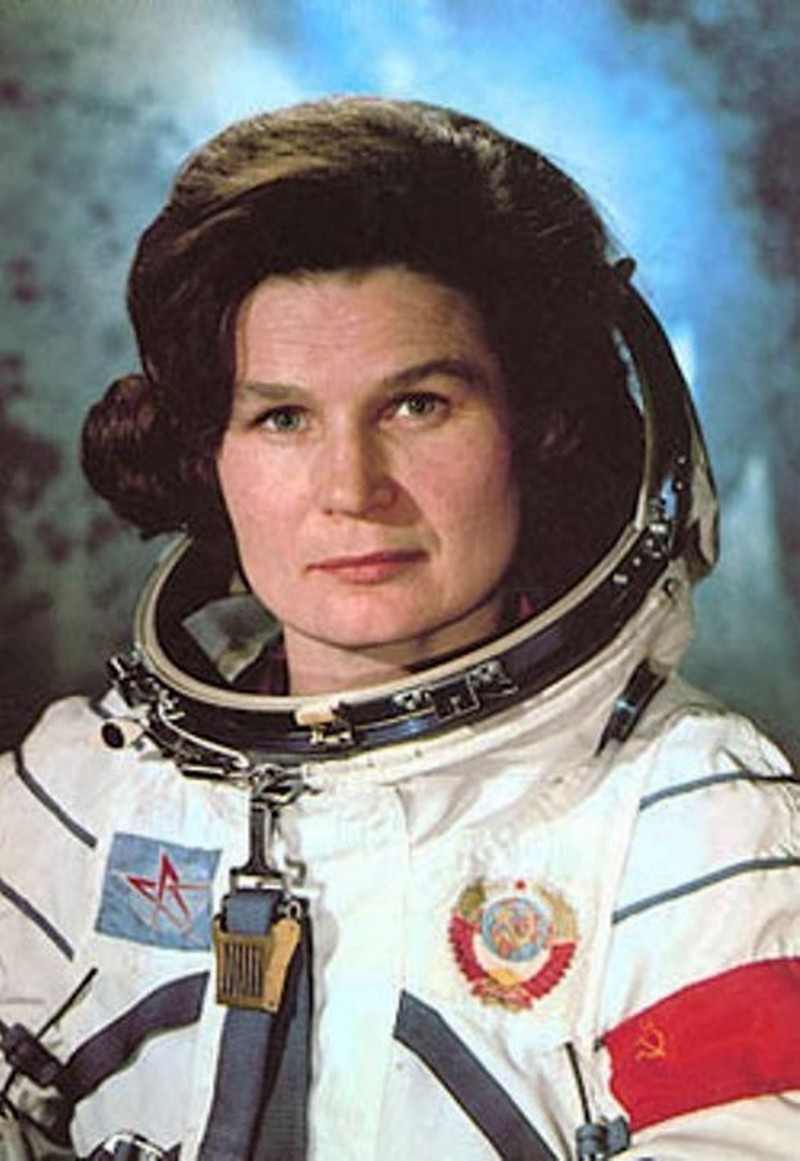
Fifty years ago, on June 16, 1963, Soviet cosmonaut Valentina Tereshkova became the first woman in space, a flight undertaken for the propaganda purpose of illustrating the equality of women in the USSR.

Valentina Tereshkova First Woman in Space - Image Credit RSC Energia

Valentina Tereshkova First Woman in Space – Image Credit RSC Energia

Due to the political and social attitudes of the time, it would be another 20 years before the first US female astronaut, Dr. Sally Ride, would fly on the Space Shuttle. Unlike Tereshkova’s one off-flight, though, Dr Ride was the vanguard of a wave of female astronauts, not only from the United States, who would participate in space activities on the same footing as their male colleagues-as Mission Specialists, Pilots, Shuttle Commanders and Commanders of the International Space Station.

On Sunday June 16, 2.00pm – 3.00pm, to celebrate the 50th anniversary of the first spaceflight by a woman, Kerrie Dougherty, the Powerhouse museum’s Curator of Space Technology, will present an overview of the history of women in space, from the selection of Valentina Tereshkova and the first group of Soviet female cosmonauts to the participation of women as astronauts in space programs around the world today.

The presentation is free with Museum entry. Members no need to book, but should RSVP to play@phm.gov.au

Further information at http://www.powerhousemuseum.com/talks/space.php

BBC Radio 4 will broadcast ‘The First Woman in Space’ on Saturday, June 8 at 10:30 BST. Listen on the web at http://www.bbc.co.uk/programmes/b026x9mr

First UK astronaut Helen Sharman GB1MIR
https://amsat-uk.org/about/history/first-uk-astronaut-helen-sharman-gb1mir/

Gathering of Female Astronauts and Former Johnson Space Center Director
https://amsat-uk.org/2013/03/12/gathering-of-female-astronauts-and-former-johnson-space-center-director/

SpaceKate: The time we took on Unilever – and won!
http://spacekate.com/2013/the-time-we-took-on-unliever-and-won/

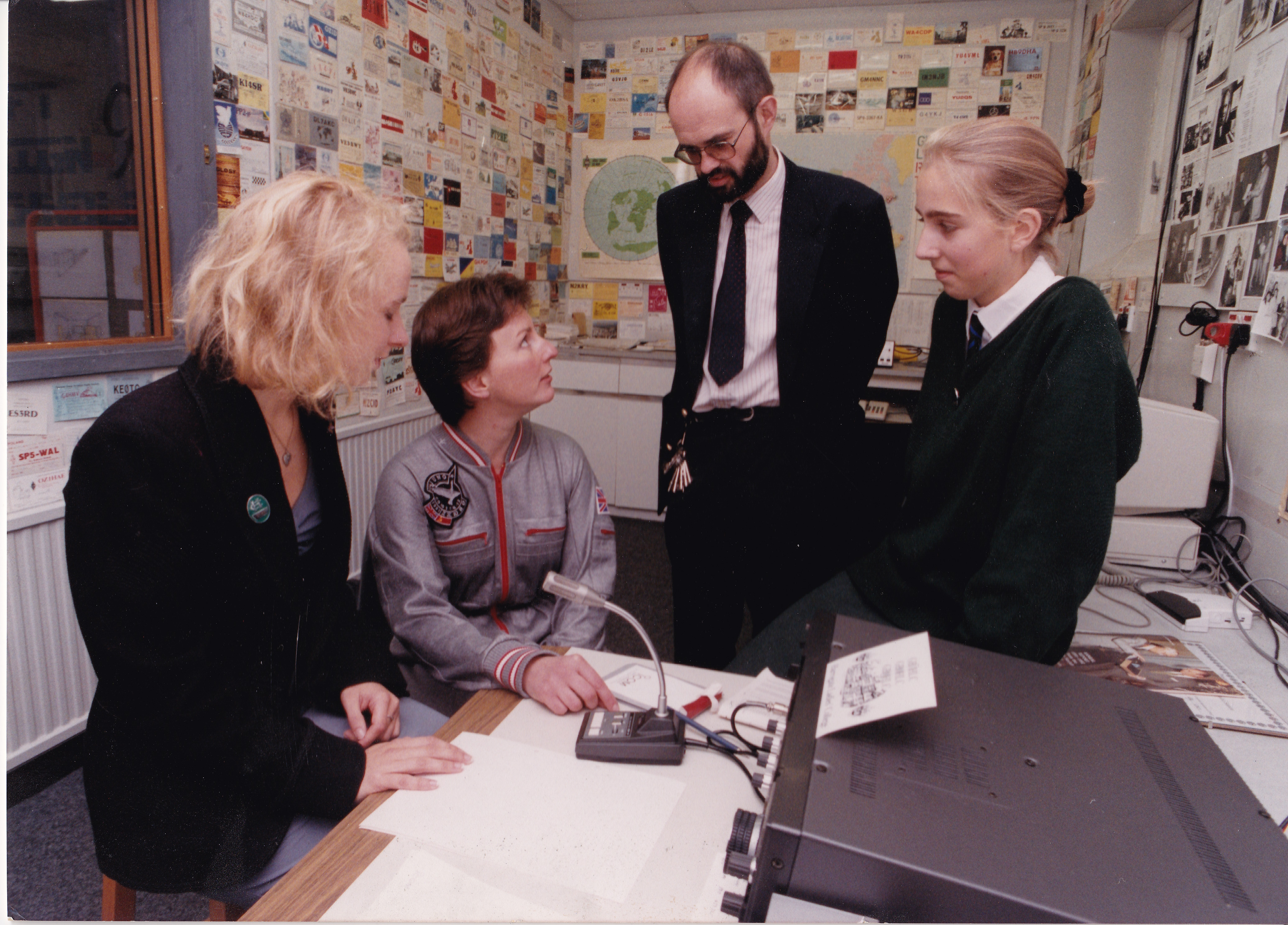
After her return to Earth the first UK astronaut Helen Sharman visited the Harrogate Ladies' College club station G0HCA From left to right are Anna-Karin G7IRR, Helen Sharman GB1MIR, Richard Horton G3XWH and Katy G7NST

After her return to Earth the first UK astronaut Helen Sharman visited
the Harrogate Ladies’ College club station G0HCA
From left to right Anna-Karin G7IRR, Helen Sharman GB1MIR, Richard Horton G3XWH, Katy G7NST

UK’s SpaceKate Wins ‘Most Inspiring App’ – International Space Apps Challenge

SpaceKate T-10 AppThe App produced by broadcast journalist Kate Arkless Gray a.k.a. SpaceKate has won the Most Inspiring App category of the International Space Apps Challange.

Radio amateur and former ISS Commander and Chris Hadfield VA3OOG said about the App “Cool idea! A 10-minute alarm would be perfect”.

The app was initially produced over a busy weekend at Space Apps London and consequently won a place in the international judging. The small team, which consists of Kate Arkless Gray, João Neves, Ketan Majmudar and Dario Lofish have continued to develop the app and provisionally hope to launch it in July. Getting the app into the hands of the astronauts may take a little more time, but that is the aim.

Read more about SpaceKate’s T-10 App
http://spacekate.com/2013/t-10-wins-most-inspiring-app-international-space-apps-challenge/

SpaceKate on Twitter https://twitter.com/SpaceKate

SpaceKate on Facebook https://www.facebook.com/pages/SpaceKate/116068865117993

SpaceKate: The time we took on Unilever – and won!
http://spacekate.com/2013/the-time-we-took-on-unliever-and-won/

International Space Apps Challange http://spaceappschallenge.org/

Small Satellite Workshop features Ham Radio

India Chennai - Small Satellite WorkshopA Small Satellite Developer Workshop featuring Amateur Radio is taking place July 8-13 in Chennai, India.

The amateur radio segment is being conducted by the National Institute of Amateur Radio (NIAR).

Other topics include
• Software Designed Receiver
• Basics of Spacecraft Technology
• Team Design Project

Further details at http://www.spaceschool.co.in/

Dhruva Space on Facebook https://www.facebook.com/DhruvaSpace