SpaceX Dragon to Blast-Off to ISS

Classroom preperation for the student spaceflight experiments program SSEP

On Tuesday, May 22 at 07:44 UT SpaceX’s Dragon hopes to transport the student payload Aquarius on SSEP Mission 1 to the International Space Station (ISS).

The set of SSEP Mission 1 experiments, called Aquarius, was originally slated to fly aboard the Soyuz 30. But in an interesting twist of fate, the experiments were re-manifested on the maiden voyage of the SpaceX Dragon to the ISS. Aquarius not only becomes part of a historic first but also allows the space station to remain an out-of-this-world platform to engage students in STEM — science, technology, engineering and mathematics.

The SpaceX Dragon launch will be broadcast live on the Internet details at
http://www.nasa.gov/nasatv

NASA – Space Station — Here We Come!
http://www.nasa.gov/audience/foreducators/station-here-we-come.html

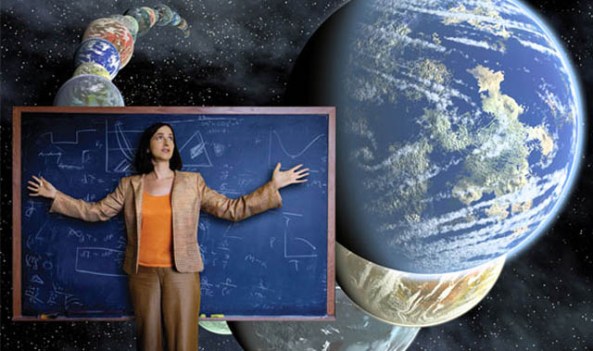
How a Pocket-Size Satellite Could Find Another Earth

Radio Amateur Sara Seager KB1WTW - Image Credit PlanetQuest

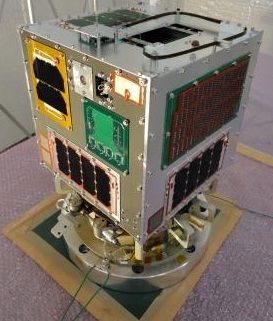
Time Magazine reports that unlike the massive NASA Kepler probe the next mission to search for new planets will be a tiny CubeSat called ExoplanetSat.

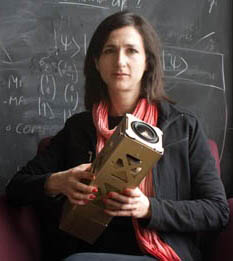
Sara Seager KB1WTW with ExoplanetSat

Sara Seager KB1WTW with model of ExoplanetSat - Image Credit MIT

Time says: What makes ExoplanetSat even more un-NASA-like is that it began as a class project — although admittedly, the class was at MIT. It was a design-and-build course, which the university’s engineering students have to take in order to graduate. In a recent semester, the class was co-taught by Sara Seager [KB1WTW] an astrophysicist who has done groundbreaking research studying how the atmospheres of planets orbiting distant stars might look like from earthly telescopes. Seager recruited five science undergrads to join her engineers, on the theory that out in the real world, they’d eventually have to work with engineers anyway.

The group lead by Sara KB1WTW is developing a prototype ExoplanetSat capable of monitoring a single, bright, sun-like star for two years. Planned to launch late 2012 or 2013 it is hoped it will open the gates for ExoplanetSat interest and funding. Once the funding doors are opened, then the fleet of ExoplanetSats can be launched. The fleet may contain as many as a hundred of these small satellites, each focused on its own star.

In a 2011 visit to Cambridge, UK, Sara said “The reason why we’re excited is because we think that this is a really huge thing. Hundreds and thousands of years from now, people will look back and ask, what are the significant accomplishments of our society in the early twenty-first century? One of them will be that we were the first to discover other worlds and other worlds that might be like Earth. When you think back four hundred years, what do you remember? You think about Christopher Columbus and Lewis and Clark. It’s the exploration—finding things that were new to our culture. And that’s why we’re excited.

Read the Times Magazine article at http://www.time.com/time/health/article/0,8599,2114158,00.html

MIT paper on ExoplanetSat http://dspace.mit.edu/openaccess-disseminate/1721.1/61644

Presentation Slides http://mstl.atl.calpoly.edu/~bklofas/Presentations/DevelopersWorkshop2011/5_Smith_ExoplanetSat.pdf

PlanetQuest http://planetquest.jpl.nasa.gov/

Vote For Your Favorite Space App

Global voting started yesterday, May 9, for the International Space Apps Challenge! The Space Apps Challenge fosters innovation by providing a platform for citizens from around the world to work together to solve current challenges relevant to both space exploration and social need. The Innovation Endeavors and Talenthouse community of investors, entrepreneurs and advisors are here to support and celebrate these teams and their innovations to the fifty challenges – and invite you to vote for your favorite App. The final winners will be determined with your votes and along with an internationally recognized jury of investors and entrepreneurs from Innovation Endeavors.

Among the many Apps is one that visualizes near-real time aurora data, a solution to visualize Kepler data, such as changing star intensity, using an Arduino and a prototype web app aimed at school children that makes the Kepler exoplanet data more accessible by displayingᅠit in a visual and fun way, making comparisons with each planetᅠto our own.

Voting closes May 15, see the contenders and cast your vote at
http://open.nasa.gov/blog/2012/05/09/spaceapps-global-judging-open-now/

2012 AMSAT Forum at Dayton – Saturday May 19


The AMSAT Forum at the 2012 Dayton Hamvention will be on Saturday
morning May 19 from 11:15 to 13:30 in Forum Room 5. The moderator
will be Alan Biddle, WA4SCA

The speakers will be:

Barry Baines, WD4ASW;  AMSAT Status Report
------------------------------------------
Barry, AMSAT President, will highlight recent activities within
AMSAT, and discuss some of the challenges and accomplishments
of the organization.

Mark Hammond, N8MH;  AMSAT Educational Relationships
----------------------------------------------------
Mark, AMSAT VP of Educational Relationships, will discuss his
education activities.

Gould Smith, WA4SXM;  ARISSat-1 Operation in Space
--------------------------------------------------
Gould, AMSAT Project Manager for ARISSat-1, will talk about its
operation aboard the ISS, the  deployment and operations this past
fall and winter.

Tony Monteiro, AA2TX;  Project Fox - AMSAT's First CubeSat
----------------------------------------------------------
Tony, AMSAT Engineering VP, will discuss the design and status
of Project-FOX.

Howard Long, G6LVB; "FUN in Space for All!"
-------------------------------------------
Howard, AMSAT-UK Committee, will discuss the FUNcube project
which will enable amateurs and students to have FUN in space.
For amateurs, the spacecraft will carry conventional UHF to VHF
linear transponders. For students of all ages, the same space-
craft will provide strong telemetry transmissions which they can
easily receive at schools in support of science, technology,
engineering, and math subjects (STEM).

[ANS thanks Gould Smith, WA4SXM and Alan Biddle, WA4SCA for the
 above information]

India's Largest Ever Rocket – GSLV MK3

It’s tipped to be India’s heaviest rocket till date weighing 640 tons, it’s also taken 10 years to develop and will hopefully launch Indian astronauts into space. That’s the Indian Space Research Organisation (ISRO) designed and developed GSLV MK3 that has cost Rs 2500 crores and will put India on the multimillion dollar commercial launch market.

Watch ISROs GSLV MK3 – First Look

India’s Largest Ever Rocket – GSLV MK3

It’s tipped to be India’s heaviest rocket till date weighing 640 tons, it’s also taken 10 years to develop and will hopefully launch Indian astronauts into space. That’s the Indian Space Research Organisation (ISRO) designed and developed GSLV MK3 that has cost Rs 2500 crores and will put India on the multimillion dollar commercial launch market.

Watch ISROs GSLV MK3 – First Look