AMSAT-UK Net Recorded via 20 km WiFi Link

AMSAT-UK Net Recorded via 20 km WiFi Link

Simon Brown HB9DRV in Switzerland has made available a recording of Sunday’s AMSAT-UK 80m net that he made using a remote receiver in Poole, Dorset. What is remarkable about this recording is that a 20 km long experimental 2.4 GHz WiFi link was used at the Dorset end.

The AMSAT-UK net is held every Sunday morning at 10am local time on a nominal frequency of 3.780 MHz. Due to interference the net may move either side of that frequency so tune around. Newcomers are most welcome to call-in.

Listen to the AMSAT-UK Net recorded Sunday, March 4th, 2012. Due to the experimental nature of the 20 km WiFi link there are a few breaks in the recording.

http://www.ham-radio.ch/kits/sdr-radio.com/mp3/04-Mar-2012-1056%203.750MHz.mp3

Previous Net Recordings http://www.ham-radio.ch/kits/sdr-radio.com/mp3/

You can listen to the remote radio of Paul M0EYT in Poole, Dorset as well as other remote receivers in the United Kingdom and around the world via the Web Servers (Free)  page at http://www.sdr-radio.com/

Another web based radio site is http://www.websdr.org/

Nine band web SDR http://websdr.ewi.utwente.nl:8901/

Online Receivers http://www.dxzone.com/catalog/Internet_and_Radio/Online_Receivers/

FUNcube-1 Launch Fund

Just a reminder of the launch Fund that has been created for the FUNcube-1 Cubesat Satellite, all donations are very much appreciated, and will help towards the cost of launching the FUNcube-1 satellite in 2012.

AMSAT-UK FUNcube-1 Launch Fund:  http://tinyurl.com/7t24yol

UK_FUNcube_Mission_Patch

For more information on the FUNcube-1 Cubesat project visit: http://funcube.org.uk/
For more information on the FUNcube Dongle (the SDR receiver for FUNcube) visit here:http://www.funcubedongle.com/

AMSAT-UK Satellite Talk at Telford

RSGB President Dave Wilson M0OBW Presents Louis Varney G5RV Cup to Paul Robinson 2E1EUB

RSGB President Dave Wilson M0OBW Presents Louis Varney G5RV Cup to Paul Robinson 2E1EUB

Paul Robinson 2E1EUB will be guest speaker at the Telford and District Amateur Radio Society (TDARS) on Wednesday, March 21, where he will give a talk about amateur radio satellites.

In 2011 the RSGB awarded Paul the prestigious Louis Varney Cup for Advances in Space Communication, which was presented to him at the Telford Hamfest.

Over the years Paul has worked hard promoting and encouraging the use of amateur radio satellites and perfecting the art of a portable ground station.

Amateur radio satellite communications can be achieved using very simple equipment. You don’t need high power or massive antennas.  If you want to find out more about this fascinating part of the hobby make sure you get to Paul’s talk.

The meeting starts at 7 pm on Wednesday, March 21 at Little Wenlock Village Hall, Malthouse Bank, Little Wenlock, Telford, TF6 5BG.

How the find the TDARS meeting place http://www.tdars.org.uk/html/How%20to%20Find%20Us2.html

The Telford and District Amateur Radio Society (TDARS) have just produced issue 250 of their newsletter Read it at http://www.tdars.org.uk/library/NewsletterFeb12.pdf

UK Space Agency to send up first satellite

Artist impression of UKube-1

The UK Space Agency has announced plans to launch its first satellite – if it can find the right spaceship to catch a lift from.

The tiny UKube-1 will carry a variety of scientific experiments when it eventually gets off the ground later this year.


The project will see the agency take a leap into launching cubesats – a type of relatively cheap, mini-satellite for space research which has a volume of little more than one litre, a mass of around 1.3kg.

It also marks a significant departure for UKSAformed less than a year ago from the British National Space Centre, which had focused on supplying European Space Agency with parts and expertise for a variety of missions. 

Head of communications Matt Goodman said: ‘We’re still in discussions with potential launch providers for UKube-1, and are working hard to find a launch option for the satellite.

‘Since cubesats tend to “piggy-back” on larger payloads during a launch, finding an opportunity with the right orbital configuration is not straightforward.’

Despite its relatively small budget, UKSA hopes to become a much bigger player in the industry, launching several more satellites in the years to come.

Agency head David Williams said: ‘The idea of cubesat is that we see it as a series with a launch every year or maybe two years allowing the sort of people that wouldn’t normally get access to space to run experiments in it.

‘We’d like to see this being an ongoing programme because it gives university groups, and even school groups and amateur groups, the opportunity to test fly equipment. It also gives industry the opportunity to test fly and to develop ideas on bits and pieces of electronics.’

UKSA is also involved in another ambitious project named Skylon, which is an ‘unpiloted, reusable spaceplane intended to provide inexpensive and reliable access to space’, according to the British firm Reaction Engines, which is hoping to build the new craft. 

The project got the green light from the European Space Agency in May last year. Although technologically possible, the project’s major stumbling block appears to be cost.

Mr Williams said: ‘We’re trying to work with [the team] to work out how they can raise the necessary finance and whether government should have any involvement in it in the future.

‘It’s going to be an expensive programme, several billion pounds over quite a long period, and the question is which industries wish to be involved, how UK should it be, how European should it be, should it be an international project?’ he added. ‘The idea of a true single-stage-to-orbit plane is very novel.’

FUNcube Dongle in Radiouser Magazine

Radiouser Magazine February 2012

Radiouser Magazine February 2012

The February issue of the UK magazine Radiouser features a 5 page article on the AMSAT-UK FUNcube Dongle (FCD) VHF/UHF Software Defined Radio written by Mike Richards G4WNC.

For the review amateur radio dealer Martin Lynch & Sons loaned a FCD to Mike who ended up buying one for himself!

Other articles in the February issue include Pat Carty’s ‘Military Matters’ column, DXTV and NDB DXing. In the ‘Sky High’ column Godfrey Manning G4GLM highlights the problems that wind farms cause to Radar and questions the need for the extensive restrictions on UK airspace to be imposed during July and August.

Postal copies of Radiouser can be purchased direct from the publisher using a Debit or Credit card by ringing +44 (0)1202 659910 (Monday – Thursday, 8.30am – 4.00pm) – the cost is the same because there is no postage to pay.

RadioUser magazine will be available from UK High Street newsagents such as WH Smith from January 26.

Radiouser magazine http://www.radiouser.co.uk/

Mike G4WNC also writes the Decode column and runs the DataModes Yahoo Group

The AMSAT-UK FUNcube Dongle SDR is available from http://www.funcubedongle.com/?page_id=286
or Martin Lynch & Sons (ML&S) http://tinyurl.com/MartinLynchFCD

FUNcube Yahoo Group http://groups.yahoo.com/group/FUNcube

AO, Cubesat Mission Concept Studies

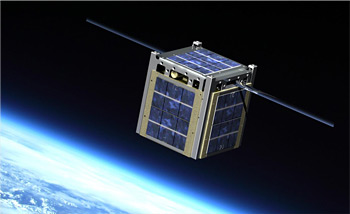
A CubeSat in Space

A CubeSat in Space

(Source: Technology Strategy Board)

CubeSats offer huge potential to accelerate technology development of sensors and instruments in a miniaturised package for deployment in space. New technology concepts for space missions can be demonstrated on CubeSat payloads, delivering a test bed at low cost and significantly reduced timescales.

The UK Space Agency is currently funding a pilot programme, called Ukube1, to demonstrate the capabilities of a CubeSats with a launch towards the end of 2012. If successful, this pilot project could pave the way for a national programme starting in the third quarter of 2012, offering launch opportunities every 12-18 months. The aims of a national programme will also encompass the delivery of educational opportunities and science applications as well as testing new technologies.

Proposals are invited to develop CubeSat preparatory studies for future mission concepts e.g. UKube-2. The concept can address a scientific theme or be of an in-orbit technology demonstration nature (e.g. formation flying), providing a real impact to the UK. All UK based communities (academic, industrial and other) are invited to submit proposals. Applications can be made individually or in partnership with other organisations, however industry and academia will be funded under the rules stipulated in the scope of funding presented below.

Funding is available up to £35K per proposal; the size of award will depend on the requirements of the proposed project and the applicants’ case for support. Proposals should not exceed a grant value of £35K. Funding will be awarded in 2012 and the project cannot exceed 3 months duration. Due to the short nature of these studies and the amount of funding available, we intend funding successful applicants at the onset of the project. It is anticipated the scheme will fund a minimum of 7 proposals; the facility to fund more will depend on the size of awards and will be assessed on a competitive basis as detailed below. The deadline for submission of proposals is 01 February 2012, 12pm.

See TSB website for more information