Yasny Dnepr CubeSat Launch April/May

Dnepr Launch November 21, 2013 - Credit ISC Kosmotras

Dnepr Launch November 21, 2013 – Credit ISC Kosmotras

A Dnepr carrying the 310 kg Spanish imaging minisatellite Deimos-2 along with 20 other satellites is expected to launch from Dombarovsky near Yasny in April/May. The satellites will be deployed in a 600 km orbit.

Information on Russian space launches can be found on this thread: http://forum.nasaspaceflight.com/index.php?topic=26990.465

Deimos-2 https://directory.eoportal.org/web/eoportal/satellite-missions/d/deimos-2

Deimos-1, launched in 2009, was built by SSTL http://www.sstl.co.uk/Missions/Deimos-1–Launched-2009

UK CubeSat Programme in New Electronics

UKube-1 on display at UK Space Conference in Glasgow

UKube-1 on display at UK Space Conference in Glasgow

New Electronics has a feature on the UK CubeSat programme and UKube-1 which it says should be launched from Kazakhstan on March 27, 2014.

Caroline Harper is a programme manager at the UK Space Agency and one programme that comes under her wing is UKube-1.

CubeSats can also have a role in education, as Harper pointed out. “We have a payload called FUNCube, which will allow kids in schools to download real housekeeping data from the spacecraft almost in real time and to do their own experiments on that data. We hope that will encourage interest in STEM subjects.”

FUNcube was developed entirely by volunteers at the amateur radio organisation AMSAT-UK. TOPCAT, meanwhile, is a payload that will measure the regions of space just beyond the Earth’s atmosphere – the ionosphere and plasmasphere – in order to help GPS users by monitoring and subsequently reacting to variable space weather conditions that adversely affect the Global Positioning System. The payload will consist of a specialised dual frequency GPS receiver that is suitable for operation in the space environment. The development has been led by a postgraduate at the University of Bath, with support from Chronos Technology, RAL and MSSL.

Read the article at http://www.newelectronics.co.uk/electronics-technology/emerging-opportunities-provide-a-launchpad-for-the-uks-space-sector/58857/

Artists impression of UKube-1 in orbit

Artists impression of UKube-1 in orbit – Credit Clyde Space

In addition to the educational telemetry beacon the FUNcube boards on UKube-1 will also provide a 435/145 MHz linear transponder for SSB/CW communications.

UKube-1 communications subsystem:
• Telemetry downlink 145.840 MHz
• FUNcube subsystem beacon 145.915 MHz 1200 bps BPSK
• 400 mW inverting linear transponder for SSB and CW
– 435.080 -435.060 MHz Uplink
– 145.930 -145.950 MHz Downlink
• 2401.0 MHz S Band Downlink
• 437.425-437.525 MHz UKSEDS myPocketQub Downlink

March launch for UKube-1 and TechDemoSat-1
https://amsat-uk.org/2013/11/05/march-launch-for-ukube-1-and-techdemosat-1/

The UK CubeSat Forum https://amsat-uk.org/2013/12/19/announcing-the-uk-cubesat-forum/

FUNcube-1 realtime data available as .csv download

FUNcube Data Warehouse

FUNcube Data Warehouse

The FUNcube Data Warehouse is now producing .csv files containing Realtime data channels for the AO-73 CubeSat.

The data is produced every hour, on the hour and contains 3000 rows, starting 250 minutes before the last record in the database.

As we do not have worldwide coverage, there will be missing segments of data. To overcome this, we fill the data with the last value before the gap.

All records are have an associated ‘satellite time’ this is based on the known activation time of the satellite and offset calculated from the sequence number and frame type. The satellite is currently 3 hours 50 minutes ahead of the data server time.

Please visit the Real Time Data page and click on the link in the descriptive text.

http://warehouse.funcube.org.uk/

We welcome feedback on the format and content. Please use the forum:

http://forum.funcube.org.uk/

Regards

Dave Johnson, G4DPZ, FUNcube Team Member

Deorbitsail CubeSat

Deorbit Sail - Image Credit Surrey Space Centre

Deorbit Sail – Image Credit Surrey Space Centre

Students and researchers at the Surrey Space Centre (SSC) in the University of Surrey, Guilford, are developing the 3U CubeSat Deorbitsail. It is planned to launch on a Dnepr rocket into a 600 km Low Earth Orbit (LEO).

The aims of the mission are:

(1) Deploy a large (5-by-5-metre) square Kapton sail.

(2) Deorbitsail is equipped with 3-axis-stabilizing attitude determination and control system. A novel capability of this system is pointing via Centre-Of-Mass / Centre-Of-Pressure (COM/COP) offset.

(3) The satellite will deorbit much more quickly than otherwise due to its deployable sail. Satellite pointing will be optimized by the attitude control system for maximum drag.

(4) The satellite will provide beacons which radio amateurs will be able to receive. The ISIS UHF/VHF radio will provide a 9600 bps BPSK downlink on 145.975 MHz.

DeorbitSail electronics stack - Image Credit DeorbitSail Consortium

DeorbitSail electronics stack – Image Credit DeorbitSail Consortium

For further information read DeOrbitSail Nanosatellite Mission
https://directory.eoportal.org/web/eoportal/satellite-missions/d/deorbitsail

DeorbitSail: A Spacecraft Mission to deploy sails in Space http://www.athena-spu.gr/projects/DeOrbit

Kapton https://en.wikipedia.org/wiki/Kapton

Deorbitsail: a deployable sail for de-orbiting by Olive R. Stohlman, University of Surrey and Vaios Lappas, University of Surrey http://arc.aiaa.org/doi/abs/10.2514/6.2013-1806

Inspection of a co-orbital solar sail using a microthruster attitude control system
http://surreyspacecentre.wordpress.com/2013/06/18/inspection-of-a-co-orbital-solar-sail-using-a-microthruster-attitude-control-system/

Open access to latest research output from Surrey Space Centre
https://amsat-uk.org/2013/06/19/open-access-to-ssc-research/

RAG 2014 tickets on sale

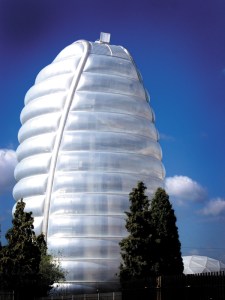
National Space Centre Leicester

National Space Centre Leicester

The BAA Radio Astronomy Group will be holding its 2014 General Meeting on Saturday, May 17 at the National Space Centre, Leicester, LE4 5NS. The last two meetings have both sold out ahead of the day and early booking is advisable.

This year Dr Klaas Wiersema (University of Leicester) will describe how new radio telescope technologies enable the exploration of the “transient” radio Universe, from the mysterious millisecond duration “fast radio bursts” to the energetic afterglows of gamma-ray bursts (GRBs) which are sometimes visible for years. The presentation will show how new technology is allowing us to study afterglows and other transients in a completely new way.

Supporting papers so far offered are: an ultra-low cost Hydrogen Line radio telescope (Peter East); the modelling of our local galactic topology (Gordon Dennis); the design of an Arduino-based magnetometer (Jonathan Rawlinson M0ZJO); making and analysing observations with Starbase (Laurence Newell); experiments with a small SDR radio telescope (David Morgan 2W0CXV); and reports on developments at EAARO (Jason Williams M0YJW) and the Harold Clayton Observatory (Dave James).

Tickets for the event cost £12 for BAA members and £15 for non-members, including free parking at the NSC and free admission to the main attraction, excluding the Planetarium show. Tea and coffee will be provided during the breaks but lunch is not included. Delegates are welcome to bring their own lunch or the NSC shop (Boosters) sells a range of sandwiches and other refreshments. It would help the NSC if you could also note the number of people in your party that are likely to use Boosters when you book tickets.

All ticket sales will be via the BAA but you do not need to be a BAA member to purchase tickets.  A Booking Form is available at the BAA RAG website at http://www.britastro.org/radio/ from where you can also download the latest edition of RAGazine.

The closing date for the next edition of RAGazine is February 7. Please think whether you can offer any material for this or future editions.  This can be a technical or education article (inc. work in progress, or a negative experiment); project ideas; appeals for teaming; news items; practical tips; relevant professional developments; humour; book reviews; useful resources; parts and equipment news and reviews; observatories; calendar events, etc.  RAGazine covers newcomers through experienced folk, radio astronomy and geophysics, without restriction over frequency range or technology base.

If you have any queries regarding the RAG 2014 event, please mail me direct at: radiogroup <at> britastro.org

Best wishes
Paul Hyde G4CSD
BAA RAG Coordinator

BAA-RAG Yahoo Group http://groups.yahoo.com/group/baa-rag

Ofcom 2.3 and 3.4 GHz Consultation Responses

AMSAT-UK Logo

AMSAT-UK Logo

The responses to Ofcom’s consultation on the 2300 and 3400 MHz bands are now available.

The joint RSGB, UK Microwave Group, AMSAT-UK and BATC response says:

Amateur radio has international secondary allocations in the 2300 and 3400 MHz bands, which are adversely affected by Public Sector Spectrum Release (PSSR). Whilst the detailed impact on amateur radio usage has been covered in an earlier Ofcom consultation, a continuing concern is to achieve a harmonised solution that gives both existing and new users a degree of certainty and consistency. This is particularly true for frequency segments that are key for long distance weak-signal amateur and amateur-satellite activity, such as 3400-3410 MHz.

In this respect the proposed 3.4 GHz Time Division Duplex(TDD) band plan (currently on CEPT consultation) is of serious concern as we discuss overleaf, and would welcome Ofcom taking a more pro-active stance to refine it.

Read the joint response at
http://stakeholders.ofcom.org.uk/binaries/consultations/2.3-3.4-ghz/responses/RSGB.pdf

The other responses are at
http://stakeholders.ofcom.org.uk/consultations/2.3-3.4-ghz/?showResponses=true

Ofcom 2300 and 3400 MHz consultation page
http://stakeholders.ofcom.org.uk/consultations/2.3-3.4-ghz/

Also see the Spectrum Sharing Consultation
https://amsat-uk.org/2014/01/12/ofcom-spectrum-sharing-consultation/

UNSA-SAT1 – The first 3.4 GHz CubeSat https://amsat-uk.org/2014/01/08/unsa-sat1-the-first-3-4-ghz-cubesat/