Pig in Space

Pinky and Perky - M0NRD

Pinky and Perky – M0NRD

Andrew Garratt M0NRD plans to launch Pinky Pig into near-space along with several 434 MHz transmitters on Saturday, September 26 from the National Hamfest at the Newark Showground.

The launch had been planned for Friday but the weather has forced the postponement. If the weather is suitable it is understood the launch might now occur on Saturday at around mid-day. For the latest news check https://twitter.com/nerdsville

Andrew has two pigs, Pinky and Perky, but it is Pinky wearing his fetching headset who has been selected to be the passenger on the High Altitude Balloon flight. During the flight images of Pinky will be transmitted to radio amateurs back on Earth using the Slow Scan Digital Video (SSDV) system.

The SSDV payload, callsign PINKY, will transmit on 434.575 MHz USB RTTY 300 bps 880 Hz shift ASCII-8 no parity 2 stop bits. The backup telemetry tracker, callsign PIGLET, will transmit 434.150 MHz USB RTTY 50 bps 380 Hz shift ASCII-7 no parity 2 stop bits.

There may also be LoRa spread spectrum transmitter on 434.450 MHz, callsign PERKY, however, at the time of writing there was a fault with the module.

The signals from the balloon should be receivable across most of the UK. Those overseas can use the SUWS WebSDR to receive the 434 MHz USB signals.

Read Andrew’s Hamfest HAB – Pre Launch Update
http://nerdsville.blogspot.co.uk/2015/09/hamfest-hab-pre-launch-update.html

National Hamfest Sep 25-26 http://www.nationalhamfest.org.uk/

High Altitude Balloon links for online tracking, SSDV, UKHAS mail list / chat room, WebSDR
https://amsat-uk.org/beginners/balloons/

New XW-2 satellites – linear transponders active

CAMSAT XW-2A formerly known as CAS-3A

CAMSAT XW-2A formerly known as CAS-3A

Nine XW-2/CAS-3 amateur radio satellites were successfully launched on Saturday, September 19, 2015 at 23:01:14 UT on Beijing’s new Chang Zheng 6 (CZ-6) rocket from the Taiyuan Satellite Launch Center (TSLC) in Shanxi.

Six satellites (designated XW-2A to XW-2F) carry 435/145 MHz U/V linear transponders for SSB/CW communications, LilacSat-2 (CAS-3H) has a V/U FM voice transponder and APRS. The other two satellites DCBB (CAS-3G) and NUDT‐Phone‐Sat (CAS-3i) only have telemetry downlinks.

The satellites were deployed into a 528 km by 551 km 97.5 degree inclination orbit. The NASA Orbital Lifetime Software provides an indication as to how long the satellites might remain in orbit before reentry into the Earth’s atmosphere:
• XW-2A = 8.5 years
• XW-2B/2C/2D = 9.2 years
• XW-2E/2F = 8.5 years
• LilacSat-2 = 18.2 years

The frequencies used by the satellites are here. Some satellite frequencies fall outside the international amateur satellite bandplan, so please be aware of local terrestrial users.

David Bowman G0MRF reported “Good signals from CAS3-F at 07.00 UTC  over Europe. Managed QSOs with SP5ULN in KO02  and F1AFZ in JN17 using the special event station at GB0RWC (Rugby World Cup).”

XW-2 / CAS-3 Satellite Frequencies PDF

For the latest status reports join the AMSAT Bulletin Board at
http://www.amsat.org/mailman/listinfo/amsat-bb

Further information on the XW-2 (CAS-3) satellites is at
https://amsat-uk.org/satellites/communications/camsat-xw-2/

LilacSat-2 https://amsat-uk.org/2015/09/20/lilacsat-2-linux-telemetry-decoding/

Online orbital predictor (select XW-2) http://www.amsat.org/amsat-new/tools/predict/index.php

Satellite tracking information https://amsat-uk.org/beginners/satellite-tracking/

Adding new satellites to SatPC32, Gpredict and Nova
https://amsat-uk.org/2013/11/23/adding-new-satellites-to-satpc32/

NASA Orbital Lifetime Software http://orbitaldebris.jsc.nasa.gov/mitigate/das.html

LilacSat-2 – Linux Live CD for Telemetry Decoding

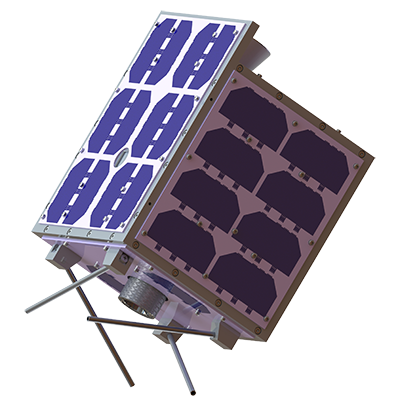
Artists impression of LilacSat-2 in orbit

Artists impression of LilacSat-2 in orbit

LilacSat-2 (CAS-3H) was launched along with eight other XW-2/CAS-3 amateur radio satellites on Saturday, September 19, 2015 at 23:01:14 UT on Beijing’s new Chang Zheng 6 (CZ-6) rocket from the Taiyuan Satellite Launch Center. The satellite, built by students at the Harbin Institute of Technology, has an APRS digipeater and a V/U FM voice transponder which can transmit telemetry data at the same time as voice by using sub-audible tones.

LilacSat-2

LilacSat-2

Note: The FM transponder and APRS downlink is 437.200 MHz not that given in the XW-2/CAS-3 Frequency Chart. There is also a telemetry downlink on 437.325 MHz. Further information is given on the LilacSat-2 website Radio Info page.

LilacSat-2 is scheduled to switch on the FM transponder at about 2200 UT each Monday, Wednesday and Friday.

Remember the Doppler shift on the downlink during a pass will be about +/- 10 kHz. If your radio has selectable FM filters use the wider filter designed for 5 kHz deviation FM, sometimes referred to as a 25 kHz channel spacing filter.

LilacSat-2 was deployed into a 528 km by 551 km 97.5 degree inclination orbit. The NASA Orbital Lifetime Software indicates the satellite might remain in orbit for 18 years before reentry into the Earth’s atmosphere.

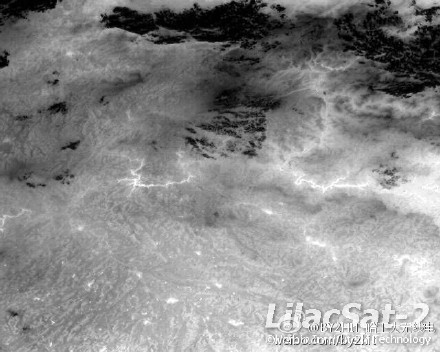
First LilacSat-2 infrared image Sept 24, 2015

First LilacSat-2 infrared image Sept 24, 2015

Wei Mingchuan, BG2BHC provides this report on the first 16 hours in space:

During the first 16 hours in orbit, we have received nearly 1000 packets of LilacSat-2 from Harbin (BY2HIT), Shihezi (B0/BY2HIT), Nanjing (BI4ST), Xian (Northwestern Polytechnical University) and Singapore (9V1SV). Many thank to all!

Now we have a Linux LiveCD for telemetry decoding released.

We have support for FCDPP, USRP and RTL-SDR. Not hard to edit the GRC flowcharts to support other devices.

It can be burned into a USB stick to boot a computer directly, run from a virtual machine or installed into a hard disk. The User manual is also included.

It can be downloaded from: http://pan.baidu.com/s/1eQfNsGE

LilacSat-2 Live CD also has a magnet link with the help of M6SIG:
magnet:?xt=urn:btih:doljmvwcvpnj3iaqfkiwu6bjienko5iv&dn=lilacsat-2_livecd_20150918.iso

More details: http://lilacsat.hit.edu.cn/

73!
Wei Mingchuan, BG2BHC

Telemetry decoder software on GitHub https://github.com/bg2bhc/gr-lilacsat

Harbin Institute Of Technology Amateur Radio Club BY2HIT
Weibo: http://www.weibo.com/by2hit
QRZ: http://www.qrz.com/db/BY2HIT
Web in Google English: http://tinyurl.com/BY2HIT

Information on the XW-2 (CAS-3) satellites is at
https://amsat-uk.org/satellites/communications/camsat-xw-2/

Online orbital predictor (select LilacSat-2) http://www.amsat.org/amsat-new/tools/predict/index.php

Satellite tracking information https://amsat-uk.org/beginners/satellite-tracking/

Adding new satellites to SatPC32, Gpredict and Nova
https://amsat-uk.org/2013/11/23/adding-new-satellites-to-satpc32/

How to Work FM Satellites https://amsat-uk.org/beginners/how-to-work-fm-satellites/

SERPENS CubeSat Deployed from ISS

Deployment of the SERPENS CubeSat from the ISS on September 17, 2015 - Credit JAXA

Deployment of the SERPENS CubeSat from the ISS on September 17, 2015 – Credit JAXA

On September 17, 2015 the Brazilian SERPENS CubeSat carrying an amateur radio payload, call sign PY0ESA, was deployed from the International Space Station (ISS).

SERPENS LogoSERPENS is a 3U CubeSat which was developed by students at the University of Brasilia and focuses on meteorological data collection.

The SERPENS Amateur Radio Page shows these downlink frequencies:

•  145.980 MHz using GFSK modulation at 9600 bps and AX.25 protocol transmiting two different beacons. The first occurs every 10 seconds with the message “SERPENS A”. This is implemented for easy identification of the satellite when searching for it. The second beacon is transmitted every 30 seconds and contains the main housekeeping data of the satellite. In addition to the beacons, a simple Store and Forward experiment has been implemented.

437.365 MHz using CW/MSK modulation at 1200 bps and CSP protocol.

SERPENS CubeSat

SERPENS CubeSat

There is a Store and Forward messaging system compatible with HUMSAT sensors on the frequency of 437.525 MHz, using GMSK modulation at 1200 bps. The HUMSAT transponder will collect data (e.g. wind, humidity, water levels, etc) from Earth based sensors operating on 437.525 MHz, store the data on-board and then transmit it to university ground stations. For more information visit http://www.humsat.org/

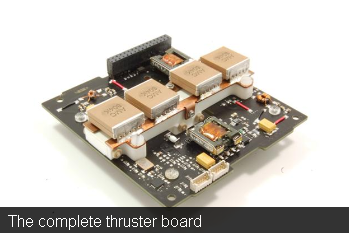
SERPENS carries a Pulsed Plasma Thruster for CUbesat Propulsion (PPTCUP) unit developed by UK companies Mars Space Ltd and Clyde Space Ltd in collaboration with the University of Southampton.

PPTCUP Board - Credit Mars Space Ltd

PPTCUP Board – Credit Mars Space Ltd

The PPTCUP consists of a thruster board and discharge chamber. Overall, the thruster assembly weighs 180 grams including 7g of Teflon fuel and delivers a thrust of 40 micronewtons at a power consumption of 2 Watts. The entire thruster assembly fits into a 90 by 90 by 27-millimeter envelope.The thruster operates at a specific impulse of 608 seconds and in its original version is certified for 1.5 million shots. For durability, the system uses copper-tungsten electrodes. All thruster functions are controlled by a PIC16 microcontroller.

Also deployed with SERPENS from the ISS was the CubeSat S-CUBE designed to observe the Ultraviolet (UV) spectrum during the Orionid meteor shower in October. It does not operate in the Amateur Satellite Service.

SERPENS Amateur Radio Page http://www.aerospace.unb.br/serpens_radioamateurs

SERPENS information in HTV-5 Cargo Overview
http://www.spaceflight101.com/htv-5-cargo-overview.html

Artists impression of Kibo Robot Arm CubeSat Deployment

Artists impression of Kibo Robot Arm CubeSat Deployment

CAMSAT XW-2 Satellites – Launch Information

Chang Zheng 6 CZ-6 rocket

Chang Zheng 6 CZ-6 rocket

UPDATE: Launch was postponed by one day due to technical reasons now Saturday, September 19 at 2300 UT.

Alan Kung BA1DU has posted this launch information for the XW-2 (CAS-3) satellites:

Launch time: 23:00:00 UT on 2015-09-19
The satellites should separate from rocket at 23:15:14 UT on 2015-09-19

The first pass over the mid-USA is expected at 00:05 UT on Sunday, September 20 and they should be in range of the UK at 05:21 UT – Frequencies Here – It is expected that initially only the telemetry beacons will be active. For the latest information check the AMSAT Bulletin Board.

The satellites will be launched on Beijing’s new Chang Zheng 6 (CZ-6) rocket from the Taiyuan Satellite Launch Center.

It is understood the CZ-6 is carrying at least nine satellites with payloads operating in amateur bands. They include six satellites (designated XW-2A to XW-2F) with 435/145 MHz linear transponders for SSB/CW communications, and one satellite, LilacSat-2 (CAS-3H) with an FM voice transponder and APRS. The frequencies to be used by the satellites are here. Some satellite frequencies fall outside the international amateur satellite bandplan, so please be aware of local terrestrial users.

XW-2A should operate in a sun-synchronous orbit at an altitude of about 450 km, with the other satellites at an altitude of about 530 km.

Please send reception reports to the AMSAT Bulletin Board (sign up at http://www.amsat.org/mailman/listinfo/amsat-bb) amsat-bb@amsat.org or #amsat on Twitter.

Predicted Two-Line Element (TLE) for tracking:

XW-2(CAS-3)
1 99999U          15262.96885748  .00004985  00000-0  28395-3 0 00005
2 99999 097.4712 270.8252 0010383 266.0522 270.6644 15.12847565000015

WEI Mingchuan BG2BHC says:  LilacSat-2 website http://lilacsat.hit.edu.cn/ and telemetry decoder based on GNU Radio https://github.com/bg2bhc/gr-lilacsat are now available. A Live CD is coming soon.

Further information on the XW-2 satellites is at
https://amsat-uk.org/satellites/communications/camsat-xw-2/

Online orbital predictor (select XW-2) http://www.amsat.org/amsat-new/tools/predict/index.php

Satellite tracking information https://amsat-uk.org/beginners/satellite-tracking/

Adding new satellites to SatPC32, Gpredict and Nova
https://amsat-uk.org/2013/11/23/adding-new-satellites-to-satpc32/

SatPC32 doppler.sqf http://www.pe0sat.vgnet.nl/2015/xw-2cas-3-launch-information/

15-year-old radio ham receives ISS Apollo-Soyuz SSTV Award

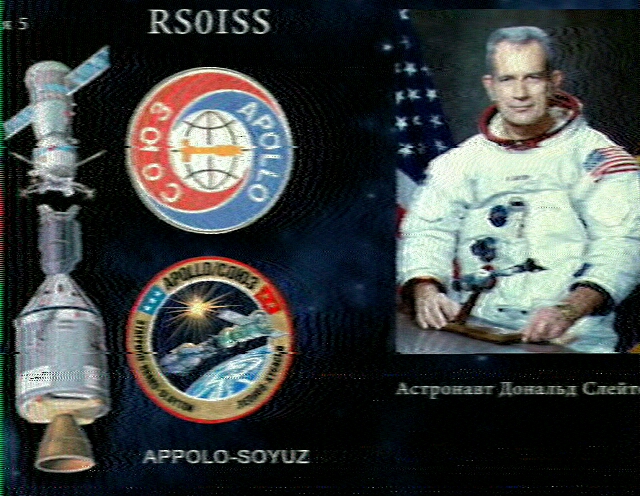
ISS SSTV Apollo-Soyuz Award #0289 received by Sakshi Vagadia VU3EXP

ISS SSTV Apollo-Soyuz Award #0289 received by Sakshi Vagadia VU3EXP

Rajesh Vagadia VU2EXP reports that he and his15 year old daughter, Sakshi Vagadia VU3EXP, have each received ISS Apollo-Soyuz SSTV Awards for their reception of Slow Scan Television images transmitted using amateur radio from the International Space Station (ISS).

Sakshi Vagadia VU3EXP

Sakshi Vagadia VU3EXP

These special transmissions from the ISS during July 18-19, 2015 were made to commemorate the 40th anniversary of the Apollo-Soyuz mission, which was the first joint collaboration in space between the United States and the Soviet Union. The ARISS organisation has issued a special limited edition diploma to award those who received one of the SSTV images.

Rajesh writes: After getting ticket [amateur radio licence] few months back, It was first successful attempt by Sakshi VU3EXP to receive SSTV Image from International Space Station and get such memorable & precious Wallpaper (award). She received ISS SSTV image on July 18, 2015 @ 19:36:44 (UTC).

My ISS SSTV Image was received on July 19 @ 05:24:27 (UTC). It was my 5th successful attempt.

I highly appreciate ARISS International, Russian Cosmonauts, various Radio Clubs and ARISS SSTV Award Managers (incl. SQ3OOK) joint efforts to give such wonderful opportunity to we Ham community.

73 VU2EXP
Rajesh P. Vagadia
Rajkot – Gujarat

Image received by Sakshi Vagadia VU3EXP on July 18, 2015 at 1936 GMT

Image received by Sakshi Vagadia VU3EXP on July 18, 2015 at 1936 GMT

Amateur Radio on the International Space Station (ARISS) – Contact the ISS
http://www.ariss.org/contact-the-iss.html

ISS Slow Scan TV https://amsat-uk.org/beginners/iss-sstv/

Youngest radio ham in Gujarat state
https://amsat-uk.org/2015/05/04/youngest-radio-ham-in-gujarat-state/

What is Amateur Radio ? http://www.essexham.co.uk/what-is-amateur-radio