Schools' communications satellite to put the fun back into science lessons

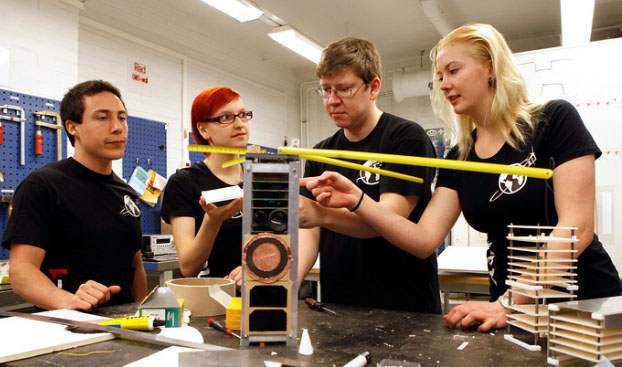
FUNcube_Graphic_Large

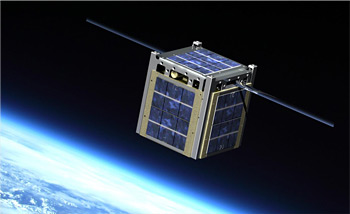
Artists impression of FUNcube in space

The Jan 25-31 printed edition of Electronics Weekly (circulation 36,400) carries an article on the AMSAT-UK FUNcube amateur radio satellite. The article, titled “Schools’ communications satellite to put the fun back into science lessons”, appears on page 12.

You can read or download this issue of Electronics Weekly at http://cde.cerosmedia.com/1M4f1d2b906fdb1433.cde

(The PDF can be downloaded by clicking on the PDF icon at the top).

A free subscription to the digital version of the publication is available via the Electronics Weekly website http://www.electronicsweekly.com/ On the lef-hand side under “SIGN UP TO” click on “Digital Magazine”.

RS-39 (Chibis-M) Deploys

RS-39 Chibis-M

RS-39 Chibis-M

RS-39 has CW beacons on 435.315 and 435.215 MHz that can be received directly by schools and colleges for educational outreach purposes. It deployed from Progress M-13M into a 500 km orbit on January 24 at approximately 23:18:30 UT.

On November 2, 2011 cargo ship “Progress M-13M”, which also delivered microsatellite “Chibis-M”, was docked with ISS. The main purpose of “Chibis-M” is the study of physical processes in the vicinity of the lightning, during which the Terrestrial Gamma Ray Flashes (TGFs) are generated. TGFs are likely produced by beams of very energetic electrons, which are accelerated in the intense electric fields generated by large thunderstorm systems.

The deployment of “Chibis-M” in a circular orbit of 500 km will take place during the final phase of “Progress M-13M” operation. According to the plan of the Russian Space Control Centre, undocking of “Progress M-13M” will occur at January 24, 01:59 msk and after two corrections it will be positioned at 500 km orbit. At January 25, 03:14 msk “Chibis-M” will separate. Beside scientific data “Chibis-M” will transmit service telemetry (the housekeeping parameters) in the beacon format on 435.315 or 435.215 MHz CW (Doppler shift +/- 10 kHz) and has the designation of RS-39. The format of data is typical for RS satellites and can be downloaded here.

The telemetry of RS-39 can be easily received directly by schools and colleges for educational outreach purposes. This telemetry will give details of the spacecraft’s health – battery voltages and temperatures of critical units. In combination with orbital data such information will be useful as the curriculum for student lessons.

The team of RS-39 will very much appreciate any reception reports of “Chibis-M”. Special attention is requested for the first orbits as these are outside of control stations for “Chibis-M”. Each report will be confirmed by special QSL card. The email address is amateur-rs39@chibis.cosmos.ru

The RS-39 Chibis-M website managed the by Space Research Institute of the Russian Academy of Sciences (RAS) can be seen in Russian at http://chibis.cosmos.ru/ or in Google English at http://tinyurl.com/RS-39-Chibis-M

As well as measuring electromagnetic parameters of “space weather” in the spectrum 0.1 – 40 kHz the satellite also carries a receiver for the analysis of radio frequency signals in a frequency band of 26-48 MHz. http://www.energia.ru/en/iss/researches/geophis/19.html

RS-39 Morse Code telemetry format http://tinyurl.com/RS-39-Morse-Code-Telemetry

RS-39 Telemetry Decoder http://www.uk.amsat.org/4029

RS-39 Real Time Tracking Map http://chibis.cosmos.ru/cyclogr/prepare1/google/index.html
For Keps click on two gear wheels in top left-hand corner then click on Satellites.

It may be worth checking the AMSAT Bulletin Board (AMSAT-BB) for the very latest news. The 48-hour archive of the AMSAT-BB is at http://www.amsat.org/amsat/archive/amsat-bb/48hour/threads.html or you can join the bulletin board at http://www.amsat.org/amsat-new/tools/maillist/maillist.php

FUNcube Dongle in Radiouser Magazine

Radiouser Magazine February 2012

Radiouser Magazine February 2012

The February issue of the UK magazine Radiouser features a 5 page article on the AMSAT-UK FUNcube Dongle (FCD) VHF/UHF Software Defined Radio written by Mike Richards G4WNC.

For the review amateur radio dealer Martin Lynch & Sons loaned a FCD to Mike who ended up buying one for himself!

Other articles in the February issue include Pat Carty’s ‘Military Matters’ column, DXTV and NDB DXing. In the ‘Sky High’ column Godfrey Manning G4GLM highlights the problems that wind farms cause to Radar and questions the need for the extensive restrictions on UK airspace to be imposed during July and August.

Postal copies of Radiouser can be purchased direct from the publisher using a Debit or Credit card by ringing +44 (0)1202 659910 (Monday – Thursday, 8.30am – 4.00pm) – the cost is the same because there is no postage to pay.

RadioUser magazine will be available from UK High Street newsagents such as WH Smith from January 26.

Radiouser magazine http://www.radiouser.co.uk/

Mike G4WNC also writes the Decode column and runs the DataModes Yahoo Group

The AMSAT-UK FUNcube Dongle SDR is available from http://www.funcubedongle.com/?page_id=286
or Martin Lynch & Sons (ML&S) http://tinyurl.com/MartinLynchFCD

FUNcube Yahoo Group http://groups.yahoo.com/group/FUNcube

Student Aalto-1 CubeSat video

Students working on the Aalto-1 CubeSat have released a 4 minute video showing a visualization of the launch and deployment of the satellite.

Aalto-1 is a student satellite project of Aalto University, Finland.
When launched, it will be Finland’s first satellite.

It is planned to operate at VHF-UHF and there will also be an S-band transmitter. Up to 8 watts of power will be available from the Solar panels.

The main payload of the satellite is a novel tiny Fabry-Perot imaging spectrometer, developed by VTT, Finland. The primary scientific goal of the mission is to demonstrate the feasibility of MEMS Fabry-Perot spectrometers for space applications. This miniature technology can be used in nanosatellites for large a variety of remote sensing applications in the future.

High spectral resolution images can be used for water quality monitoring and land use classification.

Watch Aalto1 Mission // visualization project status for Winter Seminar


Watch a Finnish TV show from 2010 about the project

Aalto-1 Discussion Forum
https://wiki.aalto.fi/display/SatForum/Aalto-1+Discussion+Forum

Aalto-1
https://wiki.aalto.fi/display/SuomiSAT/Summary

AO, Cubesat Mission Concept Studies

A CubeSat in Space

A CubeSat in Space

(Source: Technology Strategy Board)

CubeSats offer huge potential to accelerate technology development of sensors and instruments in a miniaturised package for deployment in space. New technology concepts for space missions can be demonstrated on CubeSat payloads, delivering a test bed at low cost and significantly reduced timescales.

The UK Space Agency is currently funding a pilot programme, called Ukube1, to demonstrate the capabilities of a CubeSats with a launch towards the end of 2012. If successful, this pilot project could pave the way for a national programme starting in the third quarter of 2012, offering launch opportunities every 12-18 months. The aims of a national programme will also encompass the delivery of educational opportunities and science applications as well as testing new technologies.

Proposals are invited to develop CubeSat preparatory studies for future mission concepts e.g. UKube-2. The concept can address a scientific theme or be of an in-orbit technology demonstration nature (e.g. formation flying), providing a real impact to the UK. All UK based communities (academic, industrial and other) are invited to submit proposals. Applications can be made individually or in partnership with other organisations, however industry and academia will be funded under the rules stipulated in the scope of funding presented below.

Funding is available up to £35K per proposal; the size of award will depend on the requirements of the proposed project and the applicants’ case for support. Proposals should not exceed a grant value of £35K. Funding will be awarded in 2012 and the project cannot exceed 3 months duration. Due to the short nature of these studies and the amount of funding available, we intend funding successful applicants at the onset of the project. It is anticipated the scheme will fund a minimum of 7 proposals; the facility to fund more will depend on the size of awards and will be assessed on a competitive basis as detailed below. The deadline for submission of proposals is 01 February 2012, 12pm.

See TSB website for more information

Winners in the ARISSat-1/KEDR Chicken Little Contest

The Chicken Little Contest received 77 entries from 17 different countries, and all continents except Antarctica.

Based on comments sent along with the submissions, a wide variety of techniques were used. These ranged from detailed calculations, to comparisons with past satellites, to guesses based on birthdays.

The winners in each category are:

+ Kindergarten through grade 8:
Cora Haefner, KK4ECV, Fort A.P. Hill, VA, USA

+ High School, grades 9 through 12:
Cameron, Lancashire, UK

+ Adult:
Thomas Frey, HB9SKA, Birr, Switzerland

Cora, KK4ECV and Thomas, HB9SKA were both within 15 hours of the
best data we have from Space Track: approximately 0700 on 4 January 2012, in the South Atlantic.

All three winners have received an appropriate Chicken Little Certificate, and the congratulations of the ARISSat-1/KEDR Team. Thanks go to all those who entered, and especially educators who worked with students.


Winners of the ARISSat-1/KEDR Grab the Last Telemetry Contest.

Thanks to the dedication of stations around the world, a nearly steady stream of digital telemetry reports were received in the final days from ARISSat-1/KEDR:

31 Dec — 1125
01 Jan — 1537
02 Jan — 1541
03 Jan — 1048
04 Jan — 107

Many other reports were received from stations copying the voice, SSTV, and telemetry transmissions, as well as some contacts through the transponder.

The final digital data received was copied by both JA8TCH, Mori Seiji, Sapporo City, Japan, and JA0CAW, Tetsurou Satou, Niigata City, Japan.
It was received at 06:02:14, 4 January, 2012, less than an hour before the estimated point of loss in the South Atlantic.
Their data, combined with the submissions of many others, constitutes the most comprehensive coverage of the reentry of any amateur satellite.

JA8TCH and JA0CAW will receive a certificate for their achievement. They and all who submitted telemetry throughout the ARISSat-1/KEDR mission have the thanks of the entire team.

Alan Biddle, WA4SCA and the ARISSat-1/KEDR Team

Amsat