Radiocommunication Assembly opens in Geneva

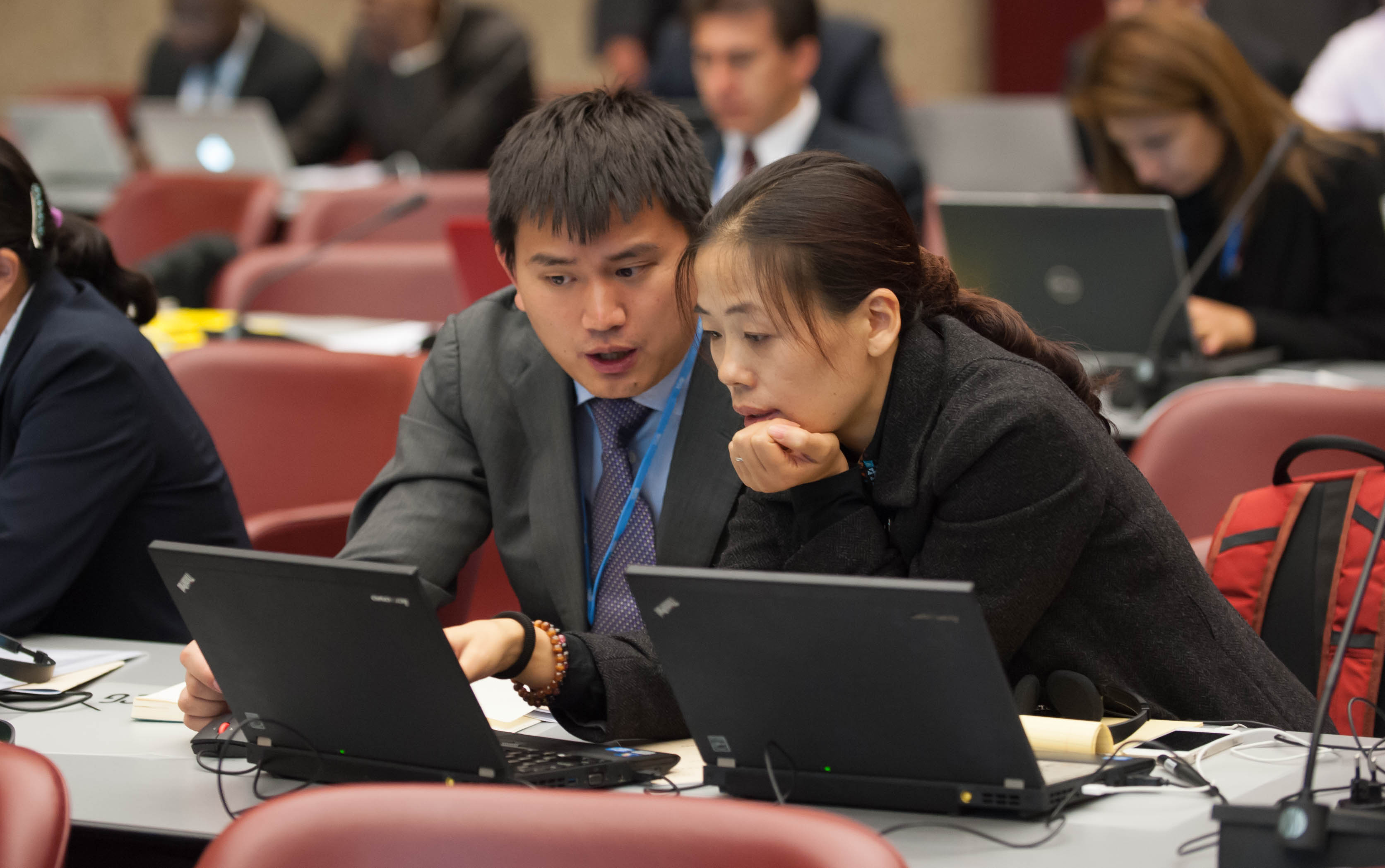
Delegates at the ITU Radiocommunication Assembly October 26, 2015

Delegates at the ITU Radiocommunication Assembly October 26, 2015

The ITU Radiocommunication Assembly (RA-15) has opened in Geneva ahead of the World Radiocommunication Conference 2015 (WRC-15) which commences next week.

Logo WRC RA 2015The Radiocommunication Assembly, which is responsible for the structure, programme and approval of radiocommunication studies, runs from October 26-30 followed by WRC-15 from November 2-27.

There are a number of agenda items for WRC-15 which may impact amateur radio, among them are:

• Agenda Item 1.1 – Additional allocations for Mobile (IMT) services and applications

• Agenda Item 1.4 Amateur service, on a secondary basis, in the 5250–5450 kHz band

• Agenda Item 1.10 – Additional mobile satellite IMT allocations in the 22-26 GHz range

• Agenda Item 1.18 – Radar for automotive applications in 77.5-78.0 GHz

• Agenda Item 9.1, issue 9.1.8 – Regulatory aspects for nano and pico-satellites

Pictures of the RA-15 Opening Plenary can be seen at
https://www.flickr.com/photos/itupictures/22302633870/in/dateposted

RA-15 http://www.itu.int/en/ITU-R/conferences/RA/2015/Pages/default.aspx

WRC-15 http://www.itu.int/en/ITU-R/conferences/wrc/2015/Pages/default.aspx

University of Southampton CubeSat Program

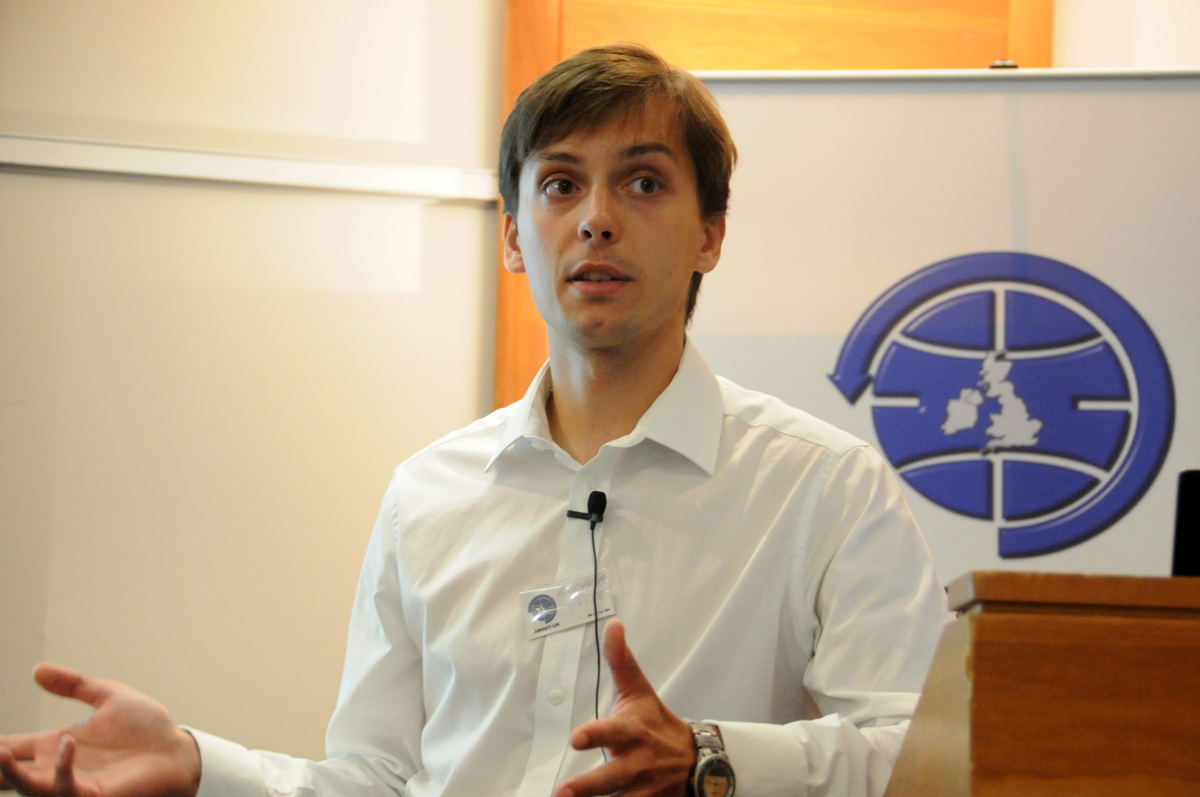
Aleksander Lidtke at 2014 AMSAT-UK International Space Colloquium - Image DK3WN

Aleksander Lidtke at 2014 AMSAT-UK International Space Colloquium – Image DK3WN

The University of Southampton is developing its own CubeSat with a view to obtaining a free launch on the VEGA launch vehicle.

University of Southampton Small Satellite is a group of students, primarily from a physics background, who aim to get a fully functional satellite into space, possibly by the end of 2016. Over a number of years they have designed the structure, the power, attitude control and the onboard processing and work is continuing on the development and integration of these subsystems into a full operational system.

Wessex Scene recently published an article about the project which included an interview with Aleksander Lidtke who in 2014 gave a presentation about the CubeSat to the AMSAT-UK International Space Colloquium in Guildford.

Phil Crump M0DNY has released a video showing the first step of the Southampton University Spaceflight CubeSat Telecommand Board construction.

Watch SUSF Telecommand Prototype: AVR + Switches + LEDs Demo

Wessex Scene article https://www.wessexscene.co.uk/science/2015/10/17/the-final-frontier-how-a-group-of-university-of-southampton-students-aim-to-get-a-satellite-into-space/

Watch the 2014 presentation by Aleksander Lidtke at the AMSAT-UK International Space Colloquium
https://www.youtube.com/watch?v=4uWdPkHObJw

Videos of other presentations and PDF’s of the slides are available at
https://amsat-uk.org/colloquium/colloquium-2014/presentation-videos/

University of Southampton Small Satellite UoS³ Cubesat Program
http://generic.wordpress.soton.ac.uk/uos3/

Southampton University Spaceflight Ground Station
http://susf.co.uk/wiki/doku.php?id=cubesat_ground_station

Follow SUSF on Twitter @SUSpaceflight

Amateur radio balloon enthusiast helped restore BTTF DeLorean

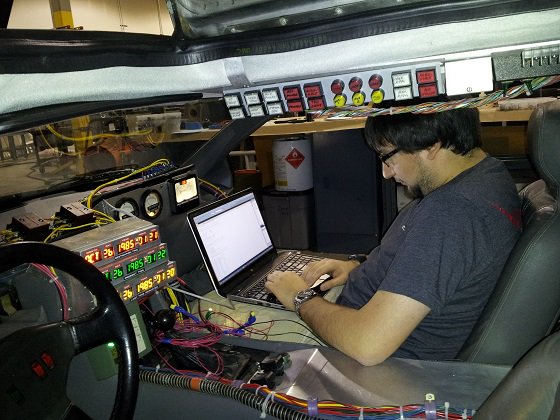
Ara Kourchians N6ARA in BTTF DeLorean Time Machine

Ara Kourchians N6ARA in BTTF DeLorean Time Machine

Radio amateur and High Altitude Balloon enthusiast Ara Kourchians (Arko) N6ARA was among those who helped restore the Back To The Future DeLorean time machine for Universal Studios.

Ara Kourchians N6ARA restoring BTTF Delorean

Ara Kourchians N6ARA restoring BTTF DeLorean

The San Bernardino Microwave Society newsletter reported his interest in the amateur microwave bands when he was a student in 2008.

Ara N6ARA has since flown many amateur radio High Altitude Balloons and in 2013 attended the UKHAS Conference in London to give a presentation on US Ballooning.

By 2015 he completed his bachelors degree in Electrical Engineering at Cal Poly Pomona and has worked as a Software Engineer at JPL.

Ara Kourchians N6ARA appeared in a video about the DeLorean restoration project.

Watch “OUT OF TIME: Saving the DeLorean Time Machine” – Trailer 1

Ara’s presentation to the UKHAS 2013 Conference can be seen at
http://www.batc.tv/channel.php?cat=HAB+2013&ch=1&id=1168

Arko N6ARA
http://arkorobotics.com/
https://twitter.com/arkorobotics

IARU Region 3 Conference

IARU-R3 LogoThe ARRL reports on the 16th International Amateur Radio Union (IARU) Region 3 triennial conference held in Bali, Indonesia, October 12-16.

Working Group 2 (WG2) dealt with such operational and technical matters as emergency communication, digital modes, a common APRS frequency, and Region 3 band plans. Titon Dutono, YB3PET, chaired WG2, and ARRL CEO David Sumner, K1ZZ, served as its secretary. In all, working group members discussed 37 papers and submitted recommendations to the conference for adoption.

Among recommendations adopted was one to ask the IARU Administrative Council to make available information on the use of the Amateur Satellite Service for member societies, satellite groups, Amateur Satellite operators, and concerned radio amateurs. This information would include, but not be limited to, criteria for a satellite to be in the Amateur Satellite Service and the procedure for IARU satellite frequency coordination.

The conference also adopted adjustments to the Region 3 band plans. Region 3 directors will consider making the format similar to that used in Regions 1 and 2.

Read the full ARRL story at
http://www.arrl.org/news/iaru-region-3-conference-opens-with-a-gong-adopts-recommendat

The Chinese Radio Sports Association / Chinese Radio Amateur Club submitted a paper titled Amateur Satellite Guide which said “Amateur satellite projects may rely on a wide range of cooperation between radio amateurs and other parties, as the consequence, the nature of the mission can be complicated. Without a set of definite criterion, the service classification of a mission may not be crystal clear to both satellite operators and other radio amateurs, especially when the radio payload supplies amateur service but also covers certain kind of other tasks.”

The CRSA/CRAC proposed “that the IARU AC shall consider to make available some information on use of the amateur satellite service for member societies, satellite groups, amateur satellite operators as well as concerned radio amateurs.”
http://www.iaru-r3.org/16r3c/docs/055r1%20Amateur%20Satellite%20Guide.docx

CRSA/CRAC paper on the number of radio amateurs – paper also notes Beijing has allocated 135.7-137.8 kHz to the Amateur Satellite Service
http://www.iaru-r3.org/16r3c/docs/054%20CRSA-CRAC%20Report.docx

The Working Group 2 report recommended a common APRS frequency of 144.390 MHz for High Altitude Balloons and terrestrial use. The Region 3 Directors will be consulting with IARU Regions 1 & 2
http://iaru-r3.org/16th-triennial-conference-of-the-iaru-r3-documents/#058

Papers submitted for the conference may be seen at
http://iaru-r3.org/16th-triennial-conference-of-the-iaru-r3-documents/

IARU Region 3 Act on Band Plan Satellite Allocations
https://amsat-uk.org/2015/08/21/iaru-region-3-act-on-band-plan-satellite/

New version of Fox-1A Telemetry Decoder

Fox-1 CubeSat at the Dayton Hamvention - Image Credit ARRL

Fox-1 CubeSat at the Dayton Hamvention – Image Credit ARRL

Chris Thompson G0KLA has released a new version of the AO-85 (Fox-1A) telemetry decoder software FoxTelem 

I want to announce the release of FoxTelem Version 1.01. If possible, everyone should upgrade to this new version. In addition to some new functionality it fixes some bugs and issue that mean more data will be uploaded to the server.

This is a patch release. If you already have 1.00 installed then download the file FoxTelem_1.01_patch.zip

You can download it from:
http://amsat.us/FoxTelem/windows
http://amsat.us/FoxTelem/mac
http://amsat.us/FoxTelem/linux

Only two files have changed (plus the manual). Copy these files into your install directory
– FoxTelem.jar
– spacecraft/FOX1A_radtelemetry2.csv

You can also download the whole install file and install it in a new directory. You can use the settings menu to continue using your existing log files. Ask if you need assistance.

Lots has changed in this release and many bugs have been fixed. Please report any issues that you see.

Release notes:
* Allow the user to view and set the “track” attribute for each spacecraft (and other parameters)
* Better doppler tracking in IQ mode and more stable estimate of the received frequency
* Better Find Signal algorithm with tuning parameters for experts
* Read Time Zero from the server for each reset and use to plot graphs in UTC
* Set the default fcd frequency to 145930 so that Fox-1A, Fox-1Cliff and Fox-1D will be in the passband
* Allow the gain to be set on the FCD (rather than hard coded)
* Do not change the FCD LNA or Mixer Gain. Leave unchanged.
* Do not open the FCD unless the start button is pressed
* Fixed a bug where the last 2 bytes of the radiation telemetry were not decoded correctly
* Allow Vanderbilt radiation experiment to be graphed
* Allow user to select UDP or TCP for upload to the server (but use UDP for now please)
* Shorten the period between passes so that graphs look continuous
* Ignore duplicate high speed radiation frames – needed for processing data from the server
* Allow graphs to be hidden so that average or derivative is easier to see
* Notify the user when a new release is available
* Cleaned up the FFT trace with some averaging
* If showRawValues is checked then save CSV files as raw values
* Several updates to the manual

FoxTelem Software for Windows, Mac, & Linux http://www.amsat.org/?page_id=4532

AO-85 (Fox-1A) https://amsat-uk.org/satellites/communications/ao-85-fox-1a/

Astro Pi launch changed

Astro Pi LogoTwo specially augmented Raspberry Pi’s called Astro Pi‘s were planned to fly with UK astronaut Tim Peake KG5BVI to the International Space Station (ISS) on December 15.

On the ISS the Astro Pi’s are planned to run experimental Python programs written by school-age students; the results will be downloaded back to Earth and made available online for all to see. It is hoped that subsequently one of them will be used to provide a video source for the amateur radio HamTV transmitter in the ISS Columbus module.

It appears the amount of cargo on Tim’s Soyuz flight was overbooked so the Astro Pi’s will instead fly to the ISS on an Orbital Sciences’ Cygnus cargo freighter. The launch is currently planned for December 3 at 22:48 UT.

Read the full story on the Raspberry Pi site
https://www.raspberrypi.org/blog/astro-pi-mission-update-7-launch-vehicle-changed/

HamTV https://amsat-uk.org/satellites/hamtv-on-the-iss/