
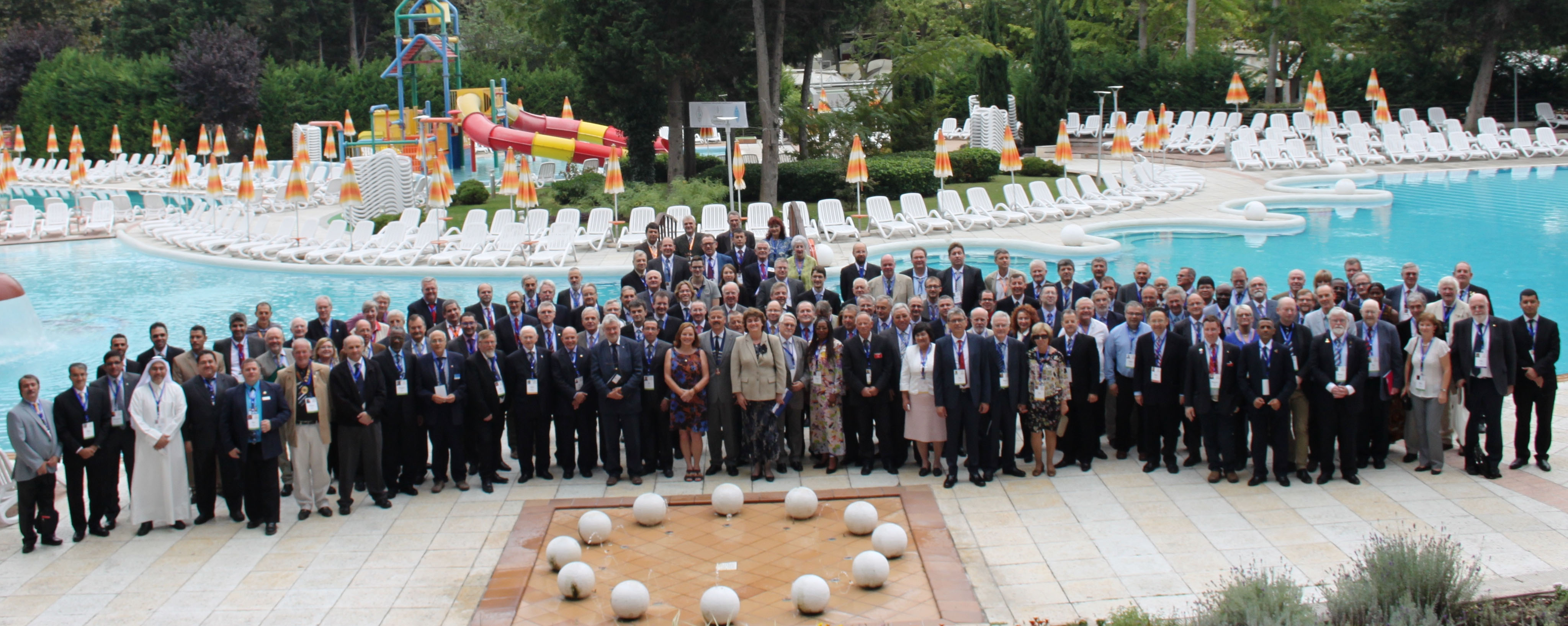
Delegates at IARU Region 1 Conference 2014
The First Plenary of the 24th IARU Region 1 General Conference was opened at 10:30 on Sunday, September 21, 2014 in the Grand Hall of the Flamingo Grand Hotel, Albena, Bulgaria.
The message of Dr Kristalina Georgieva, European Union Commissioner for International Cooperation, Humanitarian Aid and Crisis Response was read by Mr Encho Gospodinov.
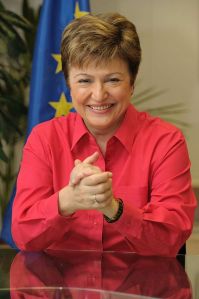
Dr Kristalina Georgieva
“Dear IARU Conference participants,
Dear radio messengers in times of trouble and hope
Friends, ladies and gentlemen,
It is my pleasure and privilege to address your General Conference. The timing for your gathering could not be more indicative for the world we live in and the challenges we all face today.
The lives of millions of people is impacted by troubling events: conflicts in Africa and the Middle East (and sadly, in Europe); natural disasters all over the world with all the un-predictabilities of the mother Nature and the responsibilities of the human beings for the Climate Change; human waves of migrants and refugees moving from one place to another, and assorted diseases often trailing the disasters and conflicts. In short, this is a world, which does not stop to surprise us every morning when we open the TV screen or a newspaper.
At the same time, the world has never been better connected and wired. Today\’s communications are a real miracle once considered a fantasy coming from the novels of Arthur Clarke or Rey Bradbury. Never before, we had this privilege to transmit or exchange information with such accuracy, speed and scope of distribution. And never before so many people from all corners of the world and all layers of the society had access to this information. The arrival of internet really made our planet a Global village and ever since our live changed forever in the way we deal with information. Politics, diplomacy, journalism, technology, science, research, banking, literally all changed overnight with this powerful instrument.
However, there are moments in life when a good, stable, reliable and independent information tool is the only one we can use to save lives. And this is the one we call simply the RADIO.
 Imagine a major natural disaster, which knocks down all modern information tools in the affected area: with no electricity, no internet, no telephone and fax connections, not even the old telex machines. No trains and ships moving, no roads to use or airports functioning. Nothing. We know a tragedy has happened, we know many are dead, and even more still alive, but trapped and helpless. And no one can help them as nobody knows what has happened. Because there is no information.
Luckily, there is a last resort: the radio amateurs; the people who are the eyes and the ears of the world in time when all other information channels are silent. “Amateurs” is actually not the right word in this case: these are professional communicators who are listening to the heartbeat of the planet and registering the emotional vibrations of people who may be in danger. In short, you are the last technical miracle, which is independent, reliable information channel, which can transmit an important piece of news from any place in the world, any time, by anyone who knows how to operate this wonderful creature, called radio.
Your advantage is that you are independent. A well-trained radioman with good equipment and ever-charged batteries can be a fantastic link between two villages, two countries or two continents. When organized in a Union, you are a communication superpower in time of total electronic darkness. But the most important part of your equipment is the people you have; the Bravehearts of men and women listening to people who may be in danger and may need help; the professional live-savers called strangely amateurs, who nevertheless act as volunteers when and where they are needed.

IARU Region 1 VHF, UHF and Microwaves C5 Committee
In your history, you have many examples of lives being saved because some of your members caught a signal from a village, a region or un-accessible place that someone needs help. We need your skills and services because we will have more and more disasters in the future. The dry statistics reveal troubling trends: during the last 20 – 30 years, the number and the intensity of the natural disasters have increased dramatically. So did the number of people killed or affected. The earthquake in Haiti in 2010 killed 230 000 people alone …. Between 2003 and 2012, some 6 700 disasters hit the planet with 2005 being the darkest one – 810 disasters in one year. Typhoons in the Philippines, floods in Pakistan, China or Europe, droughts and famine in Africa, garnished with conflicts, are now almost daily events. The economic losses from these disasters went up from $ 50 billion to $ 200 billion a year since the 80s.
Every Red Cross volunteer will tell you that during a disaster the most needed and precious live saving element is not food, water or medicines. It is the timely, accurate information that is the most needed. As timely and accurate information saves lives, prevents major tragedies, stops rumours, which create panic and leads to even more casualties. This is how solid information flow becomes the backbone of a successful communication strategy. In short, everything, which you do and helps your societies to organise themselves better, is vital. Local and national authorities count on you as the last bastion of reliable information channel. Your professional skills and your humanitarian duties make you more than radio amateurs; you are truly needed guardians in time of troubles and I hope you will always stay as a pillar of hope and courage for all who are in danger.
Thank you for your noble work. I wish you every success in this Conference.”
Kristalina Georgieva
Source IARU Region 1 http://iaru-r1.org/
IARU Region 1 Conference documents and pictures http://iarur1con2014.bfra.bg/
23 cm band and WRC-2018 https://amsat-uk.org/2014/08/13/23-cm-band-and-wrc-2018/
 Don Beattie, G3BJ, former President of the RSGB, has been elected as IARU Region 1 President at the General Conference in Varna-Albena, Bulgaria.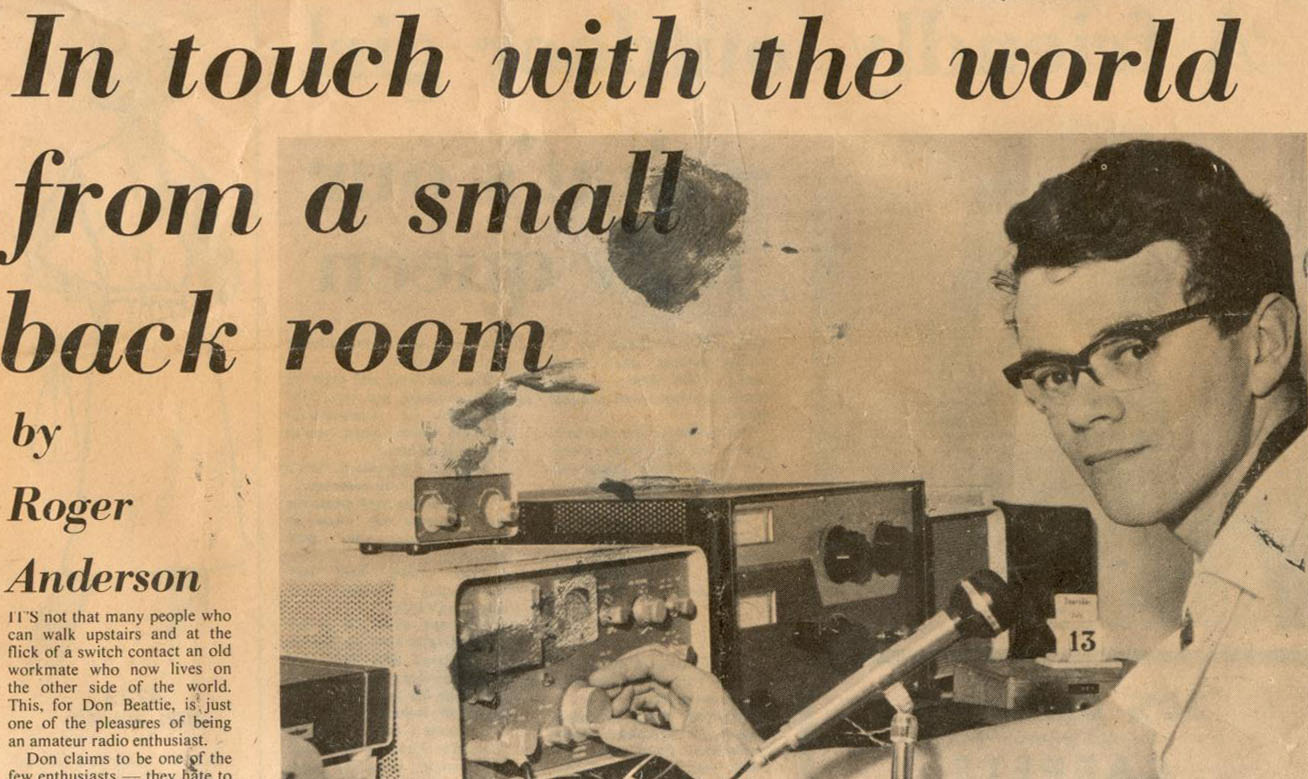




 AMSAT-UK
You must be logged in to post a comment.