First picture taken by ESTCube-1 CubeSat amateur radio callsign ES5E

ESTCube-1_first_picture_from_space

The first picture taken by the amateur radio CubeSat ESTCube-1 in space has been released. ESTCube-1 was launched from Kourou in the Caribbean on May 7 at 0206 UT on an ESA Vega rocket into a 704 km orbit.

ESTCube-1 camera on left of board

ESTCube-1 camera on left of board

The hard work of the first two weeks has paid off and the CAM team, leaded by the University of Tartu Computer Technology graduate student Henri Kuuste has this to say: The camera works perfectly and so do all the other subsystems, needed for taking the photo. The first image was captured on May 15 over the Mediterranean Sea, showing the sea, Sahara desert, and Tunisia.

On Monday, May 13 the whole ESTCube-1 team was invited to the reception of the rector of University of Tartu to celebrate the success of the satellite. Watch the video (in English) at http://www.uttv.ee/naita?id=17163

ESTCube-1 at press conference in Tallinn before shipping January 21, 2013 - Image credit University of Tartu

ESTCube-1 at press conference in Tallinn before shipping January 21, 2013 – Image credit University of Tartu

ESTCube-1 was built by students at the University of Tartu. The main mission of the satellite is to test electric solar wind sail technology, a novel space propulsion technology that could revolutionize transportation within the solar system. It will deploy a 10 meter conductive electrodynamic tether and the force interacting with the tether will be measured.

The technology is based on the electrostatic interaction between the electric field generated by the satellite and the high-speed particles being ejected from the Sun. A spacecraft utilizing this method would first deploy a set of electrically charged wires, which allow to generate an electric field over a large area. This area effectively forms a “sail” that can be pushed by the charged particles being diverted by it and therefore transferring momentum to the craft.

ESTCube-1 uses these frequencies:
437.252 MHz – CW beacon, callsign ES5E/S
437.505 MHz – 9600 bps AX.25 telemetry, callsign ES5E-11

Watch ESTCube-1 mission

Electric solar wind sail http://www.electric-sailing.fi/

EstCube on Facebook https://www.facebook.com/estcube/

EstCube website http://www.estcube.eu/en/home

Wiki EstCube-1 http://tinyurl.com/WikiESTCube-1

Keplerian Two Line Elements (TLEs) ‘Keps’ for CubeSats are at
http://celestrak.com/NORAD/elements/cubesat.txt

Free satellite tracking software:
• SimpleSat Look Down http://www.tomdoyle.org/SimpleSatLookDown/
• Gpredict http://gpredict.oz9aec.net/
• Orbitron http://www.uk.amsat.org/?p=9051

BBC News: US Teenager’s Space Ambitions

Abby HarrisonBBC News reports that fifteen-year-old Abby Harrison is training to be an astronaut and has set herself the goal of being the first person to reach Mars.

“I remember looking up at the night sky when I was five-years-old and thinking that I wanted to go to space” she told the BBC.

Abby is currently in Moscow visiting her mentor, the astronaut Luca Parmitano KF5KDP, who is about to travel to the International Space Station.

Watch the BBC News interview at http://www.bbc.co.uk/news/world-us-canada-22597923

The Star Tribune newspaper says: This week, she’s traveling to Kazakhstan to watch the launch of the Soyuz TMA-09M, a Russian craft headed for the International Space Station on May 28. She’s used her social media prowess to spearhead a successful Kickstarter-like crowdfunding campaign, raising more than $30,000 to help pay for the rare trip.

Star Tribune ‘Astronaut Abby’ is crowdfunding her way to outer space
http://www.startribune.com/lifestyle/208184441.html

Tech Tuesday: Meet 15-Year Old “Astronaut Abby”
http://www.womenyoushouldknow.net/tech-tuesday-meet-15-year-old-astronaut-abby/

High School Student’s RocketHub Project
https://amsat-uk.org/2013/05/11/high-school-students-rockethub-project/

Further information at

NEE-01 Pegasus 910 MHz TV Camera in Action

NEE-01 Pegasus (Pegaso) the first of two HD TV CubeSats built in Ecuador launched on a CZ-2D rocket from the Jiuquan Space Center on Friday, April 26 at 0413 UT.

The 1U CubeSat (10x10x10 cm) was built in Ecuador and carries a 0.9 watt output 720p HD TV transmitter on 910 MHz (an amateur radio band in some countries).

Watch NEE-01 Pegaso recording May 16, 2013

EarthCam has teamed up with the Ecuadorian Civilian Space Agency to deliver what EarthCam describe as an amazing viewing experience from an orbiting satellite. You can view the NEE-01 Pegasus SpaceCam online at http://www.earthcam.com/world/ecuador/ecsa/

NEE-01 Pegasus (Pegaso) https://amsat-uk.org/2013/04/25/nee-01-pegasus-hd-tv-cubesat/

January 2014 Ecuadorian Civil Space Company (EXA)—Imagery Involvement + An Important Recovery (Satellites) http://www.satnews.com/story.php?number=1323163133

UK Astronaut to fly to International Space Station in 2015

UK astronaut Major Tim Peake

UK astronaut Major Tim Peake

The Guardian newspaper reports that Major Tim Peake has been selected to fly a five-month mission on the International Space Station (ISS) in 2015.

Tim Peake, from Salisbury in Wiltshire, was chosen for astronaut training in 2009 from 8,400 applicants. Since then he has been undergoing training in a number of locations around the world including Köln in Germany, Star City in Russia and Houston in Texas. He had previously served in the army for 18 years primarily flying Apache helicopters and has seen active service in Afghanistan.

The Guardian newspaper says: 41-year-old Peake has been assigned a lengthy stay in orbit in 2015. He will be blasted into space on a Russian Soyuz rocket from Kazakhstan in November that year and flown to the space station where he will stay for five months. He will be able to take part in spacewalks and other complex scientific activities.

Helen Sharman GB1MIR

Helen Sharman GB1MIR

Sarah Brightman

Sarah Brightman

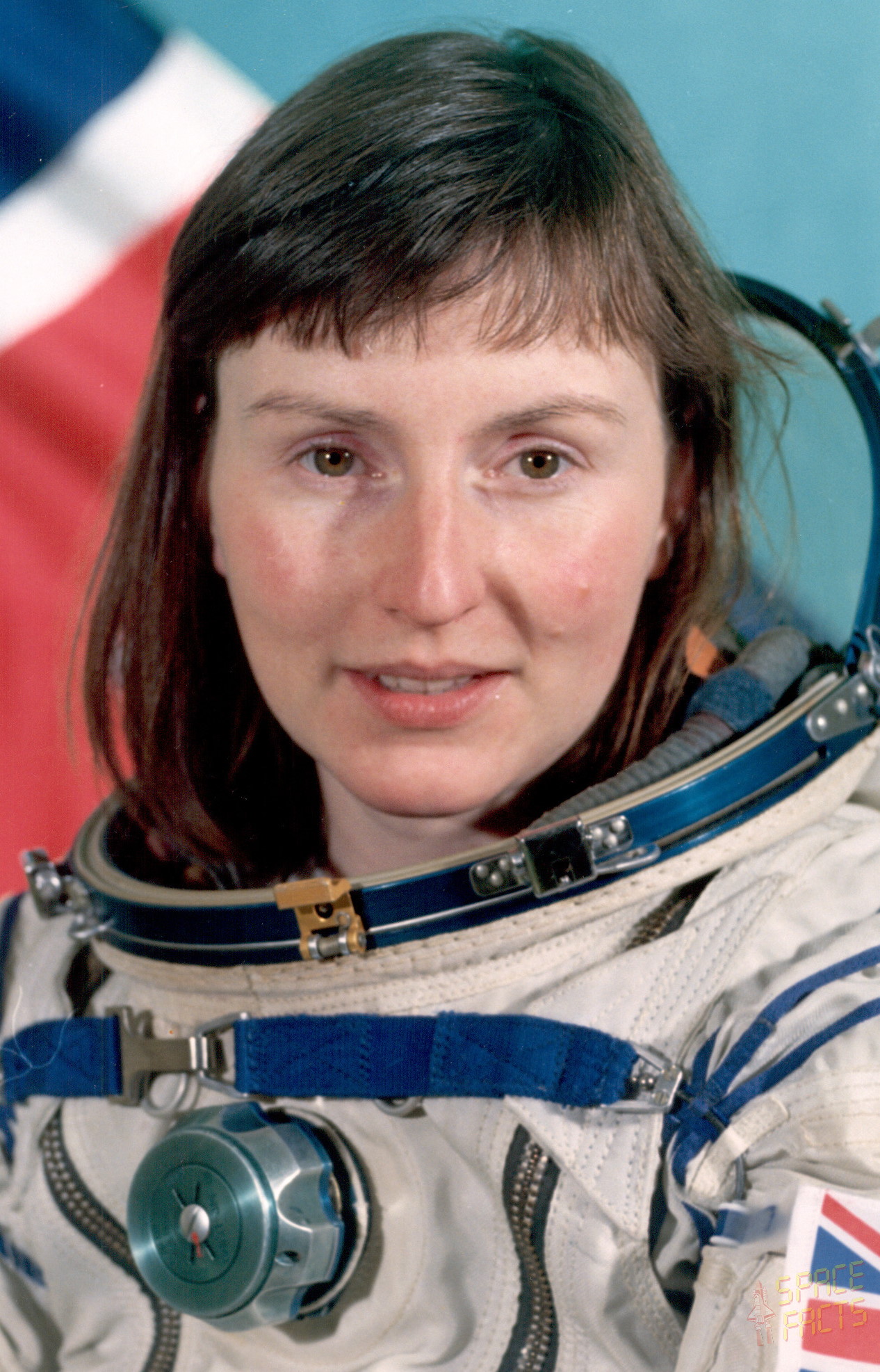
On May 18, 1991 the first UK astronaut Helen Sharman GB1MIR flew to the Mir Space Station in a Russian Soyuz spacecraft and during her 8 day mission contacted a number of radio amateurs around the world. There have been no other UK astronauts since that epic voyage over 22 years ago.

It had been expected that Sarah Brightman would be the second UK astronaut but it looks as though her mission to the ISS will take place after Tim Peake’s.

Read the Guardian newspaper article at
http://www.guardian.co.uk/science/2013/may/19/tim-peake-mission-space-station

Helen Sharman GB1MIR https://amsat-uk.org/about/history/first-uk-astronaut-helen-sharman-gb1mir/

Sarah Brightman plans ISS mission https://amsat-uk.org/2012/10/10/sarah-brightman-iss/

2013 UK Space Conference Glasgow July 16-17
https://amsat-uk.org/2013/05/18/2013-uk-space-conference-glasgow-july-16-17/

Free CubeSat Workshop Guildford July 19
https://amsat-uk.org/colloquium/cubesat-workshop-2013/

AMSAT-UK International Space Colloquium Guildford July 20-21
https://amsat-uk.org/colloquium/colloquium-2013/

AMSAT Fox-1 Ham Radio CubeSat Announcement

Fox-1 CubeSat at the Dayton Hamvention - Image Credit ARRL

AMSAT at the Dayton Hamvention – Image Credit ARRL

NASA announced on May 13, 2013 that AMSAT’s Fox-1 amateur radio spacecraft has been assigned for launch in November 2014 on the ELaNa XII mission. The expected orbit is 470 x 780 km at 64 degrees inclination. This orbit has a lifetime of about 11 years.

AMSAT Vice President Engineering, Tony Monteiro, AA2TX, reported that the software development team successfully brought up the Fox-1 system software on the Internal Housekeeping Unit (IHU). The IHU is the brains of the Fox-1 satellite and it has a 32-bit, STM32L microprocessor. The operating IHU card was shown in the AMSAT Engineering booth at the Dayton Hamvention.

AMSAT FOXThe Fox-1 Engineering Team will deliver the satellite for integration with the launch vehicle during May, 2014 with the launch scheduled for November, 2014. Tony commented, “While this is later than we had hoped, it is well within the normal variance of ELaNa launch dates and the extra time will be most welcome for additional satellite testing. This is very exciting news and really puts the focus on finishing the satellite and ground station software development.”

President Barry Baines says, “AMSAT’s focus on STEM education and development of a CubeSat platform capable of flying a science mission with a reliable communications link resulted in the selection of Fox-1 in the third round and RadFxSat (Fox-1B) in the fourth round of NASA’s Cubesat Launch Initiative.”

All Fox CubeSats are designed to host advanced science payloads to support future science missions that help us to continue qualify for NASA ELaNa (free) launches. The Phase 1 Fox satellites are 1-Unit CubeSats. They each include an analog FM repeater that will allow simple ground stations using an HT and an “arrow” type antenna to make contacts using the satellite. This was the mode made so popular by AO-51. The Phase 1 CubeSats also have the capability of operating in a high-speed digital mode for data communications. Phase 2 Fox satellites will include software-defined-transponders (SDX) like the one tested on ARISSat-1. These will be able to operate in a wide variety of analog and digital communications modes including linear transponders. Since this requires more power for reliable operation, these will probably all be 3-Unit CubeSats.

Source: AMSAT News Service (ANS) http://ww2.amsat.org/?page_id=443

A 1U CubeSat, Fox-1a will serve as a communications relay for radio amateurs worldwide via the onboard FM repeater system. Fox-1a will also carry an experiment consisting of a 3-axis MEMs gyro developed by Penn State University. The communications and experiment missions will run concurrently. An uplink on 435.180 MHz for FM voice and a downlink on 145.980 MHz with FM voice and an optional sub audible FSK digital carrier channel has been coordinated. Fox-1a will employ passive magnetic stabilization.

For more information see http://www.amsat.org/amsat-new/symposium/2012/2012_Symposium_Fox_Overview.pdf

Fox-1a is planning to launch from Vandenburg during 2014 on the NASA ElanaXII mission with ARC1, BisonSat, Lightsail and R2S(NEO)

AMSAT Bulletin Board (AMSAT-BB) http://www.amsat.org/amsat-new/tools/maillist/

2013 UK Space Conference Glasgow July 16-17

UK-Space-Conference-Logo-2013The 2013 UK Space Conference, which takes place July 16-17 in Glasgow, will focus on realising the UK’s ambitions in space – including making a global impact with science and research, contributing to the UK’s economic growth by developing new commercial applications and businesses and developing the interactions between these activities.

Further details at http://www.intellectuk.org/uk-space-2013-home

Interested in speaking at the UK Space Conference 2013? Soapbox slots available!
http://www.intellectuk.org/speaker-submission

Also taking place the same week is the free CubeSat Workshop at the Surrey Space Centre, Guildford on Friday, July 19 and the AMSAT-UK International Space Colloquium on Saturday/Sunday, July 20-21.