Student CubeSat CATSAT II and Hydrogen Peroxide Propulsion

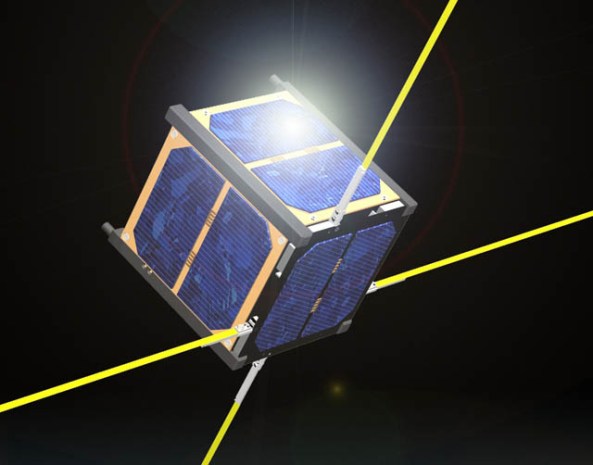
Students at the University of Vermont are working on a Cubesat project CATSAT II sponsored by the University and NASA.

The team have been experimenting with Hydrogen Peroxide Propulsion. In this video Mohamed Metwally, Eric Niebylski, Rudy Raab and Drew Swomley provide a brief overview of the project.

Watch UVM Capstone Design 2011/2012 – CATSAT II

NASA’s CubeSat program helps students take part in space experiments.

Watch Launch of Nanosatellites

Armadillo CubeSat to use Cold Gas Thruster

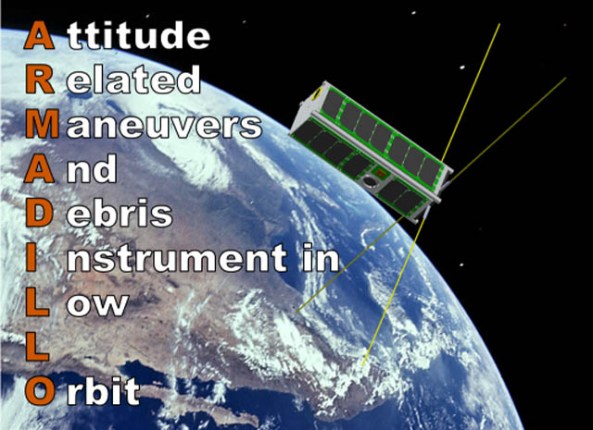
The amateur radio 3U CubeSat Armadillo is a collaboration between students at University of Texas at Austin and Baylor University.

Armadillo stands for Attitude Related Maneuvers And Debris Instrument in Low (L) Orbit and the satellite is being designed for Flight Unit delivery in June 2013 with an assumed launch in January 2014.

Mission Objectives:

– Characterize the low altitude space dust environment and the orbit effects of this space dust as potential threats to military satellites.

– Operate a cold-gas thruster to extend mission lifetime and perform a controlled de-orbit maneuver in order to gather more scientific data at different altitudes.

– Establish optical navigation by taking and downloading a celestial image to obtain an independent verification of satellite position and attitude.

– Demonstrate on-orbit reprogrammable software so the satellite may use updated commands and algorithms.

– Develop a reusable 3U picosatellite bus for potential use on future missions in an effort to cut design and fabrication costs

Watch Bevo 2 / ARMADILLO Cold Gas Thruster Pendulum Test 3

Armadillo website http://armadillo.ae.utexas.edu/

Information, Videos , News and Images about Cold Gas Thruster http://www.rtbot.net/cold_gas_thruster

Cold Gas Thruster spec sheet http://austinsat.net/datasheets/Thruster%20Spec%20Sheet%20rev2.pdf

Texas CubeSat 2011 Presentation http://lightsey.ae.utexas.edu/publications/TEXAS_CubeSat_2011_Presentation.pdf

New Frequencies for AMSAT-UK FUNcube-1

The AMSAT-UK FUNcube-1 satellite is due to launch on a DNEPR rocket from Yasny later this year.

This launch could carry around 11 amateur radio satellites including FUNcube-1 into space. As a result the International Amateur Radio Union (IARU) satellite advisory panel have had to carefully coordinate the planned operating frequencies in order to minimise the risk of interference between FUNcube-1 and other payloads on the same launch.

The IARU Amateur Satellite Frequency Coordination Panel have now confirmed the following frequencies for FUNcube-1 (these frequencies replace those previously announced)

Inverting linear transponder:
Uplink            435.150 – 435.130 MHz
Downlink        145.950 – 145.970 MHz

Telemetry:     145.935 MHz   BPSK

AMSAT-UK have announced that the power of the FUNcube-1 1200 bps BPSK telemetry beacon has been increased to 400 milliwatts. This should provide a strong signal for school students to receive using simple equipment.

Read the leaflet ‘Teach Space with a Real Satellite’ at http://tinyurl.com/TeachSpaceWithFUNcube

Gunter’s Space Page 2012 launches http://space.skyrocket.de/doc_chr/lau2012.htm

IARU Amateur Satellite Frequency Coordination Status http://www.amsat.org.uk/IARU

OSSI Art CubeSat to Launch in August

Hojun Song DS1SBO and the NovaNano FlyMate™ deployer

Hojun Song DS1SBO and the NovaNano FlyMate™ deployer

Hojun Song DS1SBO is a cutting-edge, tech-obsessed Korean artist breaking boundaries with his passion for telling stories through technology. He hopes to instill a sense of empowerment in the world, through the DIY nature and uplifting undertones in each of his works.

OSSI CubeSat

OSSI CubeSat

At univeristy he studied Electrical Engineering and Computer Science after which he started working on his art.

After years of research he has found that it is indeed possible to launch and operate a personal satellite at a fairly reasonable price. For the past six years he has been exploring ways to integrate the concept of a personal satellite project into cultural contexts and into his artistic practice.

Hojun Song’s first satellite OSSI will take off on a Soyuz rocket from Baikonour in Kazakhstan this August. He obtained his rocket launch through a new French launch brokerage company NovaNano http://www.novanano.com/. In this video he shares his story, his struggles and his plans.

Watch The Open Source Satellite Initiative by Hojun Song

The OSSI CubeSat should be delivered on May 31 in preperation for its launch on August 31. The team are working hard to finish building the satellite.

Watch Building OSSI EPS / 20120429

Open Source Satellite Initiative (OSSI) http://opensat.cc/

The Creators Project http://thecreatorsproject.com/en-uk/creators/hojun-song

DIY Satellite http://opensat.cc/download/DIYSatellite_en.pdf

Studio hhjjj http://www.hhjjj.com/

Blue Origin

Blue Origin is developing a reusable first-stage booster. It will take off vertically like a conventional booster rocket and lift the upper stages to a conventional suborbital staging point, where the upper stage will separate and continue to propel the astronauts to orbit.

Blue Origin Picture

Once separated, the first stage booster will descend to perform a powered vertical landing similar to the New Shepard Propulsion Module. Then the orbital booster can be refueled and launched again, allowing improved reliability and lowering the cost of human access to space.

Orbital Reusable Booster System
The booster rocket will loft a biconic Space Vehicle to orbit, carrying astronauts and supplies for adventure, science research, and exploration. After orbiting the Earth, the Space Vehicle will reenter Earth’s atmosphere to land on land under parachutes, and then be reused on future missions to Earth orbit.

What is Blue Origin

Blue Origin, LLC is developing technologies to enable private human access to space at dramatically lower cost and increased reliability. We’ve adopted an incremental approach, with each development step building on the prior development. We are currently focused on developing rocket-powered Vertical Takeoff and Vertical Landing (VTVL) vehicles for access to suborbital and orbital space

http://www.blueorigin.com/

New IARU Satellite Advisor Region 1

Mike Rupprecht DK3WN 640

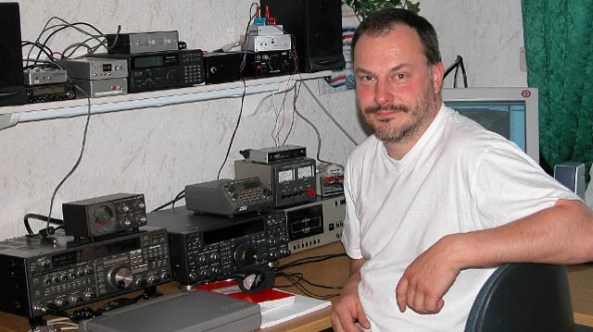
Mike Rupprecht DK3WN

AMSAT-DL President, Peter Gülzow, DB2OS reports on a new IARU appointment:

I have recommended to the IARU Satellite Adviser that Mike Rupprecht, DK3WN takes over membership of the advisory panel form Norbert Nothoff, DF5DP and I’m happy to notify interested parties that he has agreed to appoint Mike, DK3WN as a panel member. He has thanked Norbert, DF5DP for his support as a member of the Advisory panel for many years and said that he is looking forward to work with Mike.

Mike Rupprecht, DK3WN will help with the IARU Satellite Frequency Coordination process in Region 1 and in particular here in Germany. Mike is very active and well known on the satellite bands and Internet boards, and he has particularly profound knowledge of all cubesat operations. He is also very well known in the community of cubesat operators, including excellent communication connections to that groups.

Mike Ruprecht, DK3WN will support Norbert Nothoff, DF5DP and take over the coordination process of satellite projects from him, which includes correspondence with the coordination group and the satellite operators.

Norbert Nothoff, DF5DP will continue to stay in charge of anything which is related to government issues (government and office liaison, laws, bylaws, and regulations of satellite operations) in Germany.

Peter Gülzow, DB2OS
President, AMSAT-DL

IARU Satellite Advisory Panel http://www.iaru.org/satellite/advisory-panel.html