IARU Paper: APRS Harmonization and removal of OSCAR sub-band

IARU_Region_1_logoIARU Region 1 has released the papers for the Interim Meeting to be held in Vienna April 15-17, 2016.

Among the papers for the C5 VHF/UHF/Microwave Committee is one on harmonizing APRS.

VIE16_C5_41_1.pdf – 144 /435 MHz APRS Harmonisation

The paper covers global band planning considerations and among the recommendations says:

Emphasise that spaceborne APRS must be confined to globally coordinated amateur satellite sub bands. Therefore items that are ambiguous and generate confusion in national band plans such as ‘Space communications’ and ‘New Oscar Sub band’ should be removed as soon as possible in all Regions in accordance with IARU-AC and Satellite Coordination guidance

It is believed that ‘New Oscar Sub band’ refers to the USA’s ARRL 144 MHz band plan and ‘Space communications’  to the Australian WIA 144 MHz band plan. These band plans, as well as those for some other countries, show 144.300 – 144.500 MHz as being for Amateur Satellite use.

Direct link for C5 VHF/UHF/Microwave Papers
http://www.iaru-r1.org/index.php/documents/Documents/VHF/C5-papers-v2.zip/

Links for all committee papers and email addresses of Committee Chairs are at
http://www.iaru-r1.org/index.php/88-news/1518-interim-meeting-vienna-2017
[Although URL says 2017 the meeting is 2016]

ARRL 144 MHz Band Plan http://www.arrl.org/band-plan

WIA 144 MHz Band Plan http://www.wia.org.au/members/bandplans/data/documents/Australian%20Band%20Plan%202m%20150729.pdf

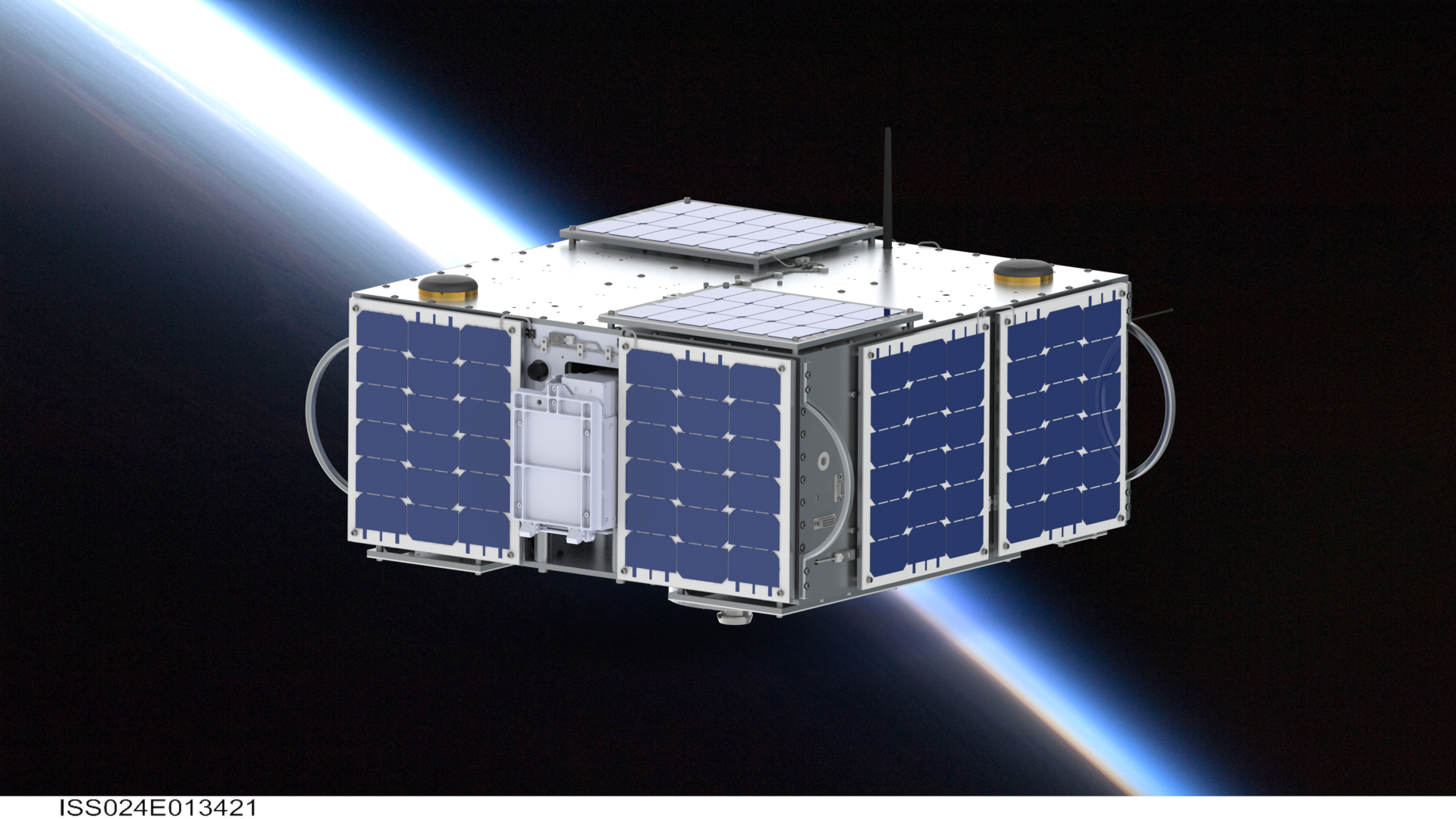
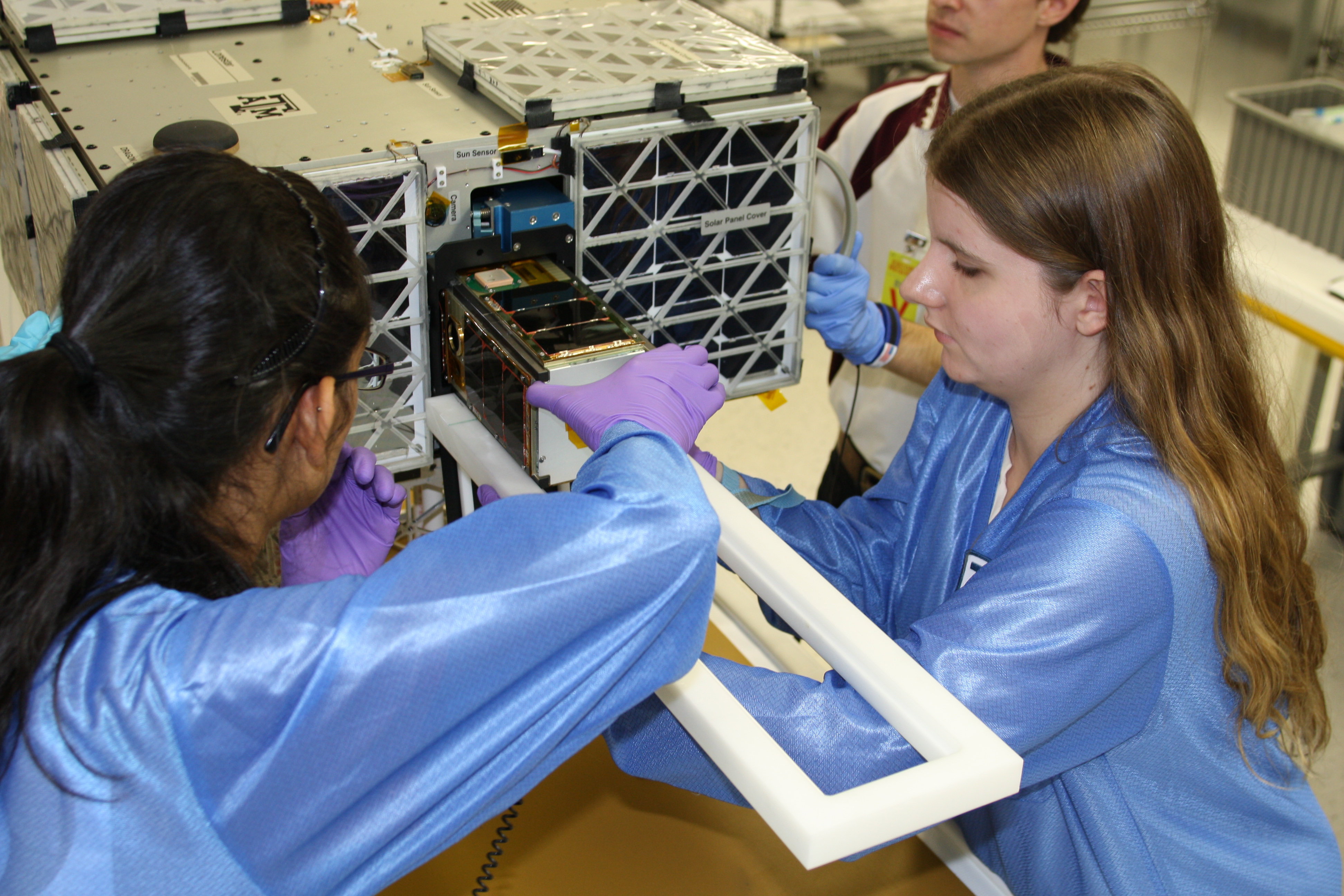
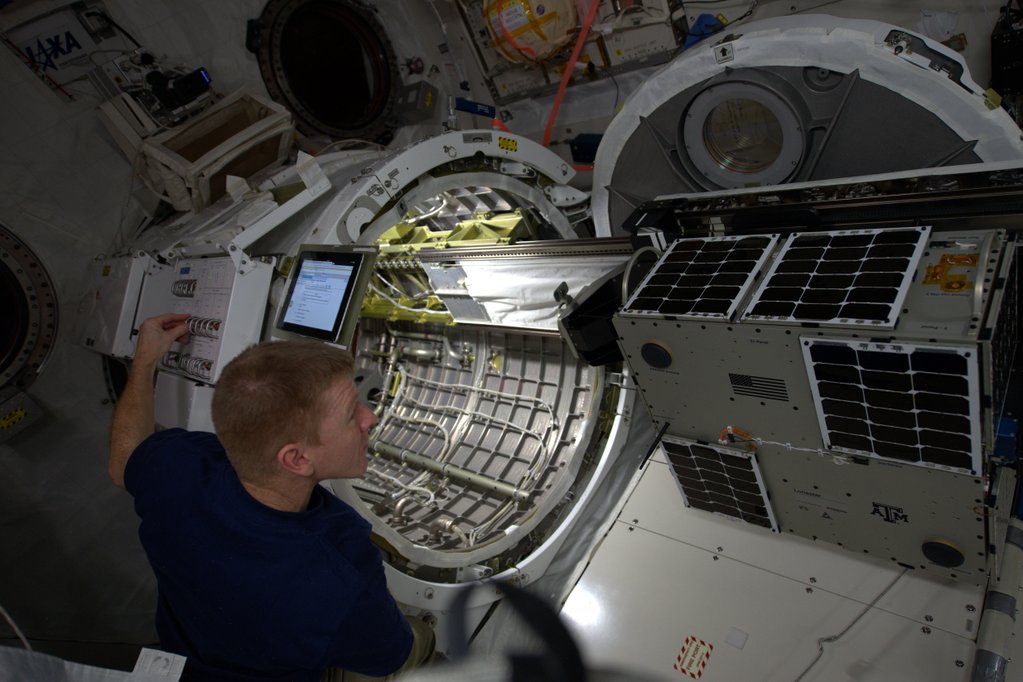
ISS AggieSat4 Satellite Deployment

Simulation of AggieSat4 on orbit - Credit Andrew Shell

Simulation of AggieSat4 on orbit – Credit Andrew Shell

The AggieSat4 satellite carrying the Bevo-2 CubeSat is expected to be deployed from the International Space Station (ISS) on January 29, both have amateur radio payloads.

Below is a timelapse of the build process of the Texas A&M student-built satellite, AggieSat4. The video spans an entire year, the amount of time it took to build AGS4, however many more years were put into the design and programming of AGS4 before any hardware was assembled.

AggieSat4 was launched aboard the Orbital ATK Cygnus OA-4 cargo resupply mission. The Cygnus spacecraft was mounted atop a United Launch Alliance Atlas V rocket that took the Cygnus from the Kennedy Space Center up into Low Earth Orbit on December 6 at 4:44pm EST.

AGS4 is planned to release from the ISS on January 29 and will then proceed to eject the University of Texas CubeSat, Bevo-2 and perform relative navigation tasks as well as take pictures of the release of Bevo-2.

The IARU has coordinated these frequencies for the amateur radio payloads:
AggieSat4 436.250 MHz 9k6 FSK telemetry (also 153.6 kbps FSK)
Bevo-2 437.325 MHz CW and 38k4 FSK

Watch AggieSat4 Build Process Timelapse – LONESTAR 2

The AggieSat4 team request that any amateur radio enthusiasts receiving the beacons sends any data to aggiesat@tamu.edu it would be much appreciated!

AggieSat4 information
https://twitter.com/aggiesat
https://www.facebook.com/AggieSatLab
http://aggiesatweb.tamu.edu/index.php/projects/lab_projects/aggiesat4
https://www.dropbox.com/sh/v8razh1evcabt7a/jrGSjbOJb4

Bevo-2 information
https://www.facebook.com/UTSatLab
https://www.ae.utexas.edu/news/features/bevo-2-satellite-sdl

AggieSat4 reception reports http://www.dk3wn.info/p/?cat=313
Chelmsford Talk: Amateur Radio Satellites

Steve Hedgecock M0SHQ sending Packet Radio to the ISS

Steve Hedgecock M0SHQ sending Packet Radio to the ISS

On Tuesday, February 2, Steve Hedgecock M0SHQ will give a presentation to the Chelmsford Amateur Radio Society (CARS) on amateur radio satellites, the talk is open to all.

The main part of the presentation will be on simple satellite operation using an FT-817 and hand held antennas. Steve will also cover amateur radio activity on the International Space Station (ISS) including using the ISS APRS digipeater and reception of ISS Slow Scan Television (SSTV).

The talk coincides with the mission of UK astronaut Tim Peake GB1SS on the space station. Some of you may have already heard Tim using the amateur radio station in the Columbus module to link up with school students as part of the ARISS program.

The meeting takes place at the Oaklands Museum, Moulsham Street, CM2 9AQ. The doors open at 7pm for a 7:30pm start, car parking and admittance are free, visitors are most welcome.

Map http://www.g0mwt.org.uk/meeting-map.pdf

Web http://g0mwt.org.uk/

CARS run short amateur radio training courses, to find out about the next course speak to the training manager Peter Davies M0PSD, contact details are at http://www.g0mwt.org.uk/training/

What is Amateur Radio ? http://www.essexham.co.uk/what-is-amateur-radio

Nepal students to speak to Tim Peake

Brihaspati Vidhyasadan students have been building a model of the ISS

Brihaspati Vidhyasadan students have been building a model of the ISS

UK astronaut Tim Peake KG5BVI will be using amateur radio to talk to students at Brihaspati Vidhyasadan School (BVS) in Nepal on Wednesday, January 20 at 08:37:04 UT.

You can listen to the audio online at https://sites.google.com/site/arissaudio/

The Himalayan Times reports this is the first link up  between a school in Nepal and the International Space Station (ISS). It will be a Telebridge contact via Tony Hutchison VK5ZAI in Australia. The ISS should be in range of the Telebridge station for about 8 minutes.

BVS is organising an Exhibition during the week of the contact from January 19-23. Experts as well as knowledgeable students will be at hand to respond to queries of visiting students who will be able to get acquainted with amateur radio during the exhibition.

The Nepal Amateur Radio Operators’ Society is one of the organisations supporting the exhibition.

UPDATE Jan. 20: Read the Nagarik News story on the successful contact http://nagariknews.com/feature-article/story/52883.html

Brihaspati Vidhyasadan School students speak to Tim Peake KG5BVI / NA1SS - Image Credit Nagarik News

Brihaspati Vidhyasadan School students speak to Tim Peake KG5BVI / NA1SS – Image Credit Nagarik News

Brihaspati Vidyasadan is a 32 year old High school, located in Kathmandu, Nepal. Brihaspati runs classes from nursery to 100 at secondary level and the 10+2 program in Science and Management at the higher secondary Level. Besides these Brihaspati also runs Diploma in Hospitality Managemant and Tourism in affiliation with Confederation of Tourism and Hospitality (CTH), UK.

Brihaspati is known for its academic excellence. To date Brihaspati has produced over 2000 SLC graduates and over 600 +2 graduates who have achieved excellent academic achievements. Brihaspati has also been awarded the “Best School in Nepal” in 2055BS.

Brihaspati is also known for its co-curricular and extra-curricular activities including sports, debates and concerts. Over the years the school has achieved Inter-school successes in football (soccer), cricket and basketball at national levels. School has also successes in inter-school competitions like debate, elocution and concerts.

For its academic, co-curricular and extra-curricular achievements Brihaspati has been placed among the Class A schools of Nepal by the Ministry of Education, Government of Nepal.

Brihaspati staff and students have been known for their innovation in education. The school is reputed to be the first school in Nepal to introduce computer education. Brihaspati houses clubs like Lokopakar, which is a student club that looks into Humanitarian aid.  Brihaspati students recently started gThink Inkh, an activity designed using the principles of Extreme Design from Stanford for instilling critical thinking and problem solving skills in students. This program has gained attention of a lot of people in the academia at a very rapid pace.

Brihaspati is located in a 25 acre land space at the heart of Kathmandu within the Balmandir compound. It  has academic facility that is of very high standards. It houses the Free and Open Source Research Lab and Ham (amateur radio) facility that students and staff have access to.

Recently during the earthquake of Nepal, one of the buildings of Brihaspati was used by ham radio operators from Nepal and India to coordinate search and reconciliation of families where over 500 families were reunited with their loved ones.

Read The Himalayan Times story at
https://thehimalayantimes.com/nepal/nepali-students-to-talk-to-astronaut-in-intl-space-station/

Brihaspati Vidhyasadan School
http://www.bvs.edu.np/bvstalkstoiss/
https://www.facebook.com/bvsTalksToISS/

ARISS http://www.ariss.org/upcoming-contacts.html

Amateur radio village at EMF 2016

GB2EMF Amateur Radio Village EMF 2016An amateur radio village is planned for  the Electromagnetic Field EMF 2016 event which takes place August 5-7, 2016 near Guildford in Surrey.

London Hackspace Amateur Radio Club are planning to erect at least one of their Clark masts in the village. During EMF 2016 they will be showcasing Amateur Radio on bands from 3.5 MHz (80m) to 430 MHz (70cm) and maybe higher using the call sign GB4EMF.

The event is aimed at makers, scientists, engineers, radio enthusiasts and more.

EMF Amateur Radio Village https://wiki.emfcamp.org/wiki/Village:Amateur_Radio

Call for Participation https://www.emfcamp.org/cfp

EMF Camp on Twitter https://twitter.com/emfcamp
London Hackspace ARC https://twitter.com/m0hsl

Previous EMF events have generated BBC News coverage
https://amsat-uk.org/2014/09/02/bbc-reports-emf-2014/

Local newspaper reports reception of Tim Peake on ISS

ISS amateur radio article in Southend Echo Jan 13, 2016

ISS amateur radio article in Southend Echo newspaper published January 13, 2016

ISS school contacts provide an opportunity for radio amateurs across the country to get publicity for the hobby in their local newspaper.

Simply hearing Tim Peake using amateur radio from the ISS is in itself a newsworthy event which can be used to promote your local amateur radio club and the hobby in general.

When Essex radio amateur Pete Sipple M0PSX received a signal from ISS astronaut Tim Peake talking to Sandringham School students in Hertfordshire he contacted his local newspaper, the Southend Echo, and told them about it. The newspaper was very interested to hear that someone in their local area had actually received the ISS and published the story, see above.

Pete M0PSX has kindly made available the press release he sent to the local newspaper so that others can use it as a template, download press release here.

Dates of future Tim Peake amateur radio school contacts are at
https://amsat-uk.org/2015/12/15/tim-peake-iss-school-contacts-announced/

Essex Ham – What is Amateur Radio? http://www.essexham.co.uk/what-is-amateur-radio