NASA TV to cover launch of Tim Peake KG5BVI

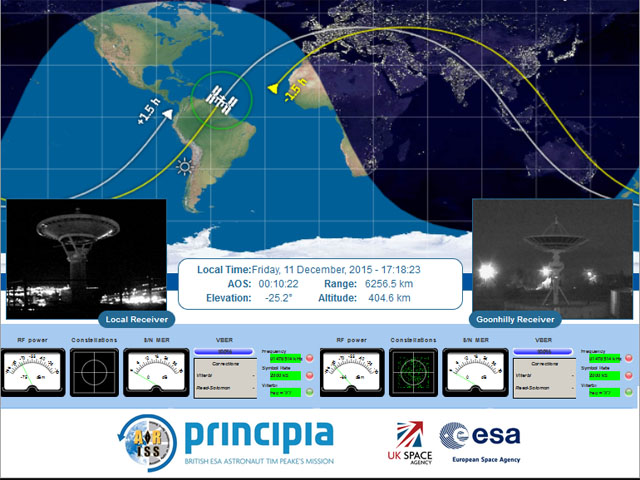
Tim Peake KG5BVI with Yuri Malenchenko RK3DUP and Tim Kopra KE5UDN

Tim Peake KG5BVI with Yuri Malenchenko RK3DUP and Tim Kopra KE5UDN

The next three crew members bound for the International Space Station are set to launch on Tuesday, December 15. NASA Television will provide full coverage of the launch beginning at 10:00 UT.

UK astronaut Tim Peake KG5BVI, along with Yuri Malenchenko RK3DUP and Tim Kopra KE5UDN, will launch from the Baikonur Cosmodrome in Kazakhstan at 11:03 UT (5:03 p.m. Baikonur time) for a six-month stay on the orbital complex.

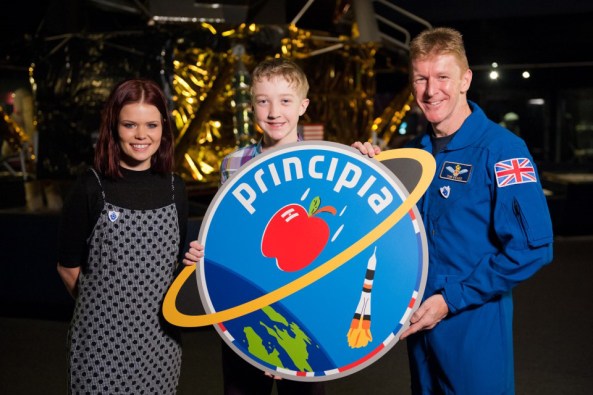
Principia Mission Patch

Principia Mission Patch

The three will travel in a Soyuz spacecraft, rendezvous with the space station and dock to the Rassvet module at 17:24 UT NASA TV coverage of docking will begin at 16:45 UT.

The hatches between the Soyuz and space station will be opened at about 19:25 UT, and the newly arrived crew members will be greeted by Expedition 46 Commander Scott Kelly of NASA and Flight Engineers Sergey Volkov RU3DIS and Mikhail Kornienko RN3BF of Roscosmos. NASA TV coverage of the hatch opening will begin at 19:00 UT.

Kelly and Kornienko will return in March 2016 with Volkov after spending a year on the station collecting valuable biomedical data that will improve our understanding of the effects of long duration space travel and aid in NASA’s journey to Mars.

Together, the Expedition 46 crew members will continue the several hundred experiments in biology, biotechnology, physical science and Earth science currently underway and scheduled to take place aboard humanity’s only orbiting laboratory.

For the full schedule of prelaunch, launch and docking coverage, visit:
http://www.nasa.gov/nasatv

Follow Tim Peake KG5BVI on Twitter at
https://twitter.com/astro_timpeake

Follow the space station crew members on Instagram and Twitter at:
http://instagram.com/iss
and
http://www.twitter.com/Space_Station

Tim Peake and Union Flag

Tim Peake and Union Flag

More 73 on 73 Awards Issued

First 73 on 73 Award issued to Wyatt Dirks AC0RA

First 73 on 73 Award issued to Wyatt Dirks AC0RA

Paul Stoetzer N8HM reports more awards have been issued for contacts made via the AO-73 (FUNcube-1) amateur radio satellite.

The 73 on 73 Award aims to promote activity on AO-73. The requirements are straight-forward:

1. Work 73 unique stations on AO-73.
2. Contacts must be made on or after September 1, 2014.
3. There are no geographic restrictions on your operating location.

The latest recipients are:
20. David D’Aliesio IW0HLG – 31 May 2015
21. Kiyosi Hasegawa JA3FWT – 22 June 2015
22. Mariusz Kocot SQ9MES – 28 June 2015
23. Hector Luis Martinez W5CBF – 12 July 2015
24. George K. Carr II WA5KBH – 17 July 2015
25. Michel Ribot F6GLJ – 18 July 2015
26. Paul Stoetzer N8HM – 21 July 2015
27. Jeffrey Lamb NX9B – 2 August 2015
28. Imre Füzi HA1SE – 13 September 2015
29. Herman Blom PB0AHX – 1 November 2015
30. Joseba Andoni Barrio – 22 November 2015

Full information on how to apply is at https://amsat-uk.org/funcube/73-on-73-award/

IARU at WRC-15

IARU WRC-15 team inside CICG

IARU WRC-15 team inside CICG

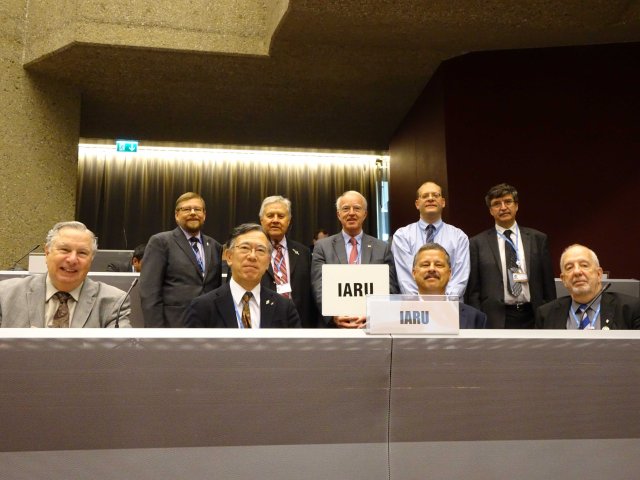
With WRC-15 entering the 4th and final week the opportunity was taken to get most of the group together for a photograph.

Taken inside the main CICG meeting room, sitting from left to right is Bryan Rawlings VE3QN (Canada), IARU Region 3 Secretary Ken Yamamoto JA1CJP (JARL), Hans Blondeel Timmerman PB2T (Netherlands), Colin Thomas G3PSM (UK).

Standing from left to right is IARU Vice-President Ole Garpestad LA2RR (Norway), IARU Region 2 President Reinaldo Leandro YV5AM, Ulrich Muller DK4VW (DARC), ARRL Chief Technology Officer Brennan Price N4QX (USA) and IARU Region 3 Director Don Wallace ZL2TLL (New Zealand).

Not pictured was Flavio Archangelo PY2ZX (Brazil) who worked tirelessly with the CITEL group and Dale Hughes VK1DSH (Australia) the sub-working group Chairman who successfully steered the 5 MHz agenda item through to a successful conclusion, IARU President Tim Ellam VE6SH and IARU Region 1 Vice-President Faisal Alajmi 9K2RR (Kuwait/ASMG) .

Photo courtesy of LA2RR

In his report for Day 16 of the conference Colin Thomas G3PSM says:

Discussions took place on suggested frequency bands for possible new or an upgrade of existing allocations to the space operations service within the frequency ranges 150.05-174 MHz, 400.15-420 MHz [and 420-450 MHz] for short duration satellites.

This potential future agenda item is an attempt to overcome the problem of non-amateur nano- and pico-satellites using the amateur service bands. No decision was reached and the document has been passed to plenary for decision.

WRC-15 reports http://rsgb.org/main/blog/category/news/special-focus/wrc-15/

IARU Region 1 http://iaru-r1.org/

Successful SSTV and Digitalker transmissions from SPROUT

SPROUT SSTV received by Paulo PV8DX Nov 22, 2015

SPROUT SSTV received by Paulo PV8DX

On November 22, 2015 SSTV and Digitalker transmissions were made from the SPROUT amateur radio satellite on 437.600 MHz FM (+/- 9 kHz Doppler shift). These transmissions are planned to take place every Sunday (Japanese Standard Time).

Many FM radios can be switched been wide and narrow deviation FM filters. For best results you should select the wider filter designed for 5 kHz deviation FM.

SPROUT (Space Research On Unique Technology) was built by students from Nihon University. It is a 20 x 20 x 22 cm nano-satellite with a mass of 7.1 kg in a 654 km, 97.9 degree inclination Sun Synchronous Orbit (SSO).

Paulo PV8DX in Brazil reports receiving both the SSTV image and the Digitalker transmission a recording of which can be heard here:

.
Real-Time tracking of SPROUT at http://www.n2yo.com/?s=39770 (tick Draw Footprint)

SPROUT SSTV and Digitalker are active every Sunday
https://amsat-uk.org/2015/11/19/sprout-sstv-active-sundays/

SPROUT Digitalker full text http://www.ne.jp/asahi/hamradio/je9pel/sprdigie.htm

Second Birthday of FUNcube-1

FUNcube-1 flight model - Image credit Wouter Weggelaar PA3WEG

AO-73 (FUNcube-1) – Image credit Wouter Weggelaar PA3WEG

FUNcube-1 (AO-73) was launched into space two years ago on November 21, 2013.

We are delighted to be able to report that more than 900 stations, including many schools around the world, have received the telemetry from the spacecraft since launch. Our Data Warehouse is storing more than 750 MB of data from almost 1 million data packets. We are very grateful to everyone who has been contributing to the success of this mission. Please continue to keep the data flowing as it will provide a valuable resource for students in the future.

The stats continue – speeding along at around 17,500 mph, FUNcube-1, which had a launch mass of just 982 grams, has completed more than 10,500 orbits of the earth. This means a total distance travelled of more than 260 million miles.

All telemetry sensors continue to provide valid data, real time, whole orbit and high resolution channels alike. The flight code is really robust and we have only had three unexpected “events” since launch. Two of these we believe to have been caused by noise of the command receiver being incorrectly interpreted as a command and only one appears to have been caused by a RAM error. The battery and solar panels also continue to work perfectly and provide a very positive power budget.

We have sent out many Fitter messages for school and other similar events. On November 17, 2015 there was a demonstration at Thorne Green Top School in Yorkshire. Here is a report from Dave Ryan EI4HT/M0GIW:

FUNcube-1 Educational Outreach - Thorne Green Top School in Yorkshire

FUNcube-1 Educational Outreach – Thorne Green Top School in Yorkshire

Good Morning All  

Firstly -thanks to all for your help, we had a great morning at Green Top and the highlight was FUNcube.

I started with a slide show talking about communications from cave paintings all the way up to smartphones, we looked at space communications and travel from Sputnik to Astra and Apollo to the Millennium Falcon! We spoke about satellites and how they are used every day and how we all got to watch “I’m A Celebrity” via Satellite last night from Australia.

I brought in lots of props too, some old Motorola MX330 radios, some PMR 446, and a marine band radio .I also had a small model of a CubeSat that I knocked up over the weekend, I also passed around some NOAA images from last week’s Abigail storm and I had a few QSL cards from ISS and MIR from years ago when I lived in Ireland.  

The FUNcube pass was great, really strong signals, I had my turnstile and FCD set up and had audio through speakers and used the class projector to show Satpc32 and the Dashboard.  

There was a great buzz of excitement when we got the first packet and even more when the Fitter messages came through. The kids were fascinated to see the signal arrive just as the software predicted and then hear the telemetry and the decode.  

After the pass we were able to look at the Warehouse online and print off the QSL card and certificate.

 I didn’t get a chance to take many pics but Mrs Overson will update the School Blog and she took lots of pics.

http://greentopschool.co.uk/blog

Once again thanks to all at FUNcube, looking forward to Tim Peake on the ISS in the New Year and planning another visit to the School then.

Regards

Dave EI4HT / M0GIW

PS: I was back dropping my own kids off this morning and Mrs Overson told me they have printed a QSL card and Certificate for each of the students and they have used them for their class journals.

As well providing a great educational resource, FUNcube-1 operates at night and generally at weekends with the linear transponder active for radio amateurs to use for communications. The transponder continues to provide an excellent service. As users will be aware, the transponder uplink frequencies vary with receiver temperature. The RX temp telemetry channel is the best one to use for tracking this effect. This does make it quite difficult to use full computer control for transponder operations and we have already developed new oscillator circuits to improve this performance for future missions.

For the telemetry uplinked to the Data Warehouse, it is possible to download special Certificate or QSL Card here http://amsatuk.me.uk/on/funcube_qsl.php and, for transponder users, the “73 on 73 award” continues at https://amsat-uk.org/funcube/73-on-73-award/

The Nayif-1 CubeSat mission, which includes a full FUNcube payload, is expected to be launched into a similar orbit in the first half of next year and will provide an additional level of service to the community.

Meanwhile we hope everyone will continue to have fun with FUNcube-1!

FUNcube-1 https://amsat-uk.org/satellites/communications/funcube-1/
Nayif-1 https://amsat-uk.org/satellites/communications/nayif-1/
FUNcube on Twitter https://twitter.com/FUNcubeUK
AMSAT-UK on Twitter https://twitter.com/AmsatUK
Facebook https://facebook.com/AmsatUK
YouTube https://youtube.com/AmsatUK

SPROUT SSTV and Digitalker active every Sunday

SSTV image received from SPROUT by Mario LU4EOU on May 31, 2014 at 0408 UT

SSTV image received from SPROUT by Mario LU4EOU on May 31, 2014 at 0408 UT

Slow Scan TV (SSTV) images in Scottie 1 format will be transmitted from the SPROUT satellite every Sunday (Japanese Standard Time) on 437.600 MHz FM (+/- 9 kHz Doppler shift). The Digitalker will also be active.

SPROUT, a 20 x 20 x 22 cm amateur radio nano-satellite with a mass of 7.1 kg, launched successfully with the L-band (1236.5 MHz/1257.5 MHz/1278.5 MHz) Synthetic Aperture Radar (SAR) satellite ALOS-2 on May 24, 2014 at 0305 UT. SPROUT is in a 654 km, 97.9 degree inclination Sun Synchronous Orbit (SSO).

SPROUT (Space Research On Unique Technology) was built by students from Nihon University and its objectives are:

SPROUT Satellite - Credit Nihon-Univ. Miyazaki Laboratory

SPROUT Satellite – Credit Nihon-Univ. Miyazaki Laboratory

1. Operation of satellite by radio amateurs.

A FM Digitalker will enable the satellite to speak to amateurs around the world.

The Voice Message Box will record transmissions from radio amateurs and play them back.

Pre-loaded images from the Message Gallery can be transmitted using Slow Scan TV (SSTV).

Pictures of the Earth can be transmitted by SSTV and radio amateurs can receive it using free software such as MMSSTV. As part of the Earth mapping project the team ask radio amateurs to contribute pictures they have received from the satellite for display on the SPROUT website.

The satellite also has a packet radio Digipeater and Text Message Box function.

SPROUT in orbit2. Demonstration of the deployment of the combined membrane structure and verification of the design method of the structure SPROUT has a triangular membrane supported by two tubes like framework. They are folded and stored in the satellite before the launch. After the launch, the nitrogen gas is injected into the tubes in space, and they extend, so that the membrane deploys (called “combined membrane structure”).

3. Demonstration of attitude determination and control of a nanosatellite using the sun sensors, gyros, geomagnetic sensor and magnetic torquers.

Callsign: JQ1ZJQ
Size: 214x210x220 mm
Weight: 7.1 kg
Mode: 1200bps AFSK, 9600bps GMSK
CW downlink 437.525 MHz
FM packet downlink 437.525 MHz
Digipeater uplink 437.600 MHz
Digitalker downlink 437.600 MHz
SSTV downlink 437.600 MHz

Many FM radios can be switched been wide and narrow deviation FM filters. For best results you should select the wider filter designed for 5 kHz deviation FM.

SPROUT Amateur Radio SSTV Satellite

SPROUT Amateur Radio SSTV Satellite

SPROUT English website http://sat.aero.cst.nihon-u.ac.jp/sprout-e/

SPROUT Japanese website http://sat.aero.cst.nihon-u.ac.jp/sprout/

Nihon-Univ. Miyazaki Laboratory on Facebook
https://www.facebook.com/pages/Nihon-Univ-Miyazaki-Laboratory/406566642818860

Telemetry Software http://sat.aero.cst.nihon-u.ac.jp/sprout-e/2-Software-e.html

Telemetry format http://sat.aero.cst.nihon-u.ac.jp/sprout-e/2-Formats%20of%20telemetry-e.html

SPROUT launch data page
http://sat.aero.cst.nihon-u.ac.jp/sprout-e/2-Launch%20data-e.htmlTLE’s from the North American Aerospace Defence Command (NORAD) are also available at http://celestrak.com/NORAD/elements/tle-new.txt

Free Slow Scan TV (SSTV) software MMSSTV http://hamsoft.ca/pages/mmsstv.php

The JE9PEL website has information on other satellites on this launch
http://www.ne.jp/asahi/hamradio/je9pel/jaxalos2.htm

Read the Overview of the L-band SAR Onboard ALOS-2 here.

SPROUT satellite students at Nihon-Univ. Miyazaki Laboratory

SPROUT satellite students at Nihon-University Miyazaki Laboratory