UK CanSat 2015 Winner Announced

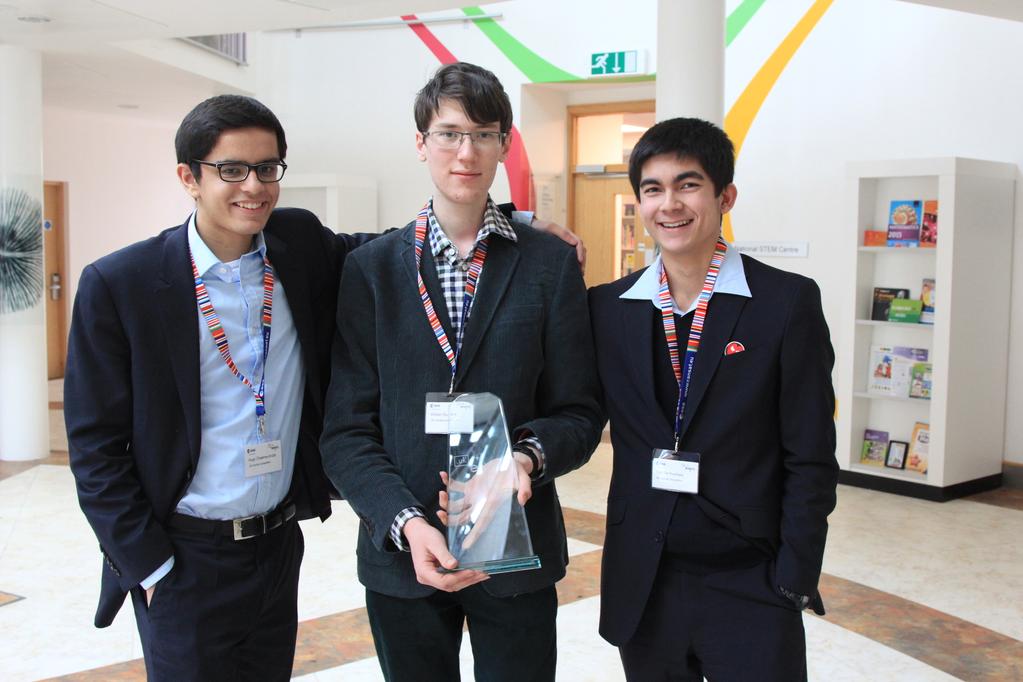
St Paul's Team Impulse - UK CanSat 2015 Winners - Image Credit ESERO-UK

St Paul’s Team Impulse – UK CanSat 2015 Winners – Image Credit ESERO-UK

ESERO-UK, the UK space education office, based in York, has announced the winner of the UK round of the International CanSat competition .

A CanSat is a student built simulated satellite with all the major subsystems including radio communications on 433/434 MHz and power fitting into a 350 ml soda can.

ESERO-UK organises the annual UK CanSat Competition for teams of secondary school students.

Winner of the Beginners’s category was the CANnoneers, from Tonbridge School in Kent. Runners up include: Spiritus, Putney High School, London; #getjezsrockettospace, from Allestree Woodlands School, Derby; Benenden CANSAT Avengers, from Benenden; Kent and Colossus, from St. Paul’s School, London.

“I highly recommend this wonderful opportunity to anyone who has the chance. Jump on it as it’s a unique opportunity to gain a lot of experience in a unique learning environment and will give a good amount of experience for anyone even considering a career in engineering! I enjoyed the experience and I’m sure the rest of my team did too.” Walter Tso, Outreach Manager and Electronics Assistant, CANnoneers.

Team Impulse, from St Paul’s School in London won the Advanced category of the competition. Runners up include: OSSO , from Oundle School, Northamptonshire; Heathrow Aeronautical Engineers, from Heathrow UTC, Greater London.

Team Impulse, from St Paul’s School in London, were announced overall winners of the 2015 CanSat competition and will go on to compete at the European CanSat Competition in Portugal.

“We are thrilled to be continuing the great British tradition of innovative engineering and are delighted to be representing St Paul’s and the UK at the CanSat final in Portugal.” Team Impulse, St Paul’s School.

Tom Lyons, ESERO Teacher Fellow said: “This year’s completion was a great success with all teams launching and recording data with their CanSats. We’re now looking forward to the 2016 competition and hoping to attract even more teams to get involved.”

Source ESERO-UK http://www.esero.org.uk/news/winner-of-uk-cansat-2015-announced

UK 434 MHz CanSat Competition https://amsat-uk.org/2015/03/13/434-mhz-cansat-competition/

Team Impulse St Paul’s School on Twitter https://twitter.com/TeamImpulseSPS

Young ham’s first contact is via OSCAR satellite

8-year-old radio amateur Hope Lea KM4IPF made her first contact just 45 minutes after her callsign appeared in the FCC database. The contact with Arthur K4YYL, via the FO-29 satellite, took place on March 11, 2015 at 2100 UT.

Her elder sister Faith WA4BBC and brother Zechariah WX4TVJ got to work K4YYL as well. They had both gained their US Technician licenses (equiv UK Foundation) in February and upgraded to the US General (equiv UK Intermediate) a couple of weeks later.

Hope’s younger sister is studying for her licence.

Watch KM4IPF Makes her FIRST amateur radio QSO!

FO-29 information https://amsat-uk.org/satellites/two-way-comms-satellites/fuji-oscar-29-jas-2/

John Heath G7HIA describes how to work FO-29 in this article https://amsat-uk.org/beginners/radcom-getting-started-on-satellites/

Notice of Variation to UK Amateur Radio Licence

Ofcom-logo-col-tOfcom have announced that following representations they are restoring the 75.875-76.0 GHz Amateur and Amateur-Satellite allocation to Primary status in the new amateur radio licence which comes into effect on April 7, 2015.

The Ofcom licensing updates page says:

Following the recent notification sent to licensees of our proposal to vary the Amateur Radio Licence, Ofcom now publishes a Notice of Variation to the Amateur Radio licence.

Licensees who received a notification dated 30th January are not covered by this. Their licences will be the subject of a separate Notice, which we shall publish in the course of the next couple of weeks.

The new licence document, which will have effect from 7 April 2015 has been published on our website, at
http://licensing.ofcom.org.uk/radiocommunication-licences/amateur-radio/guidance-for-licensees

The Notice of Variation along with Annex A and B can be downloaded from
http://licensing.ofcom.org.uk/radiocommunication-licences/amateur-radio/licensing-updates/notice-of-variation/

A number of changes have been made to the licence proposals originally announced December 5, 2014, these are detailed in Annex B.

It is understood that examinations will continue to be based on old licence terms until October 2015, since any exam changes are subject to a six month notice period.

Read the RSGB report at
http://rsgb.org/main/blog/news/rsgb-notices/2015/03/13/notice-variation-amateur-radio-licence/

UK 434 MHz CanSat Competition

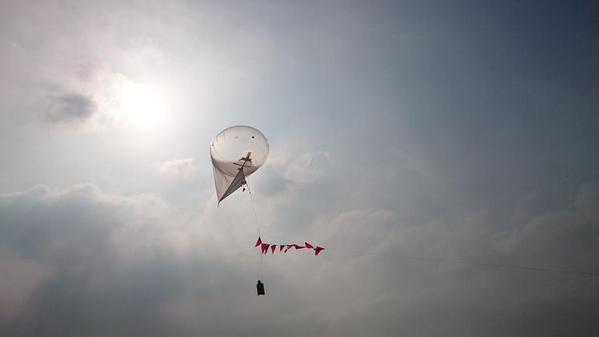
CanSat in Flight - Credit Ryan Laird

CanSat in flight – Credit Ryan Laird

On Friday, March 13 eight school teams from across the UK competed in the National CanSat Competition held at the National STEM Centre in York.

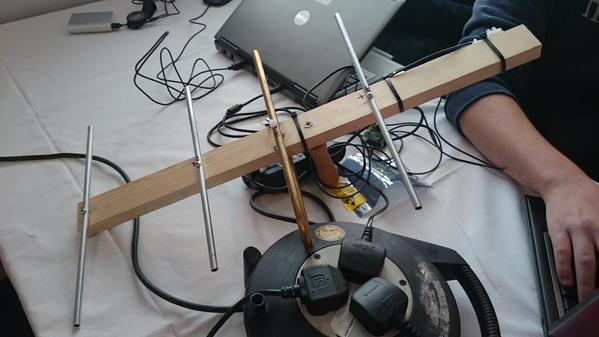
CanSat 434 MHz Tracking Antenna - Credit Ryan Laird

CanSat 434 MHz Tracking Antenna – Credit Ryan Laird

The CREST Gold Award accredited competition, now in its second year, involves students building a miniature simulation satellite, known as a CanSat, and launching it from 300 metres above an airfield.

The students had to build their own space experiments, fitting all the major subsystems including radio communications on 433/434 MHz and power into a 350 ml soda can.

They needed to write code to measure temperature, pressure and other chosen parameters on its journey parachuting to the ground. The winners of the competition will go on to the European finals, held in Portugal, in June.

Around 50 students and their teachers took part.

The pictures were taken by the Vice Chair of UKSEDS Ryan Laird @rjmlaird who attended the AMSAT-UK International Space Colloquium in 2007.

UK CanSat http://www.esero.org.uk/cansat

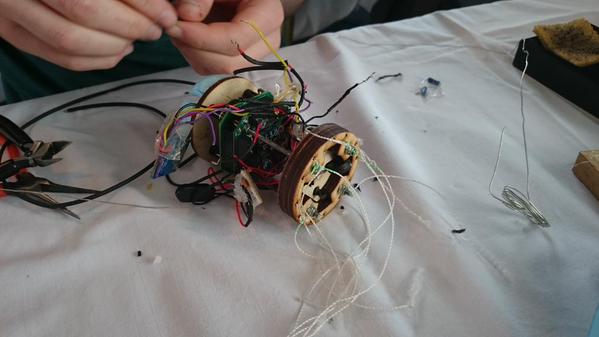
CanSat Electronics - Credit Ryan Laird

CanSat Electronics – Credit Ryan Laird

Listen to FUNcube-1 during Solar Eclipse

Solar Eclipse - March 20, 2015

Solar Eclipse – March 20, 2015

There will be a total solar eclipse on March 20, 2015 which tracks across the North Atlantic and eventually covers a lot of the Arctic.

Path of Solar Eclipse  March 20 2015

Path of Solar Eclipse March 20, 2015

It would seem that this will affect most spacecraft that are in a polar orbit to some extent as, at that sort of time, they would expect to be in sunlight at the time and location.

On FUNcube-1 (AO-73) we have a good power budget which means that we should be able to maintain our normal autonomous operation schedule for the day but, of course, if the spacecraft does go fully into darkness it should switch autonomously to transponder and low power telemetry.

It will be interesting to see what actually happens and we hope that as many listeners as possible will upload the data they receive between 0740 and 1150 UT on that morning. Our Whole Orbit Data will show the solar currents, battery voltage and external temps clearly during this period so we should get a clear understanding of the effects on board.

If anyone has some software that can model the satellite’s track and the expected impact of the solar eclipse it would be great to hear about it!

FUNcube-1 (AO-73) Telemetry:
• Dashboard App http://funcube.org.uk/working-documents/funcube-telemetry-dashboard/
• Data Warehouse Archive http://warehouse.funcube.org.uk/
• Whole orbit data will show the effect http://warehouse.funcube.org.uk/wod.html?satelliteId=2
This website has a good animation of the eclipse
http://www.timeanddate.com/eclipse/solar/2015-march-20

Information on the Solar Eclipse from Chelmsford Amateur Radio Society member Peter Meadows M0ZBU http://www.southgatearc.org/news/2015/march/partial_solar_eclipse_march_20.htm

Essex Partial Solar Eclipse Friday, March 20, 2015
http://www.petermeadows.com/Essex_Partial_Solar_Eclipse_Mar15.pdf

Radio hams will be at BBC Solar Eclipse event
https://amsat-uk.org/2015/03/02/radio-hams-will-be-at-bbc-solar-eclipse-event

Sarah Brightman’s fellow astronaut gets ham license

Danish Astronuat Andreas Mogensen KG5GCZ and Murray Niman G6JYB

Danish astronaut Andreas Mogensen KG5GCZ with Murray Niman G6JYB

Danish astronaut Andreas Mogensen completed his amateur radio license class on February 23 and passed his exam on February 25. He has been assigned the callsign KG5GCZ.

Andreas was selected as an ESA astronaut in May 2009 and completed the astronaut basic training programme at the European Astronaut Centre in Cologne, Germany in November 2010. Since completing the astronaut basic training programme, Andreas has been trained and certified as a private pilot by the Lufthansa flight school and is trained and qualified for spacewalks using both the American EMU suit and the Russian Orlan suit.

In July  2009 he attended the AMSAT-UK International Space Colloquium in Guildford where he described to delegates the astronaut selection process. This year it was announced he would be on the same 10-day mission to the International Space Station (ISS) as the UK’s Sarah Brightman.

He will be the first astronaut of Danish nationality to go to space and will launch with Sarah on a Soyuz TMA-18M spacecraft in September 2015.

UK’s Sarah Brightman starts space flight training
https://amsat-uk.org/2015/01/13/uks-sarah-brightman-starts-space-flight-training/

Sarah Brightman ISS Mission Patch

Sarah Brightman ISS Mission Patch