20th anniversary of first amateur radio operation from ISS

International Space Station - Image Credit NASA

International Space Station – Image Credit NASA

On November 13, 2000, the ISS Expedition-1 crew turned on the ARISS Ericsson radio for the first time and completed several contacts with ARISS ground stations around the world to validate the radio communications system.

These inaugural contacts launched an incredible two-decade operations journey on ISS, enabling ARISS to inspire, engage and educate our next generation of explorers and provide the ham radio community a platform for lifelong learning and experimentation.

In celebration of the ISS 20th anniversary, ARISS was part of an ISS Research and Development Conference Panel session entitled “20 years of STEM Experiments on the ISS.” The video below, developed for this panel session, describes our program, celebrates our 20th anniversary, conveys some key lessons learned over the past 20 years and describes the ARISS team’s vision for the future. Enjoy watching!

20 years of continuous operations is a phenomenal accomplishment. But what makes it even more extraordinary is that ARISS has achieved this through hundreds of volunteers that are passionate in “paying it forward” to our youth and ham radio community. On behalf of the ARISS International team, I would like to express our heartfelt thanks to every volunteer that has made ARISS such an amazing success over the past 20 years. Your passion, drive, creativity and spirit made it happen!!

Congratulations ARISS team!!!

Frank H. Bauer, KA3HDO
ARISS International Chair

Watch ARISS 20th Anniversary

Source ARISS https://www.ariss.org/
Amateur radio satellite talk now online

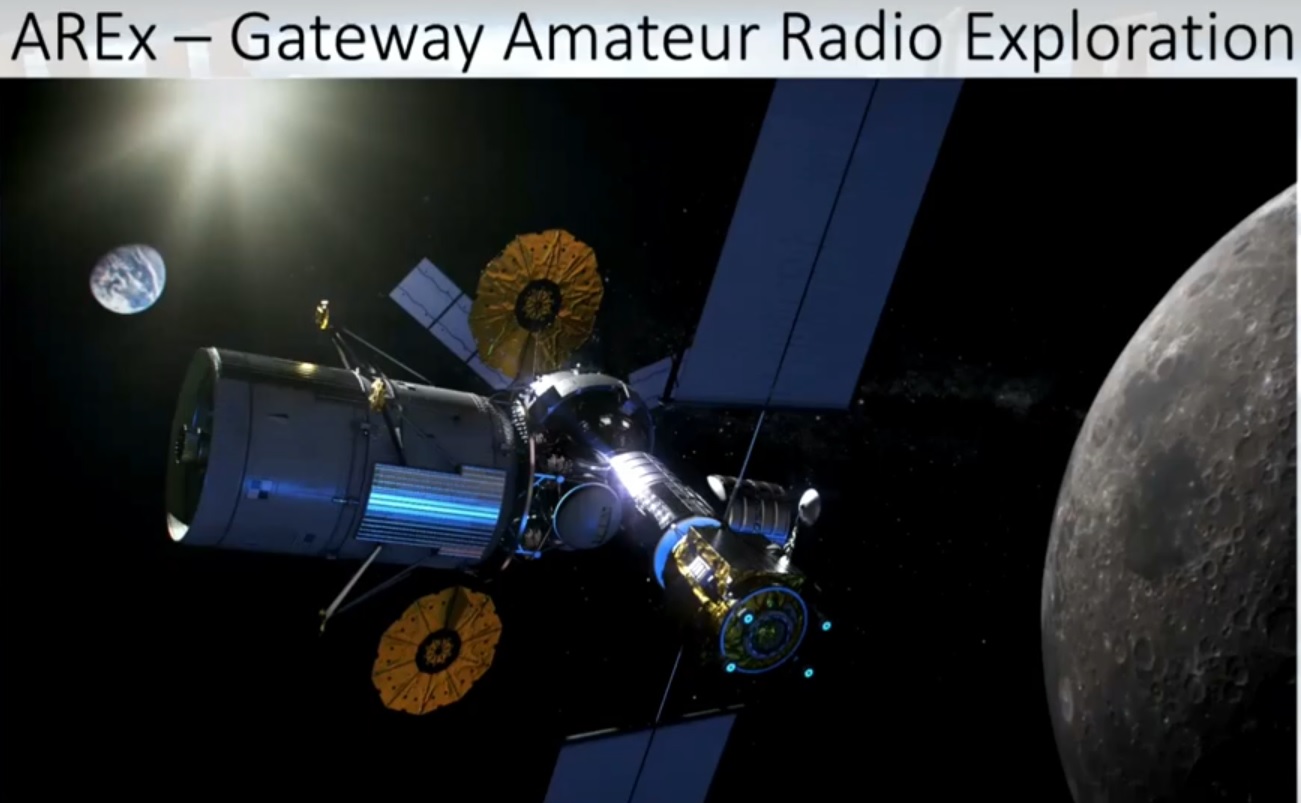
AREx - Gateway Amateur Radio Exploration

AREx – Gateway Amateur Radio Exploration

On Tuesday, November 10, Dave Johnson G4DPZ gave an online satellite talk to the Mid Ulster Amateur Radio Club, the video is now available for everyone to watch on YouTube.

The talk covered the many amateur satellites in Low Earth Orbit that operate in the 145.8-146.0 MHz and 435-438 MHz satellite bands as well as the QO-100 geostationary satellite which uses the 2.4 GHz and 10 GHz bands.

Also covered were the new Inter-Operable Radio System which has recently been installed in the ISS Columbus module and Gateway Amateur Radio Exploration (AREx).

After the talk the Mid Ulster ARC @MN0VFW tweeted:
“What a talk from Dave G4DPZ from @AmsatUK this evening. Thank you to him and everyone who joined in.”
https://twitter.com/MN0VFW/status/1326284522388905985

Watch AMSAT-UK and Amateur radio satellites with Dave G4DPZ

Mid Ulster Amateur Radio Club (MUARC) talks are held online at Zoom Meeting ID 832 6862 3068 at 7pm on the 2nd and 4th Tuesday’s of each month
https://twitter.com/MN0VFW/status/1326114389804584963

You can watch previous MUARC talks at https://www.youtube.com/MuarcMedia/videos

Video of EIRSAT-1 talk

Some of the EIRSAT-1 Team

Some of the EIRSAT-1 Team

The EIRSAT-1 CubeSat, built by students at University College Dublin, is due for launch on the Vega rocket in early 2021 and you can help!

The South Dublin Radio Club was honored to host a talk by David Murphy EI9HWB and Fergal Marshall of the EIRSAT-1 team. In this video, they give a comprehensive technical run-through of the satellite’s payload, subsystems and onboard communications.

From an amateur radio and hobbyist point-of-view, there is a full run-through of the uplink and downlink schemes including detailed flow charts (including demodulation and decoding). For details go to 14:30

This followed by a detailed proposal as to how amateur radio operators can contribute to ground station operations via SatNOGs and gr_satellites GNU Radio. For details go to 34:05

EIRSAT-1 particularly wants help with signal acquisition just after launch… the riskiest part of the mission. They want help from amateur radio operators, listeners, scanners, makers, etc… to expand the mission’s ground segment.  For details go to 39:50

There is then a very informative Q&A.

Watch You can help Ireland’s first satellite, EIRSAT-1!

EIRSAT-1 – 437.100 MHz
https://www.eirsat1.ie/
https://twitter.com/eirsat1

South Dublin Radio Club https://twitter.com/SDRadioClub

FCC Deletes 3.4 GHz Amateur Satellite Service Allocation

FCC SealThe AMSAT News Service (ANS) reports that at its open meeting on September 30, 2020, the Federal Communications Commission (FCC) adopted a Report and Order that sunsets Amateur use of the 3.3-3.5 GHz band.

This spectrum includes the 3.40-3.41 GHz Amateur-Satellite Service allocation. AMSAT had previously filed comments opposing the FCC’s proposal to delete this spectrum.

The adopted FCC Report and Order can be found at
https://www.fcc.gov/document/fcc-seeks-facilitate-5g-345-355-ghz-band-0

AMSAT filing https://www.amsat.org/wordpress/wp-content/uploads/2020/02/Comments-of-Radio-Amateur-Satellite-Corporation-WT-Docket-No-19-348.pdf

ISS SSTV October 4-8 on 145.800 MHz FM

ISS SSTV image 5 received by Dave Boult G7HCE in Exeter on April 14, 2019

ISS SSTV image 5 received by Dave Boult G7HCE in Exeter on April 14, 2019

An ARISS Slow Scan TV (SSTV) event is scheduled from the International Space Station (ISS) for October 4-8.

Update: Transmissions commenced on October 3.

The event is scheduled to begin on October 4 at 14:00 GMT for setup and operation and continue until October 8 ending at 19:15 GMT. Dates and times subject to change due to ISS operational adjustments.

Images will be downlinked at 145.800 MHz FM +/- 3 kHz for Doppler shift and the expected SSTV mode of operation is PD 120. The main theme of this collection of images will be Satellites.

Radio enthusiasts participating in the event can post and view images on the ARISS SSTV Gallery at https://www.spaceflightsoftware.com/ARISS_SSTV/

After your image is posted at the gallery, you can acquire a special award by linking to https://ariss.pzk.org.pl/sstv/ and following directions for submitting a digital copy of your received image.

ARISS SSTV Blog http://ariss-sstv.blogspot.com/

If your radio has selectable FM filters then for best results select the wider filter designed for 25 kHz channel spacing.

ISS SSTV info and links https://amsat-uk.org/beginners/iss-sstv

Online AMSAT-UK Space Colloquium – Open To All

Lunar Amateur Radio Transponder Project

Lunar Amateur Radio Transponder Project

The Online AMSAT-UK Convention takes place on Sunday, October 11, from 11am BST (10:00 GMT) to approximately 5pm, with a break for lunch, and several short breaks during the day. You don’t have to be a member of AMSAT-UK to participate, and the event is free of charge but please register ASAP.

Watch the recording of the Colloquium on YouTube at https://www.youtube.com/user/AMSATUK/videos

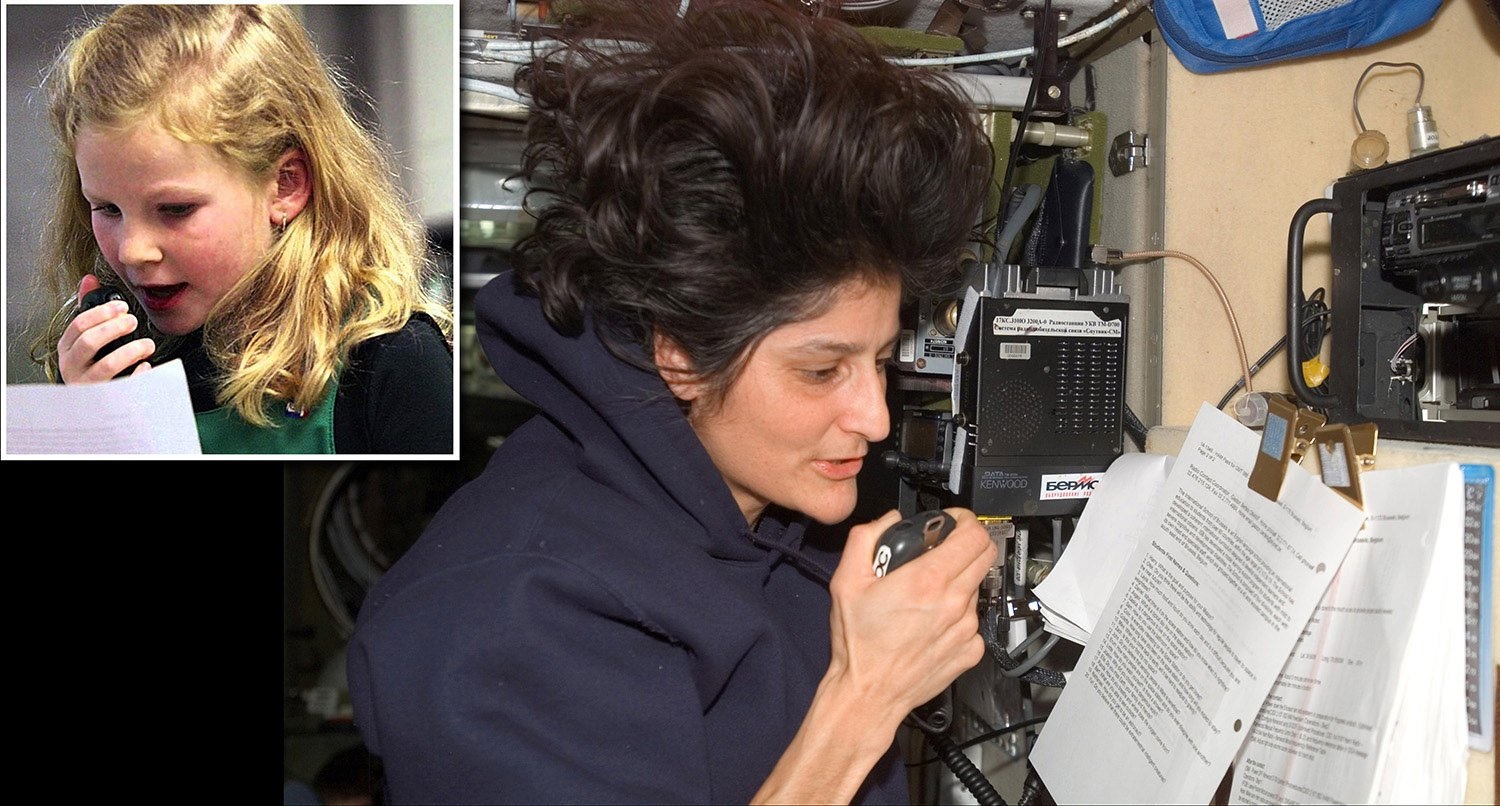
Astronaut Sunita Williams KD5PLB answers questions from a student

Astronaut Sunita Williams KD5PLB answers questions from a student

Those who are registered will be entered for a number of free raffles which will take place during the event.

Among the many talks and demonstrations during the day are:

1100 BST (1000 GMT) Official opening by Martin Sweeting G3YJO
1105-1125 Amateur Radio on the International Space Station (ARISS) Update by Ciaran Morgan M0XTD
1135-1200 Decoding Mars spacecraft – Bits and pieces you can learn from spacecraft telemetry by Daniel Estévez EA4GPZ
1210-1230 Tevel FM transponder satellite constellation by David Greenberg 4X1DG
1240-1300 LUNART – A Lunar Amateur Radio Transponder Project by Peter Gülzow DB2OS

Goonhilly GHY-6

Goonhilly GHY-6

1400-1420 FUNcube next, to boldly go… creating an open platform in space by Phil Ashby M6IPX
1430-1450 QO-100 Demonstration by Mike Willis G0MJW
1500-1520 Getting Goonhilly’s 32m antenna ready to support ESA missions by Matt Cosby Director of Space Engineering at Goonhilly Earth Station Ltd
1530-1550 AMSAT North America Engineering Update by Jerry Buxton N0JY
1600-1620 LEO Sat demonstration by Drew Glasbrenner KO4MA

Please register online at http://tinyurl.com/amsatukreg2020

Schedule of the day’s events
https://amsat-uk.org/wp-content/uploads/2020/09/amsat-colloquium-020-program-ver-1a.pdf

AMSAT-UK Colloquium Page https://amsat-uk.org/colloquium/