AMSAT’s FOX-1 Ham Radio CubeSat

AMSAT FOXIn HamRadioNow episode 85 Gary Pearce KN4AQ talks to a pair of AMSAT Vice Presidents – Tony Montiero AA2TX (Engineering) and Mark Hammond N8MH (Education) who tell us about the new Fox-1 Satellite.

They explain why AMSAT must transition from a bunch of hams who put up satellites for us to use, to a provider of the platform and communications for space science experiments for education (that also happen to have repeaters and transponders we can use).

Fox-1 is scheduled to launch from Vandenburg in November 2014 on the NASA ELaNa XII mission into a 470 x 780 km at 64 degrees inclination orbit. It will employ passive magnetic stabilization and carry a 435.180 MHz to 145.980 MHz FM voice transponder and an optional sub audible FSK digital carrier channel.

Watch HamRadioNow Episode 85: AMSAT’s Fox-1 Satellite

IARU Coordinates Frequencies for Fox-1A Ham Radio CubeSat
https://amsat-uk.org/2013/06/04/iaru-fox-1a-cubesat-frequencies/

July 13 Lift-off for LOHAN Balloon Rocket Test

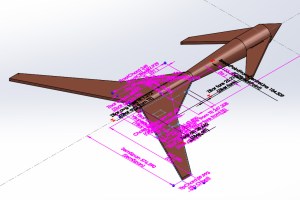
Vulture 2 Spaceplane - Image credit LOHAN

Vulture 2 Spaceplane – Image credit LOHAN

Radio amateurs Dave Akerman M6RPI and Anthony Stirk M0UPU provide an update on a balloon launch planned for this Saturday, July 13 which aims to test the firing mechanism for the LOHAN rocket.

There will be several 434 MHz radio transmitters on-board including one sending Slow Scan Digital Video (SSDV). The radio range is expected to cover most of the British Isles and North-West Europe.

The British Amateur Television Club (BATC) will be providing live coverage of the launch and hopefully also from the two chase vehicles.

Dave and Anthony say:

We will launch a second test of The Register’s LOHAN Project  from Brightwalton around 1000 UT (ISH time is most definitely in effect for this one). If you recall last time due to some problematic predictions the trusty Playmonaut was lost at sea and not recovered despite some valiant efforts by Lester and Neil in a bath tub with an engine on it.

LOHAN_mission_summary_04_bigWe will be repeating the test of the first launch on Saturday under a 2000g Hwoyee balloon. In order to test the firing mechanism for the LOHAN rocket we will be instead using it to detach a payload at a predetermined altitude where the payloads will part ways and land separately.

Each payload will have a primary and backup tracker on it :
Main payload SPEARS : LOHAN Board and a PAVA backup tracker:

Primary : $$SPEARS 434.650 MHz
Secondary : $$REHAB 434.600 MHz

Secondary payload CHAV : Rasp Pi doing SSDV and a PAVA Backup tracker:
Primary : $$CHAV 434.075 MHz
Secondary : $$SHUTIT 434.495 MHz

Transmission format is RTTY speeds please select auto-configure in DL-FLDigi

If we have dubious prediction data we may be launching another payload early in the day to verify that prediction meets reality and we aren’t going to feed another Playmonaut to the fish. This will be on 434.545 MHz and its call sign will be $$PAVA.

The Slow Scan Digital Video (SSDV) on CHAV will change sizes during the flight:
– “launch mode” is small images (320 x 176) till it gets above 3 km
– “flight mode” is larger images (512 x 288) till it drops below 2 km
– “landing mode” takes a single 10-minute video starting at 2 km, then switches back to small images

We will, subject to 3G coverage, be transmitting the preparation, launch and possibly chase live thanks to the nice people at batc.tv. The link is :
http://www.batc.tv/streams/ukhas

There may be a secondary stream (the two chase cars may go separate ways) at :
http://www.batc.tv/streams/ukhas2
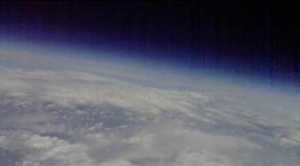
SSDV picture from a PIE balloon - Image credit Dave Akerman M6RPI

SSDV picture from a PIE balloon – Image credit Dave Akerman M6RPI

You can of course follow the position of the balloons live at http://www.spacenear.us/tracker and the live SSDV images from the Pi will be uploaded here : http://ssdv.habhub.org/.

Although batc.tv has a chat function we welcome you to join the #highaltitude channel on Freenode to take part in the conversation throughout the day.

Finally we welcome listeners to track the balloons in flight, tracking can be done with any radio reciever that can recieved USB on 70 cms (434 MHz), i.e some scanners, full amateur radio equipment, FUNcube Dongles or just a RTL Dongle being used as an SDR. There is a guide here on how to track. We expect reception range to cover most of the UK and northern Europe.

Cheers,

Anthony M0UPU / Dave M6RPI

LOHAN hooks up with radio ham and top-flight rocketeer G7ALW
https://amsat-uk.org/2013/03/17/lohan-hooks-up-with-radio-ham-and-top-flight-rocketeer-g7alw/

For up-to-date information on balloon launches subscribe to the UKHAS Mailing List by sending a blank email to this address:
ukhas+subscribe@googlegroups.com

Radio Hams Kickstarter Plasma Thruster CubeSat

Artists impression of the CubeSat Ambipolar Thruster (CAT) satellite

Artists impression of the CubeSat Ambipolar Thruster (CAT) satellite

Radio amateurs Benjamin Longmier KF5KMP and James Cutler KF6RFX of the University of Michigan hope to raise $200,000 on Kickstarter for a CubeSat propulsion project.

The CubeSat Ambipolar Thruster (CAT) is a new plasma propulsion system which will push small spacecraft like CubeSats around in orbit or far beyond the Earth. They aim to use the CAT plasma thruster to propel a 5kg satellite into deep space at 1/1000th the cost of previous missions.

Just like a normal rocket that produces thrust from the burning and expansion of hot gases, CAT produces thrust from the expansion of a super-heated 350,000 °C plasma stream. Plasma is an ionized gas that can be accelerated to produce thrust (F=ma).  The force generated by this thruster will be very low (milli-newtons) but very efficient.  The engine will be turned on for long durations, accelerating the spacecraft to much higher velocities than a typical chemical rocket.

First, the propellant will be injected from its storage container into the plasma discharge chamber, a quartz bottle that distributes the gas and contains the plasma. The gas is turned into a plasma by a radio frequency antenna that surrounds the chamber and launches a plasma wave known as a “helicon.” The plasma is then launched out of the quartz bottle and guided by magnetic fields from extremely powerful permanent magnets. As the plasma escapes the CAT engine, this causes an equal and opposite thrust, pushing the satellite in the opposite direction. Unlike conventional rockets, almost any substance can be used as propellant for CAT – even liquid metals or water vapor!

Find out more about the project and watch the video on the Kickstarter site.

Kickstarter – CAT: A Thruster for Interplanetary CubeSats
http://www.kickstarter.com/projects/597141632/cat-a-thruster-for-interplanetary-cubesats

Facebook https://www.facebook.com/CubeSatAmbipolarThruster

7-year-old UK boy writes to NASA

Late Spring on MarsDexter, a 7-year-old from Derby in England, wrote to NASA saying he wanted to be an astronaut and go to Mars.

The Huffington Post reports that to the surprise of his mother, Katrina Anderson, NASA responded encouraging Dexter to explore space camp, get good grades and continue “reaching for the stars” and sent a parcel of photos and stickers.

Read Dexters original letter and NASA’s response on his mother’s Imgur account at http://imgur.com/a/6MqlY

Huffington Post article http://www.huffingtonpost.com/2013/07/08/dexter-nasa-letter_n_3561386.html

National Public Radio (NPR) story http://www.npr.org/blogs/thetwo-way/2013/07/08/200053973/boy-writes-to-nasa-nasa-writes-back

Google Project Loon Interference Concerns

Google Project Loon Balloon

Google Project Loon Balloon

Concerns have been raised about interference from the 2400 MHz and 5800 MHz transmitters on the Google Project Loon High Altitude Balloons.

Google has launched 30 balloons from New Zealand which transmit wideband 2400 MHz and 5800 MHz signals and concerns have been raised about the interference they could cause to radio astronomy.

The Register reports that when Google engneer Dr Brad Tucker was contacted about the problem Google to said to have identified locations where Loon balloons might interfere with radio astronomy, and shut the transmitters down until they’re out of range.

Google plans to sending up 300 balloons around the world at the southern fortieth parallel that would provide coverage to New Zealand, Australia, Chile, and Argentina.

The company hopes to eventually have thousands of balloons flying in the stratosphere at an altitude of 20 km.

The Amateur and Amateur Satellite Services also use the frequencies that Project Loon is transmitting on.

Read the Register story at
http://www.theregister.co.uk/2013/07/02/project_loon_wont_blind_radio_telescopes/

Google Project Loon https://amsat-uk.org/2013/06/17/google-project-loon-using-2400-and-5800-mhz/

Ham Radio CubeSat FITSAT-1 becomes a “Shooting Star”

FITSAT-1 used LED's to signal in Morse code

FITSAT-1 used LED’s to signal in Morse code

The amateur radio CubeSat FITSAT-1, also known as NIWAKA, burnt up in the Earth’s atmosphere in the early hours of Thursday, July 4, 2013.

Image of ISS taken by the FITSAT-1 CubeSat after deployment

Image of ISS taken by the FITSAT-1 CubeSat after deployment

Takushi Tanaka JA6AVG of the Fukuoka Institute of Technology FITSAT project has issued this statement:

FITSAT-1 has decayed on July 4, 2013. The last signal was received by JA0CAW at 03:07(UT).

I appreciate all hams who joined our experiments, helped our operations, and sent me many reports.

I could make many friends in the world and enjoyed through FITSAT-1. Though FITSAT-1 became a shooting star,  I am very happy now.

Thank you very much again all Ham friends.

FITSAT-1 Flight Model

FITSAT-1 Flight Model

FITSAT-1, built by students at the Fukuoka Institute of Technology, was one of five CubeSats launched to the International Space Station (ISS) on July 21, 2012.

The CubeSats WE-WISH, TechEdSat, F-1, FITSAT-1 and RAIKO were integrated with the J-SSOD small satellite deployer on the the Japanese Experiment Module Kibo and deployed by the Kibo robotic arm on October 4, 2012 into a 420 km orbit.

Four of them, WE-WISH, TechEdSat, F-1 and FITSAT-1, have now de-orbited only RAIKO remains. The CubeSats that have de-orbited were all 1U in size (10x10x10 cm, 1-1.2 kg). The remaining CubeSat RAIKO is 2U in size, twice the volume and mass (20x10x10 cm, 2 kg).

Takushi Tanaka JA6AVG and FITSAT

Takushi Tanaka JA6AVG and FITSAT

FITSAT-1 carried a CW telemetry beacon on 437.250 MHz, a 1200 bps AX.25 packet radio transmitter on 437.445 MHz, a high-speed (115.2 kbps) data transmitter on 5840.0 MHz and an optical LED array to flash Morse code to observers on Earth.

The 5840.0 MHz transmitter on FITSAT-1 ran about 2 watts output. It supported a data rate of 115.2 kbps and sent a JPEG 640×480 VGA pictures in just 6 sec.

FITSAT-1’s low orbit meant its lifespan was limited to just 9 months but in that time it was able to achieve a number of technology firsts. Its success showed the outstanding design and construction abilities of the student team from the Fukuoka Institute of Technology.

Pictures Received on 5840 MHz from Amateur Radio Satellite FITSAT-1
https://amsat-uk.org/2013/01/08/pictures-received-on-5840-mhz-from-amateur-radio-satellite-fitsat-1/

FITSAT-1 Successfully Flashes Morse Code from Space
https://amsat-uk.org/2012/12/12/amateur-radio-cubesat-fitsat-1-successfully-flashes-morse-code-from-space/

FITSAT-1 website http://www.fit.ac.jp/~tanaka/fitsat.shtml

Further information and pictures of the CubeSats are at
https://amsat-uk.org/satellites/techedsat-f-1-fitsat-1-we-wish/

Amateur Radio CubeSats TechEdSat, F-1 and FITSAT-1 pass the ISS solar panels

Amateur Radio CubeSats TechEdSat, F-1 and FITSAT-1 pass the ISS solar panels