STRaND-2 ‘Kinect’ Satellites Video

STRaND-2, a twin nanosatellite mission from SSTL and the University of Surrey to test a novel in-orbit docking system using a gridded Lidar system based on the Microsoft Xbox Kinect games-controller technology.

Similar in design to STRaND-1, the identical twin satellites will each measure 30cm (3 unit Cubesat) in length, and utilise components from the Xbox Kinect games controller to scan the local area and provide the satellites with spatial awareness on all three axes – thus allowing them to dock.

The STRaND team sees the relatively low cost nanosatellites as intelligent “space building blocks” that could be stacked together and reconfigured to build larger modular spacecraft.

Watch STRaND-2 Docking Nanosatellite.wmv

STRaND stands for Surrey Training, Research and Nanosatellite Demonstration and the programme is intended to be a long-term arrangement between the space company SSTL and academic researchers at the Surrey Space Centre (SSC), with STRaND-1 the first of a long line of STRaND nanosatellites.

The SSTL employees involved with the STRaND programme are volunteers. It is a condition of the programme that volunteers from SSTL and SSC use their own, free time for STRaND activities (such as lunches and breaks). The project has no budget for staff so is entirely dependent on volunteers.

Further information at http://www.sstl.co.uk/divisions/earth-observation—science/science—exploration/strand-2-building-blocks-nanosatellite

‘Kinect’ STRaND-2 at UK Space Agency Conference http://www.uk.amsat.org/6795

Surrey Satellite to put Xbox parts in space http://www.uk.amsat.org/7771

The Register article http://www.theregister.co.uk/2012/05/28/sstl_strand_2_nanosat_xbox_kinect/

Thinking outside the box in space by BBC Science correspondent Jonathan Amos http://www.bbc.co.uk/news/science-environment-18250755

STRaND on Facebook https://www.facebook.com/nanosats

Beta Version of SimpleSat Software Available

The SimpleSat Look Down program is designed for demonstrating satellite operation. It is also useful in educational environments. It is designed for ease of use and is not a full featured tracking program like the very capable SatPC32.

Tom Doyle W9KE wrote it as a Windows 8 Metro application so the Windows 7 version has the look and feel of a Metro app. It also runs on Windows XP but your results may vary.

Tom has produced this demonstration video of the software.

Watch – SimpleSat Look Down – best viewed full screen HD

Download SimpleSat Look Down from http://www.tomdoyle.org/SimpleSatLookDown/

International Space Colloquium – Second Call For Speakers

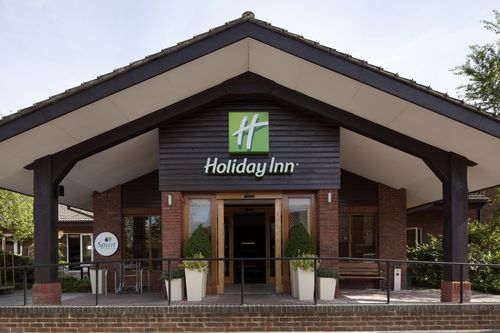
Holiday Inn Guildford GU2 7XZ

Holiday Inn Guildford GU2 7XZ

This is the second call for speakers for the AMSAT-UK International Space Colloquium which, due to the Olympic & Paralympic Games, will be held this year on the weekend of September 15-16, 2012 at the Holiday Inn, Guildford, GU2 7XZ, United Kingdom.

This Colloquium will take place before the planned launch of AMSAT-UK’s Cubesat FUNcube-1 designed to encourage young people to learn about radio, space, physics and electronics. It contains a 1200 bps BPSK telemetry beacon and a 435/145 MHz linear transponder.

AMSAT-UK invites speakers, to cover topics about micro-satellites, CubeSats, Nanosats, space and associated activities, for this event.

They are also invited to submit papers for subsequent publishing on the AMSAT-UK web site. We normally prefer authors to present talks themselves rather than having someone else give them in the authors’ absence. We also welcome “unpresented” papers for the web site.

We appreciate that it is not always possible to give a firm indication of attendance at this stage but expressions of interest would be appreciated.

Submissions should be sent ONLY to David Johnson G4DPZ, via the following routes:

e-mail: david dot johnson at blackpepper dot co dot uk

Postal address at http://www.qrz.com/db/G4DPZ

AMSAT-UK also invite anyone with requests for Program Topics to submit them as soon as possible to David Johnson G4DPZ.

Invitations for any papers on specific subjects will be included in the future call. Likewise if anyone knows of a good speaker, please send contact and other information to David Johnson G4DPZ.

AMSAT-UK International Space Colloquium 2012 http://www.uk.amsat.org/colloquium/twelve

Booking http://shop.amsat.org.uk/shop/category_10/Colloquium-2012-Fri-14-Sep-to-Sun-16-Sep.html

Video of VO-52 Downlink Over Europe

Dimitrios Pallis SW1JGW has made available a video of the downlink of the amateur radio satellite VO-52 over Europe on May 27, 2012.

Among the stations heard in the downlink is Domenico I8CVS. His interest in satellites first started in 1960 when he built a VHF converter and yagi antenna to succesfully receive the 108.000 and 108.030 MHz beacons from the passive communication satellites ECHO-I and ECHO-II.

Dimitrios SW1JGW made the recording with a G59 SDR and Ten Tec 1012 Transverter.

Watch VO52 27/05/2012 Recording with Genesis G59 SDR

VO-52 frequencies (note transponder is inverting, transmit LSB on 435 to get USB on 145 downlink):
Uplink:         435.2250 – 435.2750 MHz SSB/CW
Downlink:     145.9250 – 145.8750 MHz SSB/CW
Beacon:       145.8600 MHz CW

How to work the SSB amateur radio satellites such as VO-52 http://www.uk.amsat.org/2712

John Heath G7HIA wrote about operating through VO-52 in his article ‘Getting started on amateur radio satellites’ that was published by the Radio Society of Great Britain in the March 2007 edition of RadCom. Download the article at https://amsat-uk.org/wp-content/uploads/2011/05/satellites_radcom_mar07.pdf
Copyright 2007 Radio Society of Great Britain. For personal use only – no copying, reprinting or distribution without written permission from the RSGB.

David A Palmer, KB5WIA, has written an article “Twins!  A Backpack-Portable Full Duplex Satellite Station with Dual FT-817ND’s” that can be seen at http://kb5wia.blogspot.com/2010/10/satellite-portable-station.html

Surrey Satellite to put Xbox parts in space

Surrey-based researchers are to build Xbox Kinect hardware into twin satellites in an auto-docking experiment.

The microsatellites, to be called STRaND-2, are being developed by University of Surrey and Surrey Satellite Technology (SSTL), with the Kinect providing its 3D laser scanner.

CubeSat is a mechanical standard for miniature satellites. In this case, the spacecraft will be ‘3U’ CubeSats each measuring 10x10x30cm and weighing under 4kg.

“Docking systems have never been employed on such small and low cost missions and are usually reserved for big-budget space missions to the International Space Station or historically, the Mir space station and the Apollo programme,” said SSTL.

They will dock many times, initially with ground intervention, then increasingly automatically.

SSTL’s speciality, through extensive testing, is selecting commercial electronic hardware which can be used in space – STRaND-2’s scanners will come out of actual Kinects.

Inspiration for the flight came from an experiment at the Massachusetts Institute of Technology (MIT), where a tiny helicopter equipped with Kinect hardware was used to scan rooms as it flew through them, allowing a 3D model of the environment to be built, said SSTL project leader Shuan Kenyon.

The University of Surrey and SSTL team has already developed STRaND-1 (Surrey Training, Research and Nanosatellite Demonstrator), and was looking for a further challenge.

STRaND-1, another 3U CubeSat, will famously carry a mobile phone into orbit and send data direct to schools.

STRaND-1 is also one of the most manoeuvrable small satellites ever built, with eight micro-thrusters providing rotation in three axes as well as lateral movement in two dimensions. A separate gas jet provides thrust in the third linear dimension.

If two similar satellites can be made to dock, the team is proposing larger self-assembling structures made of many, perhaps dozens, of CubeSats.

“It may seem far-fetched, but our low cost nanosatellites could dock to build large and sophisticated modular structures such as space telescopes,” said Surrey university project head Dr Chris Bridges. “Unlike today’s big space missions, these could be reconfigured as mission objectives change, and upgraded in orbit with the latest available technologies.”

“I think by STRaND-4, we should be able to build the USS Enterprise,” quipped Kenyon.

Other ideas include using small mobile scanning satellites to inspect larger spacecraft.

‘Kinect’ STRaND-2 at UK Space Agency Conference http://www.uk.amsat.org/6795

STRaND on Facebook https://www.facebook.com/nanosats
50 Years of the UK in Space

Anu Ojha Director, National Space Academy

The UK Space Agency has released a YouTube video celebrating the UK’s 50 years in space

Watch 50 Years of the UK in Space

First UK Astronaut Helen Sharman GB1MIR on the MIR Space Station