AMSAT Picture Albums

Australis-Oscar-5 Checkout

Australis-Oscar-5 Checkout

Bob McGwier N4HY has made available an extensive collection of amateur radio satellite pictures available for download on smugmug.com.

The pictures range from the early 1960’s with OSCAR’s 1, 2, 3 etc to the more recent Eagle and SuitSat.

You can view the pictures and download them from http://n4hy.smugmug.com/AMSAT


ICUBE-1 CubeSat

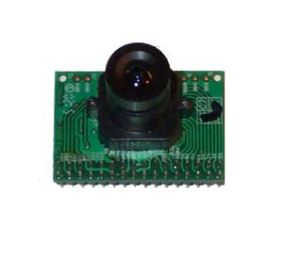
Camera Module

Camera Module

Students at the Institute of Space Technology (IST) have been building Pakistan’s first CubeSat ICUBE-1. Like a number of new CubeSats its communications subsystem is capable of acting as an “AO-16 mode” FM to DSB transponder.

The IARU amateur satellite frequency coordination panel pages say that the VHF downlink will operate as a 1k2 BPSK beacon but has the capability of being configured as an FM-DSB transponder. A downlink on 145.947 MHz and an uplink on 435.060 MHz have been coordinated.

It is planned to have an imaging payload with a small low resolution CMOS sensor. The C3188A imaging module uses Omnivision’s CMOS image sensor OV7620. The camera will be mounted on the Z+ face of the ICUBE and can take continental scale images.

ICUBE http://www.icube.org.pk/

Student Satellite Project http://www.ist.edu.pk/student_satellite.html

Institute of Space Technology (IST) http://www.ist.edu.pk/

F6KRK ISS School Contact Video

This video, shot in Descartes High School, shows the school’s contact with astronaut Dan Burbank KC5ZSX who was onboard the International Space Station (ISS).

Watch Contact ARISS – F6KRK – Montigny-Le-Bretonneux – 09 Janvier 2012

A video of Edmund 2E0MDO receiving the ISS school contact on a Baofeng UV-3R from a car park in Worthing is at http://www.uk.amsat.org/3567

Find out how to listen to the International Space Station at http://www.uk.amsat.org/3491

ARISS ham radio contact with Descartes High School, France
http://www.southgatearc.org/news/january2012/ariss_event_0901.htm

Video of Space Station Reception on 145.800 MHz FM

Baofeng UV-3R

Baofeng UV-3R

On Monday, January 9, Edmund 2E0MDO received the International Space Station (ISS) using a Baofeng UV-3R hand-held with its supplied antenna. He has made a video to show how you can hear the ISS with simple equipment. He writes:

Continuing the theme of receiving the International Space Station in random car parks in Southern England, using various low-tech cheap equipment…

This time I was near Worthing (West Sussex) around 1020 GMT on Monday 9 January 2012. I am using my old camera again so hopefully the audio is not as overdriven as the Portsmouth video!

The signal from the space-station I am receiving is on 145.800MHz, in narrow FM, at the top-end of the 2 meter amateur radio band. The signal going up to the space-station was coming from a school in France. Sadly I couldn’t receive that side of the conversation. The astronaut speaking is Dan Burbank, callsign KC5ZSX.

Watch International Space Station received in Worthing – 9 January 2012

The handheld is the Mark II version of the very cheap and cheerful (but excellent value for the money) Baofeng UV-3R, using just the supplied rubber duck as an antenna. The smallest step size on the radio is 5kHz, so I couldn’t do anything about the Doppler shift unfortunately! 145.800 was close enough though.

There is slight breakthrough from pagers, which cannot be helped in a radio of this size and complexity. Using a bigger and better antenna might actually have made the breakthrough worse.

If I can receive the ISS, then *anybody* can! Go for it, whatever your receiving setup is!!

For more information on hearing the ISS read ‘Listening to the International Space Station’ at http://www.uk.amsat.org/3491

The Baofeng UV-3R MK-II is available for around £30 ($45) from many on-line suppliers. See this review of the older MK-I http://www.essexham.co.uk/news/baofeng-uv-3r-handheld-radio-review.html

Programming the Baofeng UV-3R From a PC
http://www.essexham.co.uk/news/programming-the-baofeng-uv-3r-from-a-pc.html

Setting up the Baofeng UV-3R for a Repeater
http://www.essexham.co.uk/news/setting-up-the-baofeng-uv-3r-for-gb3da-danbury-repeater.html

ARISS ham radio contact with Descartes High School, France
http://www.southgatearc.org/news/january2012/ariss_event_0901.htm

Listening to the International Space Station

International Space Station

International Space Station

The amateur radio station on the ISS can be received using very simple equipment.

History

The first Amateur Radio equipment was delivered to the International Space Station (ISS) in September 2000 and an Amateur Radio station was established onboard for use by Astronauts who are licenced Radio Amateurs. Commander William Shepherd, KD5GS, made the first Amateur contacts in November of that year.

Most of the astronauts on the International Space Station are licenced Radio Amateurs and sometimes during their spare time they talk to other Radio Amateurs back on earth. There is a special thrill in talking to an astronaut out in space!

What equipment do you need to hear the ISS ?

Baofeng UV-3R

You can hear the ISS on a Baofeng UV-3R

Almost any 144 MHz FM rig will receive the ISS, you can even use a general coverage VHF scanner with an external antenna. As far as the antenna is concerned the simpler the better. My favourite is a ¼ wave ground plane as it has a high angle of radiation. I’ve found large 2m colinears don’t work quite as well since the radiation pattern is concentrated at the horizon.

You can receive the ISS outdoors using a 2 metre hand-held with its helical antenna but a 1/4 wave whip will give far better results.

In the UK we use narrow 2.5 kHz deviation FM but the ISS transmits using the wider 5 kHz deviation used in much of the world. Most rigs can be switched been wide and narrow deviation filters so select the wider deviation. Hand-held rigs all seem to have a single wide filter fitted as standard.

What will you hear ?

Much of the time the Space Station equipment operates in “automatic mode”. It can act as an AX.25 packet repeater, voice repeater or transmit Slow Scan Television (SSTV) pictures. Voice and SSTV transmissions take place on 145.800 MHz FM, when they are not active AX.25 packet may be heard on 145.825 MHz.

The aim to start with is simply to listen to the sounds from the satellite. You can check the current mode of operation on the ISS Fan Club website.

Astronaut Susan Helms KC7NHZ having a contact

Astronaut Susan Helms KC7NHZ having a contact

The ISS amateur radio station is used for school contacts. These educational contacts enable students to communicate directly via Amateur Radio with the Astronauts and ask them questions. In recent years a number of UK schools have made contact with the space station thanks to GB4FUN and volunteers from AMSAT-UK.

When the astronauts put out a CQ call they also use 145.800 MHz FM but operate “split” listening for replies 600 kHz lower on 145.200 MHz. If you are lucky and hear them calling CQ just remember to activate your rigs repeater shift to ensure you reply on the correct frequency. You should never transmit on 145.800 MHz.

When to listen

The ISS is in a very low orbit and so is only in range 5 or 6 times each day and then only for a maximum of 10 minutes on the best orbit. This means you need to make sure you’re listening at the right time to hear it. There are a number of websites that tell you when to listen. I use the orbital predictions on the ISS Fan Club site.

Doppler Shift

The International Space Station is travelling around the Earth at over 28,000 Km/h. This high speed makes radio signals appear to shift in frequency, a phenomenon called Doppler Shift.

This Doppler shift will cause the ISS transmit frequency of 145.800 MHz to look as if it is 3.5 kHz higher in frequency, 145.8035, when ISS is approaching your location. During the 10 minute pass the frequency will move lower shifting a total of 7 kHz down to 145.7965 as the ISS goes out of range. To get maximum signal you ideally need a radio that tunes in 1 kHz or smaller steps to follow the shift but in practice acceptable results are obtained with the radio left on 145.800 MHz.

AMSAT-UK

The Amateur Satellite organisation in this country is AMSAT-UK. Its members are involved in the construction of new Amateur Radio satellites and in running the stations used for ISS school contacts and. The group produce a quarterly A4 colour publication OSCAR News that is full of information on the Amateur satellites. You can join online via the AMSAT-UK website.

Get the latest status of the space station at the ISS Fan Club http://www.issfanclub.com/

Orbital Predictions (select ISS) http://www.amsat.org/amsat-new/tools/predict/

The IZ8BLY Vox Recoder enables you to record the ISS on 145.800 MHz FM while you’re away from home http://antoninoporcino.xoom.it/VoxRecorder/

Amateur Radio on the International Space Station (ARISS) http://www.rac.ca/ariss/oindex.htm

Hams Asked To Help Encourage Home Construction

Diane Bruce VA3DB

Diane Bruce VA3DB

The AMSAT News Service reports that Diane Bruce, VA3DB, is asking radio amateurs to help with a new website and mailing list devoted to home construction projects.

If you are currently a ham radio builder, or interested in becoming one, the Hamradio-builder mailing list has been created with you in mind.

Diane Bruce VA3DB says of the list, “A recent look at some old 73 Magazines brought to mind the simple projects this magazine produced. So my thought was to do something similar, but meant for the web instead of dead tree. I am not talking a full fledged magazine, but a website where we can put simple beginner type articles, with copious photos and good instructions. We hope it will become a bit like Maker Magazine but for the radio amateur.”

A few of us have written and edited amateur radio articles. She is proposing for the moment that we clean up or write a few articles suitable for beginners to start the content for this community.

List members have already proposed topics on homebrew test equipment, and antennas. Amateur radio satellite operators have skill and many ideas, construction projects, and techniques to get beginners on-the-air at VHF, UHF, and microwave frequencies.

The project is just getting started. If you are interested in joining this community you can sign up for the list at:

http://diana.db.net/mailman/listinfo/hamradio-builder

Watch the video – The DIY Magic of Amateur Radio http://www.uk.amsat.org/3158
A Hi-Res 480 MB version of the DIY Magic DVD can be downloaded from http://p1k.arrl.org/pub/pr/
73 Magazine PDF’s from 1960-2003 can be downloaded from http://tinyurl.com/73Magazine
Make Magazine article http://blog.makezine.com/archive/2010/05/collapsible-fabric-yagi-antenna.html

Electronic home construction (DIY) is undergoing a boom with Maker and Hacker groups springing up everywhere. Hackspaces are places where people meet up to carry out constructional projects, see http://hackspace.org.uk/