Autumn issue of OSCAR News now available for download

Oscar News Issue 227 Front CoverE-members of AMSAT-UK can now download the Autumn 2019 edition of OSCAR News, issue 227, here.

The paper edition should be sent to postal members in 2-3 weeks.

In this issue:
• From the Secretary’s Keyboard
• Editors welcome
• 2019 Meetings & Events Calendar
• Colloquium Programme
• AMSAT-UK Statement of Accounts 2019
• Supporting Comments for Accounts
• ARISS Next Generation Radio System
• ARISS Radio Upgrade on ISS for Student Outreach needs your help!
• Work FM Satellites with your HT!
• Notice of the 2019 Annual General Meeting of AMSAT-UK
• The Story of WUSAT Part 2
• The Easy-100 No-tune uplink converter for QO-100
• STP2 – MISSION
• Donation to ARISS
• Apogee view
• CAS-7B (BP-1B)
• Some activities at the forthcoming AMSAT-UK Colloquium
• AMSAT-UK QO-100 Competition

AMSAT-UK FUNcube Mission Patch

AMSAT-UK FUNcube Mission Patch

Membership of AMSAT-UK is open to anyone who has an interest in amateur radio satellites or space activities, including the International Space Station (ISS).

E-members of AMSAT-UK are able to download OSCAR News as a convenient PDF that can be read on laptops, tablets or smartphones anytime, anyplace, anywhere. Join as an E-member at Electronic (PDF) E-membership

PDF sample copy of “Oscar News” here.

Join AMSAT-UK using PayPal, Debit or Credit card at
http://shop.amsat-uk.org/

E-members can download their copies of OSCAR News here.

QO-100 satellite, GNU Radio and SDR talks released

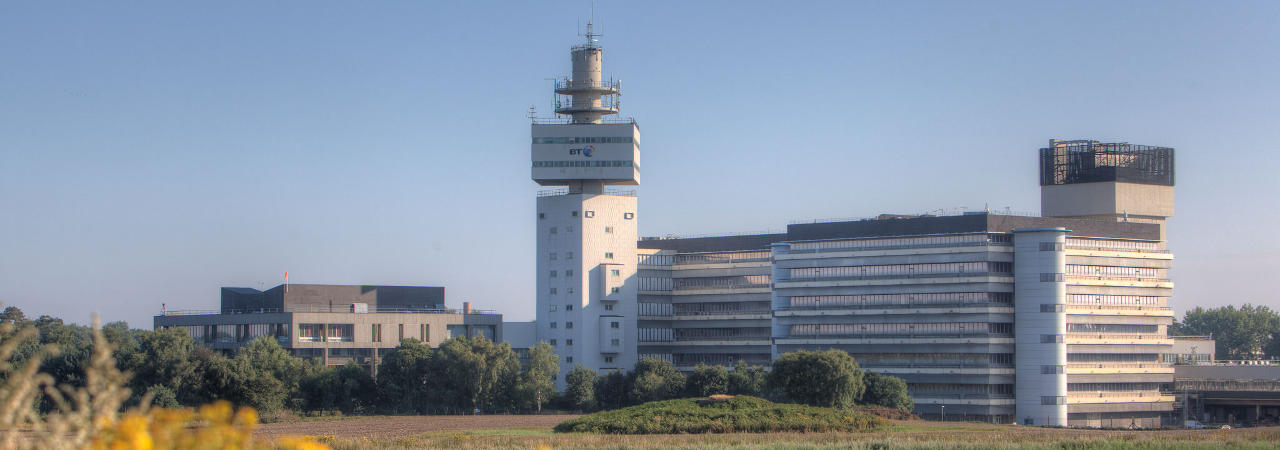
BT Adastral Park, Martlesham - credit BT

BT Adastral Park, Martlesham – credit BT

Mark M5BOP reports the complete set of amateur radio technical talks from this year’s Martlesham Microwave Round Table is now available to watch on YouTube.

Videos of these MMRT 2019 talks are available:
• Practical GNUradio – Heather Lomond M0HMO
• From Death Rays to Dinner – William Eustace M0WJE
• Equipment for Es’hail-2 / QO-100 Narrowband – David Bowman G0MRF
• DATV on Es’hail-2 / QO100 – Noel Matthews G8GTZ
• Low-pass Harmonic Filter for 23cm – John Quarmby G3XDY
• UKuG SDR Voice Transceiver Project Discussion

Watch the videos on the Martlesham Microwave YouTube channel at
https://www.youtube.com/channel/UCHV7cC7ZMehKjAM81QxUS9w/videos

Source UK Microwaves on Groups IO
https://groups.io/g/UKMicrowaves/message/51753

UK Microwave Group
https://www.microwavers.org/
https://twitter.com/UKGHZ

AMSAT-UK: https://amsat-uk.org/
Twitter: https://twitter.com/AmsatUK
Facebook: https://facebook.com/AmsatUK
YouTube: https://youtube.com/AmsatUK

University CubeSat Club members get ham radio licenses

Dawson Duckworth KC3NNB, Lauren Hurley KD2RHC, Kaixuan Ji AC3EN and Dr. Alan Johnston KU2Y staffed the AMSAT / Villanova CubeSat Club table at the Robotstock/STEM event in August

Dawson Duckworth KC3NNB, Lauren Hurley KD2RHC, Kaixuan Ji AC3EN and Dr. Alan Johnston KU2Y staffed the AMSAT / Villanova CubeSat Club table at the Robotstock/STEM event in August

Students at the Villanova University College of Engineering started a CubeSat Club in the fall of 2018 and have since got their amateur radio licenses.

The university website reports:

A CubeSat is a nanosatellite—a small, lightweight satellite that is cheaper to build than a conventional satellite. They can be launched from rockets, or occasionally from the International Space Station by astronauts. CubeSats send telemetry information—measurements communicated at remote points by automated processes—over radio signals received on earth by a ground station.

The CubeSat club’s 2018-2019 year was packed with a variety of workshops and projects, including:

• Setting up temporary ground stations called SatNOGS (Satellite Network Operators Group)
• Building Yagi-Uda antennas from tape measurers and scrap wood and using them to track low earth orbit satellites as they flew over Villanova
• Building an AMSAT CubeSat Simulator, a functional satellite model
• Assisting with the freshman CubeSat mini-design projects
• Earning amateur radio licenses and ham radio callsigns
• Assembling and selling electronic transceiver boards used in CubeSats as a fundraiser
• Attending the 2019 Hamvention conference and running the AMSAT education table
• Received and decoded a special message sent from the AO-73 FUNcube Satellite especially for Villanova

Read the full story at
https://www1.villanova.edu/villanova/engineering/newsevents/newsarchives/2019/community/CubeSat-Club.html

The students emailed a request to the FUNcube Operations Team to get their special message transmitted from space by the AO-73 satellite. Further information on these ‘Fitter’ messages is available at https://funcube.org.uk/ground-segment/fitter-messages/

Taurus-1 with Codec-2 transponder launched

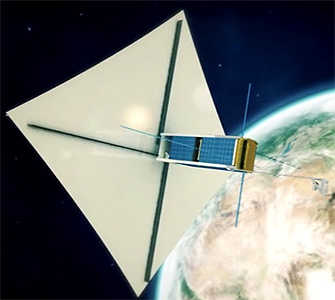
Taurus-1 with solar sail deployed

Taurus-1 with solar sail deployed

Taurus-1 (Jinniuzuo-1) carrying an amateur radio FM to Codec-2 transponder was launched on a CZ-4B rocket from the Taiyuan Satellite Launch Center on Thursday, September 12 at 0326 GMT.

Taurus-1 is a CubeSat project developed by Aerospace System Engineering Research Institute of Shanghai for youth education and amateur radio.

The transponder is similar to that used on LilacSat-1 receiving FM with 67 Hz CTCSS on 145.820 and retransmitting it as Codec-2 9600 bps BPSK digital voice along with the telemetry data on a nominal frequency of 435.840 MHz +/-10 kHz Doppler shift.

On Friday, September 13, Mark Jessop VK5QI tweeted:
“Good signals from #Taurus-1 on 435.840 MHz! Doesn’t look like the FM/Codec2 Transponder is enabled yet though (no response on 436.760 MHz when transmitting on 145.820 MHz)” Note: this was sent before it was realized Codec2 voice and the telemetry were on the same frequency.
https://twitter.com/vk5qi/status/1172505034551988225

Taurus-1 beacon received by Mark Jessop VK5QI

Taurus-1 beacon received by Mark Jessop VK5QI

Codec2 9600 bps BPSK Downlink information by Daniel Estévez EA4GPZ
https://destevez.net/2016/10/lilacsat-1-codec-2-downlink/

Adam Whitney K0FFY documented how to receive the similar Codec2 Digital Voice transponder originally flown on LilacSat-1 using the FUNcube Dongle Pro+ SDR
http://adamwhitney.net/working-lilacsat-1/

A paper by Paul Stoetzer N8HM on the FM-Code2 transponder is at
https://www.amsat.org/wordpress/wp-content/uploads/2019/03/N8HM_LilacSat_LO-90.pdf

Nico Janssen PA0DLO reports the actual telemetry downlink frequency is 435.8387 MHz and Doppler measurements show that Taurus 1 is object 44530 (2019-059C).

Keplerian Two Line Elements (TLEs) ‘Keps’ for new satellites launched in past 30 days
http://celestrak.com/NORAD/elements/tle-new.txt

IARU Region 3 approves new 15m satellite allocation

The IARU Region 3 Directors meeting was held in Tokyo September 2-3. A modified interim Region 3 bandplan was approved which included an Amateur-Satellite Service allocation in the 15m band.

The Chairman of IARU Region 3 directors, Wisnu Widjaja YBØAZ and the directors Ken Yamamoto, JA1CJP, Peter Young, VK3MV, Don Wallace, ZL2TLL, Jakkree Hantongkom, HS1FVL, Mohd. Aris bin Bernawi, 9M2IR met in Tokyo for their annual Directors’ meeting at the conference room of JARL. They were assisted by the IARU Region 3 Secretary Shizuo Endo JE1MUI. They were joined by IARU President Tim Ellam VE6SH and Region 2 President Reinaldo Leandro YV5AM.

The directors reviewed progress on tasks directed and identified at the last Directors’ meeting and the Regional Conference that were held in Seoul, Korea in September 2018.

The finance situation of the region was noted to be healthy and well within budgets set earlier.

Reports were received from the Chairman, Directors and the Secretary. They mainly reported subjects on the responsibilities allocated to each of them.

Reports were also received from the Region 3 committee chairmen and coordinators. Those include reports related to Monitoring System, Bandplan Committee, EMC, Disaster Communications, ARDF activities in some societies and Award manager.

Reports including an oral report were also received from the IARU president and Regions 1 & 2 secretary. Their reports include issues such as current situations on agenda items concerned the amateur services towards WRC (World Radiocommunication Conference)-19, administrative issues and activities in their own areas.

It was noted that some IARU Region 3 societies are no longer active and the Directors are looking at a way to involve the amateurs in these countries in IARU activities.

Other important issues to our Region were also discussed. Those include the revision of Newsletter guideline and use of social media in IARU Region 3, new structure of IARU Region 3 website and Region 3 YOTA (Youth On The Air) program.

It was recognized that usage of a social media in addition to the newsletter is useful to enable a better communication with the IARU Region 3 member societies and their members. Furthermore, it is also recognized that societies are encouraged to provide information which is included in a Region 3 newsletter and monitoring system newsletter.

It was decided that an IARU Region 3 YOTA activity will take place in Pattaya, Thailand in October 2020.

The modified interim Region 3 bandplan proposed by the Region 3 Bandplan Committee was approved. A notable change was addition of a satellite portion in 15m Band as agreed at the last Region 3 Conference.

It was agreed to make a necessary action to extend the MOU (Memorandum of understanding) with APT (Asia-Pacific Telecommunity) which is to be expired in coming December.

The Chairman, Wisnu Widjaja YBØAZ and a Director, Ken Yamamoto JA1CJP will be present at the next Administrative Council meeting and the Region 2 Conference which will be held in Lima, Peru from September 28 to October 4, 2019.

It was agreed that the next directors meeting be tentatively fixed for the 1st to 3rd of October 2020 in Thailand.

Source IARU Region 3 https://iaru-r3.org/topics/pressreleases

Download the interim IARU Region 3 bandplan
http://www.iaru-r3.org/newsite/wp-content/files/R3-004%20IARU%20Region%203%20Bandplan%20rev.2.pdf

AMSAT-LU PicoBalloons travel the around the globe

AMSAT-LU Picoballoon Payload

AMSAT-LU Picoballoon Payload

The WSPR Picoballoon on 14.0956 USB released August 31 is about to complete its first circumnavigation of the globe after traveling 33,000 km in 12 days.

AMSAT-LU appreciate any WSPR stations that help to receive it, AMSAT-LU will recognize with a certificate to stations that capture its 25 mW beacon.

Trajectory at http://lu7aa.org.ar/wspr.asp
(slow access but with lot of information)

Info: http://amsat.org.ar?f=buoy

WSPR program at http://amsat.org.ar/wspr.exe

Also the APRS PicoBalloon (145.825 via Sat 1W) will be returning this Friday to S.America
http://aprs.fi?call=lu7aa-11

73, LU7AA, AMSAT Argentina