AMSAT Pioneer Patrick J. A. Gowen, G3IOR, Silent Key

Pat Gowen G3IOR

Pat Gowen G3IOR

Pat Gowen, G3IOR, of Norwich, Norfolk, passed away on August 17, 2017, after a long illness. He was 85. The amateur-satellite world has lost one of its true pioneers.

Ray Soifer, W2RS, writes:

Pat was a co-founder of AMSAT-UK, and was elected to the board of directors of AMSAT-NA in 1974. He was also the longtime satellite columnist of Practical Wireless, as well as a frequent contributor to The AMSAT Journal and OSCAR News.

He was the first to work 100 DXCC entities via satellite (all LEOs), and received Satellite DXCC No. 4 when his QSL cards arrived. Fluent in Russian, Pat enjoyed conversing with the cosmonauts aboard MIR and ISS. He and I made the first transatlantic QSO between two handheld transceivers, in 1991.

More recently, Pat was the first to discover the “re-birth” of AMSAT-OSCAR-7 when its battery returned to life in sunlight. In addition to his work with AMSAT and satellites, Pat was a prominent HF operator and DXer. He had confirmed QSOs with all DXCC entities and had also been a member of the First Class CW Operators Club (FOC), as well as a leading member of the Norfolk Amateur Radio Club. Literally hundreds of new amateurs obtained their licenses as a result of Pat’s NARC training classes.
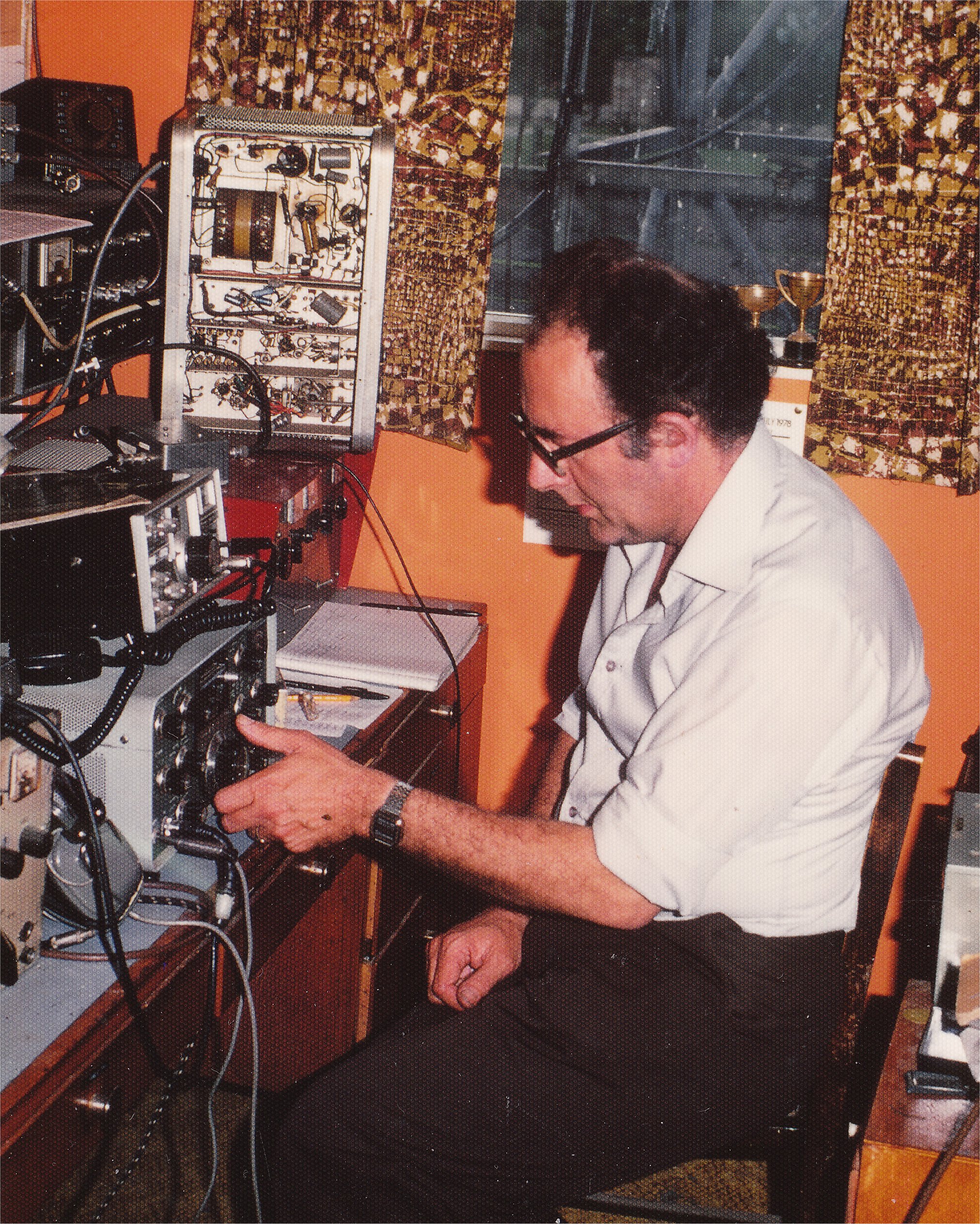
Pat Gowen G3IOR in radio shack circa 1968

Martin Sweeting, G3YJO, Chairman of AMSAT-UK and founder of Surrey Satellite Technology, Ltd. (SSTL) remembered Pat this way:

“If my memory serves me well, I first met Pat G3IOR sometime in the mid-1970’s when I became interested in space and naturally amateur radio satellites – starting with OSCAR-6. In 1975, Pat was a founding member and sometime Chairman of AMSAT-UK along with other stalwarts such as Roy Stevens G2BVN, Arthur Gee G2UK and Richard Limebear G3RWL and had a strong interest in not only the OSCAR series but also especially the RS satellites from the then Soviet Union.

Starting in late 1973, Pat produced the first editions of OSCAR News as a typed newsletter providing essential orbit tracking information for the new OSCAR-6 satellite (at a time before easy access via the internet!) and contributed more timely updates and observations via the AMSAT-UK 80-metre net each Sunday morning – along with a news round-up each month transmitted by G3RWL. Pat attended and contributed to the early AMSAT-UK Colloquia at Surrey.

In June 21, 2002 Pat surprised the AMSAT community by detecting CW signals from the long-believed defunct OSCAR-7 satellite whose batteries had failed in 1981 but came back to life after the batteries eventually went open circuit enabling operations in sunlight to this day! Pat was passionate about amateur radio, amateur satellites and the environment; he contributed much over his long life to each of these and will be sadly missed.”

Professionally, Pat was a biochemist, retired from the University of East Anglia. He had also served as a magistrate in the Norfolk courts, the youngest in England at the time. No mention of Pat would be complete without noting his decades of work in cleaning up the beaches and waters of his beloved Norfolk. He leaves his wife Norma, a noted landscape artist.

Source AMSAT News Service
FalconSAT-3 now open for amateur radio use

FalconSAT-3

FalconSAT-3

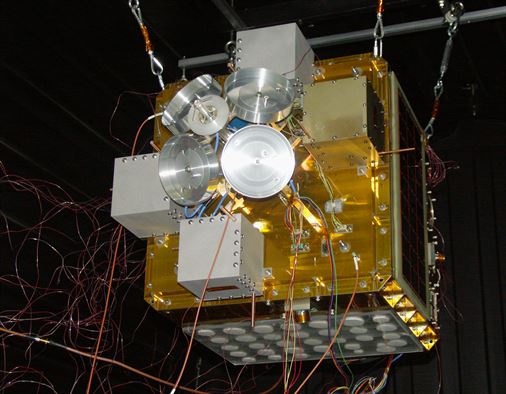
The Air Force Academy satellite Falconsat-3 is now open for amateur radio use as a digital store-and-forward system.

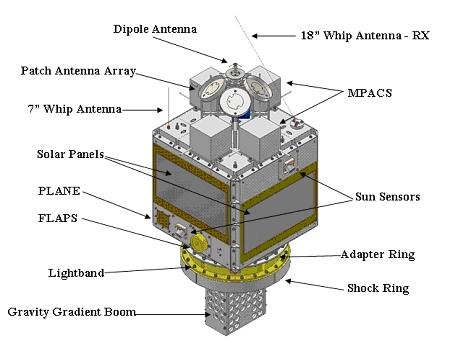
FalconSAT-3 DiagramFalconSAT-3 was built in 2005 and 2006 by cadets and faculty in the Space Systems Research Center at the US Air Force Academy in Colorado Springs, CO, and launched in 2007 on an Atlas V.

After serving in scientific and training roles, the Academy has now made the satellite available for Amateur radio use.

The satellite is in a 35.4 degree inclination orbit, with an approximate altitude of 465 to 476 km. The Packet Bulletin Board System is operating at 9600 baud with a 145.840 uplink, and 435.103 downlink. Output power is 1 watt, and the downlink is continuously on. Digipeating is enabled for live QSOs, but unattended digipeating operations is not authorized at this time. Current Keplerian elements can be found in the AMSAT distributed Keplerian elements.

More information can be found at https://www.amsat.org/falconsat-3/

Further operational inquiries should be directed to AMSAT Vice President Operations, Drew Glasbrenner, KO4MA (ko4ma<at>amsat.org).

Source AMSAT News Service http://www.amsat.org/mailman/listinfo/ans

IARU Region 1 Medal awarded to Graham Shirville G3VZV

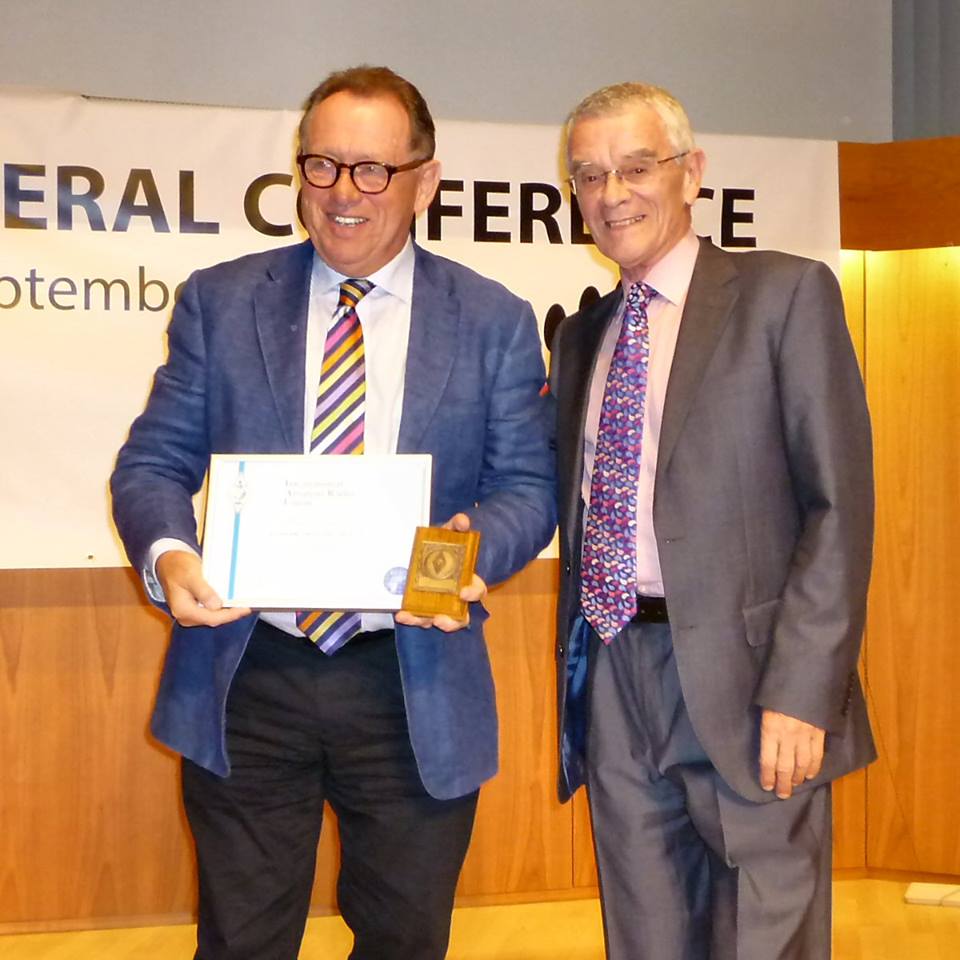
Graham Shirville G3VZV with IARU Region 1 President Don Beattie G3BJ - Credit RSGB

Graham Shirville G3VZV with IARU Region 1 President Don Beattie G3BJ – Credit RSGB

The 24th General Conference of IARU Region 1 was held in Landshut near München on September 17-21, 2017. In recognition of his outstanding and ongoing work with Satellite Coordination the IARU Region 1 Medal was awarded to Graham Shirville G3VZV.

Graham Shirville G3VZV at 2016 AMSAT-UK Colloquium – Credit Mike Rupprecht DK3WN


Autumn/Fall issue of OSCAR News now available

OSCAR News Front Cover Autumn 2017E-members of AMSAT-UK can now download the Autumn/Fall edition of OSCAR News here.

This edition features a low cost ground station using a DTV Dongle, SDRSharp and FUNcube Dashboard to capture Telemetry from the FUNcube satellites.

The paper edition should be sent to postal members in 2-3 weeks.

In this issue:
• From the Secretary’s Keyboard
• 2017 Meetings & Events calendar
• Notice of the 2017 AGM of AMSAT-UK
• Patrick J. A. Gowen, G3IOR (SK)
• IARU Region 1 Conference 2017
• Chertsey Radio Club
• A Low Cost Ground Station Using a DTV Dongle
• Yet another antenna for LEO satellites
• Just when you thought it was safe to do an ARISS contact in the UK!
• FUNcube-1 Transatlantic Experiment
• NOVA Satellite Tracking programme now free!
• Ground Based DVB-S2 Repeater for GEO Satellites
• AMSAT-UK Colloquium
• Future Spacecraft Planned For The Amateur Satellite Service Operating Above 1GHz
• AMSAT Phase-4A downconverter for SSB and DATV reception
• The new FUNcubes – progress reports
• FUNcubes – In Orbit Report Sept 2017
• GB4RME – Special Event Station – HM Royal Mint

AMSAT-UK FUNcube Mission Patch

AMSAT-UK FUNcube Mission Patch

Membership of AMSAT-UK is open to anyone who has an interest in amateur radio satellites or space activities, including the International Space Station (ISS).

E-members of AMSAT-UK are able to download OSCAR News as a convenient PDF that can be read on laptops, tablets or smartphones anytime, anyplace, anywhere. Join as an E-member at Electronic (PDF) E-membership

PDF sample copy of “Oscar News” here.

Join AMSAT-UK using PayPal, Debit or Credit card at
http://shop.amsat-uk.org/

E-members can download their copies of OSCAR News here.

CAT17 videos on Es’hail 2 and DigiTwist satellite tracker

The British Amateur Television Club have made available videos of the talks given at the CAT17 event held at the Finningley Amateur Radio Club on September 9-10, 2017.

Among the videos are:
• Es’hail 2 satellite update by Dave G8GKQ
• DigiTwist an experimental low cost satellite tracker by Brian G4EWJ
• Introduction to Optical Communications by Bernie G4HJW
• 5.7 GHz Linear Amplifiers for the ADALM Pluto by Brian G4EWJ

Watch Es’hail 2 satellite update by Dave G8GKQ

Watch DigiTwist an experimental low cost satellite tracker by Brian G4EWJ

The other videos can be seen at
https://www.youtube.com/channel/UCUWLnUZllytlcCFd93tnBzw/videos

Follow BATC on Twitter @BATCOnline
Web http://www.batc.org.uk/

Students from India and Russia build SSTV CubeSat

Space Kidz India LogoThe Times of India reports students from Russia and India are building an amateur radio satellite that will transmit SSTV images from space.

The 1U CubeSat Iskra-5 is being built by 20 students from Moscow Aviation Institute and 9 from Indian cities like Chennai and Bangalore through Space Kidz India to mark the 70th anniversary of diplomatic relationship between the two countries.

The satellite will be transported to the International Space Station by mid-October, 2017 through cargo spacecraft from where it will be placed in orbit by a cosmonaut during a spacewalk.

The Iskra satellites were a series of Soviet amateur communication satellites built by students and radio amateurs at the Moscow Aviation Institute in the early 1980s.

Srimathy Kesan, founder, Space Kidz India said that the subsystems in the satellite being built in MAI is made by Russian students while the outer cube has been designed by Indian students.

Full Times of India story http://timesofindia.indiatimes.com/city/chennai/students-from-india-and-russia-build-cubesat/articleshow/60369092.cms

Russian Aviation story https://www.ruaviation.com/news/2017/8/17/9505/

Space Kidz India https://www.facebook.com/SpaceKidzIndia/