UK CubeSat Forum – Lunar opportunity

View of Earth from the Moon AdobeStock_77398324Surrey Satellite Technology Ltd (SSTL) and Goonhilly Earth Station (GES) are looking for CubeSat passenger payloads on a Lunar mission.

SSTL and GES are teaming up with ESA to create the world’s first commercial deep space mission. They plan to carry customer payload in the form of CubeSats into lunar orbit and provide the relay link back to Earth via Goonhilly. The launch is planned for 2019.

Orbital passengers e.g. nanosatellites and CubeSats will be deployed from the Mothership and will operate in lunar orbit.

The UK CubeSat Forum can help in creating new contacts for joint proposals, so do post on their site should you want to be involved!
http://www.cubesatforum.org.uk/wordpress/2016/08/30/call-for-lunar-missions-payloads/

Twitter: https://twitter.com/UKCubeSatForum

Download the related documents from http://www.goonhilly.org/lunar

UK student balloon crosses Pacific

UBSEDS18 Solar Powered Balloon

UBSEDS18 Solar Powered Balloon

The UK balloon UBSEDS18 carrying payloads for APRS and 434 MHz has successfully crossed the Pacific, on the same day a USA amateur radio APRS balloon crossed the Atlantic.

The solar powered UBSEDS18 was developed by students from Bristol University and launched on Wednesday, August 17. Since then it has traveled in an easterly direction for 20,252 km completing the Pacific crossing on Thursday, September 1, 2016.

UBSEDS18
https://twitter.com/bristolseds
http://www.bristol-seds.co.uk/hab/flight/2016/08/17/ubseds18.html
https://tracker.habhub.org/#!mt=roadmap&mz=2&qm=All&f=UBSEDS18&q=UBSEDS18

The amateur radio APRS balloon CNSP30 was launched from California on August 25 and on September 1 crossed the coast of northern France. Its APRS signal was receivable across central and southern England.

CNSP30
https://twitter.com/K6RPT
http://www.cnsp-inc.com/cnsp-30/
http://aprs.fi/#!call=a%2FK6RPT-11&timerange=604800&tail=604800

Richard Meadows M0SBU, who worked on the development of UBSEDS18, took the amateur radio training courses run by the Chelmsford Amateur Radio Society (CARS) at Danbury in Essex. Further information on the courses is available from the CARS Training Coordinator, Christopher G0IPU
Tel: 07908-107951
Email: training2016 at g0mwt.org.uk
Web: http://g0mwt.org.uk/training

Amateur Satellites at BATC Convention Sept 24-25

BATC Logo SmallCAT 16, the British Amateur Television Club (BATC) Convention at Cosford in Shropshire Sat/Sun Sept 24/25 will be streamed live.

The talks program and agenda for the weekend has now been published and amateur space communications feature in the schedule, highlights include:

• Es’hailSat-2: Geostationary transponder for DATV – Graham G3VZV
• Receiving and Presenting HamTV from the ISS – Noel G8GTZ
• New BATC Streamer and Internet Presence – Phil M0DNY
• DATV Express and Future Developments – Charles G4GUO
• 146 MHz Reduced Bandwidth TV: A Practical Operators Guide – Shaun G8VPG
• MinitiounePro and Developments – Jean-Pierre F6DZP

The full program is at http://www.batc.org.uk/forum/viewtopic.php?f=99&t=4569

BATC CAT16 live streaming starts 1300 BST Saturday https://beta.batc.tv/live/cat16

Please also remember that the BATC Biennial General Meeting is at 1:30 pm on the Sunday.  The Agenda is at http://www.batc.org.uk/GM2016agenda.pdf

All this in a venue with many other interesting exhibits.
See more at http://www.rafmuseum.org.uk/cosford/
A guided tour will be available for those who have pre-booked.

Please register your intention to attend (and request a guided tour) using the BATC Shop (no charge at this stage, but £10/day on arrival).  Click here https://batc.org.uk/shop/cat16 and select cash payment of £0.00.

Lastly, we are  pleased to announce that Graham Shirville, G3VZV, has been chosen as the next President of the British Amateur Television Club (BATC).  He succeeds Peter Blakeborough, G3PYB, who died last December.  The appointment is for two years.

Looking forward to seeing you all at CAT16.

73 The BATC Team http://www.batc.tv/

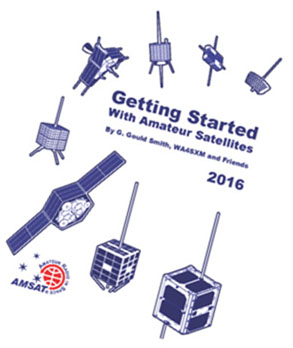
The book – Getting Started with Amateur Satellites – is now available from the AMSAT-UK shop at http://shop.amsat-uk.org/

UBSEDS19/20 balloons launch from Bristol

UBSEDS IMG_2406Richard Meadows M0SBU reports two high altitude balloons carrying 434 MHz payloads will launch from Bristol on Monday, August 29. There will be Slow Scan Digital Video (SSDV) transmissions.

Online real-time tracking of UBSEDS balloons https://tracker.habhub.org/#!mt=roadmap&mz=8&qm=3_days&q=UBSED*&f=UBSEDS20

We’re planning the first launch of ‘pico-pi’, our Raspberry Pi Zero based tracker, from Bristol this Bank Holiday Monday, August 29 between 0500 and 0530 BST. This launch is using a 1.9m envelope and longer payload train, and so we have a NOTAM in place.

There’s more information about the tracker itself here: https://github.com/bristol-seds/pico-pi-rel

The combined payload mass will be about 70 grams, and the attempted float altitude will be about 13 km. This is our first launch of this setup, so it seems unlikely that everything will go to plan!

First is the UBSEDS19 backup tracker, which is powered from a single AAA Lithium Energiser battery. It transmits Contestia 16/1000 with pips and RSID on 434.615 MHz USB, once per minute below 8km altitude and every two minutes otherwise. The battery is expected to last a few days.

Next is UBSEDS20, which is the experimental Raspberry Pi Zero board. This is powered from solar panels only, and hence is only expected to operate continously after about 0830 BST (before this it may transmit without a GPS lock, as the Raspberry Pi and GPS are powered down).

– 434.610 MHz USB: 300 baud RTTY, 850Hz shift, 8N2 transmitting telemetry and SSDV. There is also Contestia 16/1000 with RSID on this frequency. If you are listening to the RTTY, remember to turn off the ‘RxID’ button on the top right of dl-fldigi.

– 869.85 MHZ LoRa ‘Mode 3’ (250kHz / SF7 / EC4:6, explicit header), transmitting SSDV with the callsign ‘UBSEDL’. This frequency is only active in Europe. Many thanks to Dave Akerman M0RPI for making his work on LoRa available for us to use, including the lora gateway.

Rather than the usual JPEG SSDV, this payload is transmitting Better Portable Graphics (BPG) images. This is experimental, and ssdv.habhub.org doesn’t support it just yet. Hence receivers should upload to http://ssdv.bristol-seds.co.uk/ instead, please read the instructions on this site. You’ll need dl-fldigi release 3.2 and slightly modified LoRa gateway, as explained on the site. The dl-fldigi release can be found here: https://github.com/jamescoxon/dl-fldigi/releases/tag/3.2

Many thanks to everyone who attempts to track these.

Richard Meadows M0SBU
Bristol SEDS http://www.bristol-seds.co.uk/

Useful balloon links https://amsat-uk.org/beginners/balloons/

Richard took the amateur radio courses run by the Chelmsford Amateur Radio Society (CARS) at Danbury in Essex. Further information on the courses is available from the CARS Training Coordinator, Christopher G0IPU
Tel: 07908-107951
Email: training2016 at g0mwt.org.uk
Web: http://g0mwt.org.uk/training

First contact via ham radio satellite AO-85

getting-started-with-amateur-satellites-2016-front-coverOn Saturday, August 13, 2016, Christian Jacobs 2E0ICL made his first contact via the amateur radio FM CubeSat AO-85, it was with Peter Goodhall 2E0SQL.

On YouTube Christian writes:

First contact over AO-85 with Peter 2E0SQL using a new Elk antenna, a Comet CF-4160 diplexer, and two handheld transceivers. This video also features a portable SO-50 contact with Abdel M0NPT at Cow Drove Hill in Hampshire, UK.

Watch First contact via AO-85, and operating /P from Cow Drove Hill

AO-85 information https://amsat-uk.org/satellites/communications/ao-85-fox-1a/

The book – Getting Started with Amateur Satellites – is now available from the AMSAT-UK shop at http://shop.amsat-uk.org/

A popular antenna for satellite working is the Elk 2m/70cms Log Periodic available in the AMSAT-UK shop at http://shop.amsat-uk.org/ELK_2m70cms_Log_Periodic_Antenna/p3815740_15628555.aspx

Satellite operation during ILLW

Getting Started with Amateur Satellites 2016 Front CoverKen Eaton GW1FKY reports the Barry Amateur Radio Society will be active on the amateur radio satellites during International Lighthouse Lightship Weekend August 20-21.

The Barry Amateur Radio Society will be operating from a twin pair of lighthouses located at Nash Point situated on the coast of the Bristol Channel – South Wales.

We will be active from approx. 0700-1600 GMT.

In addition to operating on the HF and VHF bands I also plan to set up my portable satellite equipment for operation and contacts during suitable passes.

Callsign/Lighthouse as follows:

GC6BRC – Lighthouse (High) Ref: UK0071
GC4BRS – Lighthouse (Low)  Ref: UK0072

Locator Ref: IO81FJ
QSL Manager: MW0DHF (Philip King)

International Lighthouse Lightship Weekend – ILLW http://illw.net/

The book – Getting Started with Amateur Satellites – is now available from the AMSAT-UK shop at http://shop.amsat-uk.org/

A popular antenna for satellite working is the Elk 2m/70cms Log Periodic available in the AMSAT-UK shop at http://shop.amsat-uk.org/ELK_2m70cms_Log_Periodic_Antenna/p3815740_15628555.aspx