Your pictures of the 2012 AMSAT-UK International Space Colloquium can now be uploaded to the Photo Gallery at
http://www.uk.amsat.org/Gallery3/index.php/
Create a new album with your name or call sign and upload your pictures.
Your pictures of the 2012 AMSAT-UK International Space Colloquium can now be uploaded to the Photo Gallery at
http://www.uk.amsat.org/Gallery3/index.php/
Create a new album with your name or call sign and upload your pictures.
 In this HamRadioNow video AMSAT President, Barry Baines WD4ASW, gives an update on what AMSAT is up to now and planning for the future.
In this HamRadioNow video AMSAT President, Barry Baines WD4ASW, gives an update on what AMSAT is up to now and planning for the future.

Dr Christopher Bridges (2nd from left) discussing why space is cool on Sky News
Dr Chris Bridges recently appeared on the nationwide TV channel Sky News discussing why space is cool. On September 15-16 he will be giving two presentations to the AMSAT-UK International Space Colloquium at the Holiday Inn, Guildford, GU2 7XZ.
Chris will cover the Nexus Android Smartphone amateur radio satellite STRaND-1 which will carry both a Resistojet and a Pulsed Plasma Thruster (PPT) module and STRaND-2 which comprises two 3U CubeSats that will use Microsoft Xbox Kinect controller technology for docking.
UPDATE: For videos of the two STRaND presentations see http://www.uk.amsat.org/?p=10297
AMSAT-UK Membership.

There has never been a more exciting time for you to join one of the UK’s largest group of people who have an interest in Amateur radio satellites/space activities from all around the world.
AMSAT-UK has an ever growing membership base from shortwave listeners to satellite engineers, amateur radio in space is becoming more affordable with the
concept of Cubesats.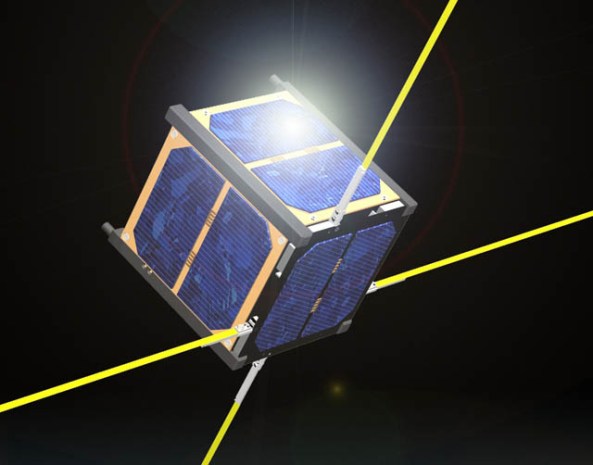
The AMSAT-UK FUNcube projects aims to be at the forefront with a launch of it’s very own educational Cubesat in 2012 http://funcube.org.uk/
AMSAT-UK is a voluntary organisation that was formed in 1975 and has provided invaluable assistance to the Amateur satellite programme and continues to be at the forefront of satellite research and design, benefits of membership include a full colour Oscar News magazine (Sample here) that is packed with articles and information relating to our ever growing hobby.
AMSAT-UK has a great Website with all the latest news and articles that are updated on a almost daily basis,there you will find information for the newcomer to the more advance
user,an online shop stocks items from the LVB satellite antenna tracker to booking a room for the forthcoming AMSAT-UK Colloquium 2012 Fri 14 Sep to Sun 16 Sep
A regular net is also held on Sunday’s on 3.780 MHz +/- QRM, at 10 AM (local) Membership is open to clubs, schools, companies, etc, and individuals from around the world.
Join AMSAT-UK today HERE
AMSAT-UK Website- http://www.uk.amsat.org/
AMSAT-UK Membership- http://tinyurl.com/3gg2tvc
FUNcube- http://funcube.org.uk/
Twitter @AMSATUK

Wyatt AC0RA and Bill OM3BD have broken the AMSAT-OSCAR-7 (AO-7) long distance (DX) record set in 2010.
 Their GPS-measured 7849km QSO between grid squares EN31vx and JN88mf surpassed the prior 7843km record set by PY5LF and K3SZH in 2010.
Bill says that Wyatt did all the hard work by waking up at 3am, driving to a hill an hour away from his home, setting up his station, and working Bill before sunrise at 0955 UT on July 2.
Bill was running an FT847, 2 x 10 element yagi on 2m with SP2000 preamp, and an 8 element yagi for 70cm while Wyatt had an FT-847, a 7 element yagi on 2 meters and a 12 element yagi on 70cm.
It appears that an even longer distance is attainable, and Wyatt is looking for a suitable place from which they can try before Bill leaves Slovakia in mid-July.
Further information, pictures and recordings of the contact are at http://www.qsl.net/nz5n/AO7record.htm
2010 PY5LF and K3SZH AO-7 distance record http://www.southgatearc.org/news/january2010/new_ao7_record.htm
10th Anniversary of OSCAR 7′s Return To Life http://www.uk.amsat.org/8524
// <  AMSAT-UK
You must be logged in to post a comment.