ICUBE-1 CubeSat

Camera Module

Camera Module

Students at the Institute of Space Technology (IST) have been building Pakistan’s first CubeSat ICUBE-1. Like a number of new CubeSats its communications subsystem is capable of acting as an “AO-16 mode” FM to DSB transponder.

The IARU amateur satellite frequency coordination panel pages say that the VHF downlink will operate as a 1k2 BPSK beacon but has the capability of being configured as an FM-DSB transponder. A downlink on 145.947 MHz and an uplink on 435.060 MHz have been coordinated.

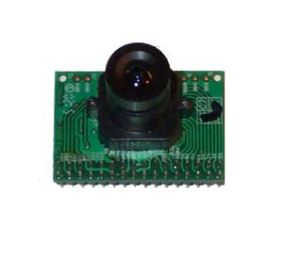
It is planned to have an imaging payload with a small low resolution CMOS sensor. The C3188A imaging module uses Omnivision’s CMOS image sensor OV7620. The camera will be mounted on the Z+ face of the ICUBE and can take continental scale images.

ICUBE http://www.icube.org.pk/

Student Satellite Project http://www.ist.edu.pk/student_satellite.html

Institute of Space Technology (IST) http://www.ist.edu.pk/

NTNU Test Satellite – NUTS Norwegian Cubesat

The student satellite project is organized at Department for Electronics and Telecomunications (IET). Our aim is to design, build, test and launch a double CubeSat by 2014. Most of the work is carried out by students from several departments and study programs, such as electronics, communications, space technology, physics, cybernetics, computer science, mechanics and more.

Projects during 2011 and 2012

There will be possible assignments within these topics:


  1. ADCS
  2. Communication system (satellite and ground systems)
  3. Power management
  4. Internal databus and OBC
  5. System design and specification
  6. Payload

Please contact Roger Birkeland or look at the section possible assignments if you are interested in joining the project in 2012!


Satellite Specification Overview

  • Double cube
  • Two tranceivers
  • IR-camera for scientific payload
  • Internal wireless experiment
  • ADCS-system
  • Robust internal data bus
  • Robust power supply and system managemet

More details about the satellites specifcation.

On-going work

  • ADCS
  • Communcation (on-board and groundstation)
  • OBC and bus
  • Power system
  • Mechanical structure
  • Payload

Detalis can be found here.

Contact

Local students can contact project manager Roger Birkeland by email roger.birkeland-at-iet.ntnu.no or come visit in room C249 in the Electro building.

For the latest information, check out the news section.

Triton-1 and Triton-2

Dnepr_rocket_lift-off

A DNEPR Lift-Off

Triton-1 and Triton-2 are expected to launch in late 2012 on a DNEPR from Yasny together with UKube-1, Delfi n3Xt, Trio-Cinema 1 & 2 and other spacecraft using frequencies in the amateur satellite service.

They are 3U Cubesats and each carries a radio science mission that aims to test an experimental advanced AIS (Automatic Identification System) receiver.

Telemetry decoding software will be made available which will allow radio amateur operators to listen to periodic downlink broadcasts containing housekeeping telemetry, payload telemetry as well as received AIS messages.

Triton-1 telemetry downlinks will be 9k6 RC-BPSK on VHF(145MHz). It includes two similar secondary amateur radio payloads, being two single channel mode U/V (435-145MHz) FM to DSB transponders. The following downlink frequencies have been coordinated for Triton-1: Main Downlink 145.815MHz & Backup Downlink 145.860MHz. Possibly (power budget permitting), both transponders may be switched on at the same time.

Triton-2 telemetry downlinks will be 9k6 RC-BPSK on VHF(145MHz) and 38k4 RC-BPSK on S Band (2400MHz). The satellite includes two secondary amateur radio payloads:

– A single channel mode U/V (435-145MHz) FM to DSB transponder.
– A single channel mode U/S (435-2400MHz) FM to FM transponder.

The following downlink frequencies have been coordinated for Triton-2: Main Downlink 145.860MHz & Backup Downlink 145.815MHz. The S-band downlink will be 2408.00MHz. Possibly (power budget permitting), both payloads may be switched on at the same time.

Mission duration
Science mission: 3 Months
Amateur radio mission: as long as possible after the science mission finishes.

AIS – E-Navigation http://www.efficiensea.org/files/conferenceproceedings.pdf

ISIS PowerPoint slides http://www.space-lt.eu/failai/Prezentacijos/Abe%20Bonnema_Developing%20and%20Launching%20CubeSat%20Missions.pdf

IARU Amateur Satellite Frequency Coordination

CubeSats Feature in Sat Magazine

The January issue of the free publication Sat Magazine covers a number of amateur radio satellites.

On pages 54-65 is an article about Small Satellites. Among the many amateur radio satellites mentioned are FITSAT-1, WE WISH, the Vega CubeSats, QB50, AubieSat-1, Prime Explorer-1, FASTRAC.and ARISSat-1/KEDR. The AMSAT-India 435/145MHz Linear Transponder is also mentioned.

Download the January Sat Magazine from http://www.satmagazine.com/2012/SM_Jan_2012.pdf

Sat Magazine http://www.satmagazine.com/

FUNcube-1 ZDNET Article

Jim Heck G3WGM on an AMSAT-UK Stand

Jim Heck G3WGM

Journalist David Meyer interviewed AMSAT-UK’s Jim Heck G3WGM for an article on the FUNcube-1 satellite being built by AMSAT-UK volunteers.

School students will be able to send, via a moderator, ‘Fitter’ (as in ‘FUNcube Twitter’) messages of 200 characters to the CubeSat. FUNcube-1 will then transmit them on the 1200 bps BPSK beacon.

Read the article at http://www.zdnet.co.uk/news/emerging-tech/2012/01/04/radio-amateurs-prep-launch-of-tiny-funcube-satellite-40094737/

The satellite will carry a 500 milliwatt 435 to 145 MHz linear transponder for SSB and CW communications.

FUNcube – Launch details and time frame finalised

FUNcube to be on show at the Association for Science Education conference Jan 5-7, 2012

FUNcube – Launch details and time frame finalised

FUNcube_Graphic_Large

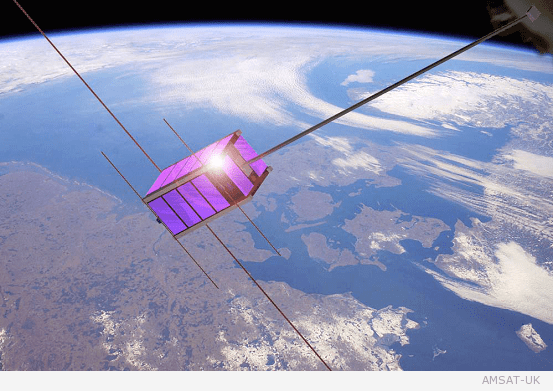
Artists impression of FUNcube in space

An agreement has now been reached with ISIS Launch Services BV, who are based in Delft in the Netherlands, for them to provide a launch of the FUNcube-1 CubeSat.

It is anticipated that FUNcube-1, which has been created by a team of volunteer radio amateurs and other specialists over the past two years, will be launched with a number of other spacecraft from a DNEPR rocket sometime in the third quarter of 2012. The flight is planned to take place from the Yasny launch facility which is in southern Russia near to the Kazakhstan border. The spacecraft needs to be completed by the end of July 2012, ready for shipping from the Netherlands to Russia.

The orbit is still to be defined precisely but it is expected to be nearly circular and approximately sun synchronous. This will ensure that the spacecraft has the necessary solar illumination and that it will appear at regular times for educational outreach activities at schools and colleges.

The FUNcube-1 spacecraft will transmit signals that can be easily received directly by schools and colleges for educational outreach purposes. This telemetry will give details of the spacecraft’s health – battery voltages and temperatures and from this it will be possible to determine its spin rate and attitude by plotting simple graphs. Additionally, experimental data and messages can be displayed in an attractive format and provide stimulation and encouragement for students to become interested in Science, Technology, Engineering and Mathematics (STEM) subjects in a unique way.

AMSAT-UK FUNcube Mission Patch Rev4 20100609

AMSAT-UK FUNcube Mission Patch

The target audience for this project is students at both primary and secondary levels and a simple and cheap “ground station” – actually it looks just like a USB dongle, for schools to use, has already been developed.

In addition to providing educational outreach for schools and colleges around the world, the spacecraft will also provide a U/V linear transponder for radio amateurs during local “night”, at weekends and during holiday periods

The production and testing of the spacecraft itself has already been funded via a legacy and other sources. It will however really help the project if radio amateurs and other interested supporters could contribute something towards the cost of the actual launch itself. With this in mind a special donation scheme has been setup using the Virgin Giving charity donation website http://tinyurl.com/funcubegiving/

All donations of £25 (or equivalent) or more will be specially acknowledged by the spacecraft itself – exact details will follow shortly!

All donations received from UK tax payers can be “Gift Aided” which will add 20% to the value of your donation.

More information about this exciting project will be made available over the coming months at the website http://www.funcube.org.uk/

FUNcube to be on show at the Association for Science Education conference Jan 5-7, 2012