Satellite Beginners Session in Guildford

AO-73 (FUNcube-1) - Image credit Wouter Weggelaar PA3WEG

AO-73 (FUNcube-1) – Image credit Wouter Weggelaar PA3WEG

The AMSAT-UK International Space Colloquium in Guildford starts at 3:30pm on Friday, July 24 with a special session for newcomers to the amateur satellite world.

Newcomers will be helped through the complexities by three amateurs, Dave G4DPZ, Carlos G3VHF and Drew KO4MA, who, between them, have thousands of hours of experience.

They will explain the theories and talk about the practice of listening to and having satellite contacts through the ever increasing number of satellites in orbit.

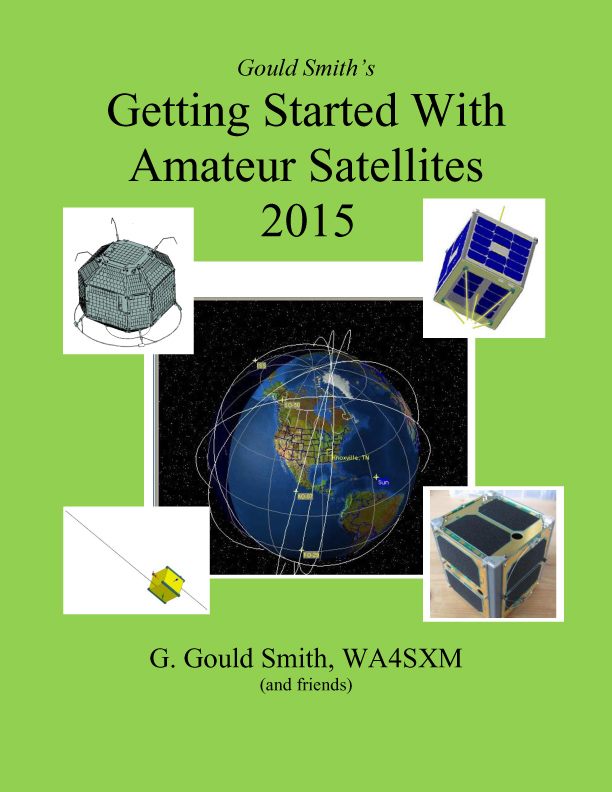
This year, there will be copies available of the very recently updated AMSAT-NA publication “Getting started with Amateur Satellites 2015″ in full colour available for sale from the shop at a special show price of £15.

Further details and programme schedule spreadsheet at https://amsat-uk.org/colloquium/

International Space Colloquium Guildford – Speakers for Sunday, July 26

Holiday Inn Guildford side entrance

Holiday Inn Guildford side entrance

There is a great line up of speakers for the AMSAT-UK International Space Colloquium at the Holiday Inn, Guildford, GU2 7XZ. The event is open to all.

Admittance is £10 for the day and car parking is free.

Speakers for Sunday, July 26

• Surrey Space Centre (SSC) Update including DeOrbitSail Report by Dr Chris Bridges 2E0OBC

• USN Academy NO-84 ParkinsonSat/PSAT by Mike Rupprecht DK3WN

• Tim Peake / ARISS / UKSA Outreach by Ciaran Morgan M0XTD

• UKube-1: technology, mission and operations by Helen Walker, RAL Space

• The Nayif-1 opportunity by Wouter Weggelaar PA3WEG

• Data Recovery as part of the ISEE-3 Reboot Project by Phil Karn KA9Q

• ESEO Update and Demonstration by Dr Chris Bridges 2E0OBC and Graham Shirville G3VZV

• Open Discussion Session lead by Graham Shirville G3VZV

• AMSAT-UK AGM

Further details and programme schedule spreadsheet at https://amsat-uk.org/colloquium/

Special Colloquium Price for Getting Started with Amateur Satellites

Getting Started With Amateur Satellites 2015 coverA special full colour edition of the book Getting Started with Amateur Satellites 2015 will be available for just £15 at the AMSAT-UK International Space Colloquium, Guildford, July 24-26. The price after the event will be higher.

This definitive reference is written for the new satellite operator by Gould Smith, WA4SXM, but includes discussions for the experienced operator who wishes to review the features of amateur satellite communications. The new operator will be introduced to the basic concepts and terminology unique to this mode. Additionally, there are many practical tips and tricks to ensure making contacts, and to sound like an experienced satellite operator in the process.

Newly revised in May 2015 with new information on, AO-73, UKube-1, the upcoming Fox-1A, Fox-1B, Fox-1C, Fox-1D, and Fox-1E, plus many other updates of general interest. It also include information on several satellites of interest to hams expected to be launched in the coming year.

AMSAT-UK thanks AMSAT-NA for permission to print the book in the UK.

International Space Colloquium Holiday Inn, Guildford – Speakers for Saturday, July 25
https://amsat-uk.org/2015/07/16/colloquium-speakers-saturday/

Students receive FUNcube-1 (AO-73)

Student Receiving FUNcube-1 CubeSat

Student Receiving FUNcube-1 CubeSat

David Haworth WA9ONY showed students how to receive the FUNcube-1 amateur radio CubeSat during a workshop at Pine Mountain Observatory, Oregon.

Students adjusting the antenna

Satellite Antenna

FUNcube-1 (AO-73), launched on November 21, 2013 is an educational satellite built by volunteers from AMSAT-UK and AMSAT-NL with the goal of enthusing and educating young people about radio, space, physics and electronics.

The satellite carries a BPSK telemetry beacon on 145.935 MHz for students to receive and a linear transponder for two-way amateur radio communications. In addition there is a materials science experiment, from which the school students can receive telemetry data which they can compare to the results they obtained from similar reference experiments in the classroom.

On the FUNcube Yahoo Group David posted:

FUNcube-1 activities were successful at Pine Mountain Observatory workshop on Sunday, July 12 to Wednesday 15.

During this time 759 packets were received which resulted in a ranking of 456.

The student were impressed when we were the only station receiving a packet and seeing our FM2 message.

The antenna was a Arrow II Portable 146/437-10 3 element 2 meter Yagi on a camera tripod.

Watch PMO Workshop FUNcube-1 Satellite Telemetry Pass July 13, 2015

Watch PMO Workshop FUNcube-1 Satellite Receving Equipment

Watch PMO Workshop FUNcube-1 Satellite Pass July 13, 2015

FUNcube-1 presentation PDF given by David Haworth WA9ONY at SEA-PAC on June 6, 2015

BBC News report about FUNcube-1 http://www.bbc.co.uk/news/science-environment-25084547

FUNcube Yahoo Group https://amsat-uk.org/funcube/yahoo-group/

FUNcube website http://FUNcube.org.uk/

Apollo Soyuz SSTV Event Diploma

International Space Station - Image Credit NASA

International Space Station – Image Credit NASA

In commemoration of the Apollo Soyuz SSTV event, ARISS will be distributing a limited edition diploma to those who received one of the SSTV images transmitted from the International Space Station on July 18-19, 2015.

You can receive a commemorative diploma by filling in one of two application forms:
•  English version: http://ariss.pzk.org.pl/Apollo-Soyuz/en
• Russian language: http://ariss.pzk.org.pl/Apollo-Soyuz/ru

The deadline to apply for the diploma is the end of July 2015.

73, Frank Bauer, KA3HDO
ARISS International Chair

Amateur Radio on the International Space Station (ARISS) http://www.ariss-eu.org/

PSAT/BRICsat Status

28 MHz PSK31 Receiver Board Flight Prototype - Brno University of Technology

28 MHz PSK31 Receiver Board Flight Prototype – Brno University of Technology

Tomas OK2PNQ provides an update on the PSK31 transponders carried by the CubeSats PSAT (NO-83) and BRICsat (NO-84).

I am from the group, which have built the PSK transponders. The PSAT is working fine and the TLE from AMSAT works for the predictions. The receiver is a bit deaf probably due to the mistuning of the receiving antenna, so please use the power, which is necessary to get solid copy in downlink.

To the BRICsat, the satellite has negative power budget, it is off for the long periods of time and switches on for short periods varying between 5 and 20 minutes approx.  In the previous weeks we had receptions every day on one pass, but between this occasions, there was week without a beep above Europe. Any kind of positive reception reports from both sides (PSK downlink, packet downlink) are welcomed.

The most important information: The BRICSAT is leading in orbit in front of the PSAT, we are using the TLE from the ULTRASAT team from the page
http://mstl.atl.calpoly.edu/~ops/ultrasat/ultrasat_jspoc.txt

and we are using ULTRASAT1=90720 as BRICsat and ULTRASAT3=90722 as PSAT.

From the receptions on omni antennas and AOS/LOS times and Doppler, those are the right elements.

Thanks for reading a bit lenghty info.

73! de Tomas OK2PNQ
http://www.urel.feec.vutbr.cz/esl/

PSK31 satellites https://amsat-uk.org/beginners/how-to-work-psk31-satellites/

ParkinsonSAT (PSAT) http://www.aprs.org/psat.html