ISS SSTV 40th Anniversary of Ham Radio in Human Spaceflight

ARISS SSTV Event Dec-16 to Dec19 2023An ARISS Slow Scan TV (SSTV) event is scheduled from the International Space Station (ISS) December 16-19, 2023, on 145.800 MHz FM to celebrate the 40th anniversary of amateur radio in human spaceflight.

The event is slated to begin on Saturday, December 16, at 10:15 GMT for setup and operation and continue until Tuesday, December 19, ending at 18:00 GMT. These times are tentative and are subject to change due to crew availability.

Images will be downlinked at 145.800 MHz +/- 3 kHz for Doppler shift and the expected SSTV mode of operation is PD-120.

Radio enthusiasts participating in the event can post and view images on the ARISS SSTV Gallery at https://www.spaceflightsoftware.com/ARISS_SSTV/

The signal should be receivable even on a handheld with a 1/4 wave whip. If your rig has selectable FM filters try the wider filter for 25 kHz channel spacing.

You can get predictions for the ISS pass times at https://www.amsat.org/track/

ARISS SSTV Blog https://ariss-sstv.blogspot.com/

Useful SSTV info and links https://amsat-uk.org/beginners/iss-sstv/

AO-73 back in transponder mode

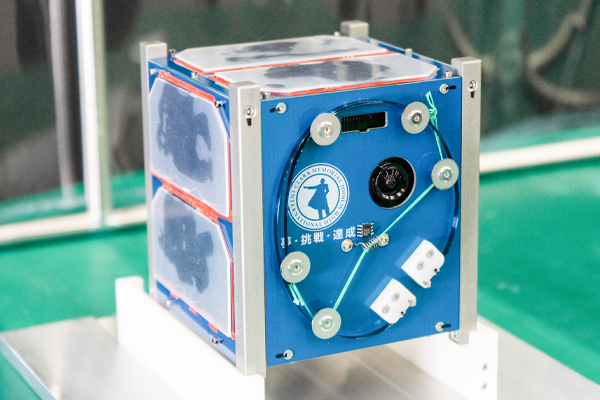
AO-73 (FUNcube-1) - Image credit Wouter Weggelaar PA3WEG

AO-73 (FUNcube-1) – Image credit Wouter Weggelaar PA3WEG

After a year long period of ‘battery management’, AMSAT-UK and AMSAT-NL have restarted the transponder on AO-73.

After 10 years in orbit, the battery on the satellite has reduced capacity and until recently, has been unable to charge to the nominal 8.3V.
Following some careful battery management, where the transmitter was off during eclipse, the battery status has improved and the transponder has been reactivated.

Although the battery voltage is varying between 8.13 in sunlight and 7.8V at the end of eclipse, this is much improved on the situation earlier in the year.

Low power BPSK telemetry is transmitted on 145.935MHz
The inverting mode U/V transponder input is 435.130 to 435.150MHz
The transponder downlink is 145.970 to 145.950MHz

At the moment the satellite has a high spin rate of apx. 30 rpm and if you’ve not used AO-73 before, the downlink can be Doppler tracked successfully, but the input on 70cms is best tuned manually due to temperature drift of the receiver.

73

David G0MRF – AMSAT-UK

ITU WRC-23: 1240-1300 MHz

IARU RNSS GraphicIARU have provided an update on the outcome of ITU WRC-23 Agenda Item 9.1B concerning the Amateur and Amateur Satellite Service allocations in 1240-1300 MHz:

“During the WRC-23 deliberations, strong positions were expressed by all the parties involved. The result is a well-supported compromise for a footnote in the Radio Regulations regarding amateur and amateur satellite service operation in the 1240–1300 MHz range. The footnote reminds administrations and amateurs of the need to protect the primary RNSS from interference and provides guidance to administrations to allow both services to continue to operate in this portion of the spectrum. The compromise was formally adopted by the Conference Plenary on December 8 and is not subject to further consideration during the final week of the WRC. The IARU team continues its work on other WRC issues including the development of agendas for future conferences.

IARU President Tim Ellam, VE6SH, noted “This is a very good result for the amateur services. The decision reached at WRC-23 on this agenda item makes no change to the table of allocations nor incorporates by reference M.2164 into the Radio Regulations. The addition of a footnote that provides guidance to administrations in the event of interference to the RNSS is a good regulatory outcome for amateurs and the primary users of this band.”

The WRC also agreed to suppress the Resolution 774 which closes the issue and satisfies the agenda item.”

Read the full IARU statement at https://www.iaru.org/recommendation-on-ai-9-1b-approved-at-wrc-23/

Download ITU‑R Report M.2532 https://www.iaru-r1.org/wp-content/uploads/2023/11/R-REP-M.2532-2023-PDF-E.pdf

IARU Summary Meeting Report WRC-23: This report is focusses on the 23 cm Band RNSS Coexistence Aspects and WRC-23 AI 9.1b by Barry Lewis G4SJH https://www.iaru-r1.org/wp-content/uploads/2023/12/Report-from-WRC_Dec-2023_23cm.pdf

23cm band report ITU‑R M.2532 published

ITU LogoIARU Region 1 reports as a part of the preparatory process for WRC-23 agenda item 9.1 topic b) involving the 23cm band (1240-1300 MHz), ITU‑R Report M.2532 has been published.

This report encapsulates the outcome of resolves 1 of ITU‑R Resolution 774 that requires a detailed review of the different systems and applications used by the amateur and amateur satellite services in the 23cm band. The review forms a part of the basis for the studies required by resolves 2 to address the amateur and amateur satellite services coexistence with the radio navigation satellite service (RNSS).

The publication represents a positive outcome from a great deal of work and committment by the IARU volunteer team that has been central to its development since 2019 in ITU‑R Study Group 5.

Download ITU‑R Report M.2532 https://www.iaru-r1.org/wp-content/uploads/2023/11/R-REP-M.2532-2023-PDF-E.pdf

The information paper ZL23_C5_19 1.3 GHz Band – Additional Information was submitted by the RSGB to the IARU Region 1 Conference held Novemebr 1-4, 2023. It provides information on the situation in the 1240-1300 MHz and 13001350 MHz spectrum. It can be downloaded from ZL23_C5_19 1300MHz INFO

Extract from CPM report 2023-10-11-Extract CPM-Report-to-WRC-23 _2_

Delfi-C3 – DO64 Deorbiting Soon

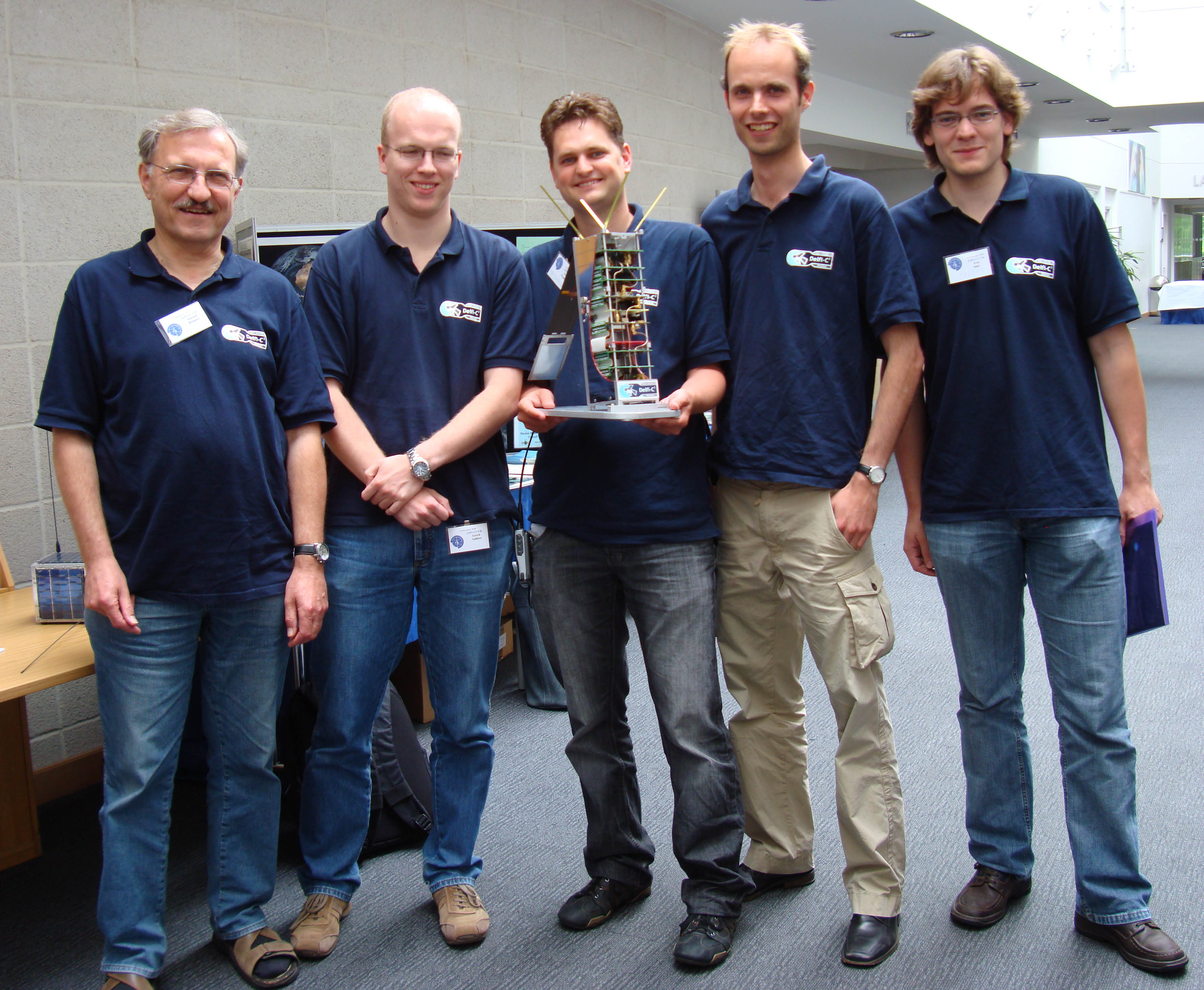
Delfi-C3 Team at AMSAT-UK Colloquium 2008

Delfi-C3 Team at AMSAT-UK Colloquium 2008

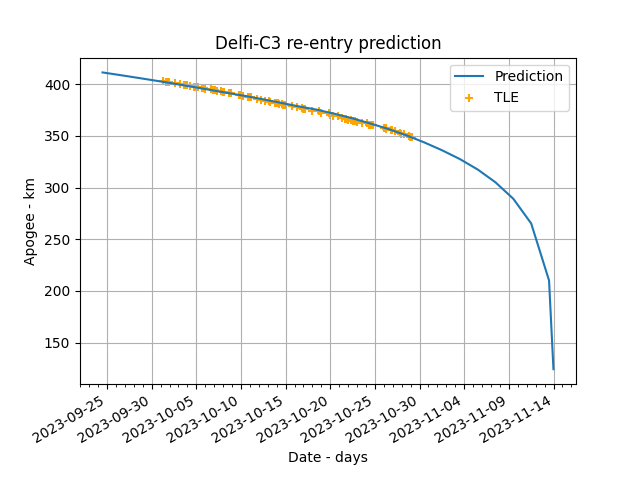
After more than 15 years in orbit, Delfi-C3’s mission is about to come to an end. The team predict that re-entry will take place around November 16th 2023.

The re-entry date might vary depending on the solar activity, which is very hard to predict accurately. See also @Marco_Langbroek on Twitter for a similar prediction.

https://twitter.com/Marco_Langbroek/status/1720110996499349663

Delfi-C3 Re-entry Prediction

Delfi-C3 Re-entry Prediction

We would like to request all amateur radio operators / SWL’s / satellite enthusiasts worldwide to listen for Delfi-C3’s telemetry downlink on 145.867 MHz, 1200 baud AX.25 BPSK. We will hand out an award certificate to the person submitting the last Delfi-C3 telemetry frame.

This can be done either through the RASCAL software (updated version coming…), through the SATNOGS network or by sending us decoded telemetry frames with reception time and location via email to Delfi_at_tudelft.nl.

On behalf of the entire Delfi-C3 team, we would like to sincerely thank the worldwide amateur radio / SWL / satellite community for assisting the team by forwarding received telemetry and reception reports.

Back in 2008 we could not imagine the great support received so far and the many first we had, including a successful ground network and flying the first linear transponder in a CubeSat.

We strongly believe that Delfi-C3 has paved the way for many follow-on missions (both amateur and commercial), and has been a great step towards maturing CubeSat technology as well as training the next generation of space engineers. Stay tuned for updates!

On behalf of the team best 73s,

Wouter PA3WEG

ISS SSTV Verification Test – Oct 27-Nov 1

ISS SSTV image 5/12 received by Murray Hely ZL3MH January 31, 2015

The SSTV system in the Service Module will be activated to attempt to verify a replacement piece of hardware during the period of Oct 27 until Nov 01.

The system will be off around the required period of no transmissions during the planned EVA on Oct 31. Images will be transmitted on 145.800 MHz and in the typical PD120 format.

There are 2 windows for testing, separated by an EVA:
Fri Oct 27 at 12:15 GMT – Sun Oct 29 at 18:50 GMT
Tue Oct 31 at 10:05 GMT – Wed Nov 01 at 18:10 GMT

Your images can be posted to the Gallery at https://www.spaceflightsoftware.com/ARISS_SSTV/index.php

Since this is a test of replacement components of the system, there still may be unexpected outages or issues.

The signal should be receivable on a handheld with a 1/4 wave whip. If your rig has selectable FM filters try the wider filter for 25 kHz channel spacing.

You can get predictions for the ISS pass times at https://www.amsat.org/track/

ARISS SSTV Blog https://ariss-sstv.blogspot.com/

Useful SSTV info and links https://amsat-uk.org/beginners/iss-sstv/