Amateur Radio BIRDS-1 CubeSat Constellation

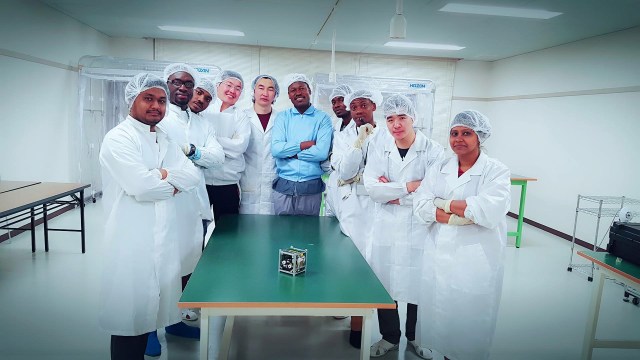
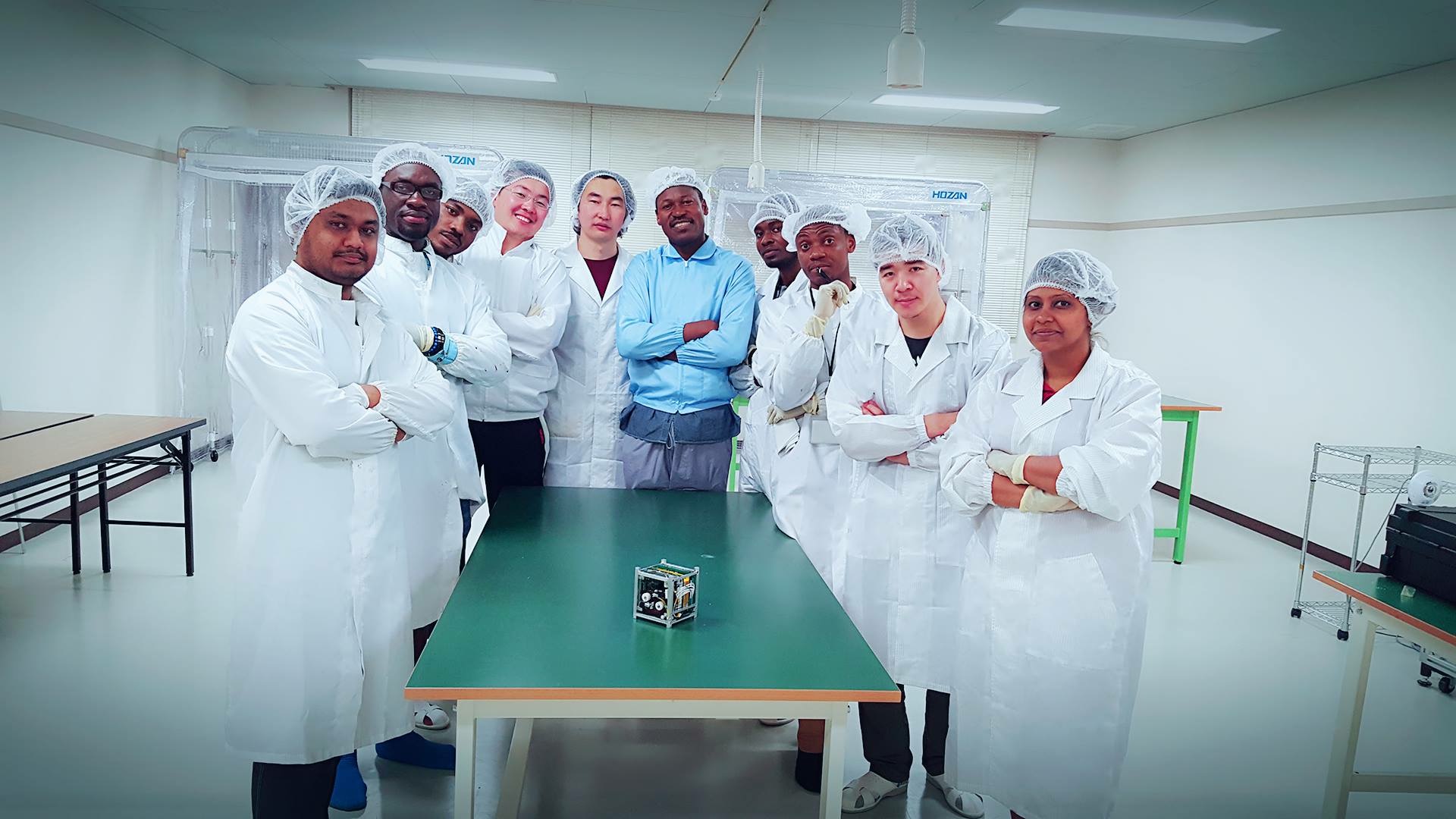
BIRDS CubeSat Engineering Model integration test

BIRDS CubeSat Engineering Model integration test

The BIRDS-1 constellation consists of five 1U CubeSats (BIRD-B, BIRD-J, BIRD-G, BIRD-M and BIRD-N). They launched to the ISS on a SpaceX Falcon 9 CRS-11 on June 3, 2017. The satellites are made of the exactly same design including the radio frequencies to be used and will be deployed from the ISS later in the year.
BIRDS CubeSat Project LogoThe main mission of the constellation is to do experiments on radio communication with a CubeSat constellation via a network of UHF/VHF amateur radio ground stations all over the world.

The challenge is to distinguish each satellite from the four satellites transmitting with the same frequency, hand over operation of a satellite from one ground station to another and assemble the satellite data, such as housekeeping telemetry, music and the Earth images, obtained at different ground stations.

Amateur radio enthusiasts are asked to join the network to assist in the data downlink and reconstruction of the patchy satellite data into one meaningful data. Orbit information and operational plan of each satellite will be made available to the amateur radio community in the world. Software to decode the satellite data will be also made available.

The respective amateur ground stations that can successfully decode the telemetry data, music and the Earth images, shall receive a QSL card from the BIRDS team. The data reconstructed by the effort of the amateur ground station network will be made public to share the sense of satisfaction and achievement.

BIRDS CubeSat NationsA particularly interesting mission of BIRDS project is the SNG mission that exchanges music via a digi-singer. It is an outreach-oriented mission. First, music in MIDI format is uploaded from ground. Then the MIDI file is processed on-board using a vocal synthesizer. Finally, the processed music is sent back to Earth using UHF antenna as voice FM data.

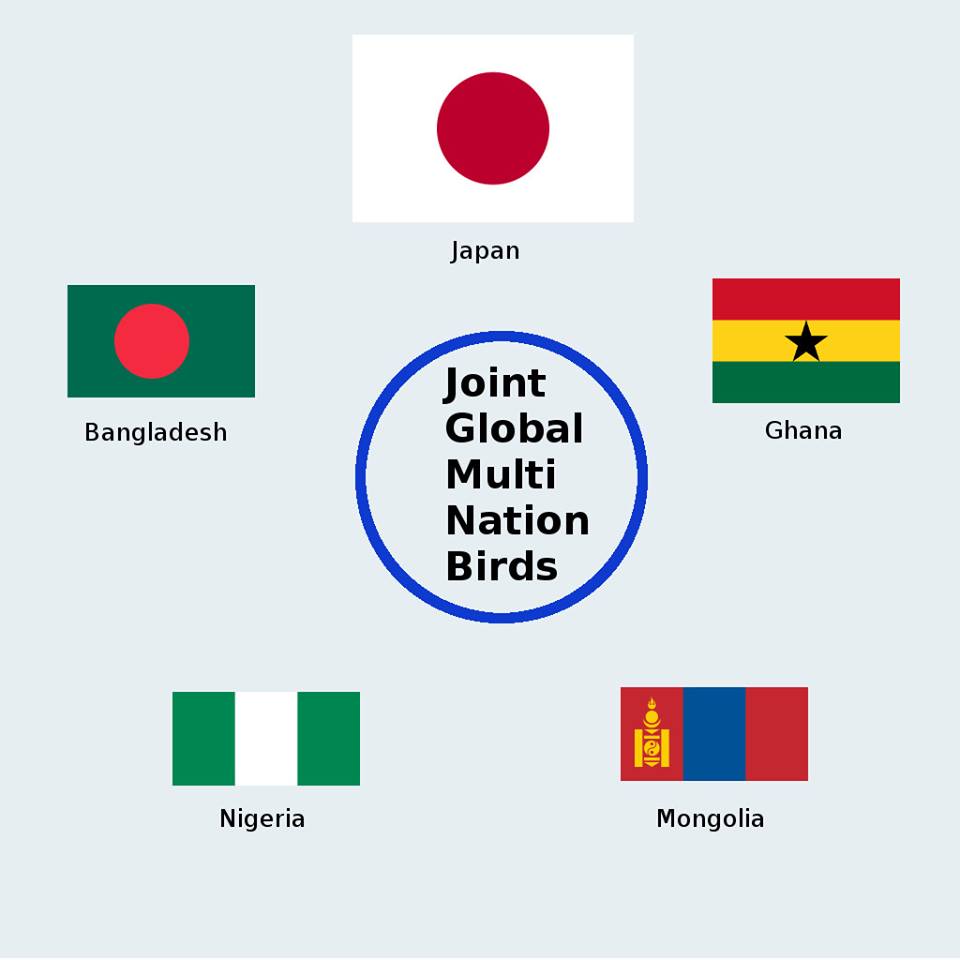
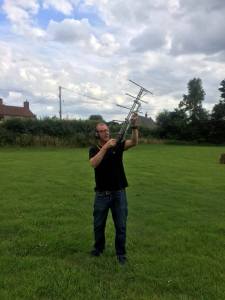
During organized events on space utilization with schools or general public, music could be heard using a common hand-held receiver and hand-made Yagi antenna positioned to track the satellite at each given pass over the region. This has a tremendous effect on awareness of radio communication among school children and general public, especially in the countries participating in the BIRDS project, Japan, Ghana, Mongolia, Nigeria and Bangladesh.

Proposing to use CW, 1k2 AFSK FM, audio FM and 9k6 GMSK downlinks. The IARU has coordinated a downlink frequency of 437.375 MHz.

BIRDS project information:
http://birds.ele.kyutech.ac.jp/
http://birds.ele.kyutech.ac.jp/amateur.html
http://birds.ele.kyutech.ac.jp/newsletter.html
https://www.facebook.com/Joint-Global-Multi-Nation-Birds-BIRDS-project-171403156542445/

Download the Paper – IAA-CU-15-01-16 Five-nations CubeSat constellation; An inexpensive test case for learning and capacity building
https://www.researchgate.net/publication/289868265_IAA-CU-15-01-16_Five-nations_CubeSat_constellation_An_inexpensive_test_case_for_learning_and_capaci-_ty_building

The IARU Satellite Frequency Coordination pages are hosted by AMSAT-UK at
http://www.amsat.org.uk/iaru/
Receive Pictures from Space – ISS SSTV August 15-16

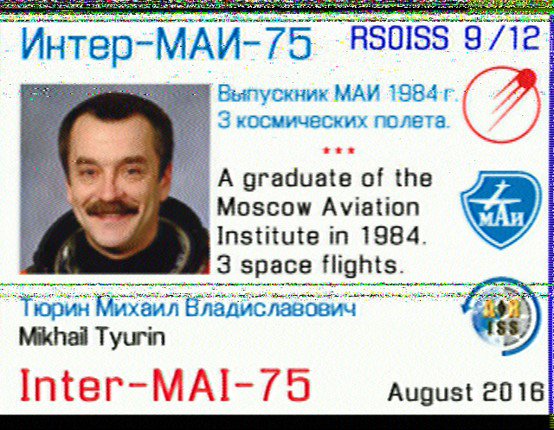
ISS SSTV image 2 received by Mike Rupprecht DK3WN April 12, 2016 at 1556 UT

ISS SSTV image 2 received by Mike Rupprecht DK3WN April 12, 2016 at 1556 UT

The ARRL reports Slow-scan television (SSTV) transmissions will be made from the International Space Station (ISS) on August 15-16, 2016.

The MAI-75 Experiment will transmit SSTV images on 145.800 MHz FM over the course of a few orbits as the space station passes over Moscow. Operators in Europe and South America will have the best chances to receive images. Operators along the US East Coast may have one chance on August 16.

Thanks to Kenneth Ransom, N5VHO, ISS Ham Project Coordinator

The ISS Fan Club website will show you when the space station is in range http://www.issfanclub.com/

ISS SSTV information and links at https://amsat-uk.org/beginners/iss-sstv/

ARISS-SSTV Images http://ariss-sstv.blogspot.co.uk/

Listen to the ISS when it is over Russia with the R4UAB WebSDR

Listen to the ISS when in range of London with the SUWS WebSDR http://websdr.suws.org.uk/

If you receive a full or partial picture from the Space Station your Local Newspaper may like to know http://www.southgatearc.org/news/2016/july/now-is-a-great-time-to-get-ham-radio-publicity.htm

Video of ISS HamTV talk at EMF

Samantha Cristoforetti IZ0UDF with ISS HamTV Transmitter

Samantha Cristoforetti IZ0UDF with ISS HamTV Transmitter

Daniel Cussen EI9FHB describes the equipment needed to receive live video direct from space and his adventure in setting up equipment and helping with video link between the ISS and school students

In this video, recorded at the Electromagnetic Field event EMF 2016 in Guildford, Daniel also shows videos received from space.

Watch Daniel Cussen EI9FHB: Receiving live video from the International Space Station

HamTV on the ISS https://amsat-uk.org/satellites/hamtv-on-the-iss/

Amateur radio presentations at EMF 2016 Guildford

David Rowntree 2E0DVR communicating via Amateur Radio Satellite

David Rowntree 2E0DVR communicating via Amateur Radio Satellite

Many radio amateurs are giving presentations at the Electromagnetic Field EMF 2016 event taking place near Guildford August 5-7 and two special event stations will be operating from the site. There is live streaming of presentations at http://streaming.media.ccc.de/emf2016/

The event is aimed at makers, scientists, engineers and radio enthusiasts. Most radio amateurs will be in two villages on the site, HABville and the Amateur Radio Village.

The London Hackspace Amateur Radio Club are planning to erect at least one of their Clark masts in the amateur radio village. London Hackspace will be showcasing Amateur Radio on bands from 3.5 MHz (80m) to 430 MHz (70cm) and maybe higher using the call sign GB4EMF.

RSGB Youth Committee member Rebecca M6BUB will be at the GB8EMF station which will be using three ICOM transceivers, two IC-706MKIIG and an IC-746.

Listen out for 434 MHz balloon trackers from HABville during the weekend, tracking information at https://tracker.habhub.org/

At 1559 GMT (4:59pm BST) on Saturday, August 6 the International Space Station (ISS) astronaut Kate Rubins KG5FYJ should be receivable at the event on a handheld radio tuned to 145.800 MHz FM. Full details at http://www.southgatearc.org/news/2016/july/ariss-event-0608.htm

The amateur radio satellite talks being given over the weekend are:
• A hacker’s guide to satellites — Dave Rowntree 2E0DVR (drummer in rock-band Blur)
• Receiving live video from the Space Station — Daniel Cussen EI9FHB HamTV
• The story behind $50SAT, a new approach to Amateur satellite design which became the world’s smallest operational satellite, built for £125 in a garden shed — Stuart Robinson GW7HPW

Other presentations by radio amateurs include:
• 100 years of Shannon — the man, his work and his legacy — Matthew Ireland MW0MIE
• Asynchronous or Analogue Methods for Computation — Matthew Ireland MW0MIE
• Connecting computers together over 1,000s miles without using the Internet — GB8EMF Amateur Radio Station
• Hacking Robot Dinosaurs — Dr Lucy Rogers M6CME (Judge on BBC Robot Wars)
• My Ubertooth Year — Michael Ossmann AD0NR developer of HackRF One SDR
• Numbers Stations: Cold War, short waves — Henry Cooke
• Rebooting a Hobby: How Modern Digital Comms are Reviving Amateur Radio — Ryan Sayre M0RYS

Electromagnetic Field EMF 2016
https://twitter.com/emfcamp
https://www.emfcamp.org/schedule
https://www.emfcamp.org/line-up/2016

EMF HABville https://wiki.emfcamp.org/wiki/Village:HABville

EMF Amateur Radio Village https://wiki.emfcamp.org/wiki/Village:Amateur_Radio

London Hackspace ARC
https://twitter.com/m0hsl
https://wiki.london.hackspace.org.uk/view/Group:Amateur_Radio

Previous EMF events have generated BBC News coverage
https://amsat-uk.org/2014/09/02/bbc-reports-emf-2014/

What is Amateur Radio? http://www.essexham.co.uk/what-is-amateur-radio

Find a short Amateur Radio training course near you at https://thersgb.org/services/coursefinder/

The book Getting Started with Amateur Satellites 2016 is available from the AMSAT-UK online shop
https://amsat-uk.org/2016/06/27/getting-started-with-amateur-satellites-2016/

Radio amateurs invited to 10 Downing Street

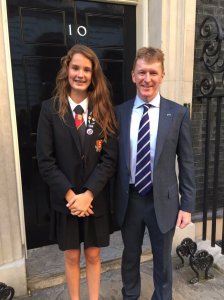
Jessica Leigh M6LPJ with Tim Peake GB1SS - Credit Richard Found

Jessica Leigh M6LPJ with Tim Peake GB1SS – Credit Richard Found

Radio amateurs were invited to a reception at the UK Prime Minister’s residence to celebrate the successful mission of UK astronaut Tim Peake KG5BVI / GB1SS.

Sandringham school student Jessica Leigh M6LPJ and her head teacher Alan Gray G4DJX attended the event with Tim Peake GB1SS. Italian astronaut Samantha Cristoforetti IZ0UDF and the UK’s first astronaut Helen Sharman GB1MIR also attended.

Jessica was the first UK school student to establish amateur radio communications with Tim Peake during his six month mission on the International Space Station. The contact took place on January 8, 2016 and was featured on national TV and in the press.

Year 10 pupil Jessica M6LPJ, along with two other students Polly M6POG and Emma M6GJQ, passed her amateur radio Foundation exam just before Christmas 2015 after training with the Verulam Amateur Radio Club.

Jessica Leigh M6LPJ with Alan Gray G4DJX - Credit Richard Found

Jessica Leigh M6LPJ with Alan Gray G4DJX – Credit Richard Found

Sandringham school caters for 1300 students aged 11-19 with 100 teachers including specialist teachers of computing science and three female physics teachers all of whom have a specialist interest in space and astronomy. In addition, the head teacher Alan Gray G4DJX is a very active radio amateur who was extremely supportive of the ISS contact.

Sandringham School presentation by ML&S
https://amsat-uk.org/2016/01/28/sandringham-school-presentation/

Video of Tim Peake amateur radio contact with Sandringham School
https://amsat-uk.org/2016/01/09/video-tim-peake-sandringham/

Jessica M6LPJ and Polly M6POG will give a talk about their experience of talking to Tim Peake GB1SS to the AMSAT-UK International Space Colloquium at the Holiday Inn Guildford, on Saturday, July 30 https://amsat-uk.org/colloquium/

The UK Space Agency’s Libby Jackson will speak at the AMSAT-UK Gala Dinner – Book Now
https://amsat-uk.org/2016/06/30/amsat-uk-international-space-colloquium-2016/

MAI-75 ISS SSTV Video

John Brier KG4AKV

John Brier KG4AKV

John Brier KG4AKV has released a video showing reception of the MAI-75 experiment Slow Scan TV transmissions from the International Space Station.

This is one of two rare MAI-75 passes over North America. The other is in Video #3 in this series (see link below). It’s rare because the MAI-75 event only took place for a few hours of Thursday and Friday during the week long event, and almost all of the passes didn’t go over North America, so getting it was really special. This was a great way to round out the April 2016 ISS SSTV week long event! I love this SuitSat image!

Oh yeah! This was shot partially with a GoPro! Enjoy the views.

Eventually I hope to make a time lapse of all the ISS SSTV images I received during this event, but my next video will be of an SO-50 pass where I made six contacts, five of which were back to back.

Watch Spacesuit MAI-75 Image! – Last Pass of April 2016 ISS SSTV Event – Video #4

New videos every Wednesday!
https://www.youtube.com/channel/UCJDdMdjxwFsjdzhXQFHVk2g/videos
https://twitter.com/johnbrier

ISS Slow Scan TV https://amsat-uk.org/beginners/iss-sstv/