ARISS contact planned for school in Norwich, UK

Tracking Tim Peake and radio technology workshop at City of Norwich School Ground Control Day with Norfolk Amateur Radio Club

Tracking Tim Peake and radio technology workshop held February 12 at the City of Norwich School Ground Control Day with Norfolk Amateur Radio Club

On Friday, February 26, 2016, at approximately 14:40 UT, an ARISS contact is planned between UK astronaut Tim Peake GB1SS and the City of Norwich School GB2CNS.

The International Space Station (ISS) signal will be audible over the British Isles and Europe on 145.800 MHz FM and streamed live on the ARISS Principia website which is going through a webhosting test right now.

UK astronaut Tim Peake KG5BVI / GB1SS

UK astronaut Tim Peake KG5BVI / GB1SS

School presentation:

This contact is a collaborative project between three schools in Norfolk and their local university, UEA. Norwich School employ an Ogden Trust Teaching Fellow whose job is 50% dedicated to Physics outreach and she has led the project.

City of Norwich School (CNS) are hosting the link up. Reepham High School have an observatory on site and are hosting a ‘spot the station’ event.

36 schools have signed up to be a part of all we have planned and have each received an age-appropriate radio kit for use in lessons and clubs funded by RCUK through the UEA.

Students will ask as many of the following questions as time allows.

Principia Mission Patch

Principia Mission Patch

1. Maddy (Aged 13):  What do you do if you cut yourself really badly in space?
2. Austin (Aged 16):  Are there any protocols or guidance in place if George Clooney comes knocking on the front door as he did in the film Gravity?
3. Sophie (Aged 13):  What experiment would you like to add to the program based on the experiences you have had?
4. Max (Aged 11):  Do you notice that you are missing natural sunlight and fresh air and in what ways is this affecting you?
5. TBD (Aged 11):  How do you get changed in space, won’t your clothes go everywhere?
6. Eden (Aged 12):  One of the experiments you are conducting in space is to measure fluid shifts in the body, how does this help us back on Earth?
7. Thomas (Aged 14):  Do you think there will be a jump in the design of spacecraft as many are now old?
8. Emily (Aged 13):  How different was the training compared to actually going into space?
9. Millie (Aged 15):  Do you think the experiments carried out in space will increase in number as the technology improves or will there be technology to recreate this environment on Earth?
10. Erin (Aged 16):  Which materials being developed with the electromagnetic levitator will have the largest impact on the development of greener living?
11. Lola (Aged 11):  Since being in space have your dreams been different to those on earth?
12. TBD (Aged 11):  If everyone in Britain turned their lights on and off at the same time, would you see it?
13. Ella (Aged 17):  Which part of the Earth do you like orbiting over the most and why?
14. Amy (Aged 16):  I understand that you experience sunrise and sunset sixteen times a day on board the ISS, are you aware of it and does it affect your body clock?
15. Mimi (Aged 11):  Do you feel insignificant up in space because perhaps there may be life beyond our planet?
16. Bruno (Aged 15):  Is there a song or a piece of art that you think reproduces the feeling of being in a non-gravity zone, if so which one?
17. Aruneesh (Aged 14):  Do you play any anti-gravity sport up in space?
18. TBD (Aged 12):  If you could live on or explore any planet, which would it be and why?
19. James (Aged 10):  If you were allowed to change one feature of a planet, which one would it be and why?
20. Tom (Aged 14):  As a plane ascends in the atmosphere, we are told to blow our noses or swallow to minimise pain. How do you deal with this with the g-force you experience in the rocket?

ARISS offers an opportunity for students to experience the excitement of Amateur Radio by talking directly with crew members onboard the International Space Station. Teachers, parents and communities see, first hand, how Amateur Radio and crew members on ISS can energize youngsters’ interest in science, technology and learning.

73, Gaston Bertels, ON4WF
ARISS mentor

Norwich School Ground Control Day https://amsat-uk.org/2016/02/15/norwich-school-ground-control-day/

ARISS Principia site https://principia.ariss.org/

UK ARISS scheduled schools
https://amsat-uk.org/2016/02/03/all-uk-ariss-shortlisted-schools-are-now-scheduled/

What is Amateur Radio? http://www.essexham.co.uk/what-is-amateur-radio

Find an amateur radio training course near you https://thersgb.org/services/coursefinder/

A free booklet is available aimed at introducing newcomers to the hobby that can also be used as a handy reference while getting started, see
http://rsgb.org/main/get-started-in-amateur-radio/alex-discovers-amateur-radio-2/

Oasis Brightstowe students talk to Tim Peake

Seema talking to Tim Peake GB1SS

Seema talking to astronaut Tim Peake GB1SS

BBC TV news has reported on the successful amateur radio contact between astronaut Tim Peake GB1SS on the ISS and students at the Oasis Academy Brightstowe GB1OAS. The contact took place on Friday, February 19, 2016 and the students were able to question Tim about life in space.

Oasis Academy Brightstowe LogoOne of those asking a question was 15-year-old Seema who came to the UK from Afghanistan in 2013 joining Oasis Academy Brightstowe in February speaking hardly any English. By the autumn term of 2013 she had achieved enough to move into top sets in all her subjects. Her aim is to be the first female Afghan astronaut, Tim told her it was a “wonderful idea and ambition” and that she should “follow her dreams”.

HamTV dish antenna at Goonhilly - Credit Frank Heritage M0AEU

HamTV dish antenna at Goonhilly – Credit Frank Heritage M0AEU

As well as the two-way voice amateur radio contact the students were able to see Tim Peake via a Digital Amateur Television (DATV) HamTV transmission from the International Space Station on 2395 MHz.

This transmission was received at an amateur radio station installed by British Amateur Television Club (BATC) and AMSAT-UK members at Goonhilly and streamed to the school via the web.

There was an additional mobile DATV receiver at the school, developed by volunteers from BATC, which received the ISS amateur TV transmission directly.

Watch the BBC TV News report at
http://www.bbc.co.uk/news/uk-england-bristol-35612764

Bristol TV showed the contact at 3 minutes into part 2 of the 6 News Show broadcast on February 19. Watch it at http://www.madeinbristol.tv/player/?playercat=76589&vid=eo392g9j

A list of the questions asked by the students is at
https://amsat-uk.org/2016/02/14/tim-peake-oasis-academy-brightstowe/

Principia Mission Patch

Principia Mission Patch

British Amateur Television Club (BATC)
http://www.batc.org.uk/
https://twitter.com/BATCOnline

AMSAT-UK https://amsat-uk.org/
Twitter https://twitter.com/AmsatUK
Facebook https://facebook.com/AmsatUK
YouTube https://youtube.com/AmsatUK

ARISS Principia site https://principia.ariss.org/

UK ARISS scheduled schools
https://amsat-uk.org/2016/02/03/all-uk-ariss-shortlisted-schools-are-now-scheduled/

What is Amateur Radio? http://www.essexham.co.uk/what-is-amateur-radio

Find an amateur radio training course near you https://thersgb.org/services/coursefinder/

Oasis Academy Brightstowe student Emily speaking to Tim Peake

Oasis Academy Brightstowe student Emily speaking to Tim Peake

Norwich School Ground Control Day

International Space Station - Image Credit NASA

International Space Station – Image Credit NASA

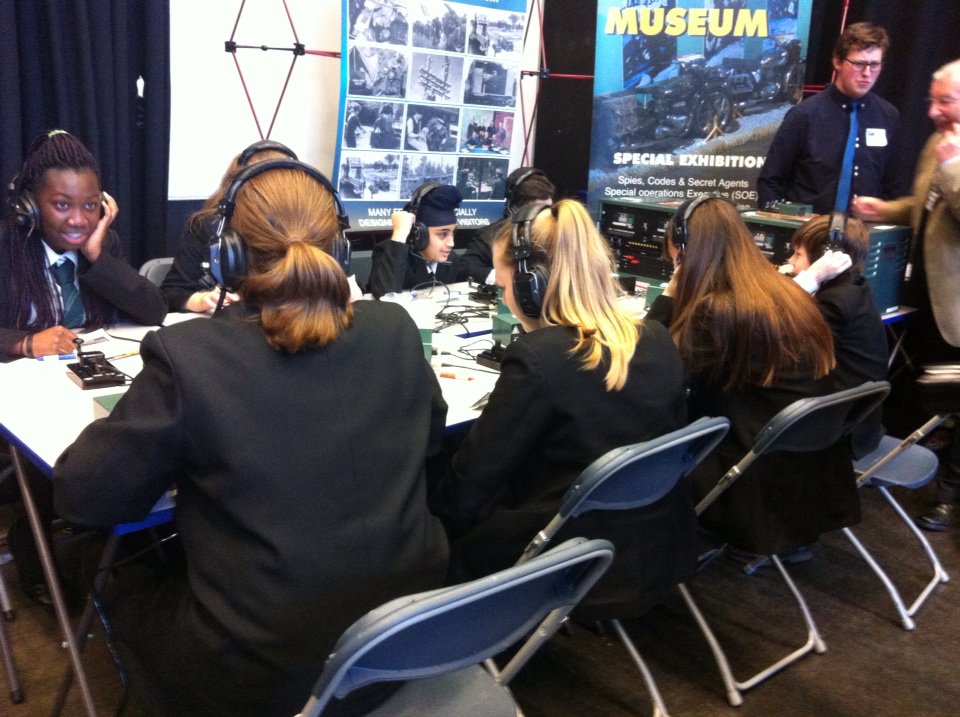
Ahead of the amateur radio link up with ISS astronaut Tim Peake GB1SS, planned for 1440 GMT on Friday, February 26, 120 pupils aged 10 to 18, from 21 schools across Norfolk and Suffolk, gathered at City of Norwich  (CNS) for a special Ground Control Day.

Tim Peake KG5BVI preparing for his spacewalk in January

Tim Peake KG5BVI preparing for his spacewalk in January

The Eastern Daily Press report:

As well as a keynote speech from Helen Mason, a reader in solar physics at Cambridge University, the event covered the technical side of the radio link itself, and issues to do with physics and space more generally.

Tim Hare M6HTJ, a Year 10 pupil at CNS who is himself a radio ham enthusiast, will lead the space linkup, said: “It’s going to be incredible. It’s a once in a lifetime opportunity that very few people will be able to have.”

Maddy Flett, a Year 8 pupil at CNS, said science is “not a subject I would jump to first”, but she really enjoyed Ground Control Day.

She is one of 10 pupils chosen to question Mr Peake, and will ask what astronauts do if they cut themselves.

Read the full EDP story and watch the video at
http://www.edp24.co.uk/news/education/ground_control_day_sees_pupils_prepare_for_space_station_link_up_with_astronaut_tim_peake_1_4417620

ARISS Principia site https://principia.ariss.org/

UK ARISS scheduled schools
https://amsat-uk.org/2016/02/03/all-uk-ariss-shortlisted-schools-are-now-scheduled/

What is Amateur Radio? http://www.essexham.co.uk/what-is-amateur-radio

Find an amateur radio training course near you https://thersgb.org/services/coursefinder/

ARISS contact planned for Oasis Academy Brightstowe

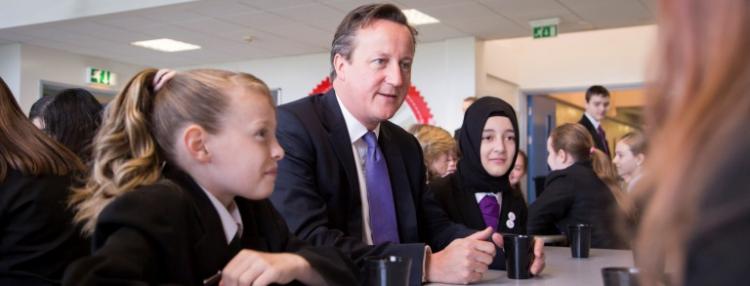
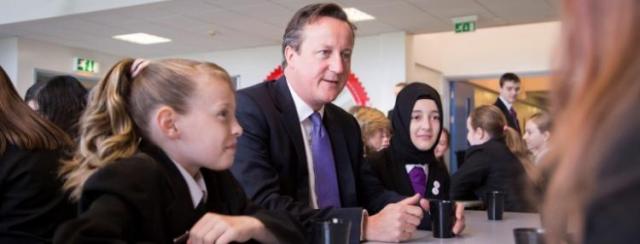
In 2014 the UK PM spoke to Oasis Academy Brightstowe students - Image Credit Oasis Academy

In 2014 the UK PM spoke to Oasis Academy Brightstowe students – Image Credit Oasis Academy

Friday, February 19, 2016, at approximately 14:20 UT, an ARISS contact is planned for Oasis Academy Brightstowe, Bristol. The UK astronaut Tim Peake will be using the call sign GB1SS  while the Academy will use GB1OAB.

The ISS signal will be audible over the British Isles and Western Europe on 145.800 MHz FM. The contact will be webcast on the ARISS Principia website

UK astronaut Tim Peake KG5BVI / GB1SS

UK astronaut Tim Peake KG5BVI / GB1SS

School presentation:

Oasis Academy Brightstowe is an independent Academy for 11 – 16 year olds, located in Shirehampton, North Bristol. We opened in September 2008 in the state-of-the-art buildings of the former Portway School. Our facilities here are second to none, with an on-site restaurant, great sports facilities and a well-stocked Library.

Oasis Academy Brightstowe was given £1.8million to develop a 21st century ICT capability, so students here have access to the very latest technology; including a fully equipped Library, access to Wi-Fi throughout the school, and a Virtual Learning Environment, designed to give students access to online learning provision.

Oasis Academy Brightstowe LogoThe Academy has one of the highest computer-per-student ratios of any school in the area (better than one between two students) and we encourage students to be competent with the use of computers and the internet in their lessons.

The new technology is embraced by both staff and students and forms a key part of lesson planning and delivery. Interactive whiteboards are a feature of every classroom and teachers can instantly turn any workspace into an ICT suite using one of our eight portable laptop trolleys.
Principia Mission Patch

Principia Mission Patch

Students will ask as many of the following questions as time allows.

1. Emily (12): From my research, I have found out that you are taking part in 265 experiments. Which one is the most important for us here on Earth?

2. Luke (15): In your opinion, will unmanned missions ever be equal to manned ones?

3. Francesca (16): In a microgravity environment, can dust, debris and liquids cause a danger, and if so how do you deal with it?

4. Seema (15): My aim is to be the first female Afghan astronaut. What would be the one most important piece of advice that you have for me?

5. Jack (11): Were you told what experiments you had to do, or did you get to choose?

6. Ashleigh (16): How many days supplies do you have on board should a resupply mission not would you potentially be able to live for, and how would you survive the longest?

7. Lewis (16): How did you build the confidence to go into space?

8. Natalie (16): Why should we continue to fund expensive space missions when we have more pressing problems on Earth?

Oasis Academy Brightstowe students learn about radio communications

Oasis Academy Brightstowe students learn about radio communications

9. Nazain (18): If the world’s leaders could see the earth from your current perspective, do you think there would be a better consensus to sort out the problems of the world?

10. Kerys (10): Did anything in your previous career or experiences, prepare you for space?

11. Jacob (9): Why did you want to become an astronaut?

12. Emily (12): When you push on the wall of the space station behind you to move forward, does the space station move backwards due to the principle of conservation of momentum?

13. Luke (15): What do you think of NASA’s planned one way Mars mission, and would you go if given the opportunity?

14. Francesca (16): Can you feel the ISS shake or wobble?

15. Seema (15): Being in a microgravity environment causes a decrease in muscle mass and bone density. Other than exercise, what measures are you taking to protect your health?

16. Jack (11): Considering that in space you are weightless and time has a different value, do you age at a different rate?

17. Kerys (10): Astronauts go through such lengthy and intensive training for their journeys. Was there anything that you were not prepared for?

18. Jacob (9): How are your experiments helping to save our Earth?

19. Natalie (16): What do you miss about being on earth?

20. Nazain (18): Other than the earth, can you tweet a picture of your favourite sight in space?

ARISS offers an opportunity for students to experience the excitement of Amateur Radio by talking directly with crewmembers onboard the International Space Station. Teachers, parents and communities see, first hand, how Amateur Radio and crewmembers on ISS can energize youngsters’ interest in science, technology and learning.

73, Gaston Bertels, ON4WF
ARISS mentor

ARISS Principia site https://principia.ariss.org/

What is Amateur Radio? http://www.essexham.co.uk/what-is-amateur-radio

Find an amateur radio training course near you https://thersgb.org/services/coursefinder/

A free booklet is available aimed at introducing newcomers to the hobby that can also be used as a handy reference while getting started, see
http://rsgb.org/main/get-started-in-amateur-radio/alex-discovers-amateur-radio-2/

ARISS-Principia-Common-Header

History of HamTV on the ISS

Samantha Cristoforetti IZ0UDF with ISS HamTV Transmitter

Samantha Cristoforetti IZ0UDF with ISS HamTV Transmitter

Thursday, February 11, 2016, at 18:09 UTC, an educational ARISS radio contact took place at the Royal Masonic School for Girls, Rickmansworth,, United Kingdom. The school contact was operated by Tim Peake KG5BVI in the frame of the Principia mission.

It was a historic event: the radio contact was enhanced with video! Tim Peake activated the Ham Video transmitter on board Columbus.

HamTV Antennas at ARISS Telebridge Station IK1SLD in Casale Monferrato, Italy

HamTV Antennas at ARISS Telebridge Station IK1SLD in Casale Monferrato, Italy

As far back as the year 2000, a proposal for an ATV system on the International Space Station was submitted to the ARISS  Project Selection and Use Committee by Graham Shirville, G3VZV.

November 2002, a request for amateur radio facilities on the then under construction Columbus module was submitted by Gaston Bertels, ON4WF to Jörg Feustel-Büechl, Director of Manned Spaceflight and Microgravity Directorate of the European Space Agency (ESA). The request was to install wideband amateur radio antennas on the nadir of Columbus, facing the earth. With such antennas, the on board amateur radio facilities could be extended to amateur TV.

In 2003 the request was examined in detail and finally accepted. ARISS would pay for the development, manufacturing and qualification of the antennas. ESA would support the installation cost.

ARISS-Europe started a funding campaign, all donations being published on the website.

In 2004 coaxial feed throughs were installed on the port cone of Columbus. This was needed for accessing the antennas with feedlines from inside the module.

In 2005, the Royal Belgian Amateur Radio Society (UBA) signed a contract with the Wroclaw University of Technology, Poland for the development and manufacturing of the antennas. Whereas initial plans were for UHF, L-band and S-band antennas, only L- and S-band antennas could be ordered by lack of funding. The cost of the project was 47,000 Euro.

One of the Columbus Module 2.4 / 1.2 GHz Antennas

One of the Columbus Module 2.4 / 1.2 GHz Antennas

Early 2006 the antennas were delivered to ESA. Meanwhile main Columbus contractor EADS and subcontractor Alenia Spazio had reviewed mechanical and thermal constraints. Wroclaw University proceeded to qualifications tests (cost 3.000 Euro) and the antennas failed.

In 2007 an additional contract was signed with the Wroclaw University for the development of modified antennas. This amounted to 36.000 Euro. These antennas were accepted and installed on Columbus, October 2007.

The cost of the antennas finally amounted to 86.000 Euro and was covered by a wordwide funding campaign.

ESA supported the total installation cost of the antennas, including feed throughs and coaxial cables.

After the successful launch of Columbus and its integration into the International Space Station complex, an ARISS-Europe working group started a study for the development of an amateur television transmitter on Columbus, using one of the the S-band antennas. A debate started between the supporters of analog television (ATV) and the proponents of digital television (DATV). The working group, which met monthly per teleconference, made progress, but was stuck by the lack of funding.

Front panel of the HamTV transmitter

Front panel of the HamTV transmitter

As time went by, the debate on ATV versus DATV evolved at the advantage of the latter, but no funding was in sight… Then, suddenly, supported by the enthusiasm of Italian astronaut Paolo Nespoli IZ0JPA, who had performed many ARISS school contacts during his 2010-2011 expedition aboard the Space Station, at the initiative of AMSAT Italia, an Italian manufacturer, Kayser Italia, presented a project for an amateur radio DATV transmitter to ESA’s educational services. In 2012, this proposal was accepted and ESA signed a contract with Kayser Italia for the development and the manufacturing of a DATV transmitter on S-band. This transmitter, dubbed “Ham Video, was installed on Columbus and ESA transferred the custodianship of this equipment to ARISS.

It was a long way, spanning sixteen years, from the initial proposal to the first ever HamTV school contact. A new era opens for ground station operators, interested in receiving digital amateur television from the International Space Station. A technical challenge already met by a few ground stations in Europe, USA and Australia. Long life to HamTV and success to the pioneering ground stations, world wide!

73,

Gaston Bertels, ON4WF

Watch First HamTV ARISS contact as received direct on 2395 MHz by Colin Watts G4KLB in Bournemouth

HamTV on the ISS https://amsat-uk.org/satellites/hamtv-on-the-iss/

Radio ham on BBC Radio Norfolk

Tim Peake KG5BVI preparing for his spacewalk in January

Tim Peake KG5BVI preparing for his spacewalk in January

Steve Nichols G0KYA got some good publicity for amateur radio by letting his local media outlets know he had received a signal from Tim Peake on the ISS.

He was lucky enough to hear astronaut Tim Peake’s ISS contact with another UK school on Thursday, February 11, 2016. Not only did he record it, but he sent out a press release and ended up being interviewed about it by BBC Radio Norfolk on Friday.

Steve says: “If you do hear and record Tim do contact your local media as they are fascinated by the whole business and it brings good PR for amateur radio in general.”

Read Steve’s blog post and listen to a recording of his interview at
http://g0kya.blogspot.co.uk/2016/02/radio-norfolk-interview-about-tim-peake.html

January – Local newspaper reports reception of Tim Peake on ISS
https://amsat-uk.org/2016/01/13/local-paper-tim-peake-iss/