ARISS contact scheduled for students in Newbury UK

International Space Station - Image Credit NASA

International Space Station – Image Credit NASA

Amateur Radio on the International Space Station (ARISS) has received schedule confirmation for an ARISS radio contact with astronauts. ARISS is the group that puts together special amateur radio contacts between students around the globe and crew members with ham radio licenses on the International Space Station (ISS).

This will be a direct contact via amateur radio between astronaut Mark Vande Hei KG5GNP onboard the International Space Station and students at the Mary Hare School, Newbury, UK.

Amateur radio station GB4MHN will be the ham radio ground station for this contact.

The downlink frequency for this contact is 145.800 MHz FM and may be heard by listeners in Europe that are within the ISS-footprint.

The ARISS radio contact is scheduled for Tuesday, October 12, 2021 at 11:12:33 UTC, which is 12:12:33 BST or 13:12:33 CEST.

A live feed from the school will be available here https://live.ariss.org/

School Information:

Mary Hare is an aural school for the deaf, we don’t use sign language, instead we teach students to develop lip reading skills and make use of technology. The contact is important for the school as not only will it help inspire students to STEM, it will hopefully demonstrate that no matter the difficulties they have with communication; there are still ways they can accomplish amazing things (“the sky is not the limit!”).

During the week the students will see some exciting chemistry demonstrations, design and fly model rockets, see some space suits, and do some astronomy (observing Jupiter and Saturn in the evening). In lessons they have researched and discussed what it might be like to live in space, done some space themed art, and looked at astronaut food. Hopefully it will be an exciting and inspiring week.

Students First Names & Questions:

1. Rosie (13 yrs): Do you have to learn a sign language to communicate if something goes wrong with the radios in your suit?

2. Jacob (18 yrs): How do you tell directions in space?

3. Harrison (11 yrs): What do the northern lights look like from space?

4. Hollie (16 yrs): How can you shower in zero gravity?

5. Jasper (13 yrs): What’s your most favourite space technology?

6. Milly (18 yrs): If there was a fire, how would you evacuate?

7. Dominika (14 yrs): Do mobile devices work in space? For example, a Smart Phone?

8. Oliver (13 yrs): If you could take one thing from home into space, to make life more fun what would you take and why?

9. Zak (17 yrs): What is it like to wake up and see the earth from space

10. Julia (15 yrs): How long have you been in space for?

Watch the That’s TV Solent interview with Alex Ayling from Mary Hare School
https://twitter.com/TTVSolent/status/1440952287883632641

Deaf pupils to talk to astronaut on the International Space Station in a world first
http://www.southgatearc.org/news/2021/september/deaf-pupils-to-talk-to-astronauts.htm

Reading Chronicle newspaper report on the planned contact
https://www.readingchronicle.co.uk/news/19582950.deaf-newbury-pupils-talk-astronauts-iss-space-station/

The latest information on the ARISS operation mode can be found at
https://www.ariss.org/current-status-of-iss-stations.html

What is Amateur Radio? http://www.essexham.co.uk/what-is-amateur-radio

Free UK amateur radio Online Training course https://essexham.co.uk/train/foundation-online/

UK school to contact the ISS using amateur radio

International Space Station - Image Credit NASA

International Space Station – Image Credit NASA

At 11:12:33 GMT on Tuesday, October 12, students at Newbury’s Mary Hare School for deaf children will be using amateur radio to talk to astronaut Mark Vande Hei KG5GNP aboard the International Space Station (ISS).

Mark will be using the ISS callsign NA1SS and Mary Hare School GB4MHN. The contact should be receiveable across the UK and Europe on a frequency of 145.800 MHz FM.

Watch the That’s TV Solent interview with Alex Ayling from Mary Hare School
https://twitter.com/TTVSolent/status/1440952287883632641

Deaf pupils to talk to astronaut on the International Space Station in a world first
http://www.southgatearc.org/news/2021/september/deaf-pupils-to-talk-to-astronauts.htm

Reading Chronicle newspaper report on the planned contact
https://www.readingchronicle.co.uk/news/19582950.deaf-newbury-pupils-talk-astronauts-iss-space-station/

The latest information on the ARISS operation mode can be found at
https://www.ariss.org/current-status-of-iss-stations.html

What is Amateur Radio? http://www.essexham.co.uk/what-is-amateur-radio

Free UK amateur radio Online Training course https://essexham.co.uk/train/foundation-online/
Ham radio CubeSats to deploy from ISS

Kibo Robot Arm CubeSat Deployment

Kibo Robot Arm CubeSat Deployment

It is expected four CubeSats carrying amateur radio payloads will be deployed on the morning of Wednesday, October 6.

You can watch live at these URL’s:
#1 0855-0945 GMT Binar-1, Maya-3, Maya-4
https://www.youtube.com/watch?v=gDnhIniV1FU
#2 1035-1105 GMT CUAVA-1
https://www.youtube.com/watch?v=UHbRKOzzvp0

On the AMSAT Bulletin Board Masa JN1GKZ writes:

JAXA announced four CubeSats deploy from ISS at Oct 6 with J-SSOD. The satellites are Binar-1, Maya-3, Maya-4 and CUAVA-1. All the satellites operate on amateur band.

The deployment sked is followings.
#1 0850-0940z Binar-1, Maya-3, Maya-4
#2 1030-1100z CUAVA-1

The deployment will be live on the JAXA YouTube channel.

Binar-1 – 1U CubeSat Australia
Downlink 437.292 MHz, 435.810 MHz 19k2 GMSK
Uplink 435.810 MHz
http://www.amsatuk.me.uk/iaru/finished_detail.php?serialnum=730
https://www.binarspace.com/

Maya-3/4 – part of the BIRDS Project 1U CubeSat Philippines
Downink 145.825 MHz APRS, 437.375 MHz CW, 4k8 GMSK
http://www.amsatuk.me.uk/iaru/finished_detail.php?serialnum=711
http://www.amsatuk.me.uk/iaru/finished_detail.php?serialnum=712
https://stamina4space.upd.edu.ph/upcoming-satellites/maya-3and4/

CUAVA-1 3U CubeSat Australia
Downlink 437.075 MHz 9k6 GMSK
Uplink 145.875 MHz
http://www.amsatuk.me.uk/iaru/finished_detail.php?serialnum=671
https://www.cuava.com.au/projects/cuava-1/

Happy chasing!
Masa JN1GKZ
Tokyo Japan

AMSAT Bulletin Board https://www.amsat.org/amsat-email-lists/

ISS SSTV Aug 6-7 145.800 MHz FM

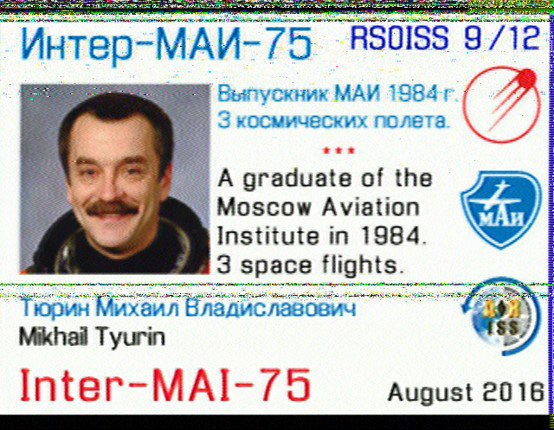
ISS SSTV MAI-75 image 9/12 received by Chertsey Radio Club on Baofeng handheld

ISS SSTV MAI-75 image 9/12 received by Chertsey Radio Club on Baofeng handheld

Russian cosmonauts on the International Space Station (ISS) are planning to transmit Slow Scan TV images on 145.800 MHz FM using the SSTV mode PD-120.

The transmissions are part of the Moscow Aviation Institute SSTV experiment (MAI-75) and will be made from the amateur radio station RS0ISS in the Russian ISS Service module (Zvezda) using a Kenwood TM-D710 transceiver.

August 6, 2021 (Friday) from 10:50 GMT until 19:10 GMT*

August 7, 2021 (Saturday) from 09:50 GMT until 15:55 GMT*

*Dates and times subject to change.

The signal should be receivable on a handheld with a 1/4 wave whip. If your rig has selectable FM filters try the wider filter for 25 kHz channel spacing.

You can get predictions for the ISS pass times at https://www.amsat.org/track/

ARISS SSTV Blog https://ariss-sstv.blogspot.com/

Useful SSTV info and links https://amsat-uk.org/beginners/iss-sstv/

ISS SSTV 145.800 MHz FM June 21-26

Amateur Radio on the International Space Station (ARISS) logoARISS report there will be an “Amateur Radio on Shuttle, Mir and ISS” Slow Scan TV (SSTV) event from June 21-26. Transmissions from the International Space Station will be on 145.800 MHz FM using PD120.

The ARISS team will be transmitting SSTV images continuously from June 21 until June 26. The images will be related to some of the amateur radio activities that have occurred on the Space Shuttle, Mir space station and the International Space Station.

The schedule start and stop times are:

Monday, June 21 – Setup is scheduled to begin at 09:40 UTC (transmissions should start a little later).

Saturday, June 26 – Transmissions are scheduled to end by 18:30 UTC.
Downlink frequency will be 145.800 MHz and the mode should be PD120.

Those that recently missed the opportunity during the limited period of MAI transmissions should have numerous chances over the 6 day period to capture many (if not all 12) of the images.

Check the ARISS SSTV blog for the latest information http://ariss-sstv.blogspot.com/

ARISS SSTV Award https://ariss.pzk.org.pl/sstv/

The signal should be receivable on a handheld with a 1/4 wave whip. If your rig has selectable FM filters try the wider filter for 25 kHz channel spacing.

You can get predictions for the ISS pass times at https://www.amsat.org/track/

Useful SSTV info and links https://amsat-uk.org/beginners/iss-sstv/

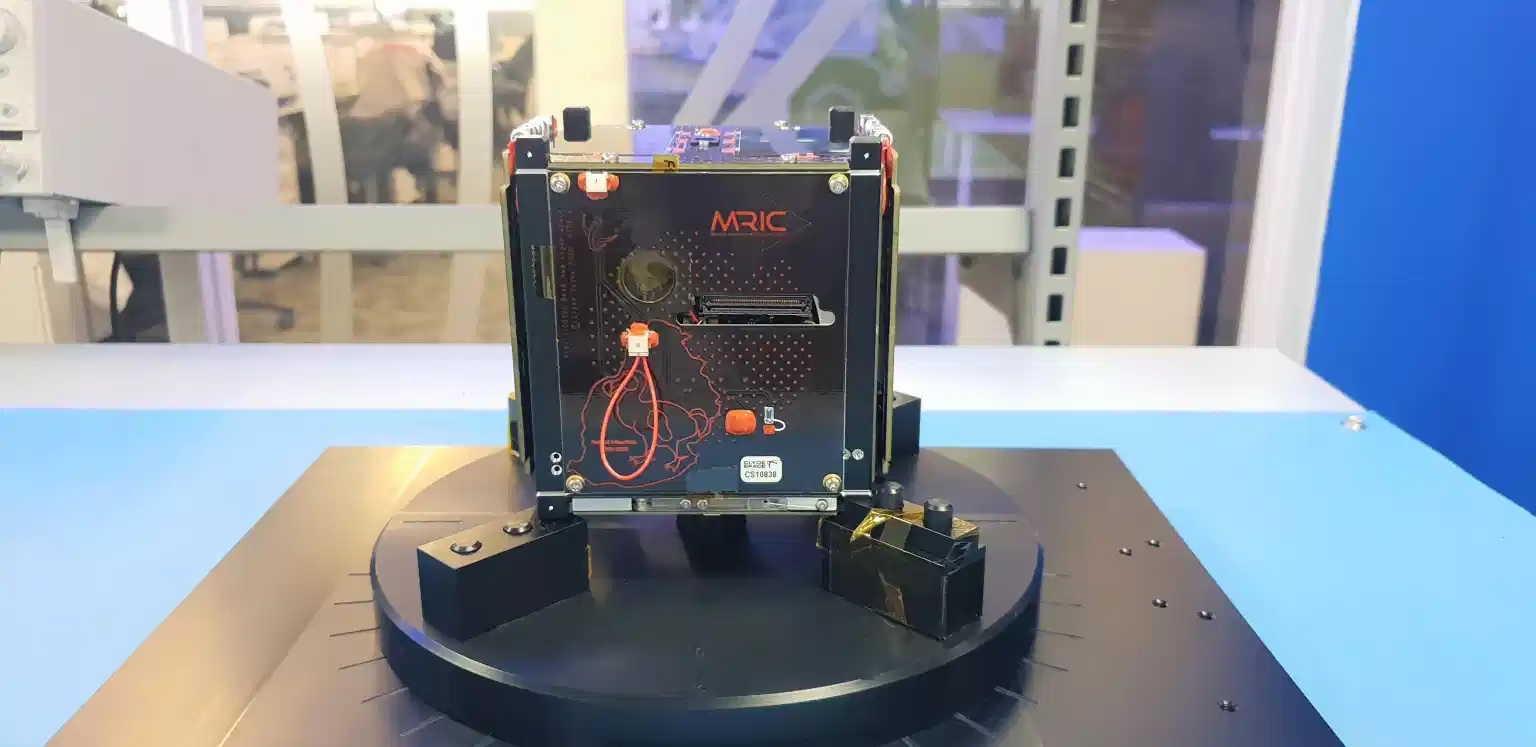
MIR-SAT1 to deploy from ISS

MIR-SAT1 CubeSat

MIR-SAT1 CubeSat

The Mauritius Amateur Radio Society (MARS), is offering an Award to commemorate the deployment of the MIR-SAT1 CubeSat from the ISS, planned for June 22 at 10:55 GMT.

The award is open to all participating Radio Amateurs/SWLs worldwide and will be issued to those decoding MIR-SAT1 telemetry (TLM) and forwarding it to SatNogs.

Full details of the award and links to telemetry decoders are at
https://mars3b8.wordpress.com/2021/06/19/mir-sat1-special-award/

The deployment will be shown live on JAXA YouTube channel, the broadcast starts at 10:35 GMT on Tuesday, June 22.

The IARU Satellite Frequency Coordination page reports:

MIR-SAT1 is a 1U CubeSat mission with the following objectives:

1. Verify the performance of the on-board subsystems by receiving telemetry from the satellite and establish communication to and from the satellite (command and control).
2. Collect images of Mauritius and the Mauritian EEZ for capacity, building, experiment and research.
3. Experimental communication with other islands via the satellite (for scientific and/or emergency purposes), through a Radio Amateur digipeater payload.
4. V/U 9600bps GMSK digipeater may be open for Radio Amateur communication worldwide when the satellite not used for all above.

A downlink on 436.925 MHz has been coordinated. Decoders for the amateur radio community and schools have been developed by Chris AC2CZ and Daniel EA4GPZ and will be available in the public domain on their WEB sites/Github, Links will be provided before launch on Tweeter, AMSAT-BB and Space Mauritius, see
https://spacemauritius.com/#telemetry

For the digipeater operation it will be necessary to evaluate the power available after deployment to decide on opening same 24/7 or on scheduled time.

IARU Satellite Frequency Coordination pages http://amsat.org.uk/iaru/

Follow 3B8DU on Twiiter at https://twitter.com/3b8du