Student Nanosat VELOX-I

VELOX-I 640Over 150 students at the Nanyang Technological University in Singapore have worked on the innovative nanosat project VELOX-I.

Velox-I - N-Sat and P-SatVELOX-I consists of two satellites: a 3U nano-satellite N-Sat and a 1U pico-satellite P-Sat. N-Sat is developed to be a robust satellite bus for future missions, and P-Sat is an experimental design to carry a scientific payload. During the mission P-Sat will be released by N-Sat.

The VELOX-I mission includes demonstrating high-resolution vision subsystem, testing a MEMS-based attitude determination and control system, verifying intersatellite RF link, and performing a quantum physics experiment.

It is hoped it will launch in 2013, a downlink of 145.980 MHz has been coordinated.

This article ‘Over 150 students helped to build it’ by Tong Su Yee appeared in The New Paper
http://www.edvantage.com.sg/edvantage/news/schoolnews/699350/Over_150_students_helped_to_build_it.html

Students reach for stars with own satellite
http://www.eee.ntu.edu.sg/Documents/Students%20reach%20for%20stars%20with%20own%20satellite.pdf

Entangled Photon Systems for Small Satellites http://quantum.nasa.gov/materials/2012-01-21-A3-Ling.pdf

Nanyang Technological University VELOX-I http://www.sarc.eee.ntu.edu.sg/Project/Pages/VELOX.aspx 

The IARU Amateur Satellite Frequency Coordination Status http://www.amsat.org.uk/iaru/
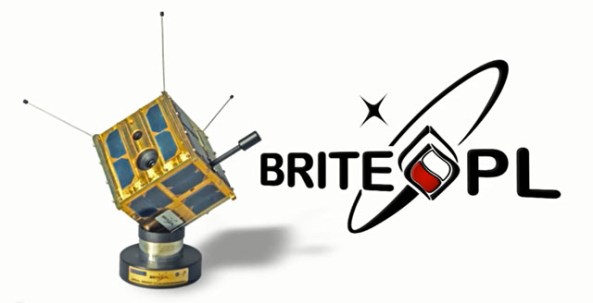
New Frequencies for Polish Radio Amateurs

Poland’s national society the Polski Związek Krótkofalowców (PZK) has announced new frequency allocations for the Amateur and Amateur-satellite Services.

The frequency range 2400-2450 MHz has been allocated to the Amateur-satellite Service and it is understood that one of the  BRITE-PL amateur radio nanosats will be making use of this allocation.

In addition frequency allocations of 70.1-70.3 MHz and 3400-3410 MHz have been made available to the Amateur Service.

Some of the students who worked on the Amateur Radio CubeSat PW-SAT (launched January, 2012) went on to work on the development of the two BRITE-PL nanosats.

Polski Związek Krótkofalowców (PZK) in Google English
http://tinyurl.com/PolandPZK

BRITE-PL http://www.brite-pl.pl/index_en.html

BRITE Project http://www.utias-sfl.net/docs/LivePapersAsOfJan2011/BRITE-COSPAR2010-PaperSR-WW-REZ-SM-AS-TM.pdf

BRITE TV http://www.uk.amsat.org/3054

IARU Amateur Satellite Frequency Coordination pages hosted by AMSAT-UK http://www.amsat.org.uk/iaru/

MicroThrust Motor for Nanosats

Imagine reaching the Moon using just a tenth of a liter of fuel. With their ionic motor, MicroThrust, EPFL scientists and their European partners are making this a reality, ushering in a new era of low-cost space exploration.

Watch EPFL – A Couple Drops of Fuel to Get to the Moon with MicroThrust

The goal is to provide efficient propulsion systems for nanosatellites (1-100 kg), which are currently stuck in whatever orbit they were initially placed: the plan is to free them to allow nanosatellites to perform orbital maneuvering, and missions to the Moon, to Near Earth Objects, or even to Mars.

Read Micromachined Propulsion systems for very small satellites http://lmts.epfl.ch/microthrust

UKube-1: 4 payloads

Rt Hon David Willetts MP learns about UKube-1 visiting Clyde space, seeing the clean rooms and talking to Craig Clark about CubeSat components. Courtesy http://www.clyde-space.com/news/305_uk-science-minister-visits-clyde-space


The UK Space Agency’s pilot programme has narrowed down from a total of 20 proposals to four payloads to fly on Ukube-1 from UK industry and academia.

Payloads chosen include a CMOS (complementary metal-oxide semiconductor) Imager Demonstrator, a specialist imaging device to measure radiation damage in space developed by the Open University and Essex-based e2v technologies.

Another, the United Kingdom Students for the Exploration and Development of Space (UKSEDS) payload, myPocketQub442, is an open source system comprising five experiments, one of which will allow school pupils, university students and hobbyists to run their own experiments in space for a day.

The other two payloads are the EADS Astrium , which will test random number generation crucial to secure communications systems in the radiation environment, and TOPCAT http://www.bath.ac.uk/elec-eng/invert/topcat.html, a system designed by the University of Bath to measure space weather conditions which can adversely affect global positioning systems (GPS).

UKube-1 will also take an educational subsystem called FUNcube, developed by the voluntary organisation AMSAT-UK, to encourage young people to learn about radio, space, physics and electronics.

The spacecraft is being developed through a knowledge transfer project with Scottish spacecraft system developer Glasgow based Clyde Space and the University of Strathclyde, which Clyde Space is also funding.

One of the world’s leading firms in the micro spacecraft sector, dubbed CubeSat , Clyde Space has made components for about 40% of the 600 CubeSats launched globally so far. It also makes components for larger satellites.

Ukube-1 is also being funded by the UK Space Agency, the Technology Strategy Board and The Science and Technology Facilities Council (STFC). The agency is currently in negotiations to find a launch vehicle to take the Ukube-1 satellite into space.

UKSEDS – Students for the Exploration and Development of Space http://www.uk.amsat.org/4369

Bath TOPCAT Project http://www.uk.amsat.org/1612

BBC TV Newsnight show on Clyde Space and UKube-1

UKube-1 is a 3U CubeSat being designed and produced by Clyde Space for the UK Space Agency. UKube-1 is the UK’s first CubeSat and will fly a total of 6 independent payloads. This news piece was prepared by the BBC covering Clyde Space and the UKube-1 mission.

Watch BBC Newsnight item on Clyde Space and UKube-1

UKube-1 will carry a set of AMSAT-UK FUNcube boards providing a 435/145 MHz linear transponder and BPSK telemetry beacon.

New Amateur Satellite Frequency Coordination Request Form

Hans van de Groenendaal ZS6AKV

Hans van de Groenendaal ZS6AKV

IARU Satellite Advisor Hans van de Groenendaal ZS6AKV has made available a new version of the Amateur Satellite Frequency Coordination request form.

Frequency coordination for amateur radio satellites is provided by the IARU through its Satellite Advisor, an official appointed by the IARU Administrative Council, its top policymaking body.

The IARU Satellite Advisor is assisted by an Advisory Panel of qualified amateurs from all three IARU Regions. The panel meets regularly via Skype to consider amateur satellite frequency coordination requests for satellites planned for operation on frequencies in the amateur service. The panel members often provide advice and assist satellite builders with the selection of   the best possible frequencies to meet the objectives of their mission.

The Amateur Satellite Frequency Coordination request form has been updated (Version 27) and is available for download from http://www.iaru.org/satellite.

On the IARU web satellite page there are also available a number of guideline documents which will assist satellite builders, including a document on the ITU requirements for Amateur Radio Satellites.

73

Hans van de Groenendaal ZS6AKV
IARU Satellite Advisor

A list of coordinated amateur radio satellites can be found at http://www.amsat.org.uk/iaru