Space Shuttle – Grand Finale 2010-11

Space Shuttle Discovery STS-133 – Image credit NASA/Kenny Allen and Mike Gayle

McLean Fahnestock  has produced a High Definition video work showing all 135 space shuttle launches.

Watch Grand Finale 2010-11

McLean Fahnestock http://mcleanfahnestock.com/

6U CubeSat Low Cost Space Missions Workshop

17th – 18th July 2012

Click here to register to attend the Workshop

Workshop Details

Title: 6U CubeSat Low Cost Space Missions Workshop
Date: 17th – 18th July 2012
Abstracts Due: 26th June 2012
Time:
Venue: The Duffield Theatre, Advanced Instrumentation and Technology Centre, Mt Stromlo Observatory, Canberra Australia
Cost: Free
Download the workshop poster here.
Background

For 2012 the NASA CubeSat Launch Initiative includes 6U CubeSat satellites. An 8 kg 6U CubeSat can be designed to perform some of the Earth observation missions of 100 kg microsatellites. A 6U CubeSat (~33 x 10 x 22 cm, ≤ 8kg) has 4 times the payload capacity of a 3U CubeSat (33 x 10 x 10 cm, ≤ 4 kg) which uses two thirds of its volume for system components.


This workshop, the first in the world dedicated to the 6U CubeSat, will explore the range of missions possible with a 6U CubeSat in the areas of:

  • Astronomy
  • Atmospheric Science and other Planetary Science
  • Space Physics
  • Earth Observation
  • Biology
  • Other

Program

Day 1 – Tuesday 17th July 2012
Time Presentation Title Speaker
10:00-10:30AM Morning tea
10:30-10:35AM Welcome Andrew Dempster (ACSER)
10:35-10:45AM Workshop Introduction Steven Tsitas (ACSER)
10:45-11:10AM 6U CubeSat Design for Earth Observation with 6.5 m GSD, 5 Spectral Bands and 14 Mbps downlink Steven Tsitas (ACSER)
11:10-11:35AM Scheduling multi-spectral collection of the Australian landmass using a 6U cubesat constellation Leon Stepan (DSTO)
11:35-12:00PM From SmallSat to 6U CubeSat: A Case Study in size and mass reduction Jeremy Straub (University of North Dakota)
12:00-01:00PM Lunch
01:00-01:25PM 6U CubeSat as the basis for a sustainable Australian space program Steven Tsitas (ACSER)
01:25-01:50PM TBC Roger Franzen, Mike Petkovic (ANU, Mt Stromlo Observatory)
01:50-02:50PM KEYNOTE: Research and Technology Implications and Applications for Very Small (MesoScale) Spacecraft John Hines (NASA-Ames)
02:50-03:15PM Synergy between 6U, fractionated and adaptable systems Gordon Roesler
03:15-03:45PM Afternoon tea
03:45PM Panel Discussion: Can the 6U CubeSat form the basis of a sustainable Australian space program?
Day 2 – Wednesday 18th July 2012
Time Presentation Title Speaker
09:05-09:10AM Workshop introduction final day Steven Tsitas (ACSER)
09:10-09:40AM TBC Stephanie Thomas (Princeton Satellite Systems)
09:40-10:05AM Satellite-borne impact detectors for small meteoroids, interplanetary dust and space debris Duncan Steel (UNSW)
10:05-10:35AM Morning tea
10:35-11:00AM A CubeSat Mission for Exoplanet Transit Detection and Asteroseismology Jeremy Bailey (UNSW)
11:00-12:00PM KEYNOTE: Astrophysics with 6U platforms Harvey Butcher (ANU)
12:00-01:00PM Lunch
01:00-01:25PM 6U CubeSat Commercial Applications Steven Tsitas (ACSER)
01:25-01:50PM 40 kg to LEO; a low cost launcher for Australia Nicholas Jamieson (UNSW)
01:50-02:15PM 6U Radar Altimeter Concept Design Nick Stacy (DSTO)
02:15-02:40PM GNSS Remote Sensing in a 6U Cubesat Andrew Dempster (UNSW)
02:40-03:05PM Preliminary parameters for an experimental payload for Trospospheric CO2 measurement using a space-born lidar 6U cubesat platform Manny Fabiao Dionizio (UNSW)
03:05-03:35PM Afternoon tea
03:35-04:05PM 6U CubeSat Systems (TBC) TBC
04:05-04:35PM CubeSat deorbit devices (TBC) TBC
04:35-04:45PM Workshop conclusion and next steps Steven Tsitas (ACSER)

Keynotes

Technology Keynote – John W. Hines, Chief Technologist, NASA-Ames Research Center
Science Keynote – Professor Harvey Butcher , Director Research School of Astronomy and Astrophysics
Chair

Dr Steven Tsitas, Senior Research Associate, Australian Centre for Space Engineering Research, University of New South Wales
Who Should Attend

Scientists and engineers interested in payload and mission concepts that take advantage of the greater payload capacity of the 6U CubeSat. For examples of 6U CubeSat designs and payloads that could perform some of the Earth observation missions of 100 kg microsatellites please see “6U CubeSat Design for Earth Observation with 6.5 m GSD, 5 Spectral Bands and 14 Mbps downlink” and “6U CubeSat Commercial Applications”. Reprints available upon request.

Presentations are invited describing payloads and mission concepts for the 6U CubeSat. Presentations are also invited regarding 6U launch opportunities and 6U CubeSat standards.

  • SESSION 1: Earth Observation Missions
  • SESSION 2: Astronomy Missions
  • SESSION 3: Planetary Science and Space Physics Missions
  • SESSION 4: Biology and other missions
  • SESSION 5: 6U CubeSat launch opportunities
  • SESSION 6: 6U CubeSat standards

Abstracts

If you wish to submit an abstract for the 6U CubeSat Low Cost Space Missions Workshop please email them to Stanija Buvac before the 3rd July 2012.

Australian Centre for Space Engineering Research

Italian HF Special Event Commemorates Apollo Space Program

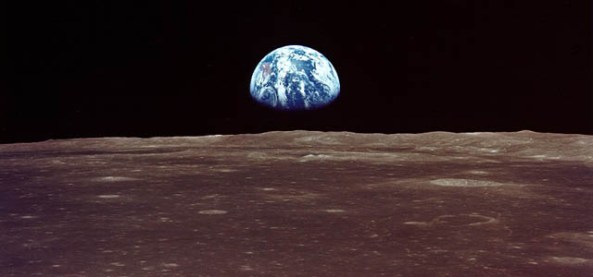
Earthrise viewed from Apollo 9 lunar orbit prior to landing – Image Credit NASA

ARI, the Associazione Radioamatori Italiani, and their club station IQ1TW have announced a special operating award “Apollo Space Program – From the Earth to the Moon” for contacts between July 1 – July 31, 2012.

This is to commemorate and keep alive the memory of the space program which has revolutionized the life of humankind.

To qualify for the award you need to have confirmed contacts with the ARI Headquarters Station IQ1TW and any three stations from this list: IZ1UMD, IZ1RFU, IZ1XBB, IZ1WVX, IZ1LBH, IK1WGZ, IZ1RGY, IZ2SMV, I1MXI.

On July 20, the anniversary of the first moon landing, a confirmed contact with IQ1TW (without the necessity of the other 3 contacts) will qualify you for the award.

The special event stations will operate with 200 watts using dipole and vertical antennas.

Full details, including a list of the planned HF operating frequencies and modes, log and confirmation information, rules, and application instructions are posted on the ARI web pages: http://aritortona.xoom.it/

[Thanks to ANS, Associazione Radioamatori Italiani and the DXNL Bulletin #1786 -Jun 27, 2012 – for the above information]

Video of Space Shuttle Discovery STS-56 mission

Ellen Ochoa KB5TZZ the first Hispanic woman in space

The crew of STS-56 made numerous amateur radio contacts to schools around the world using the Shuttle Amateur Radio Experiment II (SAREX II), including brief radio contact with the Russian Mir space station, the first such contact between Shuttle and Mir using amateur radio equipment.

STS-56 Mission Specialist Ellen Ochoa KB5TZZ plays the flute in space shuttle Discovery’s aft flight deck in April 1993. Credit: NASA

STS-56 was a Space Shuttle Discovery mission to perform special experiments. The mission launched from Kennedy Space Center, Florida, on April 8, 1993.

There were four radio hams on STS-56, Kenneth D. Cameron KB5AWP, Mike Foale KB5UAC, Ellen Ochoa KB5TZZ, Kenneth Cockrell KB5UAH.

Ellen Ochoa KB5TZZ was the first Hispanic woman to go into space. She went on to complete four space shuttle flights and become Deputy Director of the Johnson Space Center.

The primary payload of the flight was the Atmospheric Laboratory for Applications and Science-2 (ATLAS-2), designed to collect data on the relationship between the sun’s energy output and Earth’s middle atmosphere and how these factors affect the ozone layer. It included six instruments mounted on a Spacelab pallet in the cargo bay, with the seventh mounted on the wall of the bay in two Get Away Special canisters.

Narrated by the Commander and crew, this video contains footage selected by the astronauts, as well as their comments on the mission. Footage includes launch, onboard crew activities, and landing.

The amateur radio aspect of the mission features at 09:58 into the video.

Watch Space Shuttle STS-56 Discovery ATLAS-2 pt1-2 Post Flight Press 1993 NASA

Watch Space Shuttle STS-56 Discovery ATLAS-2 pt2-2 Post Flight Press 1993 NASA

Encouraging Science, Technology, Engineering and Mathematics

First US Woman Astronuat Sally Ride on STS-7 - Image Credit NASA

The Women in STEM High School Aerospace Scholars  (WISH) project is sponsoring two six-day summer camps for rising high school seniors that should feature a presentation by astronaut Shannon Walker KD5DXB and an Amateur Radio contact with the International Space Station (ISS).

Eighty-four female high school students from 29 states will plan a simulated mission to Mars and experience life as an engineer or scientist when NASA’s Johnson Space Center in Houston hosts two events focused on science, technology, engineering and mathematics (STEM) in June and July.

Shannon Walker KD5DXB - Image Credit NASA

The young women will work in teams with female NASA mentors to develop mission plans for launching to Mars, living and working there, and integrating the many components necessary for a successful planetary mission. They will work within the confines of a fictitious budget and build several small mockups of vehicles to demonstrate a successful launch and landing of the Mars spacecraft.

“WISH gives some of our brightest future innovators a chance to experience some of the exciting challenges that NASA engineers and scientists face on a daily basis,” said Johnson Deputy Director and four-time space shuttle astronaut Ellen Ochoa KB5TZZ. “It shows the young women that there are a variety of opportunities for them in technical fields.”

Young women participating June 24-29 will hear a first-hand account of life in space from NASA astronaut and radio amateur Shannon Walker KD5DXB. Participants July 8-13 will have a chance to speak with a current space station astronaut via ham radio as part of the Amateur Radio on the International Space Station program, a NASA educational initiative that facilitates direct links between students and astronauts.

The young women were selected based on completion of interactive, online lessons focused on space exploration and mapped to national education standards, academic merits and geographic diversity. The WISH program encourages young women to pursue science, technology, engineering and mathematics degrees and exposes them to the real-world applications of STEM careers at NASA. This program is in its second year. It began as a NASA accompaniment to the White House Council on Women and Girls.

For more information about WISH and a list of student participants, visit:
http://www.nasa.gov/audience/foreducators/teachingfromspace/students/wish.html

WISH: Women in STEM High School Aerospace Scholars http://www.wish.aerospacescholars.org/

Source NASA http://www.nasa.gov/home/hqnews/2012/jun/HQ_12-209_WISH.html

Amateur Radio on the International Space Station ARISS http://ariss.rac.ca/

Deployment of F-1 CubeSat XV1VN from the ISS

This video shows the planned deployment  into orbit in September of the amateur radio CubeSat F-1, callsign XV1VN, and other small satellites from the International Space Station (ISS) via the Kibo module robotic arm.

This is a joint program between JAXA and NASA. The participating CubeSats are: RAIKO (Wakayama University), FITSAT-1 (Fukuoka Institute of Technology), WE WISH (Meisei Electronics), F-1 (FPT University/Uppsala University/NanoRacks) and TechEdSat (San Jose State University and NASA Ames).

Watch Deployment of small satellites from the ISS and F-1 CubeSat mission

FSpace http://fspace.edu.vn/

F-1 CubeSat Blog on Facebook https://www.facebook.com/groups/116436068290/

Fly your name, callsign and message in space on F-1 http://www.uk.amsat.org/?p=8215

Vietnam Student CubeSat F-1 http://www.uk.amsat.org/?p=5025