
Amateur Radio Satellite HORYU-2
The launch of amateur radio satellite HORYU-2 on Thursday, May 17 at 1639 UT will be broadcast live on the Internet. On the same launch will be the JAXA climate observation satellite SHIZUKU (GCOM-W).
The launch broadcast will commence at 1610 UT and can be seen at http://www.jaxa.jp/countdown/f21/live/index_e.html
Built by students at the Kyushu Institute of Technology (KIT) HORYU-2 is 350 * 310 * 315 mm and mass is 7.1 kg. It will be launched into a Sun-Synchronous 680 km orbit with an inclination of 98.2°.
The satellite’s callsign is JG6YBW and radio amateurs are asked to listen for the 437.375 MHz (+/- 9 kHz Doppler shift) telemetry downlink that will be using 20 wpm Morse Code or 1200 bps AX.25 FSK packet radio. Details of the telemetry format are available here.
There will be a monthly competition for radio amateurs and listeners who send data received from the telemetry to the KIT server, via the HORYU-2 telemetry analysis software, details here.
The HORYU-2 telemetry software can be downloaded from here and an explanation of the software is here.
Keplerian Two Line Elements (TLEs / KEPS) for new satellites launched in past 30 days
http://celestrak.com/NORAD/elements/tle-new.txt
Amateur satellite Keplerian Two Line Elements (TLEs / KEPS) http://celestrak.com/NORAD/elements/amateur.txt
Among the experiments to be carried out on HORYU-2 are:

HORYU-2 discharge suppression solar cell side
300V power generation in LEO
In recent years, satellite size and power keep increasing. For large space platforms such as a space station, it is necessary to generate and transmit the power at a high voltage to minimize the Joule heating loss or the increase in the cable mass. It has been known that in LEO a solar array with a negative potential of 100 to 200V with respect to the plasma can suffer electrostatic discharge. Because of this, ISS power system was limited to 160V generation and 120V transmission. Generally speaking the transmission power is proportional to the square of the voltage. For a large space platform which requires 1MW-class power, such as a space hotel or a space factory, power generation at a voltage of 300 to 400V is required. The present HORYU-2 mission, 300V power generation in space without any discharge, is the first space environment test of the new technology that will be strongly demanded in near future. Also, as the satellite power employs higher voltage, there will be more demand for spacecraft charging mitigation.

Horyu-2 Structural Thermal Model
Demonstration of COTS surface potential meter in space (Trek)
This mission demonstrates a surface potential meter in space. The potential meter has been developed by TREK, Inc. aiming for terrestrial commercial application. It is a contact type potential meter with extremely large input impedance so that the contact does not affect the charging state of the specimen. KIT is currently working with TREK, Inc. to convert the potential meter for extreme environments such as space or plasma processing chamber. The in-orbit demonstration is a part of the joint research program. To put the COTS device on HORYU-2, the electronics board and the consumed power have been reduced significantly.
When HORYU-2 passes through the aurora zone, differential charging may develop between the insulator surface and the satellite chassis. The potential meter will measure the potential of the insulator that is the same material to be used for SCM. The two measurements are compared to validate against each other.
Debris observation with debris sensor
This mission aims at detecting the micro-debris impact on the surface of HORYU-2. Space debris has become a serious threat to satellites in orbit. Observation of micro debris less than 1mm has been very difficult. The debris sensor consists of many conductive thin wired laid down in parallel in the area of 8×8 cm. Upon impact, some of the lines are cut and the resistance becomes infinite.
Taking photographs of the Earth
HORYU-2 aims to take pictures of the Earth using a small CMOS camera. The camera is called SCAMP (Surrey Camera Payload) and was developed by the University of Surrey, a sister university of KIT. SCAMP takes a JPEG format picture of 640×480 pixels. From 700km altitude, one pixel corresponds to 1.6km.
HORYU-2 Launch Information http://kitsat.ele.kyutech.ac.jp/Documents/information_launch_english.html
English language version of HORYU website http://kitsat.ele.kyutech.ac.jp/index_e_new.html
Japanese HORYU website in Google English http://tinyurl.com/HoryuSatellite
KIT HORYU Blog in Google English http://tinyurl.com/HORYU-Blog
Development of High Voltage Technology Demonstration Satellite, HORYU-2
http://kitsat.ele.kyutech.ac.jp/Documents/Nano-satellite-symposium-Final-paper_nishimura.pdf
KIT HORYU-2 Facebook Group https://www.facebook.com/groups/277436165678985/
HORYU-2 Japanese Operating Schedule http://tinyurl.com/HORYU-2-Schedule
HORYU-2 Telemetry Competition http://www.uk.amsat.org/7474
HORYU-2 CW Telemetry Decoder by DK3WN http://tinyurl.com/SatSoftwareDK3WN/
SimpleSatLookDown satellite tracking software http://www.uk.amsat.org/?p=8217
MixW http://mixw.net/
UZ7HO Packet Radio Soundmodem http://wa8lmf.net/miscinfo
AGWPE Soundcard packet download page http://www.sv2agw.com/downloads/
Sound Card Packet Guide by Ralph Milnes KC2RLM
http://www.kc2rlm.info/soundcardpacket/
Sound card Interface http://www.southgatearc.org/articles/g0ftd/data_dummy_interface.htm
UISS Windows AX.25 Packet Software http://users.belgacom.net/hamradio/uiss.htm
DK3WN satellite decode software http://tinyurl.com/SatSoftwareDK3WN/
 On May 22 the amateur radio satellite HORYU-2 carried out tests using the 1200 bps AX.25 FSK downlink on 437.375 MHz.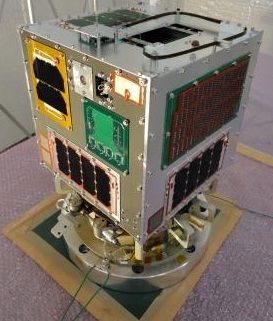


You must be logged in to post a comment.