New XW-2 satellites – linear transponders active

CAMSAT XW-2A formerly known as CAS-3A

CAMSAT XW-2A formerly known as CAS-3A

Nine XW-2/CAS-3 amateur radio satellites were successfully launched on Saturday, September 19, 2015 at 23:01:14 UT on Beijing’s new Chang Zheng 6 (CZ-6) rocket from the Taiyuan Satellite Launch Center (TSLC) in Shanxi.

Six satellites (designated XW-2A to XW-2F) carry 435/145 MHz U/V linear transponders for SSB/CW communications, LilacSat-2 (CAS-3H) has a V/U FM voice transponder and APRS. The other two satellites DCBB (CAS-3G) and NUDT‐Phone‐Sat (CAS-3i) only have telemetry downlinks.

The satellites were deployed into a 528 km by 551 km 97.5 degree inclination orbit. The NASA Orbital Lifetime Software provides an indication as to how long the satellites might remain in orbit before reentry into the Earth’s atmosphere:
• XW-2A = 8.5 years
• XW-2B/2C/2D = 9.2 years
• XW-2E/2F = 8.5 years
• LilacSat-2 = 18.2 years

The frequencies used by the satellites are here. Some satellite frequencies fall outside the international amateur satellite bandplan, so please be aware of local terrestrial users.

David Bowman G0MRF reported “Good signals from CAS3-F at 07.00 UTC  over Europe. Managed QSOs with SP5ULN in KO02  and F1AFZ in JN17 using the special event station at GB0RWC (Rugby World Cup).”

XW-2 / CAS-3 Satellite Frequencies PDF

For the latest status reports join the AMSAT Bulletin Board at
http://www.amsat.org/mailman/listinfo/amsat-bb

Further information on the XW-2 (CAS-3) satellites is at
https://amsat-uk.org/satellites/communications/camsat-xw-2/

LilacSat-2 https://amsat-uk.org/2015/09/20/lilacsat-2-linux-telemetry-decoding/

Online orbital predictor (select XW-2) http://www.amsat.org/amsat-new/tools/predict/index.php

Satellite tracking information https://amsat-uk.org/beginners/satellite-tracking/

Adding new satellites to SatPC32, Gpredict and Nova
https://amsat-uk.org/2013/11/23/adding-new-satellites-to-satpc32/

NASA Orbital Lifetime Software http://orbitaldebris.jsc.nasa.gov/mitigate/das.html

LilacSat-2 – Linux Live CD for Telemetry Decoding

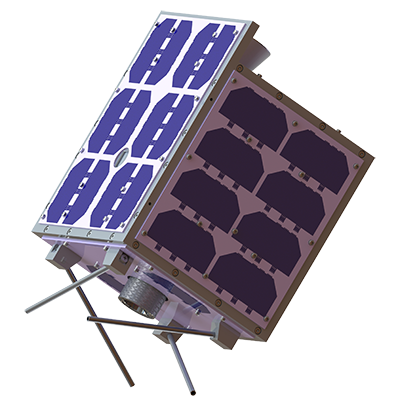
Artists impression of LilacSat-2 in orbit

Artists impression of LilacSat-2 in orbit

LilacSat-2 (CAS-3H) was launched along with eight other XW-2/CAS-3 amateur radio satellites on Saturday, September 19, 2015 at 23:01:14 UT on Beijing’s new Chang Zheng 6 (CZ-6) rocket from the Taiyuan Satellite Launch Center. The satellite, built by students at the Harbin Institute of Technology, has an APRS digipeater and a V/U FM voice transponder which can transmit telemetry data at the same time as voice by using sub-audible tones.

LilacSat-2

LilacSat-2

Note: The FM transponder and APRS downlink is 437.200 MHz not that given in the XW-2/CAS-3 Frequency Chart. There is also a telemetry downlink on 437.325 MHz. Further information is given on the LilacSat-2 website Radio Info page.

LilacSat-2 is scheduled to switch on the FM transponder at about 2200 UT each Monday, Wednesday and Friday.

Remember the Doppler shift on the downlink during a pass will be about +/- 10 kHz. If your radio has selectable FM filters use the wider filter designed for 5 kHz deviation FM, sometimes referred to as a 25 kHz channel spacing filter.

LilacSat-2 was deployed into a 528 km by 551 km 97.5 degree inclination orbit. The NASA Orbital Lifetime Software indicates the satellite might remain in orbit for 18 years before reentry into the Earth’s atmosphere.

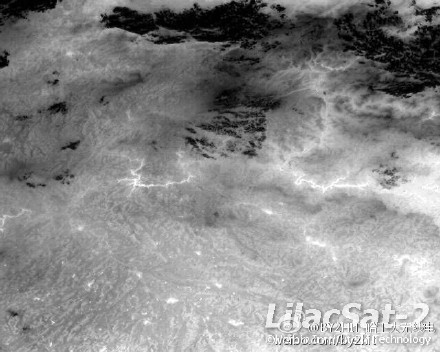
First LilacSat-2 infrared image Sept 24, 2015

First LilacSat-2 infrared image Sept 24, 2015

Wei Mingchuan, BG2BHC provides this report on the first 16 hours in space:

During the first 16 hours in orbit, we have received nearly 1000 packets of LilacSat-2 from Harbin (BY2HIT), Shihezi (B0/BY2HIT), Nanjing (BI4ST), Xian (Northwestern Polytechnical University) and Singapore (9V1SV). Many thank to all!

Now we have a Linux LiveCD for telemetry decoding released.

We have support for FCDPP, USRP and RTL-SDR. Not hard to edit the GRC flowcharts to support other devices.

It can be burned into a USB stick to boot a computer directly, run from a virtual machine or installed into a hard disk. The User manual is also included.

It can be downloaded from: http://pan.baidu.com/s/1eQfNsGE

LilacSat-2 Live CD also has a magnet link with the help of M6SIG:
magnet:?xt=urn:btih:doljmvwcvpnj3iaqfkiwu6bjienko5iv&dn=lilacsat-2_livecd_20150918.iso

More details: http://lilacsat.hit.edu.cn/

73!
Wei Mingchuan, BG2BHC

Telemetry decoder software on GitHub https://github.com/bg2bhc/gr-lilacsat

Harbin Institute Of Technology Amateur Radio Club BY2HIT
Weibo: http://www.weibo.com/by2hit
QRZ: http://www.qrz.com/db/BY2HIT
Web in Google English: http://tinyurl.com/BY2HIT

Information on the XW-2 (CAS-3) satellites is at
https://amsat-uk.org/satellites/communications/camsat-xw-2/

Online orbital predictor (select LilacSat-2) http://www.amsat.org/amsat-new/tools/predict/index.php

Satellite tracking information https://amsat-uk.org/beginners/satellite-tracking/

Adding new satellites to SatPC32, Gpredict and Nova
https://amsat-uk.org/2013/11/23/adding-new-satellites-to-satpc32/

How to Work FM Satellites https://amsat-uk.org/beginners/how-to-work-fm-satellites/

CAMSAT XW-2 Satellites – Launch Information

Chang Zheng 6 CZ-6 rocket

Chang Zheng 6 CZ-6 rocket

UPDATE: Launch was postponed by one day due to technical reasons now Saturday, September 19 at 2300 UT.

Alan Kung BA1DU has posted this launch information for the XW-2 (CAS-3) satellites:

Launch time: 23:00:00 UT on 2015-09-19
The satellites should separate from rocket at 23:15:14 UT on 2015-09-19

The first pass over the mid-USA is expected at 00:05 UT on Sunday, September 20 and they should be in range of the UK at 05:21 UT – Frequencies Here – It is expected that initially only the telemetry beacons will be active. For the latest information check the AMSAT Bulletin Board.

The satellites will be launched on Beijing’s new Chang Zheng 6 (CZ-6) rocket from the Taiyuan Satellite Launch Center.

It is understood the CZ-6 is carrying at least nine satellites with payloads operating in amateur bands. They include six satellites (designated XW-2A to XW-2F) with 435/145 MHz linear transponders for SSB/CW communications, and one satellite, LilacSat-2 (CAS-3H) with an FM voice transponder and APRS. The frequencies to be used by the satellites are here. Some satellite frequencies fall outside the international amateur satellite bandplan, so please be aware of local terrestrial users.

XW-2A should operate in a sun-synchronous orbit at an altitude of about 450 km, with the other satellites at an altitude of about 530 km.

Please send reception reports to the AMSAT Bulletin Board (sign up at http://www.amsat.org/mailman/listinfo/amsat-bb) amsat-bb@amsat.org or #amsat on Twitter.

Predicted Two-Line Element (TLE) for tracking:

XW-2(CAS-3)
1 99999U          15262.96885748  .00004985  00000-0  28395-3 0 00005
2 99999 097.4712 270.8252 0010383 266.0522 270.6644 15.12847565000015

WEI Mingchuan BG2BHC says:  LilacSat-2 website http://lilacsat.hit.edu.cn/ and telemetry decoder based on GNU Radio https://github.com/bg2bhc/gr-lilacsat are now available. A Live CD is coming soon.

Further information on the XW-2 satellites is at
https://amsat-uk.org/satellites/communications/camsat-xw-2/

Online orbital predictor (select XW-2) http://www.amsat.org/amsat-new/tools/predict/index.php

Satellite tracking information https://amsat-uk.org/beginners/satellite-tracking/

Adding new satellites to SatPC32, Gpredict and Nova
https://amsat-uk.org/2013/11/23/adding-new-satellites-to-satpc32/

SatPC32 doppler.sqf http://www.pe0sat.vgnet.nl/2015/xw-2cas-3-launch-information/

OSCAR News Issue 211

oscar-news-211-front-coverIssue 211 of the AMSAT-UK amateur radio satellite publication OSCAR News was released on September 15, 2015. E-members can download it here.

The paper edition is usually posted 2-3 weeks after publication of the electronic issue.

In this issue:
• Metallurgy for the Radio Amateur Dave Malley, K1NYK
• ARISS International Annual Meeting 2015 – Tokyo, Japan
• Colloquium Report – G3WGM
• AMSAT-NA, AMSAT-DL, and Virginia Tech Announce Potential Phase-3E Opportunity
• A FUNcube STEM Activity David Bowman G0MRF
• FUNcube Certificate of Achievement
• FUNcube-1 spin period
• Getting ready for Phase 4 David Bowman G0MRF
• AGM Minutes
• Science Museum London announce a new exhibition
• The UK Space Agency CUBESAT Review
• Nayif-1 Progress report
• Some FUNcube STEM reports

AMSAT-UK FUNcube Mission Patch

AMSAT-UK FUNcube Mission Patch

Membership of AMSAT-UK is open to anyone who has an interest in amateur radio satellites or space activities, including the International Space Station (ISS).

E-members of AMSAT-UK are able to download OSCAR News as a convenient PDF that can be read on laptops, tablets or smartphones anytime, anyplace, anywhere. Join as an E-member at Electronic (PDF) E-membership

There are two rates for the paper edition to cover the extra postage costs:
UK
Rest of the World (Overseas)

PDF sample copy of “Oscar News” here.

Join AMSAT-UK using PayPal, Debit or Credit card at
http://shop.amsat.org.uk/shop/category_9/Join-Amsat-UK.html

E-members can download their copies of OSCAR News here.

New AO-7 Distance Record

Artists impression of OSCAR 7 in Space

Artists impression of OSCAR 7 in Space

On September 5, 2015 Dave Swanson KG5CCI completed a contact with Manuel EA5TT over a record breaking distance of 7947 km via the OSCAR 7 satellite operating in mode B (432/145 MHz).

OSCAR 7 amateur radio satelliteOn the AMSAT Bulletin Board Dave KG5CCI writes:

On Saturday, September 5, 2015 at 1812 UTC I made a scheduled contact with Manuel, EA5TT, using AO-7 Mode B, from the old US Forest Service Fire Tower on top of ‘Rich Mountain’ here in extreme western Arkansas. My 10 digit grid locator was EM24UQ01MU while Manuel is located in IM99SL48CX, in Valencia, Spain. Using the http://no.nonsense.ee/qth/map.html website for reference, this equates to 7947.381 km which we believe to be a new record for AO-7 Mode B.

Like several of my extreme low elevation passes I’ve worked recently, I captured my side of the QSO on video. The bad news is that the wind on top of the tower, and limited room to operate meant a noisy audio feed and a rather awkward camera angle, the good news is our callsign, grid, and signal exchange was captured and clear. I have trimmed down the video to just the 70 seconds or so (to expedite the rural upload) of the contact and posted it to YouTube here:

Watch EA5TT Contact from Rich Mountain – Raw Footage

I fully plan on writing a more extensive post when I return from the holiday weekend, and I will likely make a proper video with commentary and data as well. I’ve made some really interesting observations when it comes to Satellite operating from places with great ‘Height Above Average Terrain’ and look forward to sharing this analysis with everyone.

Until then, catch you all on the birds, 73!

Dave, KG5CCI/P

Oscar 7 Information https://amsat-uk.org/satellites/communications/oscar-7/

A previous OSCAR-7 DX Record https://amsat-uk.org/2012/07/04/oscar-7-dx-record-broken-again/

Video of 2E0HTS Working the OSCAR-7 Satellite
https://amsat-uk.org/2012/01/26/2e0hts-working-the-oscar-7-satellite/

Three ham radio launches planned by Beijing

Beijing's CZ-5 launcherBeijing is thought to be planning three separate launches of satellites carrying amateur radio payloads in the next few weeks.

The launches were highlighted on the Social Media site Weibo and have been discussed on a space flight forum.

On September 19, 2015 the new CZ-6 rocket is expected to launch from Taiyuan carrying nine satellites with amateur radio payloads. Six XW-2 satellites will carry 435/145 MHz SSB/CW transponders. LilacSat-2 will have a 145/435 MHz FM transponder along with APRS. The DCBB satellite will have 9600 bps GMSK telemetry in both 145 and 437 MHz and the NUDT-Phone-Sat will have a 437 MHz 9600 bps FSK telemetry downlink.

Another new launcher, CZ-11, is Beijing’s first solid-fuel rocket. Planned to launch on September 25 from Jiuquan it will carry three satellites with amateur payloads: Tianwang-1A (TW-1A / SECM); Tianwang-1B (TW-1B / NJUST-2); Tianwang-1C (TC-1C / NJFA-1). They were developed at the Shanghai Engineering Center for Microsatellites.

The Jilin-1 Earth Observation constellation is planned to launch on October 5 from Jiuquan on a CZ-2D. It is reported there may also be a satellite with an amateur radio payload.

Weibo MyHamPlace post http://www.weibo.com/2315793200/CyEQpoJms

Discussion forum for Beijing’s launch schedule
http://forum.nasaspaceflight.com/index.php?topic=5060.1320

XW-2, LilacSat-2, DCBB and NUDT-Phone-Sat satellites
https://amsat-uk.org/satellites/communications/camsat-xw-2/