BBC: Ecuador Pegasus CubeSat fears over space debris crash

CubeSat NEE-01 Pegasus

CubeSat NEE-01 Pegasus

BBC News is reporting that at 0538 UT on Thursday, May 23 Ecuador’s new NEE-01 Pegasus 910 MHz CubeSat collided with debris from a S14 Soviet rocket launched in 1985.

The satellite was some 1,500 km east of Madagascar at the time. Pegasus, launched less than a month ago, is the first 1U CubeSat to carry a HD TV transmitter and deployable solar panels. The basic satellite is just 10 by 10 by 10 cm but, when deployed, the solar panels have a span of 70 cm.

Ronnie Nader with Elisse Nader and CubeSat

Ronnie Nader with Elisse Nader and CubeSat

Ecuador’s first Astronaut Ronnie Nader is quoted as saying “Pegasus could be damaged or spinning out of control, but because it’s still in orbit, we have hope“.

He had said earlier that it could take up to 48 hours to ascertain possible damage using radar.

Read the original BBC News story Ecuador Pegasus satellite fears over space debris crash at http://www.bbc.co.uk/news/world-latin-america-22635671

May 23, 0700 UT: Ronnie Nader posted “Survived the event, but we are almost sure of side impact with particles, tomorrow [May 23 ECT?] we will see the state of Pegasus, but we are still in the sky, still have Pegasus”.

May 23, 1600 UT: Ronnie Nader tweeted Now we are sure that there [was] particle impact.

BBC News Monday, May 27: Ecuador tries to fix satellite after space debris crash at http://www.bbc.co.uk/news/world-latin-america-22678919

Educational outreach is an important part of the project. The Ecuadorian Space Agency EXA is partnering with schools in Ecuador as part of the ASTERIA Program, in which students will use the satellite in their curricular and extra curricular activities.

The BBC report that the Ecuadorian Government contributed $700,000 towards the launch costs of the 1U CubeSat. It was launched on April 26, 2013 into a 660 km orbit on a CZ-2D rocket from the Jiuquan Space Center along with CubeBug-1 and TURKSAT-3USAT. It was reported by EXA that the Argentine CubeBug-1 had a particle impact, however, Colin Hurst VK5HI has tweeted @AMSATUK @CubeBug1 CubeBug-1 still beaconing at 1257utc 24th May 2013 @VK5HI

902 – 928 MHz is an amateur radio allocation in some countries.

EXA has indicated that the successor to Pegasus, NEE-02 Krysaor, is expected to launch on a Dnepr rocket from Dombarovsky near Yasny. This is expected to take place in November 2013 https://amsat-uk.org/2013/02/14/two-tv-cubesats-from-ecuador/

EXA report on the incident in Spanish http://www.exa.ec/bp52/
Google English version of the report http://tinyurl.com/q8wdql2

NEE-01 Pegasus 910 MHz TV Camera in Action
https://amsat-uk.org/2013/05/20/nee-01-pegasus-910-mhz-tv-camera-in-action/

NEE-01 Pegaus HD TV CubeSat
https://amsat-uk.org/2013/04/25/nee-01-pegasus-hd-tv-cubesat/

January 2014 Ecuadorian Civil Space Company (EXA)—Imagery Involvement + An Important Recovery (Satellites) http://www.satnews.com/story.php?number=1323163133

BBC News: US Teenager’s Space Ambitions

Abby HarrisonBBC News reports that fifteen-year-old Abby Harrison is training to be an astronaut and has set herself the goal of being the first person to reach Mars.

“I remember looking up at the night sky when I was five-years-old and thinking that I wanted to go to space” she told the BBC.

Abby is currently in Moscow visiting her mentor, the astronaut Luca Parmitano KF5KDP, who is about to travel to the International Space Station.

Watch the BBC News interview at http://www.bbc.co.uk/news/world-us-canada-22597923

The Star Tribune newspaper says: This week, she’s traveling to Kazakhstan to watch the launch of the Soyuz TMA-09M, a Russian craft headed for the International Space Station on May 28. She’s used her social media prowess to spearhead a successful Kickstarter-like crowdfunding campaign, raising more than $30,000 to help pay for the rare trip.

Star Tribune ‘Astronaut Abby’ is crowdfunding her way to outer space
http://www.startribune.com/lifestyle/208184441.html

Tech Tuesday: Meet 15-Year Old “Astronaut Abby”
http://www.womenyoushouldknow.net/tech-tuesday-meet-15-year-old-astronaut-abby/

High School Student’s RocketHub Project
https://amsat-uk.org/2013/05/11/high-school-students-rockethub-project/

Further information at

UK Astronaut to fly to International Space Station in 2015

UK astronaut Major Tim Peake

UK astronaut Major Tim Peake

The Guardian newspaper reports that Major Tim Peake has been selected to fly a five-month mission on the International Space Station (ISS) in 2015.

Tim Peake, from Salisbury in Wiltshire, was chosen for astronaut training in 2009 from 8,400 applicants. Since then he has been undergoing training in a number of locations around the world including Köln in Germany, Star City in Russia and Houston in Texas. He had previously served in the army for 18 years primarily flying Apache helicopters and has seen active service in Afghanistan.

The Guardian newspaper says: 41-year-old Peake has been assigned a lengthy stay in orbit in 2015. He will be blasted into space on a Russian Soyuz rocket from Kazakhstan in November that year and flown to the space station where he will stay for five months. He will be able to take part in spacewalks and other complex scientific activities.

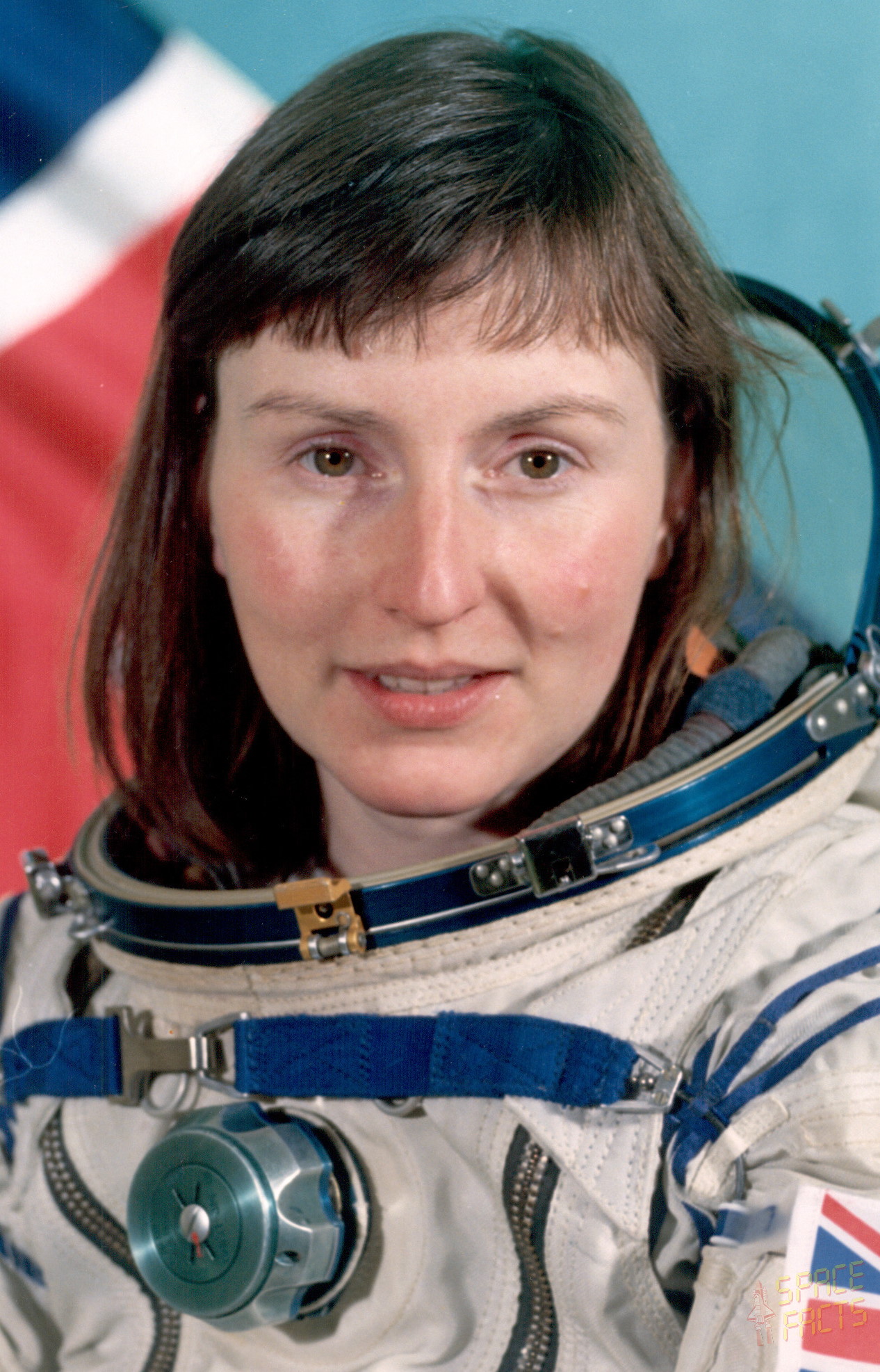
Helen Sharman GB1MIR

Helen Sharman GB1MIR

Sarah Brightman

Sarah Brightman

On May 18, 1991 the first UK astronaut Helen Sharman GB1MIR flew to the Mir Space Station in a Russian Soyuz spacecraft and during her 8 day mission contacted a number of radio amateurs around the world. There have been no other UK astronauts since that epic voyage over 22 years ago.

It had been expected that Sarah Brightman would be the second UK astronaut but it looks as though her mission to the ISS will take place after Tim Peake’s.

Read the Guardian newspaper article at
http://www.guardian.co.uk/science/2013/may/19/tim-peake-mission-space-station

Helen Sharman GB1MIR https://amsat-uk.org/about/history/first-uk-astronaut-helen-sharman-gb1mir/

Sarah Brightman plans ISS mission https://amsat-uk.org/2012/10/10/sarah-brightman-iss/

2013 UK Space Conference Glasgow July 16-17
https://amsat-uk.org/2013/05/18/2013-uk-space-conference-glasgow-july-16-17/

Free CubeSat Workshop Guildford July 19
https://amsat-uk.org/colloquium/cubesat-workshop-2013/

AMSAT-UK International Space Colloquium Guildford July 20-21
https://amsat-uk.org/colloquium/colloquium-2013/

2013 UK Space Conference Glasgow July 16-17

UK-Space-Conference-Logo-2013The 2013 UK Space Conference, which takes place July 16-17 in Glasgow, will focus on realising the UK’s ambitions in space – including making a global impact with science and research, contributing to the UK’s economic growth by developing new commercial applications and businesses and developing the interactions between these activities.

Further details at http://www.intellectuk.org/uk-space-2013-home

Interested in speaking at the UK Space Conference 2013? Soapbox slots available!
http://www.intellectuk.org/speaker-submission

Also taking place the same week is the free CubeSat Workshop at the Surrey Space Centre, Guildford on Friday, July 19 and the AMSAT-UK International Space Colloquium on Saturday/Sunday, July 20-21.

Three 437 MHz ham radio balloons to launch from Poland

sp9uob_frontTomasz Brol SP9UOB plans to launch three High Altitude Balloons to near-space this week carrying amateur radio payloads on 437.600, 437.595 and 437.615 MHz.

At maximum altitude the 10 mW signal from these balloons could have a potential range of up to 700 km.

Thomasz posts:

I’m planning on launching 3 balloons from Gliwice Glider Airport [Upper Silesia], with ultralight (36-40 grams) payloads.

First launch on Wednesday, May 1 at 9:00 UTC – under 100g kaysam / Helium – just for hardware check 437.600 MHz

Second on Saturday, May 4 at 9:00 UTC – 1600 g Hwoyee / Hydrogen – 437.595 MHz

Third on Saturday, May 4 at 10:00 UTC – 1600 g Hwoye / Hydrogen – 437.615 MHz

RTTY, 470 Hz shift / 50 baud / 7n1

The IARU Region 1 site carries this report on the May 4 balloon launch:

On Saturday, May 4, 2013 at 9:00 UTC (11:00 am – local time), the team from the club SP9PDF – directed by Tomasz, SP9UOB – will launch an unmanned stratospheric balloon. The current record of flight altitude is 44,376 feet above sea level.

The balloon named SEBA-1 will be launched from the Aero Club of Gliwice within the project “From Gliwice to Space”, started in June 2012.

A telemetry transmitter (its power – 10 mW) will be  placed in a capsule, the balloon will operate on RTTY on the frequency 437.600 MHz USB (+ / – thermal drift of about 10 kHz), 50 baud, 470 Hz shift, 7N1. To receive telemetric data, you should use the dl-fldigi program.

Detailed instructions for configuration of the software can be found at: http://sp9uob.verox.pl/rtty_tracking.html

The capsule has a total weight of just 37 grams, including: the electronic circuits – 8 grams, the power (R6) – 14 grams, the antenna – 3 grams, the thermal insulation – 12 grams.

Such light weight load, combined with a giant balloon (2 kg of latex filled with hydrogen) should result, at least, in approaching the world record.

We invite everyone to track the flight of the balloon by listening on the indicated frequency, or  at the following website: http://spacenear.us/

Source of information: SP9PDF Club Team – IARU Region 1 http://www.iaru-r1.org/

Beginners Guide to Tracking using dl-fldigi http://ukhas.org.uk/guides:tracking_guide

To get details of upcoming balloon launches subscribe to the UKHAS Mailing List by sending a blank email to this address: ukhas+subscribe@googlegroups.com

Twitter #ukhas https://twitter.com/search?q=%23ukhas

Tracks of balloon launches can be seen at http://www.spacenear.us/tracker

‘Bring Your Own Board’ CubeSat Workshop July 19

Surrey Space Centre University of Surrey, Guildford

Surrey Space Centre
University of Surrey, Guildford

Surrey Space Centre (SSC) and AMSAT-UK invite anyone with CubeSat equipment to a ‘Bring Your Own Board’ (BYOB) workshop. The aims are to demonstrate your latest CubeSat developments, to foster new partnerships and links within the UK and EU community, and encouraging more interaction with AMSAT-UK and the Colloquium (more info at: https://amsat-uk.org/colloquium/colloquium-2013/).

Poster Stands (if required)

Poster Stands (if required)

The workshop is free to attend or present. Opening times are 9 AM to 4 PM, after which there will be the AMSAT-UK Satellite Beginners Session. There will be ad-hoc tours to SSC’s new cleanroom, ground-station, and CubeSat experimentation facilities.

Information for Demonstrators:
• Must have working hardware for demonstrating to visitors, i.e. TRL 5-6 and above.
• Provide a 1 slide overview of their developments & how it can benefit new UK missions for public show.
• A 1.5 m table, power and 1 m poster area will be provided.

Sign up: If you are interested in attending or demonstrating, please contact Dr Chris Bridges M6OBC to guarantee you a table and to estimate numbers.
Email: c.p.bridges@surrey.ac.uk, Tel: +44 (0)1483 689137, Surrey Space Centre, Faculty of Engineering and Physical Sciences, University of Surrey, Guildford, GU2 7XH, U.K. Website: http://www.surrey.ac.uk/ssc

Download poster here.

Key Dates for your diary:
UK Space Agency Conference: 16-17 July 2013
Bring Your Own Boards Workshop: 19 July 2013
AMSAT-UK Colloquium 2013: 20-21 July 2013

STRaND-1 Engineering Model and Cleanroom

STRaND-1 Engineering Model and Cleanroom