
NanoRacks is involved with the amateur radio F-1 CubeSat due to be deployed from the International Space Station (ISS) in September. This video shows NanoRacks CEO Jeff Manber at a TEDx presentation at the International Space University.
NanoRacks is involved with the amateur radio F-1 CubeSat due to be deployed from the International Space Station (ISS) in September. This video shows NanoRacks CEO Jeff Manber at a TEDx presentation at the International Space University.
NanoRacks is involved with the amateur radio F-1 CubeSat due to be deployed from the International Space Station (ISS) in September. This video shows NanoRacks CEO Jeff Manber at a TEDx presentation at the International Space University.

Korean artist Hojun Song DS1SBO traveled to Malmö in Sweden to give this keynote presentation about his innovative amateur radio CubeSat OSSI-1 to the Media Evolution Conference on August 23.
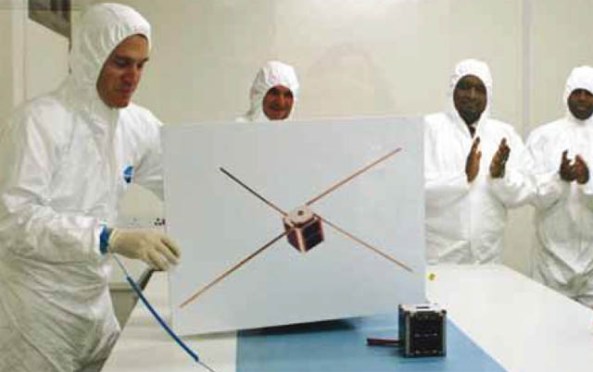
Dr Sandile Malinga, CEO of the South African Space Agency
unveils South Africa’s first CubeSat – Image credit CPUT
The amateur radio CubeSat designed and built by students at the Cape Peninsular University of Technology in Bellville is expected to launch in the 4th quarter of 2013.
Watch NewsyTech – Satellites Powered By Smartphones? Yep, and Cheap
NASA Ames Research Center has built two versions of the amateur radio PhoneSat – PhoneSat 1, which costs about $3500, and PhoneSat 2, which costs just under $8,000. Both versions are based on HTC Nexus One smartphones. The first PhoneSats are scheduled to be launched aboard an Orbital Sciences Corporation Antares launch vehicle. The launch, funded under the Commercial Orbital Transportation Services (COTS) program, is scheduled for the fourth quarter of 2012. It will carry two PhoneSat 1 satellites and one PhoneSat 2. A second PhoneSat launch is expected to occur in 2013.
Watch ISS AX.25 packets on 145.825 MHz FM at approx 7:21pm on August 24, 2012
QRP APRS Packet Radio to the ISS http://www.uk.amsat.org/?p=3838
Real time tracking and status information for the amateur radio stations on the ISS can be found on the ISS Fan Club site http://www.issfanclub.com/


You must be logged in to post a comment.