Dozens of messages were posted to the Amsat-bb after the news of the amateur radio satellite AO-51‘s end of mission was received. Many remembered their contacts, several thanked the Operating Team. Many noted that AO-51 was the satellite that brought them into this part of our hobby. Continue reading
Yearly Archives: 2011
SwissCube update
On his French language website HB9AFO provides an update on the SwissCube amateur radio satellite.
He says that the Swiss EPFL Space Center annual meeting was held December 1.
EPFL operations with SwissCube are now finished. For the remainder of its life, SwissCube will be controlled by two stations: HB9MFL in Switzerland and a Dutch station.
Volker Gass and Muriel Richard (ex Noca) warmly thanked all those who participated in the project, including amateur radio. SwissCube was a complete success, both technical (with resolution of unforeseen problems) and human (many interested students and many sponsors for future experiments).
Although EPFL has projects in the pipeline none will use the amateur bands in the near future.
Thanks were given to all the radio hams who participated, directly or indirectly in the SwissCube project.
See the HB9AFO SwissCube page in Google English at
http://tinyurl.com/SwissCube
SwissCube Live Amateur Radio Information
http://swisscube-live.ch/
EFL SwissCube
http://swisscube.epfl.ch/
Radio Amateurs Receive Mars Science Laboratory
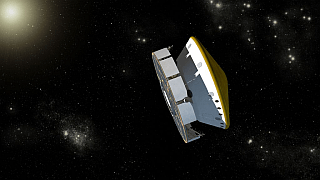
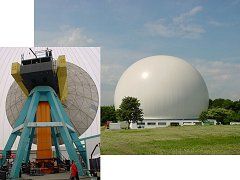
Radio Amateurs have received signals from the NASA Mars Science Laboratory using the AMSAT-DL amateur radio facility at Bochum in Germany.
On November 26, 2011 at 15:02 UTC the Mars Science Laboratory (MSL) successfully launched on an Atlas V 541 from the Cape Canaveral Air Force Station Space Launch Complex 41. It is carrying Curiosity, a 900 kg rover about the size of a small car.
It is expected to arrive at the “Red Planet” in August 2012 after a nine month flight.
Just over 7 hours after launch at 21:45 UTC the X-band telemetry signal from the MSL was received using the Bochum amateur radio facility. The signal, received at a distance of 112,000 km, had a spin-modulation of +/- 3.5 Hz with 2 revolutions / minute.
This is believed to be the first reception of the MSL outside the official NASA Deep Space Network (DSN) and the USN tracking station at Dongara, Australia (under contract to JPL for the MSL launch).
For reception of MSL James Miller G3RUH remotely reconfigured the Bochum tracking and receiving system. The MSL X-Band telemetry signal was received automatically in Bochum, no-one had to be physically on-site. This shows how flexible and reliable the system at Bochum is, ready for the planned AMSAT-DL P5-A mission to Mars.
The 20m dish at Bochum is also used by AMSAT-DL to automatically receive real-time solar data from the NASA STEREO A / B satellites. The data is transmitted to a NOAA server in the USA via the Internet.
Congratulations to the AMSAT-DL team on a remarkable acheivement.
Control Software for the Bochum Radio Telescope by James Miller G3RUH
http://www.amsat.org/amsat/articles/g3ruh/126.html
Stereo A/B Spacecraft Telemetry Reception at Bochum by James Miller G3RUH
http://www.amsat.org/amsat/articles/g3ruh/127.html
AMSAT-DL in Google English http://tinyurl.com/AMSAT-DL
AMSAT-UK publishes a newsletter, OSCAR News, full of Amateur Satellite information. Sample issue at http://www.uk.amsat.org/on_193_final.pdf Join online at http://alturl.com/avuca
ISS Shadow-Beacon Experiment Postponed
This weekends Plasma Thrust Space experiment using Amateur Radio has been postponed until after the delivery of a new rig due next April.
On the AMSAT bulletin board Andy G0SFJ passes on the following information:
It was earlier announced that the timetable of SpEx “Shadow-beacon” sessions on November 26-27, 2011 was reduced because the crew are newcomers and need more time to gain experience. For the same reason previously announced sessions on December 2-5, 2011 are cancelled.
Sergey Samburov RV3DR, the employee of space-rocket corporation “Energia” who is responsible for amateur radio on ISS, explains that the onboard radio was accidentally switched on standard simplex 145.825 MHz not the required duplex 144.360 / 145.825 MHz digipeater mode because of the old age of the onboard gear. It has been in use for more than 10 years and Sergey has previously observed malfunction like this.
A new radio is planned to be delivered to the ISS by cargo vehicle in April and Mission Control Center (TsUP) plans to hold new SpEx “Shadow-beacon” sessions in May-June 2012.
Again many thanks for those submitted reports and made other assistance! The results of data processing will be presented on our site. We wait for further cooperation!
http://knts.tsniimash.ru/Shadow/en/
Amateur Radio assistance requested: ISS Plasma Thrust Shadow Experiment
http://www.uk.amsat.org/2011/11/20/amateur-radio-assistance-requested-iss-plasma-thrust-shadow-experiment/
FASTRAC-1 Digipeater Activated
Sebastián KE5FKV has announced that the AX.25 packet radio digipeater on the amateur radio satellite FASTRAC-1 (FO-69) will be available from 1600 UT on Friday Dec. 2
On the AMSAT bulletin board FASTRAC Student Program Manager Sebastián Muñoz Toro KE5FKV writes:
The FASTRAC satellites have been in operation for more than a year and the team has been able to get a lot of data from them, in great part due to the amazing support from the amateur radio community.
Over the last month the team noticed that one of FASTRAC-1’s on board microcontrollers which controls one of the experiments has not been booting up correctly. The team has done everything possible to correct this issue apart from turning it off which can only happen if the batteries fall below an specific charge level. Since the satellites have been power positive throughout this whole year the only way this can happen is if the satellites transmit more often.
Given that one of FASTRAC goals has always been to eventually provide a platform for amateur radio enthusiasts to use after the primary mission was over, the team has decided to open up FASTRAC-1 to the amateur radio community with the hope as more people use it to digipeat through the satellite, the battery levels will diminish and cause a hard reset of the microcontrollers on board.
The satellite will be configured so that amateur radio operators can use it beginning on Friday, Dec 2 at 10:00 AM CST [1600 UT]. Starting on this date people will be able to digipeat through the satellites. The call sign and frequencies of the satellite are summarized below and an example of digipeating through the satellite is also shown in below.
To increase the chances of causing a hard reset, it is requested that as many amateur radio enthusiasts try to digipeat through the satellite on the weekend of Dec 10. If you are successful at digipeating through the satellites or have any problems doing so please let us know at fastracsats@gmail.com , through our Facebook page http://www.facebook.com/fastracsats or through the forums on our website http://fastrac.ae.utexas.edu/for_radio_operators/users/phpBB3/index.php
Frequency Information for FASTRAC-1
– FASTRAC-1 “Sara Lily” Downlink Frequency: 437.345 MHz
– FASTRAC-1 “Sara Lily” Uplink Frequency (1200 or 9600 baud): 145.825 MHz
– FASTRAC-1 “Sara Lily” Satellite Call Sign: FAST1
Example of Digipeating through FAST1
– cmd: c CALLSIGN via fast1
– cmd: KE5DTW>CALLSIGN,FAST1/1: <<C>>:
– CALLSIGN>KE5DTW,FAST1*/1: <UA>:
– *** CONNECTED to CALLSIGN VIA FAST1
Here the example shows KE5DTW (UT Austin Ground Station) digipeating through FAST1 to connect to CALLSIGN. CALLSIGN represents an arbitrary callsign and should be replaced with the callsign of the station with whom a connection is being attempted. The above example is based on a Kantronics KPC9612+ TNC.
For a PDF version of the announcement please go to the following link:
http://fastrac.ae.utexas.edu/FASTRAC_Digipeating_Announcement.pdf
Thanks a lot,
THE FASTRAC TEAM
Satscape satellite tracking software http://www.satscape.info/
FASTRAC keps for tracking software http://fastrac.ae.utexas.edu/for_radio_operators/users/phpBB3/predictedorbit.php
UISS Packet Software http://users.belgacom.net/hamradio/uiss.htm
AGW Packet Engine http://www.sv2agw.com/ham/agwpe.htm
AGPE Installation and Setup http://www.soundcardpacket.com/2agwget.htm
ARISSat-1 Re-entry Date
The latest prediction from Jim N8OQ is that the amateur radio satellite ARISSat-1 will re-enter the Earths atmosphere in January.
On the AMSAT bulletin board Jim says “Using solar data through 2011 Nov. 30 and updating the decay fit. I am getting a re-entry date of 2012 January 12 with a rule-of-thumb error estimate of +/- 10 days or so for ARISSat-1.”
Since deployment in August, ARISSat-1 has descended about 60 km, and is currently losing more than 1.5 km per day. The rapid rate is partially the result of the recent solar activity on the atmosphere, significantly increasing the drag.
AMSAT wishes to collect telemetry data from the satellite as it approaches re-entry and is running a competition to see who can copy the final telemetry frames. Further details of the Catch the Last ARISSat-1 Telemetry Contest at
http://www.uk.amsat.org/2011/11/09/catch-the-last-arissat-1-telemetry/
ARISSat-1 http://www.arissat-1.org/
Online pass predictions (select ARISSat-1) http://www.amsat.org/amsat-new/tools/
Download the Windows and Mac versions of the ARISSatTLM free ground station soundcard demodulator and display software from http://www.arissattlm.org/
ARISSat-1 Frequency Guide http://tinyurl.com/4t497t2


You must be logged in to post a comment.