Japanese Amateur Radio Satellites Launch Feb/March

ARTSAT students at the Tama Art University

ARTSAT students at the Tama Art University

Mitsubishi Heavy Industries, Ltd. and the Japan Aerospace Exploration Agency (JAXA) have announced the launch date, Feb. 28 JST, for the H-IIA Launch Vehicle No. 23 (H-IIA F23) with the Global Precipitation Measurement (GPM) core observatory along with seven amateur radio satellites.

The amateur radio satellites are STARS-II, ShindaiSat, TeikyoSat-3, KSAT2, OPUSAT, ARTSAT: INVADER, ITF-1

It is understood they will be put into a 407 km orbit with an inclination of 65 degrees.

Scheduled date of Launch : February 28 (Friday), 2014 (Japan Standard Time)
Launch time : 3:07 a.m. thru 5:07 a.m. (Japan Standard Time)
Launch Window : March 1 (Saturday) through March 31 (Monday), 2014.
Launch site : Yoshinobu Launch Complex at the Tanegashima Space Center

Ham radio CubeSats launched to ISS

LY2013SAT QSL card received by Andy Thomas G0SFJOn Thursday, January 9 at 1807 UT an Antares rocket launched the Cygnus freighter carrying a cargo of CubeSats to the International Space Station.

There are four amateur radio CubeSats LituanicaSat-1, LitSat-1, ArduSat-2 and UAPSat-1. Also onboard is the 915 MHz CubeSat SkyCube and twenty eight 3U CubeSats from Planet Labs.

LituanicaSat-1 carries a 145/435 MHz FM transponder while LitSat-1 is thought to carry a 435/145  MHz linear transponder for SSB/CW communications.

It is expected the CubeSats will be deployed from the ISS in the coming months.

Planet Labs CubeSat Constellation

Planet Labs CubeSat Constellation

The IARU coordinated frequencies are listed as:

LituanicaSAT-1
• FM Transponder Uplink 145.950 MHz Downlink 435.180 MHz
• AX25 Uplink 145.850 MHz AX25 Downlink 437.550 MHz
• CW Beacon 437.275 MHz
Facebook https://www.facebook.com/Lituanicasat1

LitSat-1
• SSB Transponder Uplink 435.180 MHz Downlink 145.950 MHz
• AX25 Uplink 437.550 MHz Downlink 145.850 MHz
Facebook https://www.facebook.com/palydovas

ArduSat
•  9k6 MSK CCSDS data format downlink 437.? MHz
http://www.kickstarter.com/projects/575960623/ardusat-your-arduino-experiment-in-space

UAPSAT
• AX.25 Packet Radio uplink 145.980 MHz downlink 437.385 MHz

Solar Activity Delays CubeSat Launch

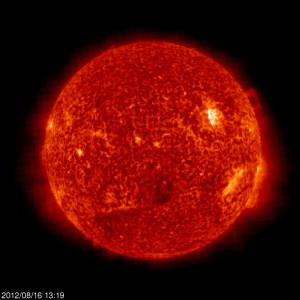
The Sun - Image Credit NASA SOHO

The Sun – Image Credit NASA SOHO

The high radiation level from recent solar eruptions has resulted in a planned launch of amateur radio CubeSats being postponed.

NASA’s Wallops Flight Facility say:

Early on Wednesday, January 8 the Antares launch team decided to scrub the launch attempt due to an unusually high level of space radiation that exceeded by a considerable margin the constraints imposed on the mission to ensure the rocket’s electronic systems are not impacted by a harsh radiation environment.

The solar flux activity that occurred late yesterday afternoon has had the result of increasing the level of radiation beyond what the Antares engineering team was monitoring earlier in the day. Overnight, Orbital engineers who are experts in the field ran numerous models to ensure that all possibilities to preserve the launch were examined. However, due to significantly elevated flux levels, the Antares team decided to postpone the launch to spend the day further examining the potential effects of the space radiation on the rocket’s avionics suite.

During Wednesday, in consultation with NASA and outside experts in the field of “space weather,” Orbital will continue to monitor the levels of space radiation with a goal of setting a new launch date as soon as possible. If we are able to launch on Thursday, the launch targeted launch time would be 1:10 p.m. (EST), with Cygnus arriving at the ISS Sunday morning, January 12.

Antares plans to ship a number of amateur radio CubeSats to the International Space Station (ISS) for later deployment. They include LituanicaSat-1, LitSat-1, ArduSat-2 andUAPSat-1. Also on the launch is the 915 MHz CubeSat SkyCube and twenty eight 3U CubeSats from Planet Labs.

UNSA-SAT1 – The first 3.4 GHz CubeSat

Typical QB50 CubeSatUNSA-SAT1 hopes to be the first CubeSat to make use of the 3400 MHz ITU Amateur-Satellite Service allocation.

Built by students at the Instituto Astronómico y Aeroespacial Pedro Paulet in Peru, UNSA-SAT1 is a 2U spacecraft (20x10x10cm) which will be part of the QB50 constellation of 50 CubeSats.

The aims of this CubeSat include: upper atmosphere science; radio communication experiments; technology demonstrator; education, training and outreach.

The team are proposing a 435 MHz transceiver using BPSK and additional transmitters on 2.4 GHz,and 5.8 GHz. They also also hope to have a 230 kbps BPSK downlink on 3.4 GHz – this will only operate in Region 2 when the spacecraft is overhead the groundstation in Peru.

The ITU Amateur-Satellite allocation at 3400-3410 MHz is available in ITU Regions 2 and 3 but not currently in Region 1 (Europe/Africa) although it is believed Denmark and Norway have allocated the band to the Amateur-Satellite Service.

QB50: Amateur Radio transponder payloads to launch 2014
https://amsat-uk.org/2013/07/20/qb50-amateur-radio-transponder-payloads-to-launch-2014/

IARU Amateur Satellite Frequency Coordination Pages http://www.amsat.org.uk/iaru

UKube-1 in SatMagazine

SatMagazine January 2014The January 2014 issue of SatMagazine features the UKube-1 CubeSat built at Clyde Space in Glasgow. UKube-1 carries an amateur radio 435/145 MHz linear transponder for SSB/CW communications and should launch later this year.

The magazine also covers some of the many other CubeSats launched recently including Cape-2, KySat-2, ChargerSat-2, Trailblazer, TJ3SAT, DragonSat-1, COPPER and PhoneSat. There is also an article on the upcoming launch of the Planet Labs constellation of twenty eight 3U CubeSats.

Download the January 2014 SatMagazine from http://www.satmagazine.com/2014/SM_Jan2014.pdf

UK CubeSat Forum https://amsat-uk.org/2013/12/19/announcing-the-uk-cubesat-forum/

High Resolution Data available on FUNcube Data Warehouse

Sun Sensors

Sun Sensors

As promised, we are making the FUNcube-1 (AO-73) CubeSat High Resolution Data available for download from the Data Warehouse.

It contains Hi-Res data generated every hour, on the hour for the 60 minutes preceding the extract.

Please note that unlike the Whole Orbit Data, the Hi-Res data may be incomplete (have significant gaps) because of a lack of ground stations on the ground track.

Now that we have the WOD and Hi-Res extracts working, we are going to move on to the RealTime extract.

Please provide any feedback on the FUNcube forum.

73 and Happy New Year,

Dave, G4DPZ

FUNcube-1 High Resolution Data https://warehouse.funcube.org.uk/highres.html?satelliteId=2

Data Warehouse – Telemetry Archive http://warehouse.funcube.org.uk/

Dashboard App – Telemetry Decoder http://funcube.org.uk/working-documents/funcube-telemetry-dashboard/