FUNcube-1 is in its Pod

ZACUBE-1, FUNcube-1 and HiNCube in the pod - Image credit Wouter Weggelaar PA3WEG

ZACUBE-1, FUNcube-1 and HiNCube in the pod – Image credit Wouter Weggelaar PA3WEG

The AMSAT FUNcube team are delighted to be able to announce that the FUNcube-1 CubeSat has now completed all its final testing and been placed into its launch POD.

This work was completed during a three day programme at the premises of ISIS BV in Delft in the Netherlands and was finished, on time, late Wednesday afternoon on September 4, 2013.

FUNcube-1 is actually the middle 1U CubeSat of three sharing a 3U ISIPOD.  It is sharing the ISIPOD with ZACUBE-1 from South Africa  and HiNCube from Norway.

ZACUBE-1 prior to being shipped to the Netherlands

ZACUBE-1 prior to being shipped to the Netherlands

ZACube-1, in addition to carrying VHF and UHF communications equipment also has a 20 metre beacon which will operate on 14.099 MHz  This ISIPOD, with the spacecraft inside, will be transported to Russia, early next month, for launch and will eventually be attached directly to the launch vehicle.

FUNcube-1 carries a U/V linear transponder and the educational telemetry beacon using 1k2 BPSK for school outreach purposes.

The current launch information has lift off scheduled for late November.

Full initial orbit details and TLE’s, together with decoding software will be made available over the next few weeks.

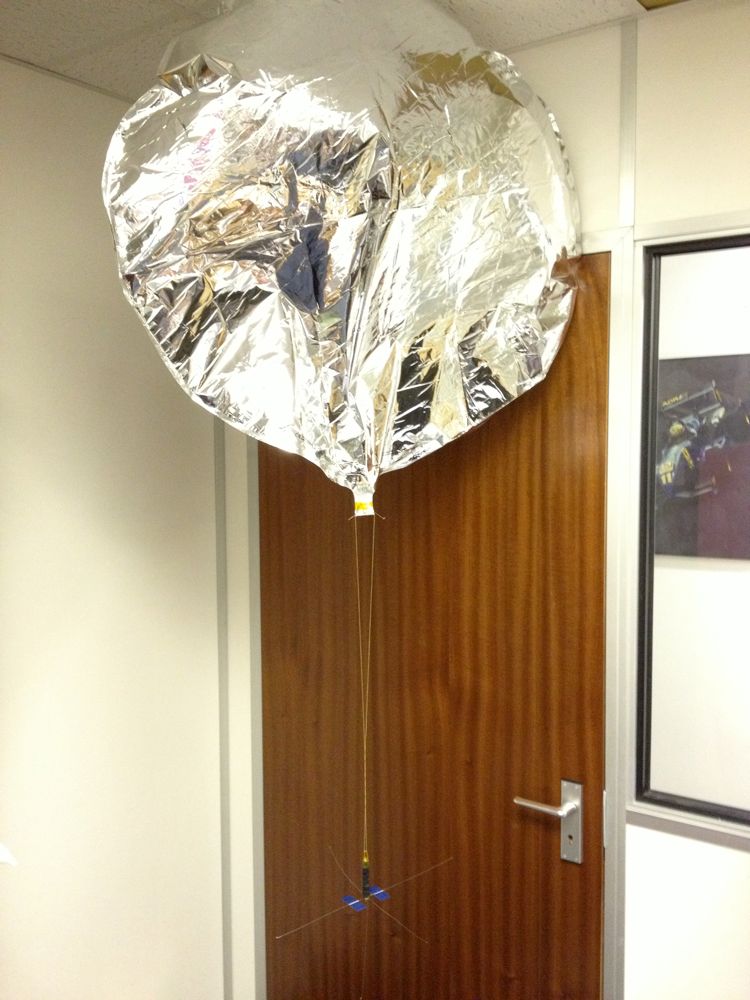
ZACUBE-1 HF beacon antenna deployment unit - Image credit CPUT

ZACUBE-1 HF beacon antenna deployment unit – Image credit CPUT

FUNcube-1 communication subsystem:
• 300 mW Inverting linear transponder for SSB and CW
– Uplink      435.150 – 435.130 MHz
– Downlink  145.950 – 145.970 MHz
• 300 mW BPSK Telemetry  145.935 MHz

ZACUBE-1 https://amsat-uk.org/2012/08/25/14099-khz-cput-cubesat-to-launch-end-of-november/

HiNCube http://www.hincube.com/

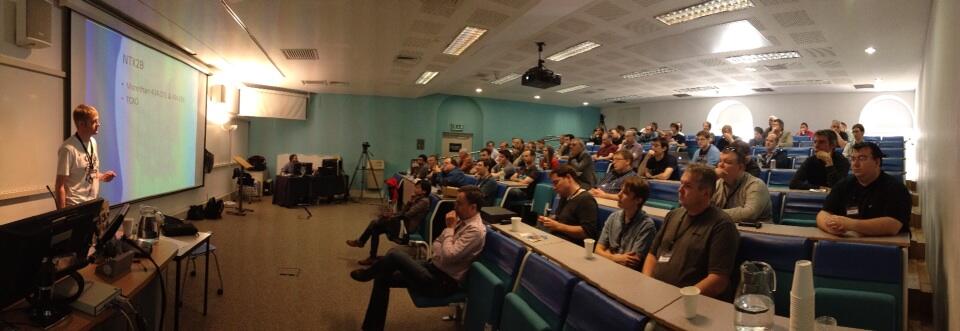
A recent presentation about the FUNcube project by Graham Shirville G3VZV and Wouter Weggelaar PA3WEG can be viewed online at http://www.batc.tv/streams/amsat1311 or downloaded from http://www.batc.tv/vod/Funcube1.flv

AMSAT-UK FUNcube Mission Patch Rev4 20100609

AMSAT-UK FUNcube Mission Patch

A PDF of the slides from that presentation is here FUNcube_Colloquium2013a

FUNcube information sheets:
•  FUNcube_Project Information_aug2013
•  FUNcube_Educational_Outreach aug2013

FUNcube-1 https://amsat-uk.org/funcube/funcube-cubesat/

FUNcube Yahoo Group https://amsat-uk.org/funcube/yahoo-group/

FUNcube website http://www.funcube.org.uk/

Some of the other satellites that may be on the same Dnepr launch vehicle are listed at https://amsat-uk.org/2013/08/22/dnepr-cubesat-launch/

AMSAT-UK on Facebook https://www.facebook.com/pages/AMSAT-UK/208113275898396
AMSAT-UK on Twitter https://twitter.com/AmsatUK

Join AMSAT-UK http://shop.amsat.org.uk/shop/category_9/Join-Amsat-UK.html

Final gluing of FUNcube-1 bolt by Wouter Weggelaar PA3WEG – Image credit Gerard Aalbers

Final gluing of FUNcube-1 bolt by Wouter Weggelaar PA3WEG – Image credit Gerard Aalbers

Radio hams to say “HI” to Juno on 10m

This computer-generated image depicts NASA's Juno spacecraft firing its Leros-1b main engine - credit NASA

This computer-generated image depicts NASA’s Juno spacecraft firing its Leros-1b main engine – Image credit NASA

NASA’s Juno mission is inviting amateur radio operators around the world to transmit a coordinated message on the 28 MHz band to the Juno spacecraft.

NASA’s Juno spacecraft will fly past Earth on October 9, 2013 to receive a gravity assist from our planet, putting it on course for Jupiter.

To celebrate this event, the Juno mission is inviting amateur radio operators around the world to say “HI” to Juno in a coordinated Morse Code message. Juno’s radio and plasma wave experiment, called Waves, should be able to detect the message if enough people participate.

Juno will have a better chance of detecting the signal from many operators if the signal is spread out across the spectrum. The Juno Waves instrument is a broadband receiver, and the detector being used for this event has a band width of 1 MHz. It is better for detection of the signal to have a broadband signal coming in.

For this experiment, the Juno team would like to ask those participating to spread out in frequency across the 10 meter band. They have supplied a table of suggested frequencies between 28 and 29 MHz, based on the last letter of your call. When the HFR receiver is tuned to 28MHz, the center frequency is 28.5 MHz. A 50 kHz high pass filter limits low frequencies hitting the detector, so the frequency table excludes 28.5 MHz ±50 kHz. The natural signals the team expect to measure at Jupiter will consist of a large number of discrete tones, so spreading the signals out in this manner is a good approximation to the signals Juno is expected to detect. But at Jupiter, they don’t expect to be able to decode CW in the telemetry!

The 28 MHz band was chosen for this experiment for several reasons. The Waves instrument is sensitive to radio signals in all amateur bands below 40 MHz, but experience with the University of Iowa instruments on the Galileo and Cassini earth flybys shows significant shielding by the ionosphere at lower frequencies. As sad as it sounds, the team hope for lousy band conditions on October 9, so an appreciable fraction of the radiated energy escapes the ionosphere into space, and is not refracted back down to the ground somewhere else on the planet.

Juno’s antenna consists of a pair of tapered 2.8 meter long titanium tubes, deployed from the bottom deck of the spacecraft under the +X solar array and magnetometer boom. A high impedance radiation resistant preamp sits at the base of the antenna and buffers the signals from 50 Hz to 45 MHz. The elements are deployed with an opening angle of about 120 degrees. Ten meters is above the resonant frequency of the antenna and NEC analysis indicates a lobe generally along the spin axis of the spacecraft. This will be good for detection on the inbound part of closest approach to Earth.

The Waves instrument uses four receivers to cover the frequency range of 50 Hz to 41 MHz. Signals up to 3 MHz are bandpass filtered, sampled by A/D converters and FFT processed into spectra using a custom FFT processor developed by The University of Iowa under a grant from the Iowa Space Grant Consortium.

The Juno team point out that All transmissions must follow local and national regulations.

Please join in, and help spread the word to fellow amateur radio enthusiasts!

NASA – Say “HI” to Juno! http://www.jpl.nasa.gov/hijuno/
See How do I participate ? for the frequency list.

Space Station Slow Scan TV Active

RS0ISS SSTV Sept 4, 2013 0950Z - Image credit Dmitry Pashkov UB4UAD

RS0ISS SSTV Sept 4, 2013 0950Z – Image credit Dmitry Pashkov UB4UAD

Dmitry Pashkov UB4UAD has posted two images that he received on 145.800 MHz FM from the International Space Station (ISS) on Wednesday, September 4, 2013.

All you need to do to receive the SSTV pictures from the space station is to  connected the audio output of a scanner or amateur rig via a simple interface to the soundcard on a Windows PC or an Apple iOS device, and tune in to 145.800 MHz FM. You can even receive pictures by holding an iPhone next to the radio’s loudspeaker.

The ISS puts out a strong signal on 145.800 MHz FM and a 2m handheld with a 1/4 wave antenna will be enough to receive it. The FM transmission uses 5 kHz deviation which is standard in much of the world.

Many FM rigs in the UK can be switched been wide and narrow deviation FM filters so select the wider deviation. Handhelds all seem to have a single wide filter fitted as standard.

RS0ISS SSTV Sept 4, 2013 0953Z - Image credit Dmitry Pashkov UB4UAD

RS0ISS SSTV Sept 4, 2013 0953Z – Image credit Dmitry Pashkov UB4UAD

On Windows PC’s the free application MMSSTV can be used to decode the signal, on Apple iOS devices you can use the SSTV app. The ISS Fan Club website will show you when the space station is in range.

For more on Slow Scan Television SSTV, see this article SSTV – The Basics.

How to be successful with the ISS Slow Scan Television (SSTV) imaging system
http://www.marexmg.org/fileshtml/howtoisssstv.html

Information on the MAI-75 SSTV experiment
http://www.energia.ru/eng/iss/researches/education-26.html

IZ8BLY Vox Recoder, enables you to record the signals from the ISS on 145.800 MHz while you’re away at work http://antoninoporcino.xoom.it/VoxRecorder/

For the latest status of amateur radio activity on the ISS and real time tracking see http://www.issfanclub.com/

ARISS Slow Scan TV (SSTV) Blog and Gallery http://ariss-sstv.blogspot.co.uk/

US Space Fence Shut Down

Part of the 3.2 km array that is the master transmitter antenna at Lake Kickapoo, Texas c.2001

Part of the 3.2 km array that is the master transmitter antenna at Lake Kickapoo, Texas c.2001

It is reported on SatWatch that the 216 MHz US Space Fence, used to detect orbital objects, was turned off on September 1, 2013 at 0000 UT.

The Air Force Space Surveillance System (AFSSS), known as the Space Fence, is a U.S. government multistatic radar system built to detect orbital objects passing over the United States. There are three transmitter sites operating on 216.983, 216.97 and 216.99 MHz and six receiving stations.

According to Wiki the system is understood to be capable of detecting a 10 cm object at an altitude of 30,000 km and makes 5 million satellite observations each month.

Early in August Space News reported that: Gen. William Shelton, commander of Air Force Space Command, “has directed that the Air Force Space Surveillance System be closed and all sites vacated” effective Oct. 1, the memo said.

It seems appear the closure may have occurred earlier than initially reported.

The reason for the shutdown has been reported as being because Federal Government expenditure is exceeding budget resulting in automatic budget cuts known as sequestration, however, a Space Review article suggests another reason http://www.thespacereview.com/article/2357/1

Air Force Space Command (AFSPC) officials say they have devised modified operating modes for the Perimeter Acquisition Radar Characterization System at Cavalier Air Force Station, N.D., and for the space surveillance radar at Eglin Air Force Base, Fla., which allows the discontinuation of AFSSS operations while still maintaining solid space situational awareness.

Air Force Space Surveillance System http://en.wikipedia.org/wiki/Air_Force_Space_Surveillance_System

Air Force Space Command to discontinue space surveillance system
http://www.af.mil/News/ArticleDisplay/tabid/223/Article/466832/air-force-space-command-to-discontinue-space-surveillance-system.aspx

Space News, August 6, 2013
http://www.spacenews.com/article/military-space/36655shelton-orders-shutdown-of-space-fence

SatWatch http://www.satwatch.org/

High Frequency Active Auroral Research Program (HAARP) shuts down
http://www.southgatearc.org/news/july2013/haarp_facility_shuts_down.htm

Amateur Radio CubeSat to HEO ?

AMSAT-UK_Bevelled_LogoBrent Salmi KB1LQD offers his thoughts on some of the challenges involved in putting a CubeSat or any other spacecraft into High Earth Orbit (HEO). This was originally posted on the AMSAT-BB and is reproduced here with Brent’s permission.

I think this 2-part 4 minute video is very relevant here:
http://www.youtube.com/watch?v=51fKeeHSxTg (Preview)

*Building a SpaceCraft*
Although less bureaucratic companies/organizations will widdle down this process considerably it still holds true. Once that rocket launches there is no turning back, Year’s of peoples lives goes into making the several minutes of reaching orbit actually work and not kill your spacecraft. Each part on a spacecraft needs to be designed correctly, tested to operate correctly, tested to operate in all expected conditions (vibrations, temperature, radiation, etc…) without any physical maintenance.

FUNcube vibration testing: http://vimeo.com/26954073

Getting to orbit is a very difficult process, in-fact the first seconds of the launch is very very violent and has a high potential to destroy
satellites on-board. Vibrations due to the ground reflections will potentially rip components right off the PCB, unscrew bolts/connectors… I’ve seen this happen in testing and when it does it’s time to go back to the drawing board and re-layout your board or parts to dampen/strengthen it. All electronics need to survive the lack of air convection taking heat away from hot things (think amplifiers…) as well as survive incredibly cold temperatures, temperatures in space do not change slowly, they will crack PCB’s, components, etc… All spacecraft need to be qualified for flight to ensure the $100,000’s (if not hundreds of millions) of dollars and years of people’s efforts are not doomed from the beginning, many launch providers require these specifications to be met even to fly on-board their rockets.

*Getting to Orbit – And Surviving*
Getting to HEO is also another challenge since we must travel through the van-allen belts, and survive the long-term exposure of higher radiation. That nice micro-controller that works well on earth or in LEO now has bit’s flip, gates short, and other analog components dies a slow but steady death as well in this radiation environment. All of this needs to be ensured to work.

For the launch itself, there are many more players in the market and many (schools…) that are willing to shell out several million easy. If you’re on-board a HEO launch your likely going to be going under very strict guidelines and you must prove that you won’t hurt the main satellite through rigorous documentation and testing. I’m not say that this is unfeasible as we’ve done this in the past but getting a LEO bird up is considerably easier and cheaper as compared to a HEO.

I also want to say that the cubesat standard is a wonderful thing, cubesat electronics are getting better, more reliable, and are increasing their functional density which means we can do more with less space/weight! The modular systems of cubesats also pave the way for *faster builds and cheaper R&D in the long run!* Standardizing radio/power/control systems into modular boards means we can optimize, upgrade, and reused designs quickly and focus on the bigger better things in years to come. Building a solid LEO cubesat base is very important for this very reason as we can learn to use the platform and avoid re-designing the wheel in years to come. Fox-1 is that stepping stone for us and Fox-2 will provide the continuing efforts to make larger, better, and more capable spacecraft! Each Fox satellite specifically improves on the previous design and when we get a solid and reliable system that can scale to large cubesats (6U) we will have a reliable bird in the sky with incredible functionality.

*Utilizing Our SAT’s – SDR’s*
I think it’s also a good time to think about utilizing our LEO birds for not just voice communications but for data (both communication and sensors/cameras) which current technology makes much easier. With additional help to the effort I don’t see why a simple and cheap ground station set-up can’t be developed and sold that directly increases the ability for people to use our satellites. Think FUNcube( http://www.funcubedongle.com/ ), what better way to increase access and abilities than a cheap and somewhat dedicated ground system? If we’re always limited to 1200 baud through an HT or multi-band radio we’ll never explore other technologies. SDR’s are cheap nowadays and offer the ability to directly downlink voice and data flexibly.

Anyways, that’s my 2 cents! I welcome all of you to help volunteer even if you’ve never been involved in the aerospace industry! From managing, to public appearance, to engineering AMSAT is always looking for help and it’s a great way to give back to the hobby that all of us love. This hobby was a large factor in my career choice and AMSAT satellites were a big draw for me. *Most of my other college peers and even young co-workers love what AMSAT stands for* and how we do it! The more excited and cooperative everyone is the more people will get on-board. I know ton’s of people (technical and not) that are incredibly interested in what AMSAT is doing and just need a push to jump in.

Thanks,

Brent, KB1LQD

Successful Kickstarter for Raspberry Pi LunarSail CubeSat

LunarSail Graphic

LunarSail Graphic

LunarSail is an Open-Source Cubesat and Solar Sail Lunar Orbiter project. Matthew Travis used Kickstarter to raise funds and comfortably exceeded his target of $11,00 by getting pledges for $15,817.

The team say “LunarSail’s computer is based on the Raspberry Pi, which is a complete Linux-based single-board computer running on an ARM processor”.

LunarSail aims to be the first “amateur” satellite to reach lunar orbit and hopes to get a free launch via the NASA CubeSat Launch Initiative. The team plan to submit a proposal by November 26.

LunarSail is an effort to demonstrate the ability of a spacecraft under solar sail propulsion to navigate itself into a lunar trajectory and insert itself into Lunar orbit. A primary objective of the LunarSail mission is to serve as a testbed for CubeSat operations beyond low Earth orbit and applications requiring cislunar or interplanetary rendezvous.

LunarSail plans to take advantage of the CubeSat platform to conduct a first of its kind mission to use a solar sail to send a spacecraft to the Moon and then utilize the sail’s unique characteristics to navigate into lunar orbit.

LunarSail on Kickstarter
http://www.kickstarter.com/projects/aresinstituteinc/lunarsail-the-worlds-first-crowdsourced-solar-sail

ARES Institute http://www.aresinstitute.org/