
Students at Derby High School in Bury used amateur radio to link up with Tim Peake
An ARISS contact between Derby High School GB1DHS in Bury and Tim Peake GB1SS on the International Space Station took place on Monday, April 25, 2016 at 1202 GMT (1:02 pm BST).
The contact was receivable on 145.800 MHz FM over the British Isles and Western Europe and webcast on the ARISS Principia website.
The Bury Times reported:
Year Nine pupils at The Derby High School were joined by others from Holy Trinity, Radcliffe Hall, St Peter’s and Wesley Methodist primary schools for the space extravaganza.
The event involved a presentations from actor Peter Joyce, who engaged the audience as Isaac Newton, The Derby band dancers, and Ciaran Morgan [M0XTD], the Radio Society of Great Britain lead for ARISS (Amateur Radio on the International Space Station).
An expert science panel consisting of Dr Helen Mason OBE from Cambridge University, Jeremy Curtis, the Head of Education and Skills at The UK Space Agency, and Milo Noblet [2E0ILO], Youth Committee of the Radio Society of Great Britain, also answered the amazed youngsters’ questions on space.
The amateur radio contact generated plenty of media coverage which included:
That’s Manchester TV News report https://www.youtube.com/watch?v=W7mx-wx2_sY
Watch TV News: Bury Students Speak to Tim Peake in Space
Watch Tim Peake link up – The Derby High School
Participants Presentation:
The Derby High School is a state comprehensive school (11-16 with 855 pupils 2015-16) situated in the town of Bury. The school is co-educational and is proud to be a community school supporting the diverse population of Bury and Radcliffe. 50% of students reside in an area within the top 20% of socio-economic deprivation nationally. The proportion of students who are disadvantaged and supported through the pupil premium is significantly high when compared with most schools. The proportion of students from minority ethnic backgrounds is well above average. The percentage of students who progress to post-16 studies is high.
 The school opened in 1958 and in 2003 became the first Science and Arts Specialist College in the country.
The school motto: Excellence, Tradition and Imagination embodies all that we strive to achieve.
We are committed to offering a first class academic education with excellent vocational opportunities and preparation for the world of work. Sport is a strength and all our students learn how to ‘live well’; to cook, eat healthily and be physically active. Personal, moral, cultural and social education is crucial to the life of our school. Citizenship and ethical education take centre stage in our school. We seek to equip our children and the wider community, not only to live in the future world, but to shape that future world and create a better tomorrow. We are proud to be the face of modern democratic Britain. Our values are enshrined in the 7 R’s: Respectful, Responsible, Reasonable, ready, Resourceful, Resilient and Right Impression
The enrichment and engagement opportunities on offer to pupils at The Derby would probably not be bettered anywhere. From humble beginnings in 2002, the program of events and activities has grown from a single educational visit to over 50 activities on offer year on year to all pupils regardless of ability.
The success of our program has in turn led to national recognition. In 2012 Mr Paul Kerr won an Institute of Physics Teacher Award for excellence in teaching and in recognition for the outstanding commitment to developing an extensive enrichment program. In 2013 the Science Department won the national TES Award for Educational Excellence in Science, and in 2014 was commended in the Science category at The Education Business Awards. In 2015 Mr Paul Kerr was also a finalist at The STEMNET Awards in the category of STEM Leadership.

Tim Peake KG5BVI / GB1SS preparing for his spacewalk in January
Participants will ask as many of the following questions as time allows:
1. Leah (year 7): Tim, You have become an inspiration to young people, how do you feel about this?
2. Lewis (year 7): Is it be possible to detect dark matter whilst in space?
3. Aisha (year 8): How do you get enough electricity to power everything we see on the ISS?
4. Paul (year 9): Do you think you will get to go on another space mission, and what might it be?
5. Shahaan (year 10): Can disease, as we know it on earth, exist in space?
6. Leah (year 11): What everyday task has become more complicated in space?
7. Nathan (year 5): The Sun looks yellow from Earth, does it look different from space?
8. Francesca (year 5): If you could invite two guests, past or present to join you for dinner on the ISS who would they be and why?
9. Rosie – year 5): Does your heart beat faster or slower in space?
10. Hamaad (year 5): Would you encourage your children to become astronauts?
11. Leah (year 7): Do molecules and atoms behave differently in space?
12. Lewis (year 7): Is it easier to see other planets in the Solar System from the ISS?
13. Aisha (year 8): If you could visit your younger self what would you say about your experience?
14. Paul (year 9): What is your most important experiment and how will we benefit down here on Earth?
15. Shahaan (year 10): Do movies like Gravity give a realistic picture of being in space?
16. Leah (year 11): You are completing over 200 experiments. How will they benefit us here on Earth?
17. Nathan (year 5): If you fired a bullet in space how far would it go?
18. Francesca (year 5): Why do you wear a mission patch on your space suit?
19. Rosie – year 5): Do seeds grow faster in space than on Earth?
20. Hamaad (year 5): Will being back on Earth ever be the same for you?
 ARISS is an international educational outreach program partnering the volunteer support and leadership from AMSAT and IARU societies around the world with the ISS space agencies partners: NASA, Russian Space Agency, ESA, CNES, JAXA, and CSA.
ARISS offers an opportunity for students to experience the excitement of Amateur Radio by talking directly with crew members on-board the International Space Station. Teachers, parents and communities see, first hand, how Amateur Radio and crew members on ISS can energize youngsters’ interest in science, technology, and learning.
ARISS Principia https://principia.ariss.org/
The Derby High School to speak to ISS https://amsat-uk.org/2016/04/03/derby-high-tim-peake/
Derby High School, Bury, UK
http://www.derby.bury.sch.uk/
https://twitter.com/derbyhighbury
UK ARISS shortlisted schools https://amsat-uk.org/2016/02/03/all-uk-ariss-shortlisted-schools-are-now-scheduled/
Listening to the ISS on a handheld radio https://amsat-uk.org/2016/01/10/listening-iss-on-handheld/
Get press publicity by receiving ISS school contacts
https://amsat-uk.org/2016/03/10/press-publicity-receiving-iss/
What is Amateur Radio? http://www.essexham.co.uk/what-is-amateur-radio
Find an amateur radio training course near you https://thersgb.org/services/coursefinder/
A free booklet is available aimed at introducing newcomers to the hobby that can also be used as a handy reference while getting started, see
http://rsgb.org/main/get-started-in-amateur-radio/alex-discovers-amateur-radio-2/

 The European Space Agency (ESA) Education Office will give a prize to the first three radio amateurs to send a recorded signal from either the AAUSAT4, E-st@r-II or OUFTI-1 CubeSats which are expected to launch Monday, April 25 at 2102 UT.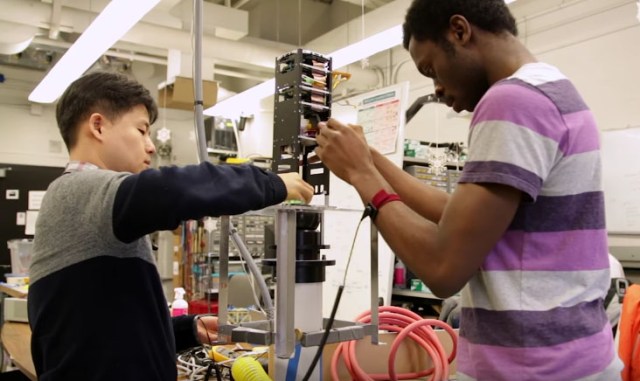


 AMSAT-UK
You must be logged in to post a comment.