ISS Columbus ham radio HT inoperative

International_Space_Station

International Space Station

The Ericsson VHF handheld transceiver in the ISS Columbus module which is used for amateur radio voice contacts on 144.800 MHz and the packet radio digipeater on 145.825 MHz is unusable.

The VHF handheld radio model that has been used by the ARISS program to connect students worldwide with astronauts on board the International Space Station (ISS) for over 16 years has given an error message and is unusable at this time.

While the ARISS technical team evaluates the best path to restore operation from the Columbus module, ARISS contacts will be supported using the Kenwood radio in the Russian Service Module.  During this period, the packet digipeater will be unavailable.

Switching to the 70 cm radio capability on board the Columbus module for some operations is being coordinated. Expect further updates as we work to resolve this problem.

Amateur Radio on the International Space Station
http://ariss.org/
https://twitter.com/ARISS_status
https://twitter.com/RF2Space/
http://issfanclub.com/

Dave Taylor W8AAS has posted the following information on the AMSAT Bulletin Board:

ARISS is actively working on a new Interoperable Radio System for ISS.  The primary components are a modified Kenwood D710GA radio and a custom ARISS-designed power supply.  The radio is complete except for final programming and NASA testing and certification.  The power supply design is in final stages and a hardware prototype has been built.  It will power existing and anticipated ARISS equipment.

The radio by itself is useless without the power supply (the radio needs 13.8 VDC, the ISS provides 120 VDC in the US segment and 28 VDC in the Russian segment).  The power supply will allow ham radio equipment to be used anywhere on ISS.

The goal is to have this new system aboard ISS about 1 year from now.  This assumes that ARISS can raise the remaining funds needed and that no delays occur in NASA testing and certification of the entire system.  The new radio system will give ISS a strong 25-watt signal on voice and packet, and is planned to support a variety of operating modes.

This system was discussed in presentations at last year’s AMSAT Symposium and you can find details in the 2015 Proceedings.  I haven’t seen a schedule, but I expect there will be updates at the Symposium next month.

A Geosynchronous Ham Radio Satellite

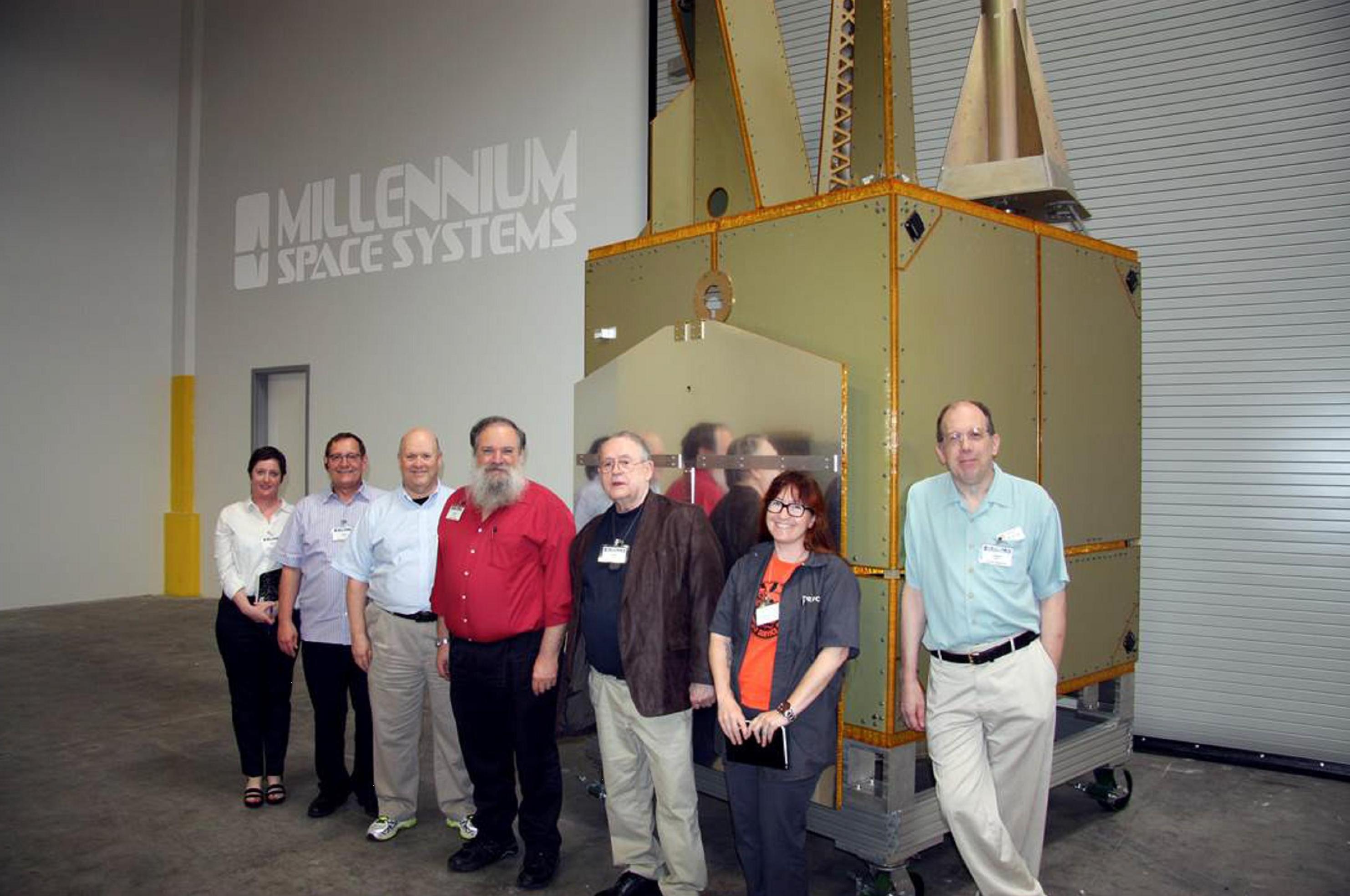
AMSAT members with the 5 GHz and 10 GHz Phase 4B geosynchronous satellite

AMSAT members with the 5 GHz and 10 GHz Phase 4B geosynchronous satellite

Gary Pearce KN4AQ has released a video of the Digital Communications Conference presentation by Bob McGwier N4HY about the AMSAT payload for a geosynchronous satellite.

Possible coverage of Geosynchronous satellite 74 degrees West - Credit Bill Reed NX5R

Possible coverage of Geosynchronous satellite 74 degrees West – Credit Bill Reed NX5R

AMSAT-NA is developing a “hosted payload” for a spacecraft that Millennium Space Systems (MSS) of El Segundo, California, is under contract to design, launch, and operate for the US government. The satellite’s potential footprint could extend over the US from the Mid-Pacific to Africa.

The amateur radio payload will comprise a Software Defined Transponder capable of supporting many different modes, including analog SSB.

Gary Pearce KN4AQ writes: We’ve been hearing about a Geosynchronous satellite for the Western Hemisphere for a while now, but not many details. In this episode from the DCC, project leader Bob McGwier N4HY fills in a lot of blanks. There’s no launch date yet, and maybe not quite enough info to start building your ground station (a ‘Five & Dime’ setup – 5 GHz up, 10 GHz down), but you can start thinking about it.

HRN 272: A GeoSync Ham Radio Satellite for the Americas – from the DCC on Ham Radio Now

What does a geosynchronous orbit look like?
https://amsat-uk.org/satellites/geosynchronous/na-gso-sat/

Previous editions of HamRadioNow http://www.youtube.com/user/HamRadioNow/videos

AlSat-1N and Pratham launch from India

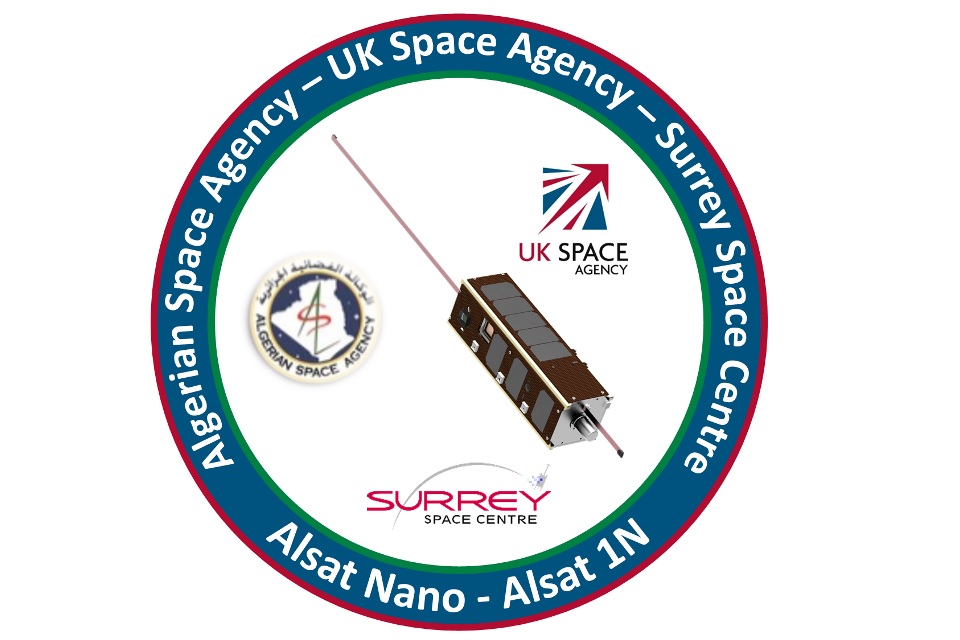
AlSat-1N Mission PatchThe AlSat-1N and Pratham satellites, both with amateur radio payloads, launched on the Indian ISRO PSLV-C35 mission at 0342 GMT on Monday, September 26, 2016, reports are requested.

Update Sept 27: The AlSat-1N signal has been received but nothing heard from Pratham. A Dorset radio amateur reports receiving a signal from PISAT (2240 MHz) which was also on the PSLV-C35 launch
https://twitter.com/uhf_satcom/status/780808329392168960

AMSAT-BB indicate the Pratham CW beacon on 145.980 MHz is active

The 3U CubeSat AlSat-1N was built in collaboration between the Algerian Space Agency (ASAL), UK Space Agency (UKSA), Surrey Space Centre (SSC) staff and Algerian students as a technology transfer and demonstrator for Algeria.

AlSat-1N is also hosting three UK payloads from various institutions and aims to take images of the Earth and send back data from the UK payloads.

The IARU coordinated downlink is 437.650 MHz 9k6 FSK.

Any downlinked data will be gratefully received at alsatnano@gmail.com
Both decoded hex files and recordings would be greatly appreciated. Richard Duke M0GSN is transmission authority in the UK under the SSC Club callsign M0GKK.

Further information on AlSat-1N can be downloaded from:

Information on the Pratham student satellite is at
https://amsat-uk.org/2016/09/07/pratham-student-satellite/

UBSEDS18 around the world balloon

UBSEDS18 Solar Powered Balloon

UBSEDS18 Solar Powered Balloon

A UK student built balloon carrying APRS and 434 MHz payloads is expected to complete its 2nd circumnavigation of the northern hemisphere on Tuesday afternoon .

The solar powered UBSEDS18 was developed by students at Bristol University and launched on Wednesday, August 17. Since then it has traveled in an easterly direction for over 62,000 km and is expected in the Bay of Biscay off the New Aquitaine coast on September 20.

The inovative balloon utilizes a LIC1235R 40F li-ion supercapacitor to enabled continued transmission after sunset.

UBSEDS18
https://twitter.com/bristolseds
http://www.bristol-seds.co.uk/hab/flight/2016/08/17/ubseds18.html
https://tracker.habhub.org/#!mt=roadmap&mz=2&qm=All&f=UBSEDS18&q=UBSEDS18

Richard Meadows M0SBU, who worked on the development of UBSEDS18, took the amateur radio training courses run by the Chelmsford Amateur Radio Society (CARS) at Danbury in Essex. Further information on the courses is available from the CARS Training Coordinator, Christopher G0IPU
Tel: 07908-107951
Email: training2016 at g0mwt.org.uk
Web: http://g0mwt.org.uk/training

Amateur Satellite 5.7 GHz LNA

AMSAT-NA 5.7 GHz LNA

AMSAT-NA 5.7 GHz LNA

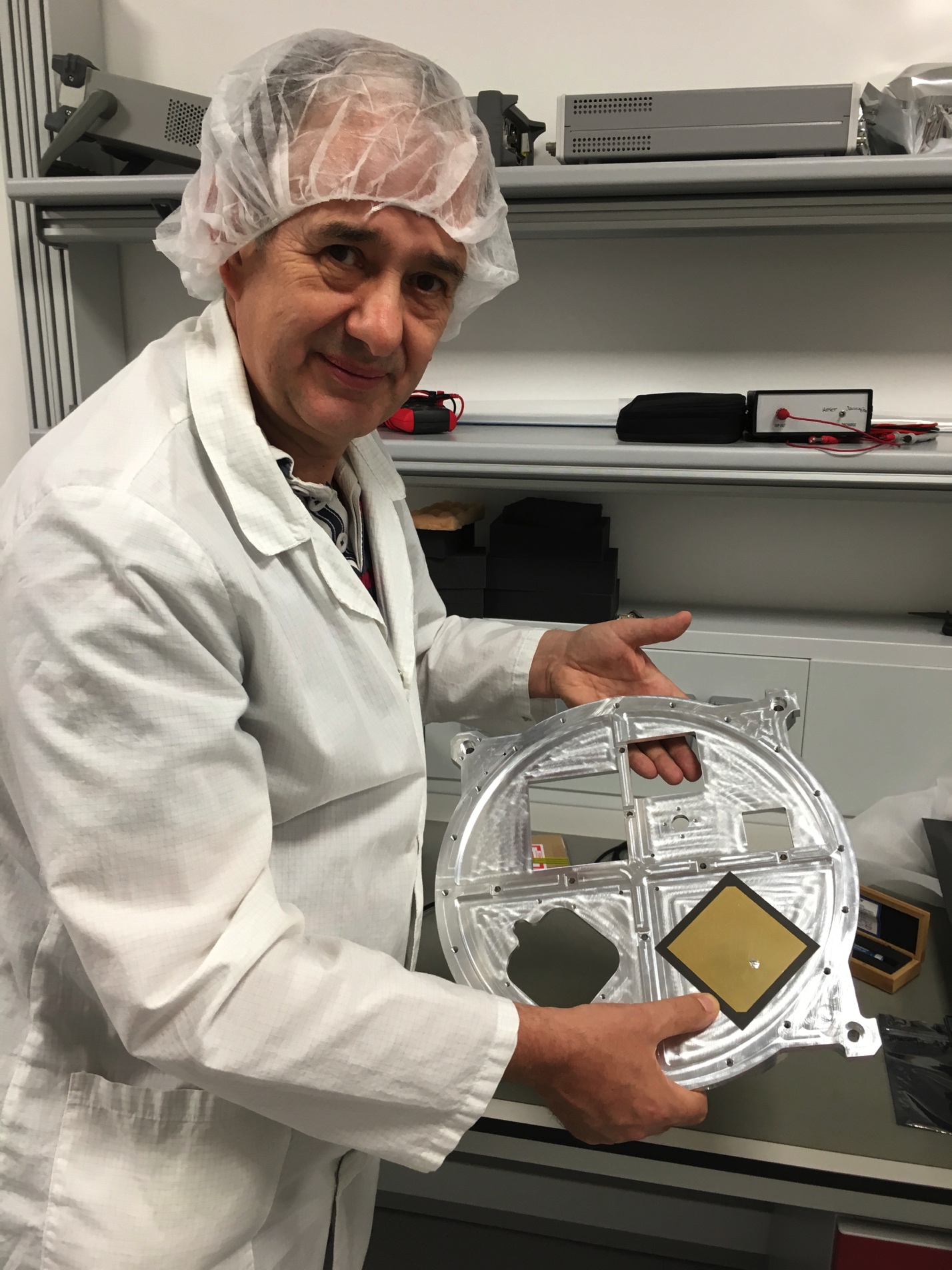
The AMSAT-NA site carries a picture showing the mechanical prototype of the 5.7 GHz Low Noise Amplifier which will be used in the Phase 5 Lunar and Phase 4B Geosynchronous amateur radio satellite projects.

Unfortunately US Federal Government ITAR legislation prevents them disclosing any technical information about it.

The International Traffic in Arms Regulations (ITAR) inexplicably applies to amateur radio satellites. It threatens US radio amateurs with jail terms or six figure fines if they cooperate with amateurs outside the USA on satellite projects. Cooperation includes talking about or publishing on the web certain information regarding amateur radio satellite systems.

The AMSAT-NA 5.7 GHz LNA page can be seen at http://www.amsat.org/?p=5519

5 GHz / 10 GHz amateur radio transponders are planned for the Heimdallr spacecraft expected to launch in September 2018 into a Lunar orbit. Further information is at
https://amsat-uk.org/2016/09/07/5-ghz-to-10-ghz-lunar-transponder-mission/

ITAR – Section 1248 Report Released
https://amsat-uk.org/2012/04/22/itar-1248-report-released/

AMSAT Wants Amateur Radio Satellites Off US Munitions List
https://amsat-uk.org/2013/07/31/amsat-wants-amateur-radio-satellites-off-us-munitions-list/

Ledbury 434 MHz School Balloon Launch

SSDV picture from a PIE balloon - Image credit Dave Akerman M6RPI/2E0LTX/M0RPI

SSDV picture from a PIE balloon – Image credit Dave Akerman M6RPI/2E0LTX/M0RPI

Ryan Ing reports he will launch a high altitude balloon with a 434 MHz Slow Scan Digital Video (SSDV) payload from the John Masefield High School Thursday, September 15.

The balloon’s transmitter should have a range of some 500-600 km for much of its flight permitting reception across the UK.

Ryan says: I’ll be doing my first launch around 10am Sept 15 from my sixth form in Ledbury, Herefordshire.  Predicted to burst at 32km, landing somewhere near Leominster.

RTTY, 434.250 MHz, 300 baud, 770 Hz Shift, 2 stop bits and 8 bit ASCII. With SSDV

Online real-time tracking of balloons http://tracker.habhub.org/

Useful High Altitude Balloon, UKHAS and SSDV links https://amsat-uk.org/beginners/balloons/