DeorbitSail Update and Initial Camera Image

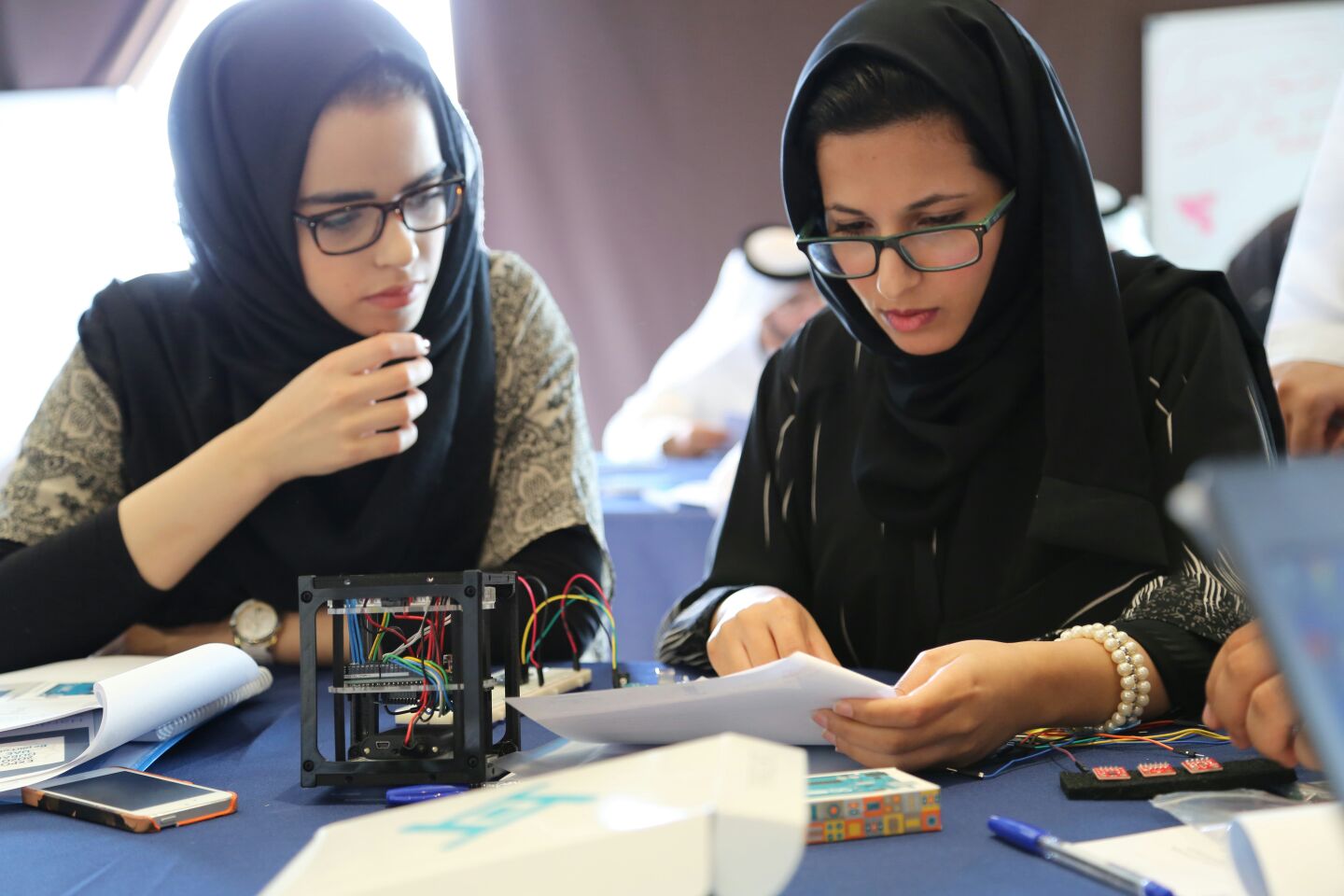
DeorbitSail project team members

DeorbitSail project team members

Chris Bridges 2E0OBC of the Surrey Space Centre provides this update on the status of the DeorbitSail Cubesat.

Dear AMSAT Community,

We would like to express our gratitude for your cooperation in the DeorbitSail project, and update you on the status of the mission.

As you know the DOS mission was launched on 10th July. After 4 months of operations, the satellite is healthy and stable, although unfortunately we have not been able to meet all of the mission objectives. Initial contact with the satellite was established relatively smoothly and we received a lot of good data, both through our own ground station but also via the network of you radio amateurs who have been very generous with your time and help.

First image taken by DeorbitSail

Initial image taken by DeorbitSail

We achieved a power stable state early on, with good comms (uplink and downlink) established within the first few days. We deployed the solar panels successfully, and managed to return to a good and stable power state after deployment. The ADCS has been challenging from the start, and continues to be challenging – we have struggled to accurately determine the satellite tumble rate and get it under control  (more detail on that is included below). We know that the satellite has seen some very high spin rates for various reasons, including some inherent design/magnetic characteristics which have become apparent.

Despite many attempts, we have unfortunately not been able to deploy the sail, and having recently thoroughly analysed and investigated the possible causes, mission events and ground test data and history, we are now reaching the conclusion that achieving successful sail deployment is very unlikely. Again there is more detail on that in the main body of text below.

We thank you for your patience and would like to apologise  for not keeping you updated on mission progress as often as we’d hoped. The operations phase has been a learning and sometimes stressful experience for all of the team at SSC, with a lot of head scratching and sleepless nights involved.

DeorbitSail

DeorbitSail

Here is some more detailed information regarding what progress and achievements have been made during the operations to date.

• After the launch on the 10th of July, and the first week in orbit, with a power safe and healthy satellite, the operation passed from the LEOP phase to the ADCS Commissioning phase. This second phase was estimated to last between three and four weeks; this proved to be optimistic.

• Although the spin up of the S/C was much higher than expected and saturated the sensors, the SU simulations and the available data suggested a large Z-spin rate on DOS which was confirmed by the B-field and MEMS magnetometry measurements. To induce a bigger difference in the Moments of Inertia (MoI) of the two non-longitudinal axes, the decision was taken to deploy the solar panels. This operation was performed the 10th of August.

• More than a month after the launch the satellite was really healthy, power safe and with great comms through newly developed software defined radio and database backend operations. Although the stabilization wasn’t achieved even with the solar panel deployment, at one month from the launch the team decide to proceed with  the sail deployment.

• This decision was agreed with DLR that confirmed that tumbling rates were no issue for the sail deployment, because the Moments of Inertia increase rapidly slowing down the tumble rate. DLR has performed a deployment test on Gossamer while tumbling before coming to this opinion.

• On the 15th of August, the first attempt for sail deployment was performed, the command was sent and the acknowledgement from the S/C was received, but no current was drawn from the boom deployer motor. Multiple experiments were performed to try and determine the cause of sail deployment failure.

• At this point, after a thorough investigation, the most plausible hypothesis and justification seems to be a physical disconnection of the motor cables. (Note that after the vibration test, it wasn’t possible to physically inspect the connection due to the design itself of the S/C)

Our simulations showed that with the actual configuration (deployed solar panels, undeployed sail) the decay time should be 20 years circa.

The aim now is to exercise and exploit the parts of the satellite that are working, and gain more confidence and experience with the SU ADCS system, the ISIS TRXUV and solar panels, and the SSC SDR groundstation and database tools to explore better the interaction of the panel circuitry with the attitude stabilisation. That will allow us to improve our performances in the next missions.

From here, the team have worked hard to take images of the Earth and via SU’s CubeSense camera – which we are delighted to show you today. This would not be possible without the dedication from the SSC team here and, of course, the amateur telemetry you kindly send us. We are going to continue imaging and testing at higher resolutions too so watch this space.

We thank you for all the support.

Chiara Massimiani, DOS Project manager & Prof Guglielmo Aglietti SSC Director and DOS PI

DeorbitSail https://amsat-uk.org/satellites/telemetry/deorbitsail/

Surrey Space Centre http://www.surrey.ac.uk/ssc/research/space_vehicle_control/deorbitsail/

Activation of IO-86 / LAPAN-ORARI FM Transponder

LAPAN-A2

LAPAN-A2

Dirgantara Rahadian YF0EEE has posted this information about the FM voice satellite IO-86 to the AMSAT-ID Facebook page:

We have Schedule Testing 1 Pass with LAPAN Command Center to Open Voice Transponder IO-86 / LAPAN-ORARI for all Country in Equatorial can Use and give me report via email yd1eee@gmail.com,
Date 14 November 2015 at 01:35 UTC – 03:40 UTC ..

Every Amateur can use the Voice Transponder
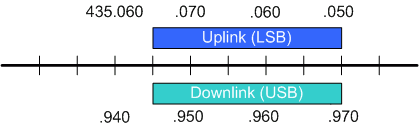
– Uplink 145.880 MHz tone 88,5
– Downlink 435.880 MHz

Note: IO-86 is in an equatorial orbit and should provide coverage between 30 degrees North and 30 degrees South of the equaror.

IO-86 Keps:

IO-86
1 40931U 15052B 15316.15776324 .00001070 00000-0 60618-4 0 9994
2 40931 6.0030 69.3893 0012877 275.6206 84.2533 14.76374433 6653

AMSAT-ID on Facebook
https://www.facebook.com/groups/831872960241607/

HamTV on the ISS – Goonhilly update

While at Goonhilly Graham Shirville G3VZV received ISS HamTV on 2395 MHz with a 60cm dish

While at Goonhilly Graham Shirville G3VZV received ISS HamTV on 2395 MHz with a 60cm dish

Noel Matthews G8GTZ of the BATC provides an update on the amateur radio ground station at Goonhilly which will receive video from the ISS during the mission of Tim Peake KG5BVI.

Some of you may remember the presentation Graham Shirville G3VZV, gave at CAT15 subtitled “Tim Peake on a TV near you”.

Some of you may have also noticed a new station on the Tutioune map located at Goonhilly in Cornwall.

HamTV dish antenna at Goonhilly - Credit Frank Heritage M0AEU

HamTV dish antenna at Goonhilly – Credit Frank Heritage M0AEU

This station is using a 3.8 m dish is being loaned to the ARISS project by Satellite Catapult, and will be used to track the ISS and provide real time video during the schools contacts scheduled for early next year. This dish is almost in the shadow of the 29 metre dish built in 1962 to receive the first transatlantic television signals from the Telstar-1 spacecraft.

At the beginning of  November, we (G8GTZ, M0AEU and G3VZV) installed a PC with mini-tutioune software and a DB6NT downconverter to receive the ISS on the dish – It was no surprise that during the tests, we received video for 8.5 minute during one pass and had an MER of 30 dB 🙂

Currently the dish is not tracking the ISS but will be doing so in the near future and will be dedicated to this task for the next 6 months 🙂 In the mean time, the dish is pointing up at 90 degrees (zenith) but the receiver is connected and we received 25 seconds of blank video (visible on the TT monitor page) this morning when the ISS flew over the top of the dish!

There will be a full article on the ARISS Tim Peake project in the next CQ-TV along with pictures of the Goonhilly site.

Whilst we were at Goonhilly last week, Graham could not resist seeing if it was possible to receive the HamTV signal using only a handheld 60cms dish and the Tutioune software – much to the team’s surprise Graham was successful and this was the first reception of the ISS at Goonhilly as the equipment had was yet to be installed on the ground station dish!

Watch CAT15 HamTV on the ISS by Graham Shirville G3VZV

Local and Goonhilly Dishcams with map showing position of ISS at https://principia.ariss.org/dashboard/

Tutioune map
http://www.vivadatv.org/tutioune.php?what=map&sid=26af759a4ad0cf89cb0f0e59c1cd46c2

HamTV https://amsat-uk.org/satellites/hamtv-on-the-iss/

Satellite Catapult https://sa.catapult.org.uk/

British Amateur Television Club (BATC) http://batc.org.uk/
Twitter https://twitter.com/BATCOnline

EO-79 CubeSat Update

QB50p1 and QB50p2 - Image Credit ISIS

QB50p1 and QB50p2 – Image Credit ISIS

Wouter Weggelaar PA3WEG has provided this update on the status and plans for QB50p1 – EO-79.

Earlier testing campaigns indicate that the AMSAT-UK/AMSAT-NL transponder on board of this spacecraft is in good health. We have activated the transponder on various occasions for testing purposes.

At the moment we believe the power system is capable of sustaining transponder operations indefinitely. ISIS (the satellite designer and operator) still needs to write and apply a software patch that would keep the transponder running. The current logic in the satellite will switch off the transponder if a reset occurs of the On Board Computer or power system.

Efforts are being made to allow usage of the transponder in the mean time and also allow select command stations to take the satellite out of safe mode if it does reset. ISIS will continue to monitor all telemetry and the satellites health.

QB50p1 EO-79 FUNcube-3 Transponder - Credit Mike Rupprecht DK3WN

QB50p1 EO-79 FUNcube-3 Transponder – Credit Mike Rupprecht DK3WN

The precursor satellites have gathered valuable data about the sensor payloads, and the lessons learnt are being implemented in the flight units for the QB50 main mission.

We will still have to wait until procedures are in place and the activation is cleared by the operator and owners of the satellite, but we are nearly ready for the activation of another transponder!

Transponder activations will be announced on the AMSAT Bulletin Board.

On behalf of AMSAT-NL and the ISIS operations team I would like to thank the community for supporting our mission and thank you for your patience.

73s,
Wouter Weggelaar PA3WEG
AMSAT-NL

EO-79 (FUNcube-3) Transponder Test May 4
https://amsat-uk.org/2015/05/03/eo-79-transponder-may-4/

JE9PEL QB50 CubeSat Spreadsheet

Planet Lab Dove CubeSats leaving the Nanoracks Deployer on February 11, 2014

Planet Lab Dove CubeSats leaving the ISS Nanoracks Deployer on February 11, 2014

The QB50 constellation of  fifty CubeSats should be shipped to the International Space Station (ISS) in December 2016 for subsequent deployment.

QB50p1 and QB50p2 Precursor 2U CubeSats - Image Credit ISIS

QB50p1 and QB50p2 Precursor 2U CubeSats – Image Credit ISIS

The CubeSats are planned to be deployed from the ISS using the Japanese Experiment Module (JEM) and the Nanoracks CubeSat Deployers.

Eight NanoRacks deployers are installed on the Multi-Purpose Experiment Platform (MPEP). Each deployer has a capacity of 6U and so can hold up to six 1U, three 2U or two 3U CubeSats. They are carried by Japanese Experiment Module-Remote Manipulator System (JEM-RMS).

Mineo Wakita JE9PEL has made available a spreadsheet showing the 50 satellites and their frequencies. A copy can be downloaded from the JE9PEL site.

QB50 project https://www.qb50.eu/

QB50 CubeSats to be deployed from ISS
https://amsat-uk.org/2015/09/08/qb50-cubesats-to-be-deployed-from-iss/

Launch of QB50 precursor CubeSats QB50p1 (EO-79) and QB50p2 (EO-80)
https://amsat-uk.org/2014/06/19/successful-launch-of-amateur-radio-satellite-payloads/

January 2014 original QB50 CubeSat launch contract signed
https://amsat-uk.org/2014/01/28/qb50-cubesat-launch-contract-signed/

Mineo Wakita JE9PEL satellite frequency list http://www.ne.jp/asahi/hamradio/je9pel/satslist.htm

Geosynchronous Ham Radio Project Video

A video from the Palomar Amateur Radio Club presents a panel discussion on the AMSAT Phase IV geosynchronous project.

00:00 Introductions
03:00 What is AMSAT Phase IV?? — Overview by Michelle Thompson, W5NYV
Michelle is leading the Phase IV Ground Team
Open source project: RF hardware, antennas, applications, servers, and digital hardware.

05:30 Sponsors and Assistance from AR Clubs, Manufacturers, Universities, and Gov’t Agencies
24:30 Technical Side (How It Works) — Phil Karn, KA9Q
34:30 Downlink (10.45 GHz)
38:30 Uplink (5.6 GHz)
42:00 Black Box
45:00 Question and Answers
57:00 Closing Comments

Watch PARC November Club Meeting – AMSAT Phase IV project

Slides http://www.ntms.org/files/Feb2016/PARC_4on4.pdf

What is a Geosynchronous orbit ? https://amsat-uk.org/satellites/geosynchronous/na-gso-sat/