UK radio amateurs use PSK31 satellite transponder

PSAT PSK31 Transponder received by Peter Goodhall 2E0SQL May 26, 2015

PSAT PSK31 Transponder received by Peter Goodhall 2E0SQL May 26, 2015

After building a 28 MHz 1/4 Wave Ground Plane antenna to replace his dipole Peter Goodhall 2E0SQL was able to receive his 10 watt signal through the PSAT CubeSat PSK31 transponder for the first time on Tuesday, May 26.

Peter Martinez G3PLX posted a report to the RSGB Tech Yahoo Group reproduced here with permission:

Finally got my own signal back via PSAT just now and proved  that the uplink frequency control works. The PSAT uplink receiver is about 300 Hz low of 28120 kHz which means that when the satellite is heading straight towards me at +600 Hz Doppler, my transmitter needs to be 900 Hz low.

If I chose to place my own signal on a downlink frequency of 1000 Hz, the transmit audio tone would have to be down at 100 Hz which is too low for my SSB transmitter. So I have chosen 1500 Hz in the downlink.

I will try again on the next few passes. I am just sending “Test de G3PLX via PSAT” continuously at the moment and not listening for replies.  Still not getting a strong downlink SNR so the power control loop isn’t kicking in.

Bob Bruninga WB4APR has made a request to developers of PSK31 software to open their PSK31 frequency tracking to accommodate more than 1 Hz per second Doppler shift. Current implementations can do 1 Hz/s but completely fail at 3 Hz/s.

PSK31 Transponder Frequencies:
PSAT: 145.825 MHz FM 1200 baud AX.25 telemetry – digipeater currently off
PSAT PSK31: 435.350 MHz FM downlink, 28.120 MHz SSB PSK31 uplink. W3ADO-5 PSK TLM beacon on 315 Hz

BRICsat: 437.975 MHz 9600 baud telemetry every 20s
BRICsat PSK31 435.350 MHz FM downlink, 28.120 MHz SSB PSK31 uplink. W3ADO-6 PSK TLM beacon on 375 Hz

Guide to using the PSK31 transponder https://amsat-uk.org/beginners/how-to-work-psk31-satellites/

ParkinsonSAT (PSAT) http://www.aprs.org/psat.html

Fldigi PSK31 software http://www.w1hkj.com/Fldigi.html

Keplerian Two Line Elements (TLEs) ‘Keps’ for satellites launched in last 30 days
http://celestrak.com/NORAD/elements/tle-new.txt

Adding new satellites to SatPC32 and Gpredict
https://amsat-uk.org/2013/11/23/adding-new-satellites-to-satpc32/

Listen to satellite signals in the 145 and 435-438 MHz bands from anywhere in the world using the online SUWS WebSDR located near London. Further details at https://amsat-uk.org/2014/08/15/suws-websdr-moves-to-new-site/

AMSAT-UK
Web https://amsat-uk.org/
Twitter https://twitter.com/AmsatUK
Facebook https://facebook.com/AmsatUK
Flickr https://flickr.com/groups/AmsatUK
YouTube https://youtube.com/AmsatUK
Yahoo Group http://groups.yahoo.com/group/FUNcube

29 MHz – the forgotten frequency for amateur radio satellites

Jan King W3GEY/VK4GEY prepares OSCAR 7 for a vibration test - Credit AMSAT-NA

Jan King W3GEY/VK4GEY prepares OSCAR 7 for a vibration test – Credit AMSAT-NA

Hans van de Groenendaal ZS6AKV writes in the EngineerIT magazine about the potential for 29 MHz as a satellite uplink band.

Universities and other scientific research institutions are using portions of the amateur spectrum for their CubeSat’s which has caused the 145 and 435 MHz amateur-satellite band segments to be very crowded, leading to an increasing number of satellite builders to explore alternatives.

For many, such as those requiring single-channel bandwidth greater than approximately 12.5 kHz, the best answer will be found in the microwave bands. However, for those who can use it, the International Amateur Radio Union (IARU) satellite frequency coordination process has now opened another alternative: 29 MHz uplinks.

Read the EngineerIT article at http://www.ee.co.za/article/29-mhz-forgotten-frequency-amateur-radio-satellites.html

IARU Satellite Frequency Coordination http://www.iaru.org/satellite.html

PSAT PSK31 CubeSat Update May 24

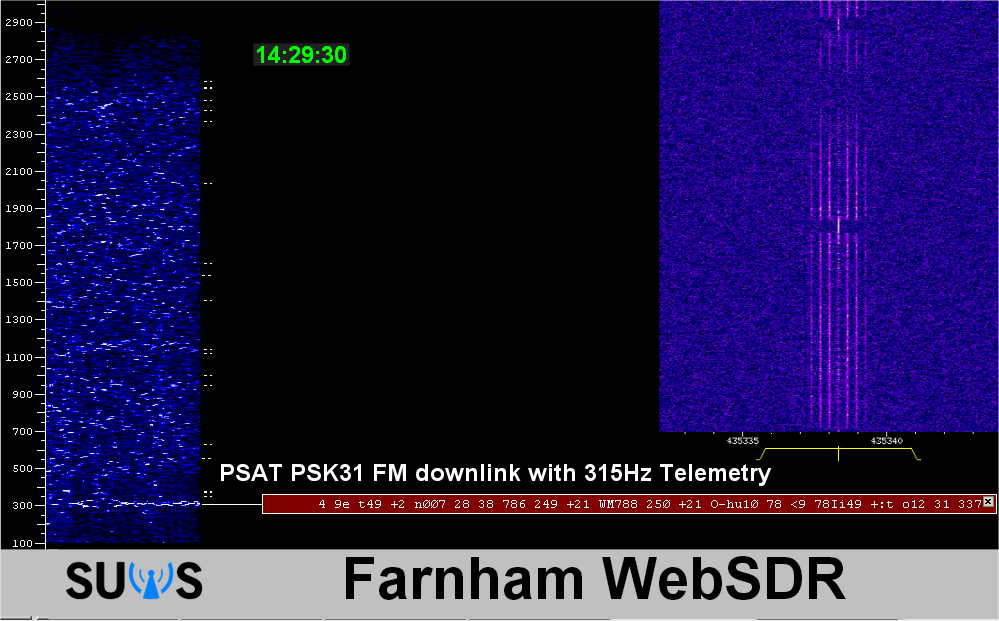
PSAT PSK31 FM Downlink received by Martin G8JNJ at 1429 UT May 22, 2015 using the online SUWS WebSDR

PSAT PSK31 FM Downlink received by Martin G8JNJ at 1429 UT May 22, 2015 using the online SUWS WebSDR

Bob Bruninga WB4APR released this update on the PSAT PSK31 CubeSat on Sunday, May 24
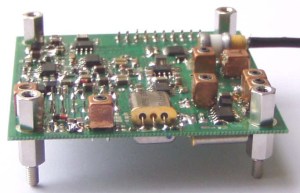
28 MHz PSK31 Receiver Board Flight Prototype - Brno University of Technology

28 MHz PSK31 Receiver Board Flight Prototype – Brno University of Technology

The PSAT PSK31 435.350 MHz FM downlink is full quieting with 6 bars using a decent UHF Yagi. But we have not seen any users other than those using the 28.120 PSK channel on HF normally. We welcome people to experiment with it.

Everyone within the 28.120 to 28.123 MHz ten meter passband will be uplinked and heard on the 435.350 MHz downlink.

The Naval Academy’s PSAT seems healthy with plenty of power (we are keeping the APRS digipeater off to allow max power for PSK31).

PSAT’s radio and packet system are a simple $250 APRS tracker http://www.byonics.com/mtt4b sent to space. The PSK31 transponder is a single 3.4″ square circuit board made by Brno Universtiy in the Czech Republic. The CPU for controlling bulletins and timing is a simple Parallax Basic Stamp.

PSAT is actually only about a 1U cubesat but in a 1.5U package since the flight was available and it gave us more power for our NON-SPACE solar cells. We are using standard silicon that are only half as efficient as multi-junction cells, but only cost 1% as much.

PSAT has a single 21″ VHF  and 72″ long HF whip. It has two UHF 6″ orthogonal monopoles, all of very thin Nitinol wire.

More details will eventually follow as the page will be updated over the coming weeks http://aprs.org/psat.html

* PSAT packet telemetry is OK, Digipeater will be off (secondary mission)
* PSAT PSK31 transponder is ON with 28.120 MHz uplink! (primary mission)
* WOD data fixed.  Spin data now available.  Right now it is at 3 RPM with
+Z pointing 45 deg off Sun
* Launch TLE elements (below) are still very good
* http://PCSAT.APRS.ORG web page is now capturing PSAT telelmetry that
users inject into the APRS-IS
* BRICSAT telemetry has been heard but is cycling OFF due to low power
* BRICSAT PSK31 downlink (also FM) has also been heard barely (when ON)
* USS Langley not heard

Frequencies:

PSAT: 145.825 – 1200 baud AX.25 telemetry – digi off
PSAT PSK31-5: 435.350 FM down, 28.120 SSB PK31 uplink – Brno University Transponder

BRICsat: 437.975 – 9600 baud telemetry evry 20s
BRICsat PSK31-6 – same as PSAT but PSK TLM on 375 Hz (PSAT on 315 Hz)

USS Langley – 437.475  9600 baud telemetry  <== CORRECTION

ULTRASat3  
1 99993U          15140.67013889  .00040043  00000-0  10235-2 0 00009
2 99993 055.0004 339.9238 0251027 182.3314 074.3075 15.12517086000014

Bob, WB4APR

Guide to using the PSK31 transponder https://amsat-uk.org/beginners/how-to-work-psk31-satellites/

ParkinsonSAT (PSAT) http://www.aprs.org/psat.html

Fldigi PSK31 software http://www.w1hkj.com/Fldigi.html

Listen to satellite signals in the 145 and 435-438 MHz bands from anywhere in the world using the online SUWS WebSDR located near London. Further details at https://amsat-uk.org/2014/08/15/suws-websdr-moves-to-new-site/

AMSAT-UK
Web https://amsat-uk.org/
Twitter https://twitter.com/AmsatUK
Facebook https://facebook.com/AmsatUK
Flickr https://flickr.com/groups/AmsatUK
YouTube https://youtube.com/AmsatUK
Yahoo Group http://groups.yahoo.com/group/FUNcube
Nine CAS-3 amateur radio satellites to launch in July

CAMSAT CAS-3A

CAMSAT CAS-3A

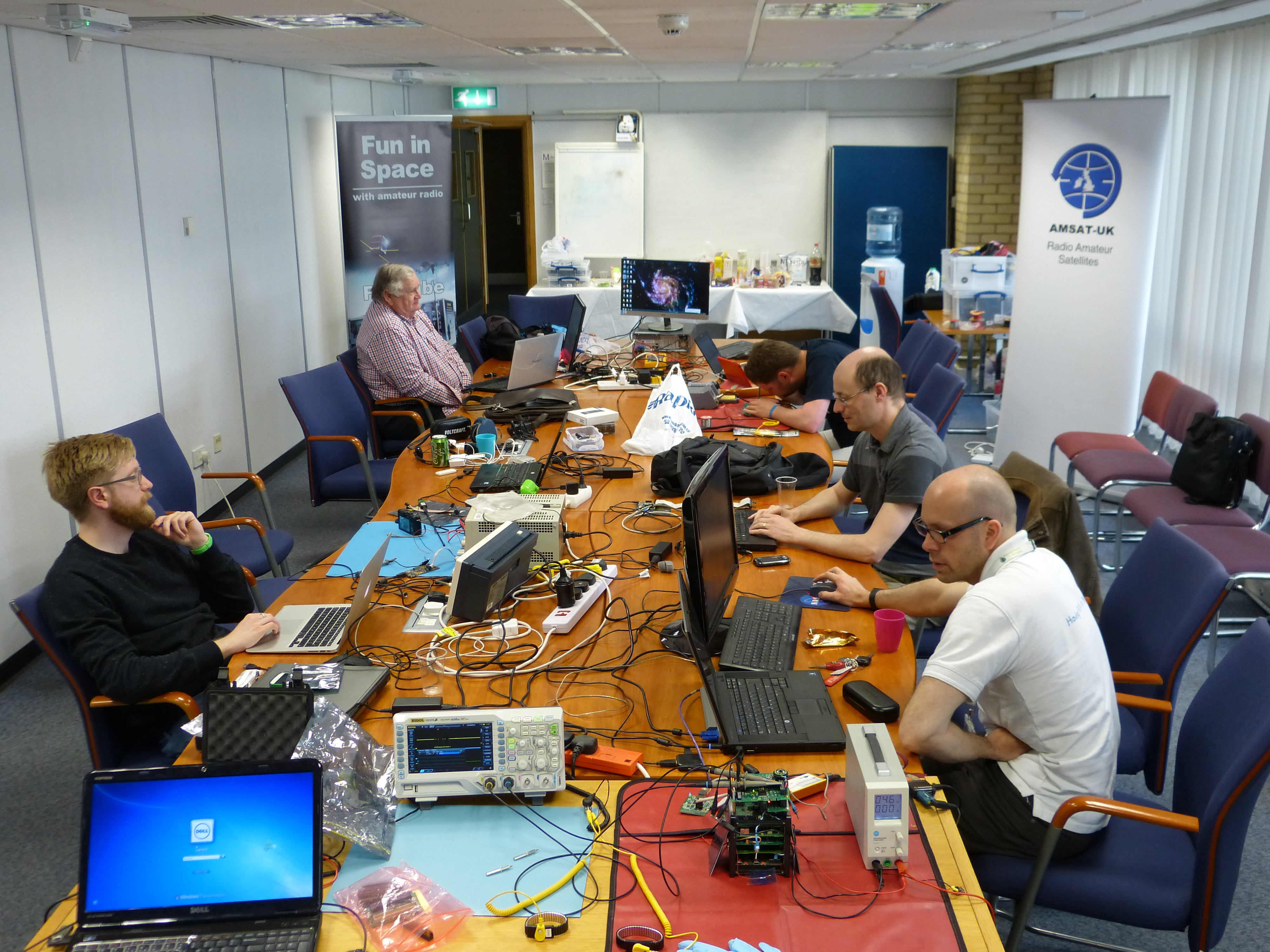
The CAMSAT orchestrated CAS-3 amateur satellite system is now nearing completion.

Nine satellites, CAS-3A – CAS3i, should be launched on July 20, 2015 from the Taiyuan Satellite Launch Center on the new CZ-6 launcher. It is understood the CZ-6 will be carrying a total of 20 satellites.

Six of the CAMSAT satellites, CAS-3A-CAS-3F, are equipped with substantially the same amateur radio payloads. A 20 kHz bandwidth 435/145 MHz (mode U/V) 100 mW linear transponder for SSB/CW communications, a CW telemetry beacon and an AX.25 19.2k/9.6k bps GMSK telemetry downlink.

Each set of amateur radio equipment has the same technical characteristics, but operates on different frequencies in the 435 MHz uplink band and 145 MHz downlink band. While the amateur payloads are similar the sizes of the satellites differ, one is 20 kg, three are 10 kg and two are 1 kg.

CAS-3A will be deployed into a 450 km sun-synchronous orbit while the other satellites will in a 530 km sun-synchronous orbit.

LilacSat-2, developed at the Harbin Institute of Technology, has been renamed as CAS-3H, and has had to change frequencies to avoid a clash with other CAMSAT satellites on the flight. CAS-3H carries 145 MHz APRS, a 145/435 FM transponder and a 437 MHz CW beacon.

Two others satellites on the launch also carry amateur satellite service payloads and have been named as CAS-3G which has 9k6 GMSK AX25 downlinks on 145 MHz and 437 MHz and CAS-3i which has a 9k6 FSK telemetry downlink on 437 MHz.

Further information on the CAS-3A to CAS-3F satellites can be seen at
https://amsat-uk.org/satellites/communications/camsat-cas-3-series/

CAMSAT with support from the Qian Youth Space Academy has been developing two satellites CAS-2A1 and CAS-2A2. These will not be on this launch, instead they may fly on a CZ-2 at a later date.
https://amsat-uk.org/2012/10/18/cas-2a1-and-cas-2a2-linear-transponder-amateur-radio-satellites/

CAS-2 Series IARU Satellite Frequency Coordination page
http://www.amsatuk.me.uk/iaru/formal_detail.php?serialnum=264

CAS-3 Series IARU Satellite Frequency Coordination page
http://www.amsatuk.me.uk/iaru/formal_detail.php?serialnum=458

AMSAT-UK
Web https://amsat-uk.org/
Twitter https://twitter.com/AmsatUK
Facebook https://facebook.com/AmsatUK
Flickr https://flickr.com/groups/AmsatUK
YouTube https://youtube.com/AmsatUK
Yahoo Group http://groups.yahoo.com/group/FUNcube

PSK31 and APRS CubeSat Status Update

PSAT PSK31 FM Downlink received by Martin G8JNJ at 1429 UT May 22, 2015 using the online SUWS WebSDR

PSAT PSK31 FM downlink received by Martin G8JNJ at 1429 UT May 22, 2015 using the online SUWS WebSDR

Martin Ehrenfried G8JNJ reports receiving the PSAT PSK31 FM downlink on the online SUWS WebSDR located at Farnham near London.

Bob Bruninga WB4APR has posted two updates on May 21 and May 22 to the AMSAT Bulletin Board about the three USNA CubeSats PSAT, BRICSAT and USS Langley along with a guide on how to use the PSK31 transponder. These can be seen below.

Status Summary – Day 2 – May 21

We now have heard 4 of 5 transmitters from our 3 spacecraft all still in a close cluster:
* PSAT packet is OK but WOD not working (no digipeating for users yet)
* PSAT PSK31 downlink is ok [remember, it is FM!]
* BRICSAT telemetry has been heard but is cycling OFF due to low power
* BRICSAT PSK31 downlink (also FM) has also been heard barely (when ON)
* USS Langley not heard

28 MHz PSK31 Receiver Board Flight Prototype - Brno University of Technology

28 MHz PSK31 Receiver Board Flight Prototype – Brno University of Technology

PSAT CPU shows the 4 day-fail-safe backup reset circuit is not counting down, so we have lost this (1 of 3) fail safe backup RESET capabilities. Bad line of code already found.  But cannot change it.

PSAT is not properly reporting WOD data and S#… STATUS packets are being bundled until 255 byte packet length is reached and then it all comes down at once.  Noone has captured any of these long packets.  Please try with PASSALL ON so that you can receive partial packets.

Awaiting permission from Brno University of Technology to authorize HF user uplinks on PSAT PSK31. UPDATE May 22 Here is the announcement from Brno University: “We can uplink open to all users. Please, do it.”Mirek OK2AQ.

BRICSAT PSK31 transponder is on identical frequencies as PSAT’s.  You can tell them apart because one has PSK Telemetry on 315 Hz and the other is on 365 Hz.  Both on the UHF FM downlink 435.350 MHz

We’d LOVE to hear from USS Langley, and we’d love to capture one of those long WOD packets from PSAT.  Our ground station is only getting a few packets compared to some submissions from others.  Keep it up.

SUMMARY:

145.825 1.5U  CubeSat – PSAT 1200 baud AX.25
435.350 same CubeSat – PSAT PSK31 FM – Brno University transponder

437.975 1.5U  CubeSat – BRICsat 9600 baud
435.350 same CubeSat – BRICsat PSK31 FM – Brno University transponder

437.475 3.0U  CubeSat – USS Langley 9600 bd

ULTRASat3 
1 99993U          15140.67013889  .00040043  00000-0  10235-2 0 00009
2 99993 055.0004 339.9238 0251027 182.3314 074.3075 15.12517086000014

Bob, WB4APR

Status Summary – Day 3 – May 22

* PSAT packet telemetry is OK, Digipeater will be off (secondary mission)
* PSAT PSK31 transponder is ON with 28.120 MHz uplink! (primary mission)
* WOD data fixed.  Spin data now available.  Right now it is at 3 RPM with
+Z pointing at Sun
* Launch TLE elements (below) are 6 minutes ahead of satellite
* PCSAT.APRS.ORG web page is now also capturing PSAT telelmetry downlinks
* BRICSAT telemetry has been heard but is cycling OFF due to low power
* BRICSAT PSK31 downlink (also FM) has also been heard barely (when ON)
* USS Langley not heard

Only fault so far is the loss of the 4 day-fail-safe backup reset circuit
(1 of 3) fail safe backup RESET capabilities.  The lack of WOD data was
because we had a LOW-POWER bits set that was holding it off.

BRICSAT PSK31 transponder is on identical frequencies as PSAT’s.  You can
tell them apart because one has PSK Telemetry on 315 Hz and the other is
on 365 Hz.  Both on the UHF FM downlink 435.350 MHz

Bob, WB4APR

Receiving the PSAT PSK31 FM downlink

BRICsat 435.350 MHz FM PSK31 signal received by Tetsurou Satou JA0CAW at 2057 UT on May 22, 2015

BRICsat 435.350 MHz FM PSK31 signal received by Tetsurou Satou JA0CAW at 2057 UT on May 22, 2015

Receiving the PSAT (and BRICsat) 435.350 MHz FM downlink is as simple as placing  your PSK31 laptop microphone next to the speaker on your FM satellite UHF receiver and just watching the waterfall.

What you see is exactly what everyone else sees (it’s FM).  There is no Doppler added to the tones due to your station’s position relative to the satellite.  But you DO have to retune your FM radio at least 3 times during the pass (+5 kHz, 0, -5 kHz) to stay in the FM passband. [Note: UK users should remember to selected the wide FM (5 kHz deviation) filter setting on their rigs]

User uplinks, however, will shift in the waterfall according to each user’s position relative to the satellite.  The shift can be as low as 1 Hz per second to as high as 6 Hz per second.  This is because the uplink is on 10 meters where the Doppler rate is only 1/15th of what it would be on UHF.

The TELEMETRY channel at 315 Hz (PSAT) or 375 Hz (BRICsat) is FIXED with no Doppler since it is generated onboard into the FM downlink

WHAT TO DO:

1) We will need PSK31 authors to open the PSK31 frequency tracking to accommodate more than 1 Hz per second Doppler tracking.  Current implementations can do 1 Hz/s but completely fail at 3 Hz/s.  2 Hz/s might work a little…

2) Until then, ANY uplink user that is in line with a direct overhead pass will have minimum Doppler at the start and end of his pass (1 Hz/sec) when the satellite is going right at him and directly away from him.  (Though it will be MAX (6 Hz/sec) when it passes over her/his station).

3) Just turn on MULTI CHANNEL window and let the PSK31 decode everyone.The ones with the least Doppler at any instant may be decoded for a while!

USERS can transmit later when BRNO University says it has completed its tests.  Brno provided the transponders for use in the PSAT and BRICsat satellites.

So start preparing your station to TX PSK31 on 10 meters SSB and to receive the audio from an FM UHF rig on 435.350 +/- 5 kHz steps of Doppler.

DOWNLINK Limitations:  The UHF downlink signal is only 300 mW and so a UHF beam is needed on the downlink.

UPLINK RESTRICTIONS:  *NOTHING MORE THAN* a Vertical 1/4 wave or Dipole is authorized on the 10m uplink  and no more than 25 Watts (for now).

Remember a 1/4 wave vertical is the ideal antenna because it maximizes the signal at lower angles and tapers the signal as the satellite gets closer. This keeps  user uplinks about the same during a pass.  Strong stations just drive down the AGC and ruin it for everyone.

Use minimum power!!  Remember, this is crossband FULL DUPLEX so  you can see yourself in the downlink just like everyone else can see you.  Act accordingly.  And of course DO NOT TRANSMIT if you cannot see the waterfall  … Duh!

Enjoy!
Bob, WB4APR

ParkinsonSAT (PSAT) http://www.aprs.org/psat.html

Fldigi PSK31 software http://www.w1hkj.com/Fldigi.html

Listen to satellite signals in the 145 and 435-438 MHz bands from anywhere in the world using the online SUWS WebSDR located near London. Further details at https://amsat-uk.org/2014/08/15/suws-websdr-moves-to-new-site/

AMSAT-UK
Web https://amsat-uk.org/
Twitter https://twitter.com/AmsatUK
Facebook https://facebook.com/AmsatUK
Flickr https://flickr.com/groups/AmsatUK
YouTube https://youtube.com/AmsatUK
Yahoo Group http://groups.yahoo.com/group/FUNcube

Beijing may launch amateur satellites in July

CAMSAT CAS-2 at Friedrichshafen Ham Radio 2012 Event

CAMSAT CAS-2 at Friedrichshafen Ham Radio 2012 Event

UPDATE May 24, 2015: CAS-2A1 and CAS-2A2 will not be launching in July but nine CAS-3 series satellites will be. See the latest information at https://amsat-uk.org/2015/05/24/nine-cas-3-ham-radio-satellites/

Mineo Wakita JE9PEL reports on his website that Beijing may launch satellites carrying amateur radio payloads in July 2015. It is understood the launch would be on a CZ-6 rocket from the Taiyuan Satellite Launch Center.

XW-2 (CAS-2) and LilacSat-2 will be carrying amateur radio payloads but at the time of writing it is not clear if Tiantuo-3 and ZDPS-2 may also have amateur radio payloads.

Additionally it is reported elsewhere there may be up to 20 satellites on the launch.

Fan Shaomin BA1EO with CAS-2 A1

Fan Shaomin BA1EO with CAS-2 A1

CAS-2A1 satellite: 270x270x250mm
2m CW telemetry beacon 100 mW
2m AX.25 digital telemetry beacon 500 mW
2m FM voice beacon 500 mW
U/V mode Linear transponder 50 kHz 500 mW
L/S mode Linear transponder 200 kHz 320 mW
U/V mode APRS repeater

CAS-2A2 satellite:
70cm CW telemetry beacon 100 mW
70cm AX.25 digital telemetry beacon 500 mW
13cm CW telemetry beacon 200 mW
3cm CW telemetry beacon 200 mW
V/U mode Linear transponder 500 mW

LilacSat-2 – Harbin Institute of Technology
Approx. 11 kg 20x20x20 cm
Uplink: 145.825, 145.875 MHz
Downlink: 437.200 MHz beacon 437.225 MHz FM/APRS

Tiantuo-3 (TT-3) – Small satellite from China’s National University of Defense Technology

ZDPS-2 – Nano-satellite mission of the Microsat Research Center Zhejiang University

Source Mineo Wakita JE9PEL http://www.ne.jp/asahi/hamradio/je9pel/lilacsat.htm

AMSAT-UK
Web https://amsat-uk.org/
Twitter https://twitter.com/AmsatUK
Facebook https://facebook.com/AmsatUK
Flickr https://flickr.com/groups/AmsatUK
YouTube https://youtube.com/AmsatUK
Yahoo Group http://groups.yahoo.com/group/FUNcube