SatNOGS give prize money to LSF

SatNOGS - Satellite Networked Open Ground Station

SatNOGS – Satellite Networked Open Ground Station

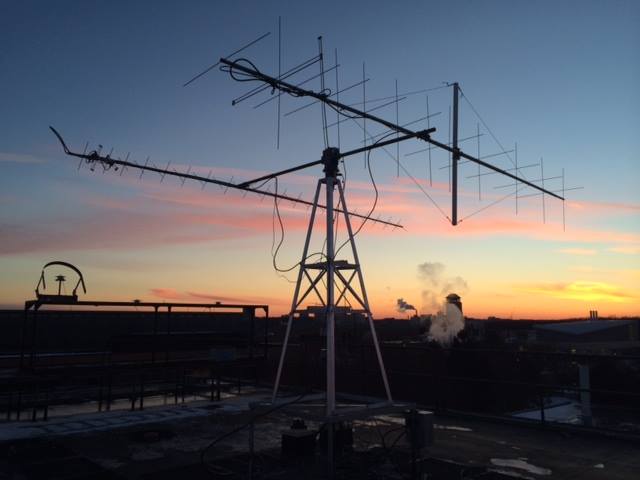
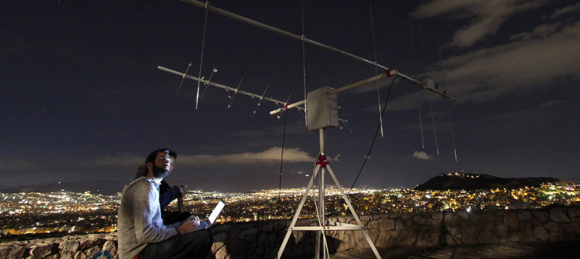
SatNOGS won the Hackaday grand prize of $196,418 for their satellite ground station, they plan to give the money to the Libre Space Foundation.

The Libre Space Foundation (LSF) is a non-profit foundation registered in Greece by the creators of the SatNOGS project. The aim of the foundation is to promote free and open source technology in space and support, develop and fund space projects.

Ground Stations are Just the Beginning: The SatNOGS Story
http://hackaday.com/2015/02/19/ground-stations-are-just-the-beginning-the-satnogs-story/

SatNOGS Win Hackaday Prize https://amsat-uk.org/2014/11/14/satnogs-win-hackaday-prize/

SatNOGS – Satellite Networked Open Ground Station https://satnogs.org/

Libre Space Foundation http://librespacefoundation.org/

Advert Features Ham Radio and ISS

International Space Station - Image Credit NASA

International Space Station – Image Credit NASA

The latest advert from Internet Services provider MTN Global features amateur radio and the International Space Station (ISS).

MTN Global’s latest brand commercial tells the story of a little boy who discovers, via the internet, that it is very simple to build a homemade radio that will allow him to actually speak to an astronaut in space. He tries and fails and tries again, using the internet to embark on a journey of discovery that takes a rather unexpected turn. Because that’s the thing about discovery, there’s always more to discover.

Watch MTN: ‘Space’

My first radio contact with an Astronaut
http://www.southgatearc.org/news/december2005/qso_with_an_astronaut.htm

Check the status of the ISS amateur radio stations at http://issfanclub.com/

How to hear the ISS https://amsat-uk.org/beginners/how-to-hear-the-iss/

How to use the ISS APRS Packet Radio Digipeater
https://amsat-uk.org/beginners/how-to-work-the-iss-on-aprs-packet-radio/

More ISS Slow Scan TV Activity https://amsat-uk.org/2015/02/11/more-iss-slow-scan-tv/

What is Amateur Radio ? http://www.essexham.co.uk/what-is-amateur-radio

Women, STEM and Amateur Radio

Bob McGwier N4HY writing code for the amateur satellite P3E

Bob McGwier N4HY writing code for the amateur satellite P3E

Bob McGwier, N4HY shares his views about Women in Science, Technoloy, Engineering, Math and Amateur Radio.

Bob, a former AMSAT director and vice president for engineering, is Director of Research, Hume Center and Research Professor of Electrical and Computer Engineering at Virginia Tech.

At Virginia Tech, where I lead the work in a large research center, I have several female graduate students in Electrical and Computer Engineering (ECE). I had one female graduate student in Aerospace and Ocean Engineering (master’s degree). I have multiple female undergraduate research assistants including the most amazing kid who came with many RF engineering projects in her experience base, an engineering notebook, and a daddy who couldn’t talk her into amateur radio and who told her she was on her own after sophomore year (she’s a second semester freshman). I have a female executive assistant, a female project manager, a female program manager for research, and a female program manager for education.

They are an incredibly diverse group of talented people that it is my honor and privilege to work with. Yet, they all have one thing in common that I wish to share. They are all licensed radio amateurs.

I am the faculty adviser at Virginia Tech’s Amateur Radio Association. I am the architect and designer and the principal investigator on the new Virginia Tech Satellite Ground Station which should go into operation in April. I have four graduate students who are doing thesis projects, class projects, and more involving this facility. A young member of our engineering staff, also a ham, is the actual lead system engineer on this project. At the all volunteer meetings for construction, operation of amateur radio satellites (such as QB50) over half the people coming are women and all are working on their ham licenses so they can operate the amateur radio spacecraft. Do you think there might be a connection, a correlation, and maybe even an agenda?

In the UK Anne-Marie Imafidon set up the STEMettes organisatio. She passed her GCSE in computer science aged 10 and became the youngest graduate to attain a masters degree, aged 19

In the UK Anne-Marie Imafidon set up the STEMettes organisation. She passed her GCSE in computer science aged 10 and became the youngest graduate to attain a masters degree, aged 19

My mother put amateur radio in front of me in a very positive way and she was a super strong principled woman. She stood in front of racism in a county that had a KKK wizard as sheriff and ran the campaign committee with her best friend for the sheriff that defeated him. She was a feminist. She was a feminist in the mode of: you, as an individual, must treat everyone the same way, not equal outcomes but with equal care and intent, and provide for equal opportunity and then they are on their own.

My goodness! She was and is an amazing woman and she is so brilliant. She left school, married my father and had me. In my center, no one is forced to be a ham. I don’t give the exams, I only lead by example, and explain how amateur radio has impacted me. I leave it there. The results speak for themselves.

I am determined to have the women around me have NO ceiling on their achievement where I can remove the ceiling without disadvantaging anyone else. I encourage them to reach for the stars. I push them hard in their research and at work. I expect no less of them than I do any other. My mother pushed me hard, showed me the value of work and discipline and made me work to pay my way. I will push them. I believe I am showing that the numbers in engineering and sciences are a product of socialization and not capability.

In four short years, I give you the above. I must be developing a reputation. My center director and I are getting almost all the top talent coming into graduate school in ECE (male and female) as our graduate students. I am getting most of the female graduate students and I am DEFINITELY getting all of them that are in the top ten (say) entrants. I owe this to my mother Ann Terry for all she did for me, literally saving me from self-destruction. I owe it to the many women I have seen with my own two eyes who are smart beyond compare and are vectored down roads that might not be of their choosing because they don’t see opportunity, or the value, or life affirming virtues of this path. I am appalled and will fight back. They can choose what they will, but they will be shown the value.

I have a mentor who many of you know. It is Tom Clark, K3IO. He was doing what I am doing now years before and was an example I have always tried to emulate in this regard.

Finally: On the undergraduate student, she took and passed tech and general in one night. She went home and proudly showed dad who went “Yeah but I have an extra class”….. She pursed her lips and looked at me as she told this and I said: “The extra exam is given every month at VTARA this Spring, but the work I am giving you and your grades are the top priority”. NOTHING stands in the way of women doing math, science and engineering except the roadblocks we place in front of them.

What are you doing to your daughters, sisters, female friends that, even without intent, discourages them so that a single man on a mission can draw this much out of the crowd without a single word of advertising, self promotion, and just word of mouth really telling that we are here. Introspection and mindfulness are all I am asking for.

I almost forgot to mention, my very first graduate student was a female and a ham and got her Master’s degree in Mathematics from me at Auburn University in 1986. Lynne now has her doctorate in stochastic processes and statistics from UNC and is on the faculty at Georgia. Her father, Eddie, is also a ham and an example of the kind of encouragement that EVERY father of a daughter should provide. I haven’t embarrassed them by tagging them, but they are in my fondest memories.

Female Ham Radio Operators http://www.themarysue.com/female-ham-radio-operators/

What is Amateur Radio ? http://www.essexham.co.uk/what-is-amateur-radio

In the UK the goal of STEMettes and its sister organizations is to get the women in the STEM (Science, Technology, Engineering, Math) workforce up to 30% by 2020.
• Web http://stemettes.org/
• Facebook https://www.facebook.com/STEMettes
• Twitter https://twitter.com/STEMettes
USA to Propose Additional Sharing of 10 GHz Ham Band

Logo WRC RA 2015The ARRL report the the USA is to propose the use of 9.9-10.5 GHz for the Earth Exploration Satellite Service.

US proposal for World Radiocommunication Conference 2015 (WRC-15) Agenda Item 1.12 — to expand the Earth Exploration Satellite Service (EESS) in the vicinity of 10 GHz — supports allocating an additional 600 MHz of spectrum to the EESS (active) as a primary allocation in the frequency band 9.9-10.5 GHz, with certain limitations.

The Amateur and Amateur-Satellite services have secondary allocations of 10.0-10.5 GHz and 10.45-10.5 GHz, respectively; the only current primary allocation is to Radiolocation. A study conducted by a Working Party of the International Telecommunication Union Radiocommunication Sector (ITU-R) concluded that the interference potential of EESS (active) to Amateur Radio was limited to very brief and infrequent periods.

“In this hotly contested frequency range, the best we can hope for is that sharing partners will be compatible with continued amateur access, and that is the case here,” ARRL CEO David Sumner, K1ZZ, commented.

EESS use of the 9900-10,500 MHz band would be limited to systems requiring necessary bandwidths greater than 600 MHz that cannot be fully accommodated within the 9300–9900 MHz band.

Read the full ARRL story at
http://www.arrl.org/news/us-to-propose-additional-sharing-of-10-ghz-band-at-wrc-15

USA 10 GHz Proposal
http://www.ntia.doc.gov/files/ntia/publications/ai_1.12_usa_proposal_2015-02-06.pdf

Amateur Geostationary Satellite will use 10 GHz
https://amsat-uk.org/2014/09/21/eshail-2-ham-radio-transponders/

GRIFEX CubeSat Update

GRIFEX and the MXL integration team - Credit Michigan Exploration Laboratory

GRIFEX and the MXL integration team – Credit Michigan Exploration Laboratory

The student built GRIFEX CubeSat was launched, along with FIREBIRD-2,  ExoCube and NASA’s SMAP, on Saturday, January 31 on a Delta 2 rocket from the Vandenberg Air Force Base. The first reception report of the spacecraft’s 437.485 MHz 9600 bps AX.25 GMSK signal was from Jan van Gils PE0SAT in the Netherlands.

Ground station antennas - Credit Michigan Exploration Laboratory

Ground station antennas – Credit Michigan Exploration Laboratory

James Cutler KF6RFX of the Michigan Exploration Laboratory has provided this update on the first 9 days after launch.

On the behalf of the GRIFEX team, thanks for all your help in tracking GRIFEX. The students working on this mission have had blast working with HAMS all over the world.

It seems that everyday someone new engages with the students and lets them know they heard GRIFEX.  We’ll be making QSL cards shortly so let us know if you need one.

GRIFEX so far is doing great.  We’re in a sun-sync terminator orbit, so we see the sun all the time.  We have plenty of power but we are fairly warm. We have active magnetic control as well that we may try later on so that our colleagues down under can get some better signal reception!

We had about five new students get their HAM license in support of this launch. Anywhere from 5-10 students get their license per year in the lab.

Thanks for your support!

Michigan Exploration Laboratory
http://exploration.engin.umich.edu/blog/
https://www.facebook.com/Michigan.Exploration

Radio Astronomy and SDR Dongles

Measuring RF Noise Sources with a SDRDavid Morgan 2W0CXV has released several papers covering the use of the RTL-SDR Dongle in radio astronomy.

In 2011 David described the equipment configuration and software involved in setting to work a small 3m diameter amateur radio telescope using the FUNcube Dongle Pro software defined radio receiver.

At the end of 2014 he published a paper dealing with the setting up and use of a RTL-SDR dongle to receive meteor pings from the Graves Radar on 143.050 MHz.

He has now released two new papers covering the measurement of signal strength and  RF noise sources with the RTL-SDR.

Download David’s papers from http://www.dmradas.co.uk/Downloads.html

You can join the BAA Radio Astronomy Yahoo Group at
http://groups.yahoo.com/group/baa-rag