Syllabus consultation for UK amateur radio exams

A syllabus consultation is being held for the new Foundation, Intermediate and Advanced RSGB amateur radio exams.

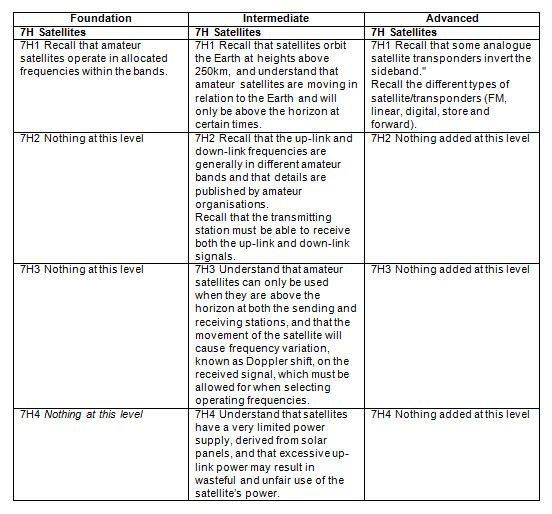
Surprisingly 7B1 Band Plans on page 56 of the consultation document proposes not teaching Foundation candidates that “transmissions on satellite frequencies should be avoided for terrestrial contacts.”

Instead it is suggested that teaching this Basic Information is delayed until Intermediate. Fewer that half of all Foundation licence holders ever do Intermediate and even those that do may take several years to get there.

The RSGB says:

A complete review of the syllabus for all three levels of the amateur radio examinations has been completed.

The draft of the new syllabus is now available for consultation together with a survey to capture any comments you may wish to make.

Please visit http://rsgb.org/syllabus_review to access the syllabus draft document and how to make your comments.

The section of syllabus relating to the Amateur Satellite Service can be seen on page 60 of the consultation document.
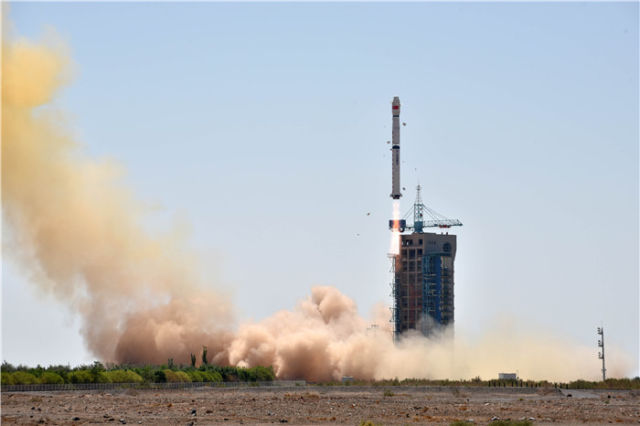
CAS-4A and CAS-4B Satellites from CAMSAT Launched

CAS-4A and CAS-4B launch on CZ-4B

CAS-4A and CAS-4B launch on CZ-4B

Two of CAMSAT’s amateur radio payloads piggybacked on the optical remote sensing micro-satellites OVS-1A and OVS-1B were launched at 0300 GMT on Thursday, June 15, 2017 from the Jiuquan Satellite Launch Center, on the CZ-4B launch vehicle. The primary payload of this launch is a hard X-ray modulation telescope satellite (HXMT).

Satellite CAS-4A/OVS-1A:
● Architecture: Micro-satellite
● Dimensions: 494Lx499Wx630H mm
● Mass: 55 kg
● Stabilization: three-axis stabilization system with its +Y surface facing the earth
● Primary Payload: optical Camera with 1.98m resolution

CAS-4A Orbit:
● Orbit type : Sun synchronization orbit
● Apogee: 524 km
● Inclination: 43°
● Period: 95.1 minutes

CAS-4A Amateur Radio Payload:
● Call sign: BJ1SK
● VHF Antenna: one 1/4λ monopole antenna with max. 0 dBi gain located at +Z side
● UHF Antenna: one 1/4λ monopole antenna with max. 0 dBi gain located at -Z side
● CW Telemetry Beacon: 145.855 MHz 17 dBm
● AX.25 4.8k Baud GMSK Telemetry: 145.835 MHz 20 dBm
● U/V Linear Transponder Downlink: 145.870 MHz 20 dBm, 20 kHz bandwidth, Inverted
● U/V Linear Transponder Uplink: 435.220 MHz

CAS-4 Satellite

CAS-4 Satellite

Satellite Name: CAS-4B/OVS-1B:
● Architecture: Micro-satellite
● Dimensions: 494Lx499Wx630H mm
● Mass: 55 kg
● Stabilization: three-axis stabilization system with its +Y surface facing the earth
● Primary Payload: optical Camera with 1.98m resolution

CAS-4B Orbit:
● Orbit type : Sun synchronization orbit
● Apogee: 524 km
● Inclination: 43°
● Period: 95.1 minutes

CAS-4B Amateur Radio Payload:
● Call sign: BJ1SL
● VHF Antenna: one 1/4λ monopole antenna with max. 0 dBi gain located at +Z side
● UHF Antenna: one 1/4λ monopole antenna with max. 0 dBi gain located at -Z side
● CW Telemetry Beacon: 145.910 MHz 17 dBm
● AX.25 4.8k Baud GMSK Telemetry: 145.890 MHz 20 dBm
● U/V Linear Transponder Downlink: 145.925 MHz 20 dBm, 20 kHz bandwidth, Inverted
● U/V Linear Transponder Uplink: 435.280 MHz

73!
Alan Kung, BA1DU

CAMSAT Press Release PDF

Keplerian Two Line Elements (TLEs) ‘Keps’ for new satellites launched in past 30 days
http://celestrak.com/NORAD/elements/tle-new.txt

CAS-4A and CAS-4B

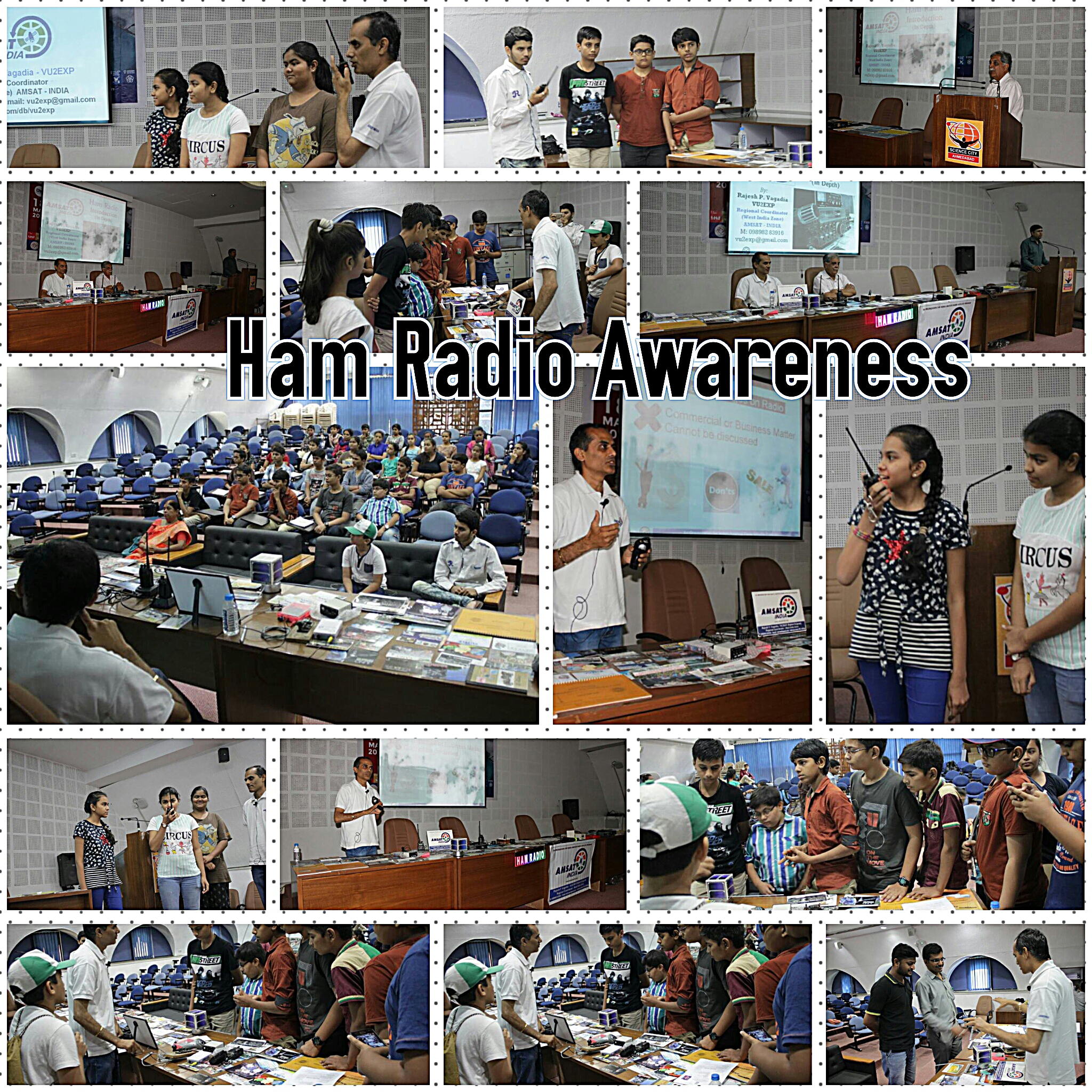
Ham Radio Awareness Program at Science City Ahmedabad

Ham Radio Awareness Program at Science City Ahmedabad May 20, 2017

Ham Radio Awareness Program at Science City Ahmedabad May 20, 2017

AMSAT-India Regional Coordinator Rajesh Vagadia VU2EXP conducted a Ham Radio Awareness program for summer camp students at Science City Ahmedabad, Gujarat, India on May 20, 2017.

The event was knowledge gaining and full of fun for small group of young students.

Participants learnt basic concept of Radio, their setup, propagation, types of conversation allowed and some limitation, communication modes, features used by hams to send voice, text, images and data, Licencing procedure in India etc.

Students were surprised to realize potential of Amateur Radio to do Satellite Communications or to have contact with Astronauts aboard ISS ! Many queries were satisfied in Question and Answer Session.

Also small VHF Demo (Modulation test) was given by young radio amateur Priyesh Vagadia VU3GLY.

We are delighted to observe young students taking interest in Amateur Radio hobby in crowded network of 3G & 4G !

We thank Shri S. D. Vora (Executive Director) and Shri Pulkesh Prajapati from Science City Ahmedabad for coordinating and supporting this event..

Tnx & 73’s
VU2EXP
Rajesh P. Vagadia
Regional Coordinator (West India Zone) AMSAT-India http://amsatindia.org/

Amateur Radio Satellite Operation in Algeria

Abdel Mesbah M0NPT reports on what is believed to be the first amateur satellite operation from Algeria since the 7X0DX activation in 2002.

An introductory training course on amateur satellite traffic which was organized on April 14-15, 2017 at the 7X3WPL radio club in Laghouat (400 km south of Algiers).

This course was held under the auspices of the Laghouat Youth and Sports Directorate, Laghouat’s League of Cultural and Scientific Activities for Youth (LACS), the National Association of Algerian Radio Amateurs (ARA) and The El Manar youth hostel which houses the radio club 7X3WPL.

Satellite Doppler Management by Professor Bouzouad Mouloud

Satellite Doppler Management by Professor Bouzouad Mouloud

A total of about 25 students took part in this event, mainly students in master telecommunications and other enthusiasts of the world of radio telecommunications. While communication and demonstrations on amateur satellite traffic were carried out by Abdel Mesbah M0NPT, a member of AMSAT-UK and Chairman of the Hucknall Rolls-Royce Amateur Radio Club (UK), the Doppler management in satellite traffic was discussed by the Professor researcher, M. Bouzouad Mouloud of the laboratory of telecommunications of the signals and systems of the University of Laghouat.

The radio club 7X3WPL is in the process of installing a satellite station using a Kenwood TS2000, Yaesu G5500 Trackers and Wimo cross Yagis, please keep your ears open on Satellites as you may hear them soon.

I am delighted to be the first person to have activated Algeria (7X2ARA in JM16MS & 7X3WPL in JM13KT) on the SO-50 satellite and I am looking forward to going back again.

The first contact from Algeria on the SO-50 satellite was with my friend Peter 2E0SQL [now 2M0SQL], followed by Adam MU0WLV, Fran EA1JM, Olivier F5RRO, Jerome F4DXV, George MI6GTY, Peter G0ABI, Neven 9A5YY, Colin MU0FAL and many others.

I am also looking forward to install my own station in Algiers once I get my Algerian callsign 7X2TT sorted Inchallah

Abdel Mesbah M0NPT

How to work FM satellites https://amsat-uk.org/beginners/how-to-work-fm-satellites/

HamRadioNow: Look! Up in the Sky!

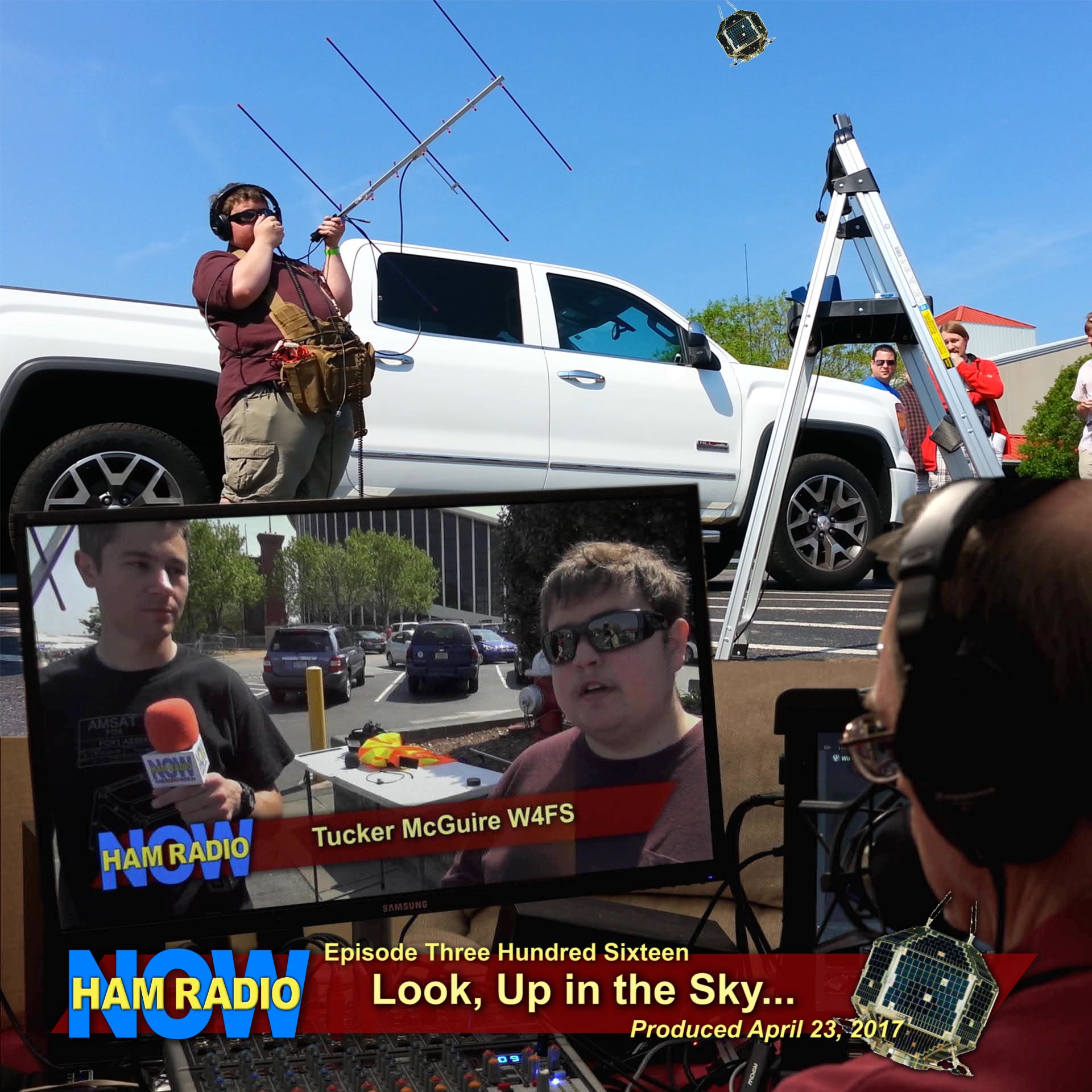
Look! Up in the Sky!The bulk of this episode is an on-location interview with two Raleigh NC area hams who gave a couple of live demonstrations of operating through satellites at the Raleigh Hamfest, April 15,  2017.

There’s some banter between hosts David Goldenberg W0DHG and Gary Pearce KN4AQ back in the studio. And toward the end Gary announces a Viewer Challenge that we’ll detail down below.

The satellite hams are John Brier KG4AKV and Tucker McGuire W4FS. At 18 years old, Tucker is a relatively new ham who first started operating satellites last summer, and quickly jumped into the deep end. John’s been around longer, but ham radio satellites and space operation captured his focus, too. He produces videos about it on his YouTube channel, Space Comms. Links below.

Gary talked to John and Tucker after they completed their second demo, and he edited a little of each demo into the interview.

There’s video of all of both demonstrations on YouTube. John shot himself operating through ‘Saudi-Sat’ SO-50, a “Mode J” FM crossband repeater (145.850 MHz uplink and 436.795 MHz downlink). John used three cameras (including a GoPro on a headband for a unique view). Gary edited the video and put it on the HamRadioNow YouTube channel as an extra bit if video.

Gary added two more cameras to the mix to shoot Tucker operating through FO-29, a Japanese satellite that uses a 100 kHz wide ‘linear transponder’ for mostly SSB and CW (and NO FM, please) between two meters and 70 cm. There’s a few minutes of that demo in this episode, and the whole thing is on John’s Space Comms channel.

Watch HRN 316: Look! Up in the Sky! Ham Radio Now

Space Comms http://youtube.com/SpaceComms1

KG4AKV’s SO-50 FM operation https://www.youtube.com/watch?v=7dhJsfh6fYA

W4FS’s FO-29 SSB operation https://www.youtube.com/watch?v=kEvsKN9ZSyw

John KG4AKV https://twitter.com/johnbrier
Tucker W4FS https://twitter.com/Whiskey4FoSho

AMSAT-UK test ESEO payload command uplink

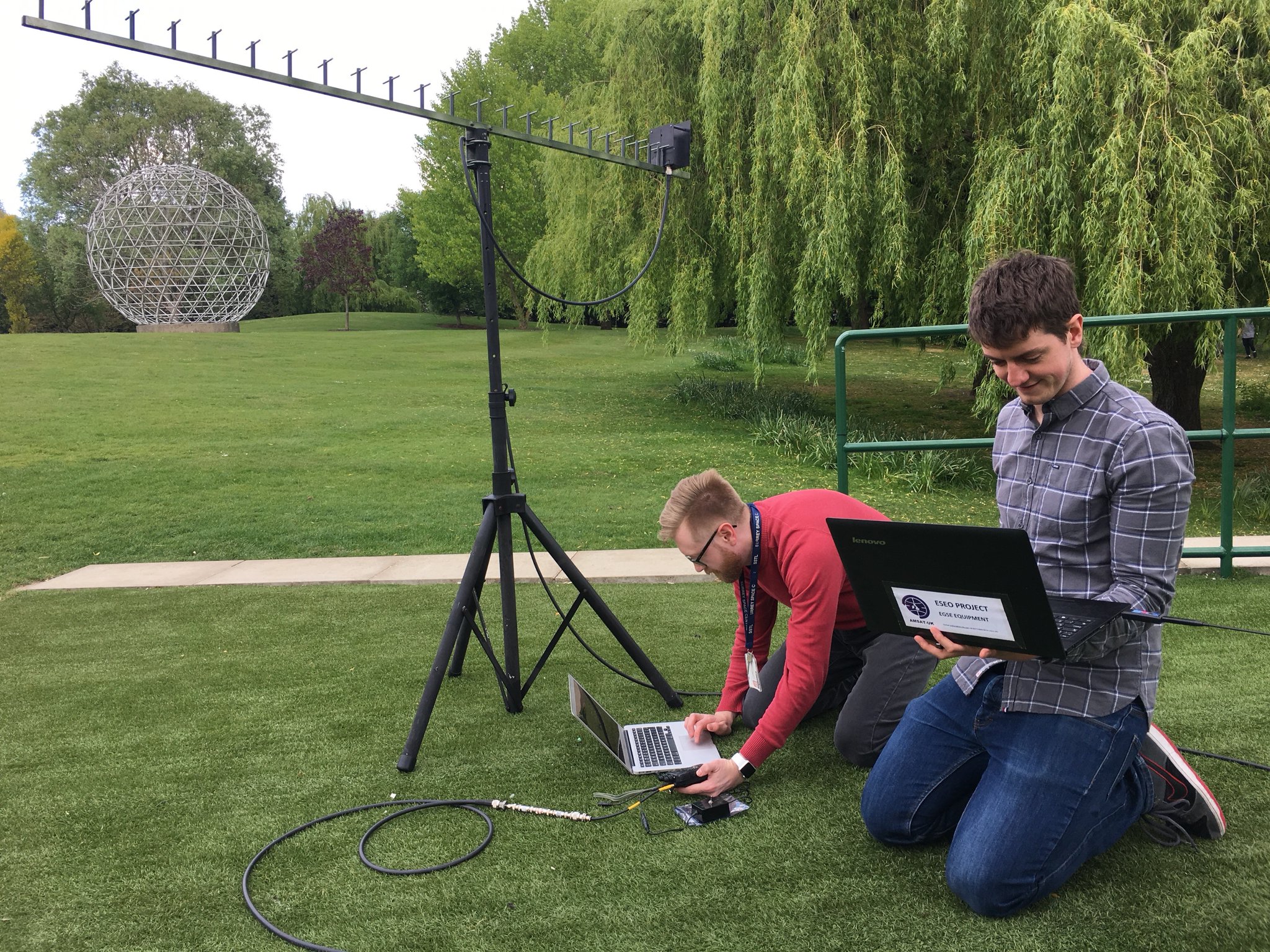
Dr Chris Bridges M0IEB and Pete Bartram conduct uplink command testing on the ESEO payload in University of Surrey grounds

Dr Chris Bridges M0IEB and Pete Bartram conduct uplink command testing on the ESEO payload in University of Surrey grounds

AMSAT-UK are providing an amateur radio 1260/145 MHz FM transponder and a 145 MHz BPSK telemetry beacon for the European Student Earth Orbiter (ESEO) satellite.

Over the weekend of April 22-23, 2017, AMSAT-UK members met at the Surrey Space Centre to conduct some final testing of the command uplink on the Engineering Model of their payload which will launch on the European Space Agency ESEO mission.

The payload, which will transmit 1k2 and 4k8 BPSK telemetry on 145.895 MHz, was set up in the Arthur C Clarke building, with the AMSAT-UK team sending commands on L-band (1260 MHz) from some distance away in the university grounds.  A large string of attenuators simulated the path loss to low Earth orbit, while the VHF telemetry confirmed the level of signal received at the ‘spacecraft antenna’ and that the commands had been executed correctly.

With the lab and range testing declared a success, work now begins on constructing the Flight Model hardware. This is due for delivery by the middle of the summer so that it can be integrated into the 50 kg microsat. ESEO is expected to be launched late this year or in the first quarter of 2018.

ESEO satellite https://amsat-uk.org/satellites/communications/eseo/