ArduSat Open-Source Arduino-based Satellite

ArduSat is an open-source arduino-based CubeSat. It plans to have an extensive sensor-suite onboard that will allow users to upload their own code and run their own experiments.

Watch KickStarter ArduSat

Open Satellite Network https://sites.google.com/a/hackersinspace.net/www/

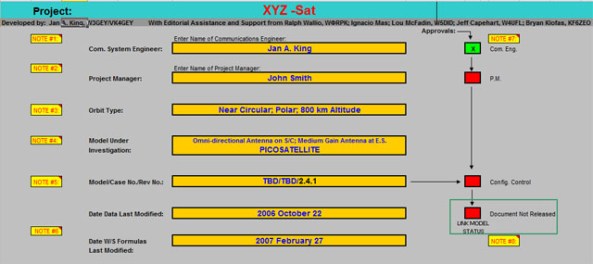
Satellite Link Budget Information and Lunar Beacons

Download the spread sheet here (1.2 MB) (ver 2.4.1 – updated 11/4/2007)

Download Basic Analog Transponder Spread sheet here and its notes here

Lunar Beacons – The Earth Moved by James Miller G3RUH http://www.amsat.org/amsat/articles/g3ruh/110.html

Lunar Transponder Calculations by Domenico I8CVS http://www.uk.amsat.org/wp-content/uploads/2012/06/Lunar-Transponder-Calculations-by-I8CVS.txt

6U CubeSat Low Cost Space Missions Workshop

6U CubeSat Low Cost Space Missions Workshop

17th – 18th July 2012

Click here to register to attend the Workshop

Workshop Details

Title: 6U CubeSat Low Cost Space Missions Workshop
Date: 17th – 18th July 2012
Abstracts Due: 26th June 2012
Time:
Venue: Advanced Instrumentation and Technology Centre, Mt Stromlo Observatory, Canberra Australia
Cost: Free

Download the workshop poster here.

STRaND-2 ‘Kinect’ Satellites Video

STRaND-2, a twin nanosatellite mission from SSTL and the University of Surrey to test a novel in-orbit docking system using a gridded Lidar system based on the Microsoft Xbox Kinect games-controller technology.

Similar in design to STRaND-1, the identical twin satellites will each measure 30cm (3 unit Cubesat) in length, and utilise components from the Xbox Kinect games controller to scan the local area and provide the satellites with spatial awareness on all three axes – thus allowing them to dock.

The STRaND team sees the relatively low cost nanosatellites as intelligent “space building blocks” that could be stacked together and reconfigured to build larger modular spacecraft.

Watch STRaND-2 Docking Nanosatellite.wmv

STRaND stands for Surrey Training, Research and Nanosatellite Demonstration and the programme is intended to be a long-term arrangement between the space company SSTL and academic researchers at the Surrey Space Centre (SSC), with STRaND-1 the first of a long line of STRaND nanosatellites.

The SSTL employees involved with the STRaND programme are volunteers. It is a condition of the programme that volunteers from SSTL and SSC use their own, free time for STRaND activities (such as lunches and breaks). The project has no budget for staff so is entirely dependent on volunteers.

Further information at http://www.sstl.co.uk/divisions/earth-observation—science/science—exploration/strand-2-building-blocks-nanosatellite

‘Kinect’ STRaND-2 at UK Space Agency Conference http://www.uk.amsat.org/6795

Surrey Satellite to put Xbox parts in space http://www.uk.amsat.org/7771

The Register article http://www.theregister.co.uk/2012/05/28/sstl_strand_2_nanosat_xbox_kinect/

Thinking outside the box in space by BBC Science correspondent Jonathan Amos http://www.bbc.co.uk/news/science-environment-18250755

STRaND on Facebook https://www.facebook.com/nanosats

STRaND-2 ‘Kinect’ Satellites Video

STRaND-2 NanosatsSTRaND-2, a twin nanosatellite mission from SSTL and the University of Surrey to test a novel in-orbit docking system using a gridded Lidar system based on the Microsoft Xbox Kinect games-controller technology.

Similar in design to STRaND-1, the identical twin satellites will each measure 30cm (3 unit Cubesat) in length, and utilise components from the Xbox Kinect games controller to scan the local area and provide the satellites with spatial awareness on all three axes – thus allowing them to dock.

The STRaND team sees the relatively low cost nanosatellites as intelligent “space building blocks” that could be stacked together and reconfigured to build larger modular spacecraft.

Watch STRaND-2 Docking Nanosatellite.wmv

STRaND stands for Surrey Training, Research and Nanosatellite Demonstration and the programme is intended to be a long-term arrangement between the space company SSTL and academic researchers at the Surrey Space Centre (SSC), with STRaND-1 the first of a long line of STRaND nanosatellites.

The SSTL employees involved with the STRaND programme are volunteers. It is a condition of the programme that volunteers from SSTL and SSC use their own, free time for STRaND activities (such as lunches and breaks). The project has no budget for staff so is entirely dependent on volunteers.

Further information at http://www.sstl.co.uk/divisions/earth-observation—science/science—exploration/strand-2-building-blocks-nanosatellite

‘Kinect’ STRaND-2 at UK Space Agency Conference http://www.uk.amsat.org/6795

Surrey Satellite to put Xbox parts in space http://www.uk.amsat.org/7771

The Register article http://www.theregister.co.uk/2012/05/28/sstl_strand_2_nanosat_xbox_kinect/

Thinking outside the box in space by BBC Science correspondent Jonathan Amos http://www.bbc.co.uk/news/science-environment-18250755

STRaND on Facebook https://www.facebook.com/nanosats

International Space Colloquium – Second Call For Speakers

Holiday Inn Guildford GU2 7XZ

Holiday Inn Guildford GU2 7XZ

This is the second call for speakers for the AMSAT-UK International Space Colloquium which, due to the Olympic & Paralympic Games, will be held this year on the weekend of September 15-16, 2012 at the Holiday Inn, Guildford, GU2 7XZ, United Kingdom.

This Colloquium will take place before the planned launch of AMSAT-UK’s Cubesat FUNcube-1 designed to encourage young people to learn about radio, space, physics and electronics. It contains a 1200 bps BPSK telemetry beacon and a 435/145 MHz linear transponder.

AMSAT-UK invites speakers, to cover topics about micro-satellites, CubeSats, Nanosats, space and associated activities, for this event.

They are also invited to submit papers for subsequent publishing on the AMSAT-UK web site. We normally prefer authors to present talks themselves rather than having someone else give them in the authors’ absence. We also welcome “unpresented” papers for the web site.

We appreciate that it is not always possible to give a firm indication of attendance at this stage but expressions of interest would be appreciated.

Submissions should be sent ONLY to David Johnson G4DPZ, via the following routes:

e-mail: david dot johnson at blackpepper dot co dot uk

Postal address at http://www.qrz.com/db/G4DPZ

AMSAT-UK also invite anyone with requests for Program Topics to submit them as soon as possible to David Johnson G4DPZ.

Invitations for any papers on specific subjects will be included in the future call. Likewise if anyone knows of a good speaker, please send contact and other information to David Johnson G4DPZ.

AMSAT-UK International Space Colloquium 2012 http://www.uk.amsat.org/colloquium/twelve

Booking http://shop.amsat.org.uk/shop/category_10/Colloquium-2012-Fri-14-Sep-to-Sun-16-Sep.html